 Comparison
Custom Iron vs Wood Doors: Cost Comparison
Last Updated: November 13, 2026
Quick Summary
In an iron vs wood doors cost comparison, custom iron generally costs more upfront and to install, while custom wood costs less to buy but more to keep because it needs refinishing every few years. Iron needs only occasional cleaning and touch-up, so its lower maintenance can offset the higher purchase price over time.
- Custom iron doors generally run higher than custom wood at equivalent sizes because fabrication hours dominate the price.
- Wood doors typically need refinishing every few years, while iron needs occasional cleaning and touch-up on chips.
- Iron doors are heavy and often need reinforced framing, adding a carpentry cost that wood doors usually avoid.
- Ask every bidder for the same six-line breakdown: door and finish, hardware, delivery, removal, framing, and labor.
- Match exposure before comparing lifecycle costs, since a protected door and an exposed door are not equal comparisons.
Table of Contents
- Iron vs Wood Doors: A Side-by-Side Cost Comparison
- What Drives Custom Iron Door Cost
- What Drives Custom Wood Door Cost
- Iron Door Installation Cost and Labor Factors
- Wood Entry Door Maintenance and Long-Term Upkeep
- Durability, Energy Efficiency, and Lifespan: Iron vs Wood Doors
- Getting an Accurate Quote for Your Door Project
- Frequently Asked Questions
Iron vs Wood Doors: A Side-by-Side Cost Comparison
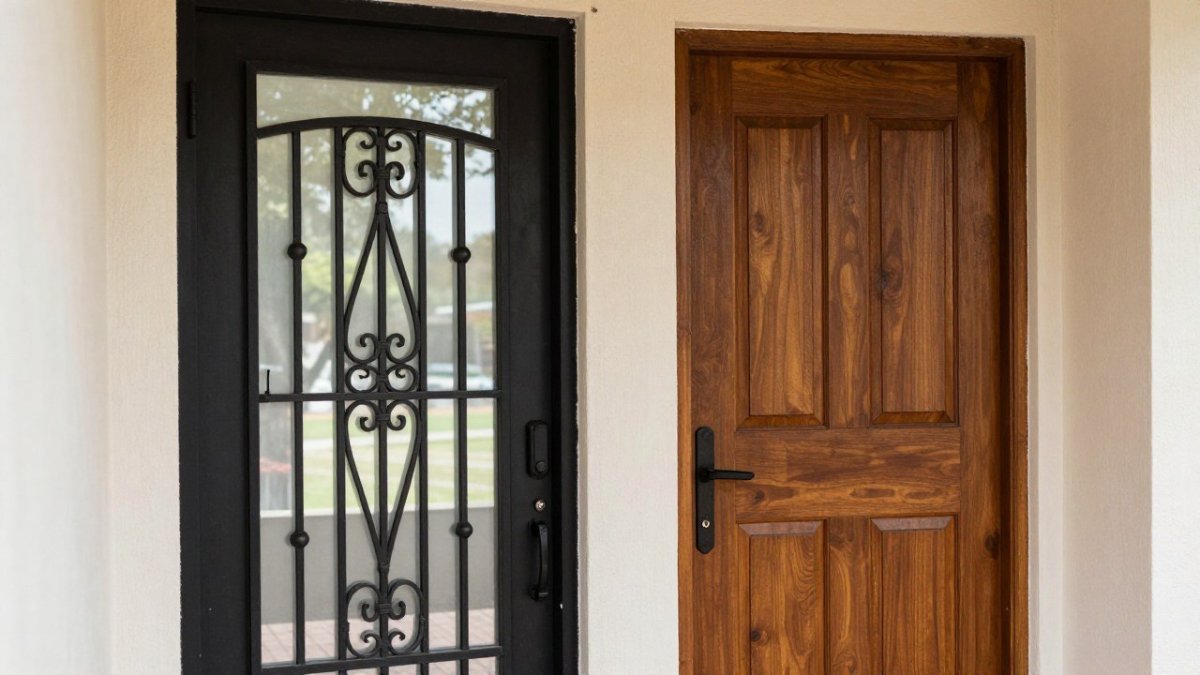
A custom iron door and a custom wood door can land in the same price bracket, but they rarely cost the same over time. This cost comparison of custom iron vs wood doors comes down to three numbers: what you pay upfront, what installation adds, and what upkeep takes from you every year after. Iron generally costs more to buy and less to keep. Wood generally costs less to buy and more to keep. Below, we break down each cost line so you can budget with real expectations instead of guesswork.
| Cost Factor | Custom Iron Door | Custom Wood Door |
|---|---|---|
| Upfront purchase | Higher, driven by fabrication | Lower to mid, driven by species |
| Installation | Heavier door, reinforced framing | Standard framing in most cases |
| Annual maintenance | Minimal, occasional touch-up | Refinishing every few years |
| Lifespan | Decades with little attention | Long, but finish-dependent |
| Energy performance | Good with thermal breaks | Good with solid core and seals |
| Best for | Security, low upkeep, modern look | Warmth, stain-grade beauty, budget |
What Drives Custom Iron Door Cost
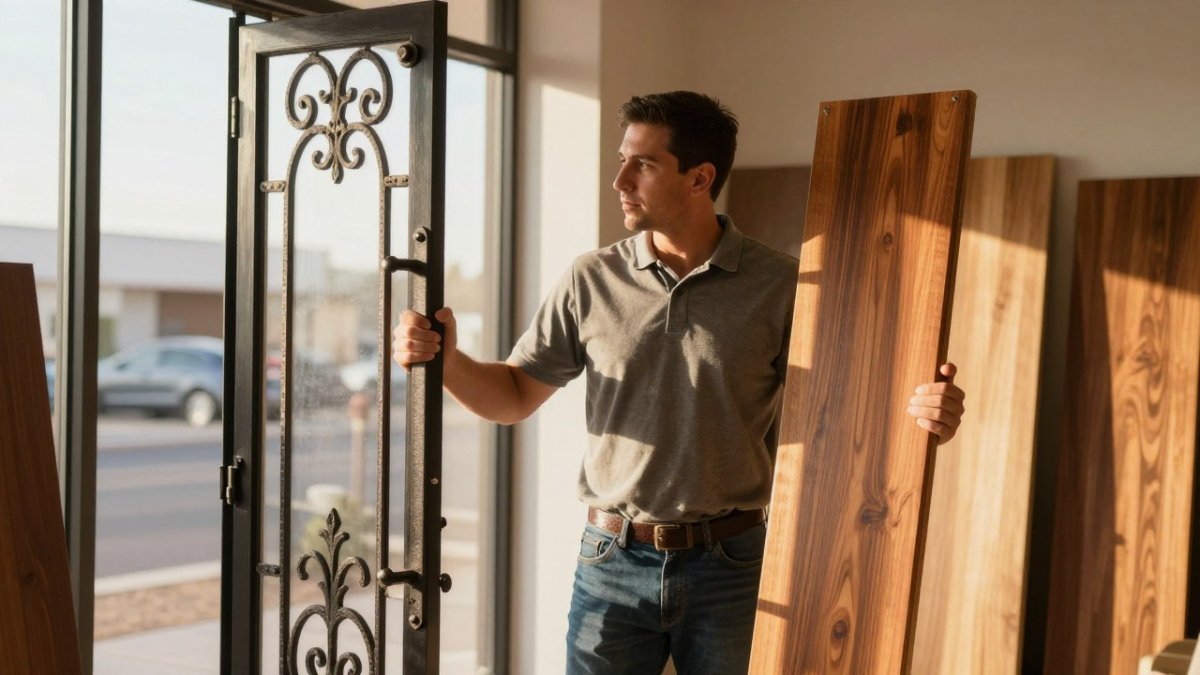
The biggest cost driver on a custom iron door is fabrication, not the metal itself. Each door is built to your opening's exact dimensions, so the price climbs with size, complexity, and finish work. A single door with a simple panel design sits at the low end. Add sidelights, a transom, glass panels, or a double-door configuration and the labor hours stack up quickly. Finish matters too: a hand-applied faux finish or a multi-step powder coat costs more than a standard color. Hardware is another line item, since heavy iron doors need heavy-duty hinges, handles, and locksets rated for the weight.
What Drives Custom Wood Door Cost
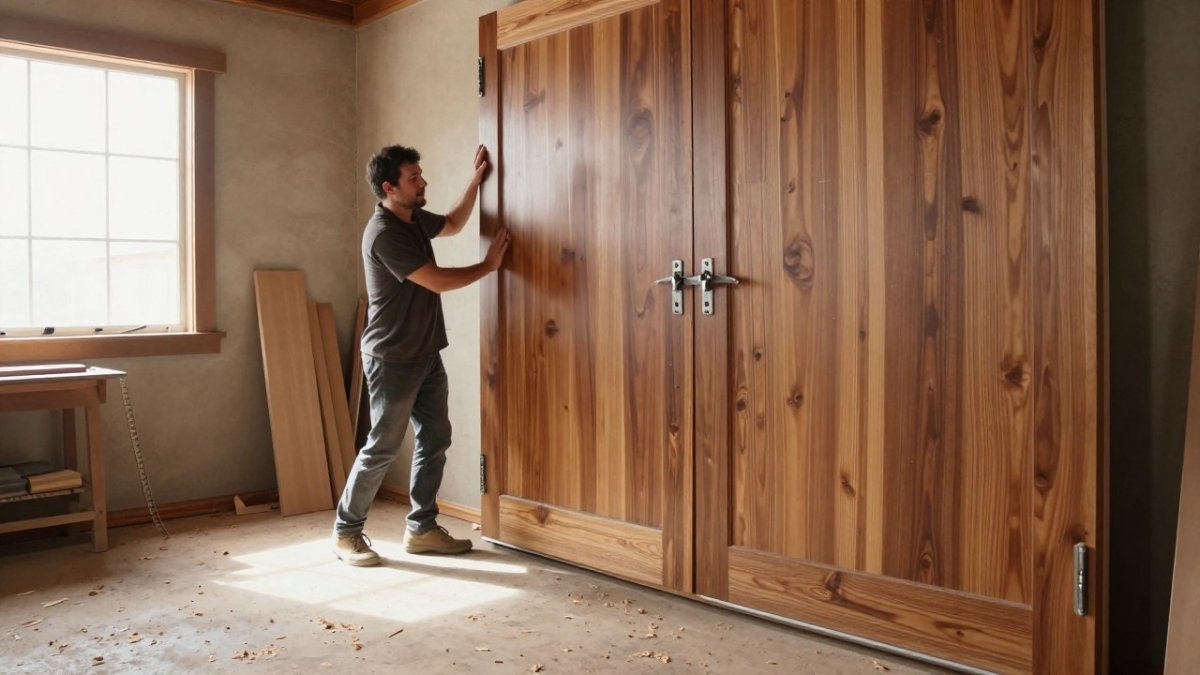
Wood pricing starts with species, and the gap between them is wider than most buyers expect. A paint-grade softwood door and a stain-grade mahogany or white oak door can look identical in a showroom photo and land in completely different price ranges. Construction method matters just as much. A solid wood door costs more than a solid-core door with a veneer skin, and engineered stiles and rails can bring the price down without sacrificing stability. Custom sizing, panel profiles, and glass options each add to the total.
Iron Door Installation Cost and Labor Factors
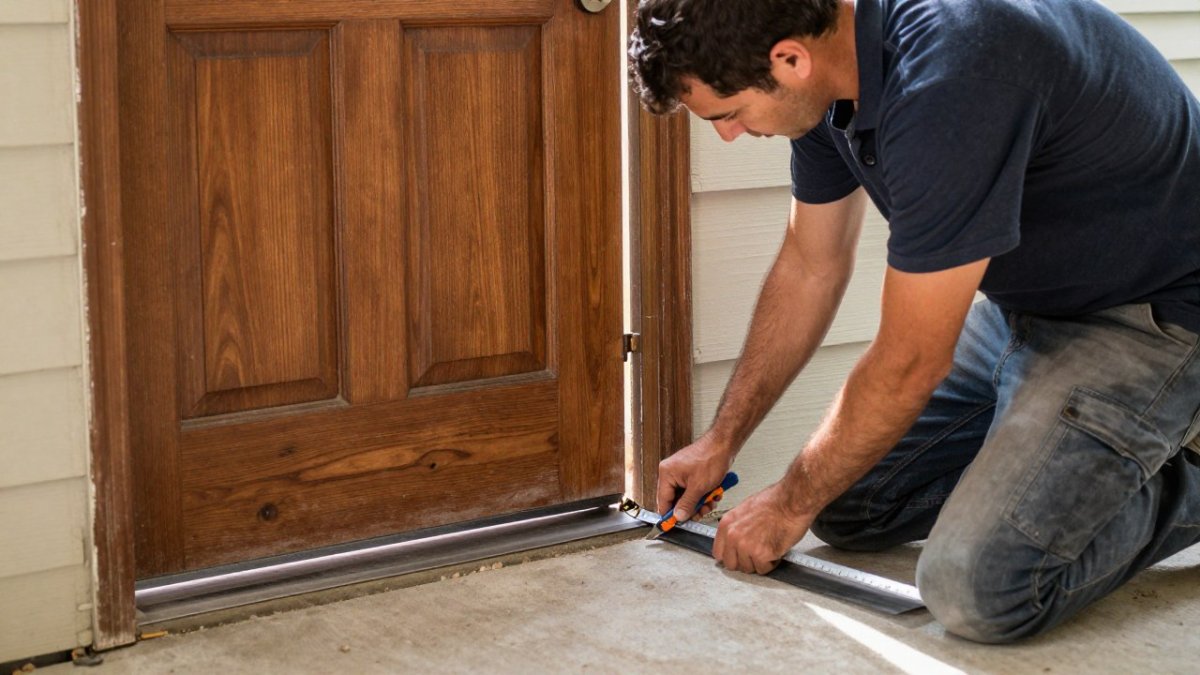
Installation is where iron and wood budgets diverge most, and it is also where most online comparisons fall apart. A quoted door price is not an installed price. To compare iron and wood fairly, separate the bid into six lines: door and finish, hardware, delivery, removal and disposal of the old door, framing and rough-opening work, and labor. Asking each bidder for an itemized breakdown is a practical way to avoid comparing a bare iron slab against a fully trimmed wood package.
On the door line itself, custom iron generally runs higher than custom wood at equivalent sizes because fabrication hours dominate. A simple single iron door with a basic panel design sits at the low end of the custom range; adding sidelights, a transom, glass, a curved top, or a double-door configuration pushes the number up in steps rather than gradually.
Delivery is a real line item for iron. An iron door is heavy, and it usually ships crated and freight, so expect a delivery charge that scales with weight and distance. Wood doors often ship more cheaply, though oversize and glass-laden units still carry a freight premium. Removal and disposal of the old door is typically a small add-on for either material, but it is frequently omitted from verbal quotes and then appears on the invoice.
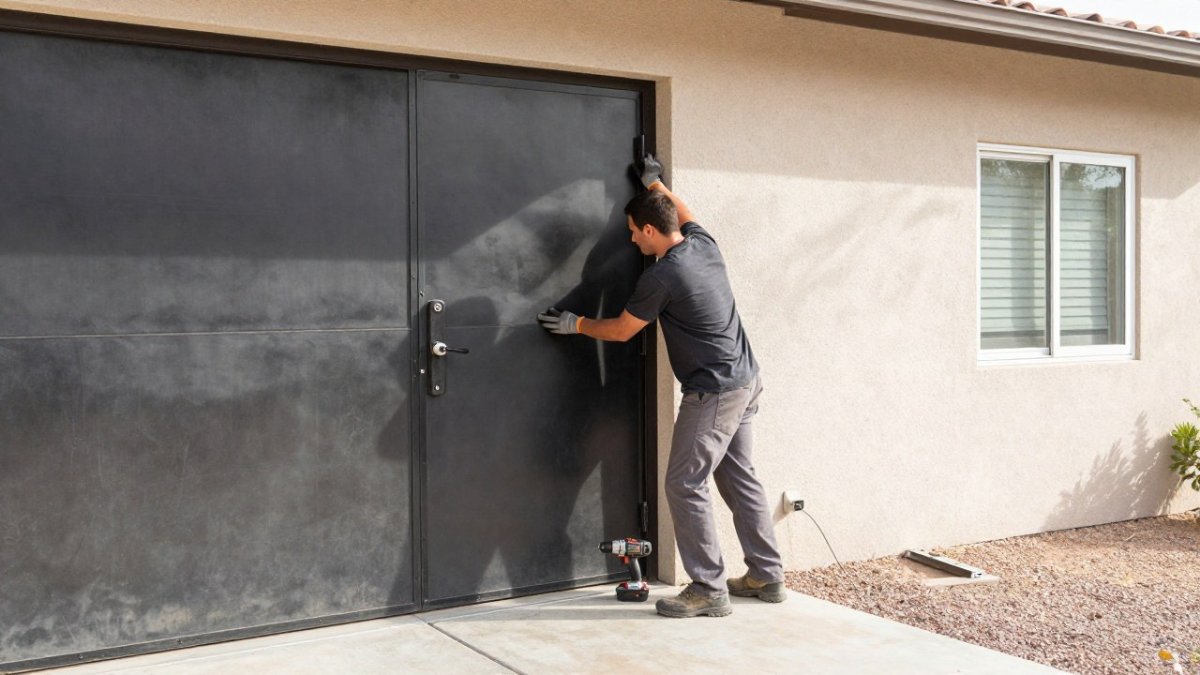
Framing and rough-opening work is where iron pulls ahead in cost. An iron door is heavy enough that the rough opening often needs reinforced framing, and the install crew needs the right equipment to set it without damaging the finish. If you are pricing a full project, our guide to cost factors for custom door installation breaks down the labor and site variables that move the number.
Hardware is the line buyers most often forget. Heavy iron doors need heavy-duty hinges, handles, and locksets rated for the weight, and those cost more than standard residential hardware. Wood doors can use standard hardware, but a stain-grade entry usually deserves a finish-matched handle set and a quality lockset, which narrows the gap. Glass, sidelights, and transoms add cost on both materials and should be quoted as separate lines so you can see what each upgrade actually costs.
A practical way to budget is to request the same six-line breakdown from every bidder, using the same opening dimensions, the same glass and finish spec, and the same hardware list. That is how you avoid the apples-to-oranges trap of comparing a bare iron door price against a fully trimmed wood door package.
Wood Entry Door Maintenance and Long-Term Upkeep
Wood entry door maintenance is the cost line buyers underestimate. Sun, monsoon rain, and dry heat work on a finish constantly, and a wood door typically needs refinishing every few years to stay protected. Strip, sand, stain, and seal is not a weekend project for most homeowners, so many budget for professional refinishing. Iron generally needs far less: occasional cleaning and touch-up on chips. If you are leaning toward wood, our guide to maintaining wood veneer door finishes covers the upkeep schedule that protects your investment. The trade-off is real. Wood gives you warmth and stain-grade beauty, and you pay for it in annual attention.
Durability, Energy Efficiency, and Lifespan: Iron vs Wood Doors
On durability, iron wins on the structural measures that matter most at an entry: resistance to dents, warping, and movement under temperature swings. A well-built iron door holds its shape, and its weak points are finish chips and, in coastal or high-humidity conditions, corrosion at welds and hardware if the coating system and fasteners are not specified for the exposure. Wood's weakness is moisture and sun, which is why finish care matters so much; a wood door that stays sealed lasts a long time, and one that is allowed to dry out and take on water does not.
On energy efficiency, the gap narrows and the specifications matter more than the material label. Both iron and wood perform well when the door has a solid core or insulated construction, quality weatherstripping, a proper threshold and sweep, and insulated glass. Iron conducts heat, so a thermal break in the frame and door makes a real difference in performance, and that feature should be confirmed in writing rather than assumed. Wood is a natural insulator, but air leakage around the perimeter, not the panel itself, is usually the larger efficiency loss on either door.
Security is a related trade-off. Iron's strength is inherent, but the lock, strike, and frame reinforcement determine how secure the assembly actually is; a heavy door on a light frame is not the advantage it appears to be. Wood doors can be reinforced with a quality lockset, a reinforced strike, and a solid frame, and many entry doors are. For high-traffic entries, our guide to selecting durable door materials explains which specs to check. If efficiency is your priority, see these ways to improve door insulation before you choose a material.
Lifespan is where the lifecycle math becomes useful. Over a stated period, the cost of each door is the purchase price plus installation plus maintenance plus any repairs plus replacement, divided across the years. Iron's purchase and installation lines are higher, but its maintenance line is small: occasional cleaning and touch-up on chips. Wood's purchase line is often lower, but its maintenance line includes refinishing every few years, and professional strip, sand, stain, and seal work is not a weekend project for most homeowners.
Climate and exposure change upkeep and longevity for both materials. Sun, rain, humidity, coastal salt air, and whether the entry is protected by a porch or overhang all shift the maintenance schedule. A protected wood door in a mild climate may need refinishing less often than an exposed one in harsh sun, and an iron door near the coast needs a coating system and fasteners specified for salt exposure. Watch out: comparing a protected door of one material against an exposed door of the other is the most common way lifecycle comparisons go wrong, so match the exposure before you compare the numbers.
Getting an Accurate Quote for Your Door Project
An accurate quote starts with a real measurement and a clear spec, not a ballpark from a website. Bring your opening dimensions, a photo of the entry, and your must-haves: glass, sidelights, finish, and hardware. Ask each quote to separate door, finish, hardware, and installation so you can compare like for like. That is how you avoid the apples-to-oranges trap of comparing a bare iron door price against a fully trimmed wood door package. When you are ready to price your project, review the custom door design services we offer so you know what to ask for. Our team will walk you through material options, sizing, and delivery to your job site.
Choosing between iron and wood comes down to which cost you would rather carry: a higher upfront price with low upkeep, or a lower entry price with regular refinishing. Arizona Door Store can help you weigh both options. As a family-owned business, we offer locally made doors, fast will-call service, and reliable local delivery to Scottsdale, Phoenix, and Tucson. Get started with Arizona Door Store and price your project with confidence.
Frequently Asked Questions
Are custom iron doors more expensive than wood doors?
Yes, custom iron doors generally carry a higher upfront price than wood doors. Wood entry doors can climb higher with premium species and custom design, but iron starts at a higher baseline because of the steel construction and fabrication work involved.
What factors affect the price of a custom iron door?
Size is the first driver. Beyond dimensions, cost rises with glass panel and glazing options, transoms and sidelights, hardware selection, finish, and whether the door is a single or double configuration. Custom design complexity and any structural reinforcement needed for the door's weight also affect the final custom iron door cost.
Which type of door requires less maintenance, iron or wood?
Iron needs less routine upkeep. Wood entry door maintenance includes refinishing every few years to protect against moisture and sun, plus periodic inspection for warping, cracking, or rot. Iron doors mostly need occasional cleaning and touch-up painting if the finish chips. In arid, high-sun climates, wood dries and fades faster, so budget for more frequent refinishing than you would with steel construction.
Do iron doors last longer than wood doors?
Iron generally outlasts wood. Steel construction resists rot, insects, and warping, and a well-finished iron door can last decades with minimal repair. Wood doors are durable when sealed and maintained, but moisture and sun exposure shorten their lifespan. Repair costs for wood, such as refinishing or section replacement, add up over time, which matters when you compare iron vs wood doors on long-term value.
Is a custom iron door worth the extra cost?
It depends on your priorities. Iron costs more upfront and adds installation labor because of its weight, but it delivers strength, security, and lower annual maintenance. Wood offers warmth, curb appeal, and a lower entry price. If you want a low-maintenance door with a long service life, iron can justify the initial investment. If budget and a traditional look matter most, wood remains a strong choice.