ultimate-guide
Custom Door Design Services in Arizona: 2026 Guide
Table of Contents
- Why Arizona Homes Need a Different Custom Door Design Approach
- Custom Door Design Services in Arizona: What the Process Looks Like
- Understanding Custom Wood Door Cost Factors
- Choosing Materials That Survive the Desert: Wood, Iron, and Aluminum
- Modern Entry Door Design Trends for 2026
- Exterior Door Installation Services: Why Professional Setup Matters
- Security Features and Climate-Specific Durability
- Start Your Custom Door Project Today
- Frequently Asked Questions
Last Updated: September 9, 2026
Arizona's climate is uniquely punishing on entry doors, with intense UV exposure, temperature swings that can exceed 40 degrees in a single day, and monsoon-driven dust and moisture (weather.gov). A standard production door built for temperate climates will warp, fade, or corrode within a few seasons. That is why custom door design services Arizona homeowners and contractors rely on focus on material science and precise fabrication.
The best custom door design treats a door as a building envelope component, not just a decorative element, thermal performance, air infiltration, and structural rigidity matter as much as grain pattern and finish.
Why Arizona Homes Need a Different Custom Door Design Approach
Standard interior doors and mass-produced entry units are engineered for moderate climates. The Phoenix and Tucson metro areas present a different challenge: extreme heat drives thermal expansion in wood and metal, while low humidity causes solid wood to check and crack.
The solution accounts for the full annual climate cycle: selecting stable core materials, specifying UV-resistant finishes, and designing for proper sealing at the threshold and jamb. Many local fabricators use engineered wood cores or aluminum reinforcement to minimize movement.
Custom Door Design Services in Arizona: What the Process Looks Like
A successful custom door project follows a structured sequence: consultation, specification, fabrication, and installation. Skipping any step introduces risk, particularly with older homes where walls are rarely plumb and floors are uneven.
Step 1: The Design Consultation
The consultation establishes functional requirements before any aesthetic decisions. A knowledgeable consultant measures the rough opening, assesses wall construction, and checks for structural issues like settling or moisture damage.
Bring architectural style references, but also be ready to discuss how the door will be used, a front entry door with southern exposure needs different materials than a shaded side entrance. The consultant should also review hardware integration, including hinge weight ratings and lock prep requirements.
Step 2: Fabrication and Materials Selection
Once specifications are locked, fabrication begins, covering everything from milling solid wood stiles and rails to welding wrought iron frames. Material selection determines the fabrication timeline and final cost structure.
Step 3: Delivery and Installation
Professional delivery and installation protect the investment, a door damaged during transport or hung incorrectly will fail regardless of build quality. Reliable local delivery to job sites in Scottsdale, Phoenix, and Tucson ensures the door arrives ready for installation.
Understanding Custom Wood Door Cost Factors
Custom wood door cost is driven by four primary factors: species, construction method, size, and hardware. Solid wood doors in premium species like mahogany or walnut cost significantly more than engineered wood alternatives, but they also offer a distinct grain and durability profile. A stile-and-rail door with floating panels handles seasonal movement better than a slab door, which is why most custom fabricators recommend the former for exterior applications.
Size is the next major variable, non-standard heights, common in older custom homes, require additional material and labor. Hardware selection adds another layer, with high-end lever sets, multi-point locking systems, and custom hinges representing a meaningful portion of the total budget. Rather than quoting a single figure that may not match your project, the Arizona Door Store team can provide a quote tailored to your specific needs.
What Drives the Price: A Detailed Breakdown
Most custom door fabricators structure pricing around a base door unit plus upgrades. Final pricing depends on your exact specifications and current material markets.
| Cost Component | Typical Range | What Influences the Price |
|---|---|---|
| Base Door Unit (Slab + Frame) | $1,800 - $4,500 | Species, core construction, size, and whether it is a pre-hung unit with jamb and weatherstripping. |
| Glass and Glazing | $400 - $1,800 | Dual-pane low-E glass is standard; add for decorative beveled glass, sidelites, or transoms. |
| Hardware (Lockset, Hinges, Handles) | $250 - $1,200 | Grade 1 or Grade 2 hardware with multi-point locking adds cost but is essential for security. |
| Finish and UV Protection | $300 - $900 | Exterior-grade finishes with UV inhibitors; sprayed-on catalyzed finishes cost more but last longer. |
| Professional Installation | $500 - $1,500 | Includes shimming, leveling, flashing, and final sealing; more for non-standard openings. |
Species and Construction: Where the Money Goes
A solid mahogany door with a stile-and-rail frame will command a premium over a fiberglass or steel door.
The Hidden Cost: Climate-Specific Modifications
In Arizona, the cost conversation does not end with the door itself. Budget for these climate-specific modifications:
How to Get an Accurate Quote
When you request a quote, provide these details to get an accurate price:
- Rough opening dimensions (width, height, depth), not the door size.
- Wall construction (stucco, brick, frame) and whether it is a new build or a replacement.
- Sun exposure (north, south, east, west facing).
- Desired material and species (or ask for recommendations).
- Glass requirements (if any) and whether you need dual-pane low-E.
- Hardware preferences (lockset style, finish, security level).
Choosing Materials That Survive the Desert: Wood, Iron, and Aluminum
Material choice is the single most important decision in any desert-climate door project. Each option offers a different balance of aesthetics, durability, and maintenance.
| Material | Best For | Durability in Desert | Maintenance Level |
|---|---|---|---|
| Solid Wood | Classic and traditional aesthetics | Moderate; requires UV-protective finish | High; periodic refinishing |
| Wrought Iron | Security and architectural statement | High; resistant to warping | Low to moderate; inspect welds |
| Aluminum | Modern and minimalist designs | Very high; excellent thermal performance | Low; anodized finishes resist corrosion |

Solid Wood and Moulding Options
Solid wood remains the preferred choice for homeowners seeking a classic design with rich grain and artisanal craftsmanship. The key to success in Arizona is selecting a stable species and applying a finish that blocks UV radiation. Wood doors also allow for integrated mouldings and casing that match interior millwork.
Wrought Iron and Aluminum Fabrication
Wrought iron offers unmatched security and a distinctive architectural presence, but it requires proper fabrication to avoid corrosion at weld points. Aluminum is increasingly popular for modern entry door systems because it combines a lightweight frame with excellent thermal efficiency and weather-resistant finishes.
Modern Entry Door Design Trends for 2026
Modern entry door design trends for 2026 are moving toward bold scale and integrated technology. Pivot doors continue to gain popularity for their dramatic visual impact and wide clear opening, while flush wood doors with hidden hardware appeal to homeowners pursuing a minimalist aesthetic.
Color trends are shifting toward deeper, richer tones. Dark bronze and charcoal finishes on metal doors provide a strong contrast against light stucco, while natural wood doors are being specified with matte, low-sheen clear coats rather than high-gloss finishes. Hardware is becoming larger and more sculptural, functioning as a design statement rather than an afterthought.
Exterior Door Installation Services: Why Professional Setup Matters
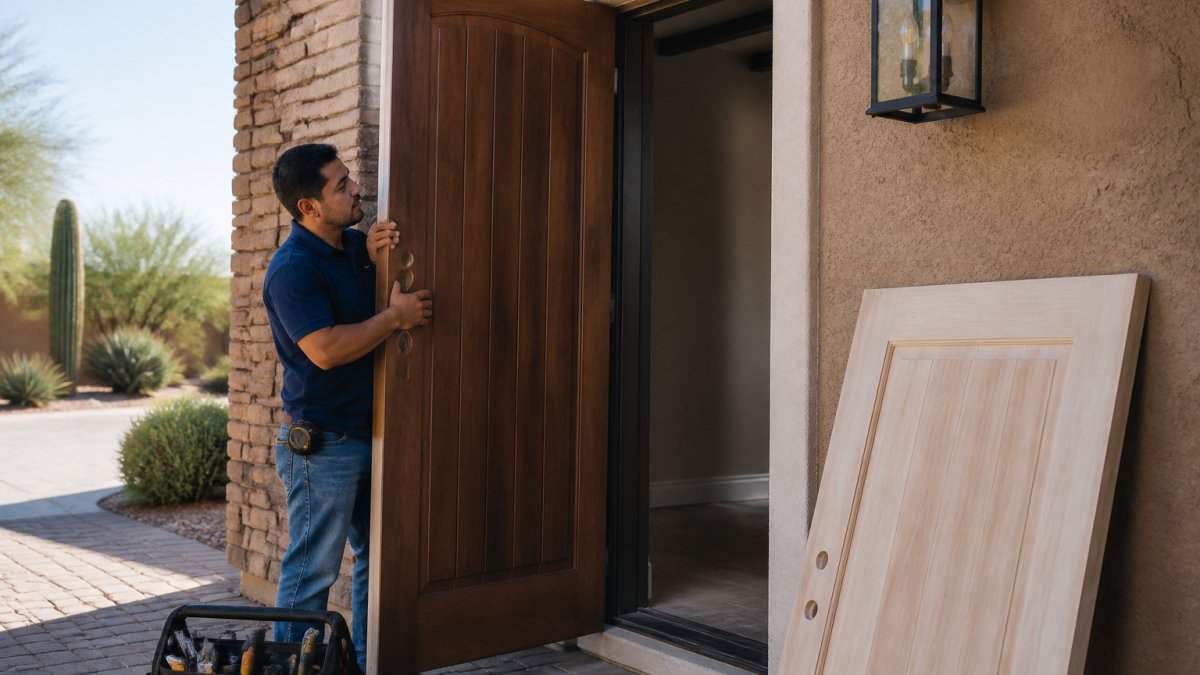
Exterior door installation services are critical because the installation determines the door's performance more than any other factor. A poorly installed door will leak air, allow water intrusion, and fail to operate smoothly.
The process involves more than just hanging the slab. Correct installation addresses the rough opening, verifies structural support, and ensures the door operates without binding against the casing. Proper sealing at the threshold and weatherstripping around the jamb prevents dust infiltration, a common complaint during Arizona's monsoon season.
The Technical Sequence: What a Proper Installation Looks Like
A professional installation follows a precise sequence that protects the door's structural integrity and thermal performance:
-
Rough Opening Inspection: The installer measures the rough opening and checks for square, level, and plumb. In Arizona, where homes settle on expansive clay soils, it is common to find openings out of square by 1/4 inch or more. The installer documents these deviations before proceeding.
-
Old Door and Frame Removal: The existing door, jamb, and casing are removed down to the rough framing. This step often reveals hidden damage, rot at the sill, termite activity, or corroded anchor bolts, that must be addressed before the new door goes in.
-
Sill Pan and Flashing Installation: This is the single most important step for Arizona homes. A properly installed sill pan (a waterproof membrane at the base of the opening) directs any water that penetrates the door system back to the exterior. Flashing tape is applied to the rough opening's sill, jambs, and header, creating a continuous water barrier. Many older Arizona homes lack this, which is why water intrusion and termite damage are common failure points.
-
Door Unit Placement and Shimming: The pre-hung door unit is set into the opening, and shims are placed at the hinge locations, strike plate, and along the jambs to ensure the frame is square and plumb. Over-shimming or using the wrong shim material can cause the frame to bow, leading to binding and air leaks.
-
Anchoring and Insulation: The frame is anchored to the rough opening with screws through the jambs. The gap between the frame and the rough opening is then filled with low-expansion foam insulation. In Arizona, this foam also provides a thermal break, preventing heat transfer through the gap.
-
Threshold Sealing and Weatherstripping: The threshold is set to create a tight seal against the door bottom, and weatherstripping is installed around the jamb. For monsoon season, the threshold must also have a proper drip cap to channel water away from the interior.
-
Final Adjustments and Hardware Alignment: The door is hung, and the lockset, hinges, and strike plate are aligned for smooth operation. A final check ensures the door seals evenly along all edges when closed.
Why Arizona Installation Is Different
Arizona's climate and construction methods create unique installation challenges:
- Expansive Clay Soils: Many homes in the Phoenix and Tucson areas are built on expansive clay that shifts with moisture changes. This movement can cause door frames to rack (twist out of square) over time. A professional installer checks for this and may recommend additional anchoring or adjustable hinges.
- Stucco and Block Construction: Unlike frame construction common in other states, many Arizona homes have concrete block or stucco-over-frame walls. This affects how the door is anchored and how the flashing is integrated. Block walls require masonry anchors, and stucco requires careful cutting and sealing to prevent moisture intrusion behind the finish.
- Monsoon-Driven Water Intrusion: The summer monsoon brings intense, wind-driven rain that tests every seal. A door installed without proper flashing or a sill pan will leak during the first monsoon storm. This is the most common installation failure we see.
- Thermal Expansion: With temperature swings of 40+ degrees in a single day, door frames expand and contract significantly. Installers must leave the correct expansion gap and use fasteners that accommodate movement without loosening.
The Cost of Getting It Wrong
A failed installation in Arizona is not just an inconvenience, it is a financial liability. Common failure modes include:
- Water Intrusion and Rot: A missing sill pan or improper flashing leads to water pooling at the base of the door, rotting the jamb and subfloor.
- Air Infiltration and Energy Loss: A door that does not seal properly leaks conditioned air year-round.
- Dust Infiltration: During monsoon season, fine dust penetrates even small gaps. A poorly sealed door will leave a visible dust line on the interior floor within a single storm.
- Operational Failure: A door that binds or sticks due to improper shimming will wear out hinges and hardware prematurely, requiring replacement within a few years.
What to Look for in an Installer
When evaluating installation services, ask these questions:
- Do you install a sill pan and flashing on every exterior door? (The answer should be yes.)
- What type of anchoring do you use for block or stucco walls?
- Do you use low-expansion foam or fiberglass insulation in the gap?
- What warranty do you offer on the installation labor?
- Can you provide references from homes built in the last 10 years?
A qualified installer will be able to answer these questions confidently and may even point out issues with your rough opening before the work begins. This upfront diligence is what separates a door that lasts 25 years from one that fails in five.
Security Features and Climate-Specific Durability
Security and durability are converging in modern door design. Multi-point locking systems, which engage bolts at the top, bottom, and center of the door, are becoming standard on high-end entry doors because they resist forced entry far better than a single deadbolt. Reinforced hinge-side protection and security strike plates add another layer of defense.
Climate-specific durability goes beyond the door itself. The finish must withstand UV exposure without fading, and the weatherstripping must maintain its seal across extreme temperature swings. Thermal efficiency is another consideration, as a well-insulated door reduces energy costs in both summer and winter. DOE guidance on energy-efficient doors and windows outlines how proper sealing and insulation contribute to overall home efficiency. When specifying a door, verify that the glass, if included, is dual-pane with a low-E coating to reject solar heat gain.
A common mistake is choosing a door based solely on appearance and neglecting the hardware grade. Entry door hardware should be ANSI Grade 1 or Grade 2 for exterior applications to ensure reliable operation over years of heavy use (ansi.org).
Start Your Custom Door Project Today
A custom door project is an investment in your home's curb appeal, security, and energy efficiency. The key is working with a partner who understands the local climate and can guide you through material selection, fabrication, and installation with expert precision. At Arizona Door Store, our family-owned business provides contractors and homeowners with personalized assistance from experienced consultants, reliable local delivery, and a fast turnaround time on both special order and budget-friendly options.
Visit our design centers in Scottsdale and Phoenix to see finished samples, discuss your project with a knowledgeable team member, and get a quote tailored to your specific needs. Get started with Arizona Door Store and build an entryway that stands up to the Arizona sun.
Frequently Asked Questions
How much does a custom door design service in Arizona cost?
Custom door costs vary significantly based on material, size, hardware, and finish. For an accurate estimate, visit the design center for a consultation. Bring your rough opening dimensions and a budget range, and the team will recommend options that fit both.
What is the typical lead time for custom door design and installation?
Lead times depend on the complexity of the fabrication and the materials selected. Simple custom-sized doors from stock materials can be ready in a few weeks. Fully bespoke designs with wrought iron details, custom glass, or specialized hardware may take several weeks longer. The design center will confirm the timeline before fabrication begins. If you are working on a renovation schedule, ask about expedited options. The team is used to coordinating with contractors to keep projects on track.
Do custom door design services include professional installation?
Many custom door design services include exterior door installation services as an add-on, but it is not always automatic. For retrofit projects in older homes with uneven floors or walls that are not plumb, professional installation is strongly recommended. A custom door is only as good as its installation, and proper threshold and casing work is critical for security and weather resistance.
How do I maintain custom exterior doors in a desert climate?
Desert conditions demand specific maintenance. For solid wood doors, plan to refinish or reseal the exterior surface every one to two years to prevent UV damage and cracking. Use a high-quality exterior-grade finish. For iron and aluminum doors, inspect the powder coating annually for chips that can lead to rust. Clean the tracks and hinges of pivot doors regularly to keep them operating smoothly. The right finish options selected during the design phase will reduce your long-term maintenance work.