 ultimate-guide
Durable Exterior Doors for Arizona: A 2026 Guide
Table of Contents
- Why Durable Exterior Doors Matter in Arizona's Climate
- Best Exterior Door Materials for Heat Resistance
- Energy Efficiency and Thermal Resistance in Arid Climates
- UV Protection and Finish Durability
- How to Maintain Exterior Doors in Dry Climates
- Security Hardware and Weatherstripping for Arizona Doors
- Local Building Codes and HOA Restrictions
- Choosing the Right Door for Your Arizona Home
- Frequently Asked Questions
Last Updated: September 26, 2026
Why Durable Exterior Doors Matter in Arizona's Climate
Arizona's extreme heat, intense UV radiation, and low humidity create unique challenges for exterior doors that homeowners and contractors in the region face year-round. Choosing durable exterior doors designed to withstand these conditions isn't just about aesthetics, it directly impacts energy efficiency, security, and long-term maintenance costs. The difference between a door that fails after five years and one that performs reliably for twenty often comes down to material selection and climate-specific design considerations.
This guide walks you through selecting durable exterior doors that handle Arizona's specific demands while maintaining their appearance and functionality.
Best Exterior Door Materials for Heat Resistance
When evaluating materials for durable exterior doors, thermal resistance and durability under extreme heat are the primary factors. Each material responds differently to Arizona's climate, and understanding those differences helps you make a choice aligned with your specific needs.
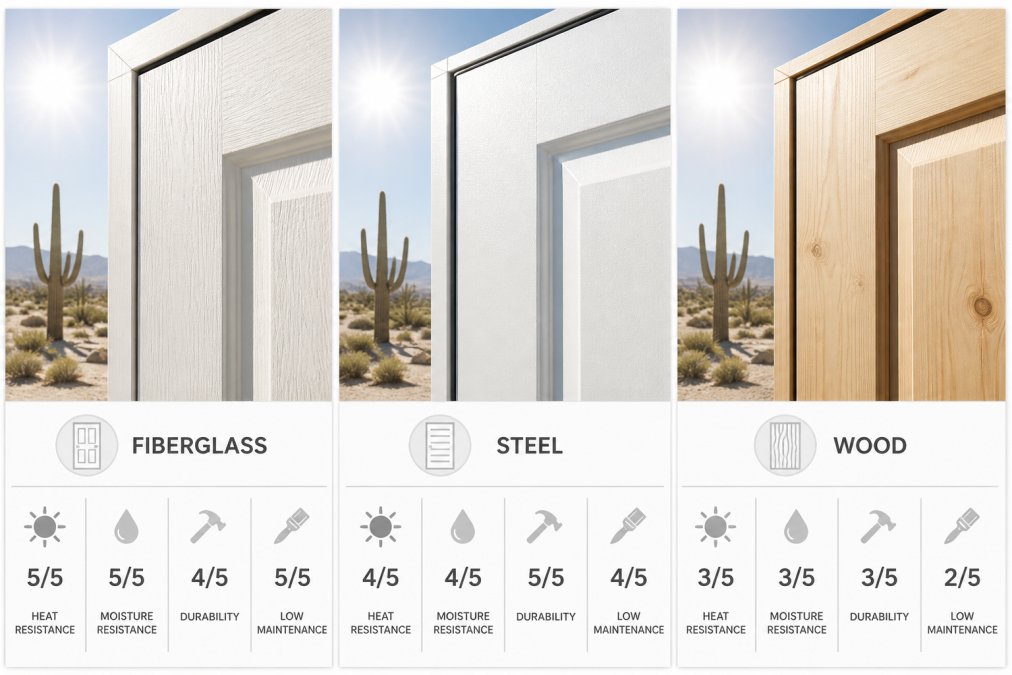
Fiberglass vs Steel Entry Doors: Which Handles Extreme Temperatures Better
Fiberglass doors outperform steel in Arizona's heat because fiberglass doesn't conduct temperature as rapidly as steel does. Steel entry doors absorb and transfer heat more efficiently, which means the interior surface temperature rises faster on hot days. This creates greater thermal stress on the door frame and can cause warping over time if the frame isn't properly insulated. Fiberglass, by contrast, acts as a thermal barrier, the material itself resists heat transfer, keeping interior temperatures more stable.
Steel doors do offer superior impact resistance and security hardware integration, which appeals to some contractors. However, the thermal conductivity issue makes steel less ideal for Arizona's climate unless the door features a polyurethane foam core rated for high-temperature environments. When steel is your preference, look for models with thermal breaks in the frame and core insulation rated above R-5.
Fiberglass doors typically offer better long-term performance in this region. The material resists warping from thermal expansion and contraction cycles, doesn't rust, and maintains structural integrity across the temperature swings Arizona experiences. Most quality fiberglass doors include a polyurethane foam core that provides insulation value, which helps reduce cooling costs. The finish durability also tends to hold up better against UV degradation when properly coated.
| Material | Thermal Resistance | Durability in Heat | Maintenance | Best For |
|---|---|---|---|---|
| Fiberglass | R-6 to R-8 | Excellent | Low | Most Arizona homes |
| Steel (with foam core) | R-3 to R-5 | Good | Moderate | Security-focused projects |
| Wood | R-2 to R-3 | Fair | High | Aesthetic-focused, shaded entries |
Wood Doors in High-Heat Environments
Wood doors present a more complex picture in Arizona. Traditional wood expands and contracts with temperature and humidity changes, sometimes dramatically. Arizona's low humidity and extreme heat create stress patterns that can cause wood to split, warp, or crack. The door slab construction becomes critical: solid wood performs worse than engineered wood with a stable core.
That said, wood doors remain popular for aesthetic reasons, particularly in upscale homes where curb appeal matters. If you choose wood, specify engineered cores rather than solid wood, and ensure the door receives a weather-resistant coating designed for UV protection. The finish durability becomes your primary maintenance concern, resealing every 2-3 years is typical. Many contractors recommend wood doors only for covered entries where they're shaded from direct sun exposure.
Energy Efficiency and Thermal Resistance in Arid Climates
Energy efficiency in Arizona's arid climate focuses on heat reflection and insulation value rather than humidity resistance. Your durable exterior doors should minimize heat transfer into the home, which directly reduces cooling costs. The insulation value of the door core matters more than the frame material in most cases.
Look for doors with polyurethane foam cores. This core material provides genuine thermal resistance, not just a thin layer of insulation. A quality foam core combined with weatherstripping that actually seals creates a barrier that keeps interior temperatures stable even when exterior temperatures spike above 115°F.
Thermal bridging, heat transfer through metal frames or uninsulated sections, undermines energy efficiency.
UV Protection and Finish Durability
Arizona's intense UV exposure degrades door finishes faster than in most regions. The sun doesn't just fade paint or stain, it breaks down the molecular bonds in coating materials, causing chalking, peeling, and color loss within 3-5 years if the finish isn't specifically rated for UV protection.
How to Maintain Exterior Doors in Dry Climates
Maintenance for durable exterior doors in Arizona focuses on preventing UV degradation and ensuring weatherstripping remains effective. The dry climate actually simplifies some maintenance, you don't face the mold and mildew issues that plague humid regions, but it creates specific challenges around finish durability and seal integrity.
Security Hardware and Weatherstripping for Arizona Doors
Security hardware and weatherstripping work together to create a secure, efficient durable exterior door. The hardware must withstand thermal expansion cycles without loosening, and the weatherstripping must maintain a seal despite temperature fluctuations.
Local Building Codes and HOA Restrictions
Arizona building codes include specific requirements for exterior doors related to energy efficiency and structural integrity. The International Energy Conservation Code (IECC), adopted at the state level, sets minimum insulation values for doors in residential construction.
Choosing the Right Door for Your Arizona Home
Selecting durable exterior doors for Arizona comes down to matching material and features to your specific situation. If energy efficiency and low maintenance are priorities, fiberglass with a foam core and UV-protective finish is the best choice. If security or aesthetic preferences lean toward steel or wood, understand the trade-offs: higher maintenance requirements or reduced thermal efficiency.
Frequently Asked Questions
What type of exterior door material is most durable in extreme heat?
Fiberglass and steel doors outperform wood in high-heat environments. Fiberglass resists thermal expansion and contraction better than wood, maintaining its structural integrity through temperature swings. Steel doors offer superior strength but require thermal breaks to prevent heat transfer. Both resist UV degradation far better than wood when finished with quality coatings. Your choice depends on whether you prioritize thermal efficiency (fiberglass) or maximum security (steel).
How do I know if an exterior door has good energy efficiency and durability?
Check for polyurethane foam cores (superior insulation), weatherstripping quality, and low-emissivity coatings that reflect heat. For durability, verify the door slab construction (solid vs. hollow), hardware finish, and UV-resistant topcoats. Request product specifications from your supplier, reputable manufacturers provide detailed thermal resistance values and warranty information.
What maintenance is required to keep exterior doors durable in dry climates?
Annual maintenance prevents premature failure. Clean door frames and weatherstripping quarterly to remove dust and debris that compromise sealing. Inspect threshold seals and door sweeps for gaps. Reapply UV-protective coating to prevent finish degradation. Check deadbolt reinforcement and hardware for corrosion. In extremely dry climates, wood doors may need additional conditioning to prevent cracking. Fiberglass and steel require less maintenance but benefit from regular cleaning and hardware inspection.
Why choose a local supplier instead of ordering doors online?
Local suppliers like Arizona Door Store provide expert guidance specific to regional climate challenges, help you navigate local building codes and HOA restrictions, offer fast delivery to job sites, and ensure doors arrive undamaged and ready for installation. They help solve problems with uneven floors or non-plumb walls that generic online retailers cannot address. You get personalized service, reliable support for your timeline, and access to products proven to perform in your specific climate rather than generic national inventory.
How does thermal expansion and contraction affect exterior doors in Arizona?
Daily temperature swings from cool mornings to intense afternoon heat cause materials to expand and contract. Wood doors are most vulnerable, they can warp, crack, or stick in their frames. Fiberglass handles these cycles better due to its composite structure and lower expansion rate. Steel doors require thermal breaks (insulated sections) to prevent warping from heat absorption. Proper installation with adequate clearance and quality weatherstripping accommodates this movement and prevents binding, gaps, or seal failure.
What is the difference between fiberglass and steel entry doors for heat environments?
Fiberglass doors excel at thermal resistance and insulation value, resisting UV degradation and thermal expansion better than steel. They're lighter and easier to install. Steel doors offer superior impact resistance and security but conduct heat more readily unless they include thermal breaks. Fiberglass typically costs more upfront but requires less maintenance. Steel is more affordable but demands thermal design to prevent heat transfer into the home. Choose fiberglass for maximum energy efficiency; choose steel if security is the priority.
Are there specific building codes in Arizona I need to follow for exterior doors?
Arizona follows the International Building Code (IBC) with state amendments. Exterior doors must meet minimum energy code requirements for U-factor ratings (thermal resistance). Many HOAs impose additional aesthetic restrictions on door color, style, and materials. Security requirements may specify deadbolt standards and door frame reinforcement. Local jurisdictions in Phoenix and Tucson may have specific requirements. Verify requirements with your local building department and HOA before purchasing. A knowledgeable local supplier can help ensure your door selection meets all applicable codes.