 ultimate-guide
Best Exterior Door Materials for Arizona Heat
Table of Contents
- Why Standard Doors Fail in Arizona Heat
- Fiberglass vs Steel Doors for Hot Climates: A Head-to-Head Comparison
- How to Prevent Door Warping from Sun Exposure
- Front Door Maintenance in Desert Weather
- The Best Exterior Door Materials for Arizona Heat: Pros and Cons
- Hardware and Installation Standards for Desert Homes
- Color Selection, Solar Heat Gain, and Warranty Nuances
- Conclusion
- Frequently Asked Questions
Last Updated: September 18, 2026
Why Standard Doors Fail in Arizona Heat
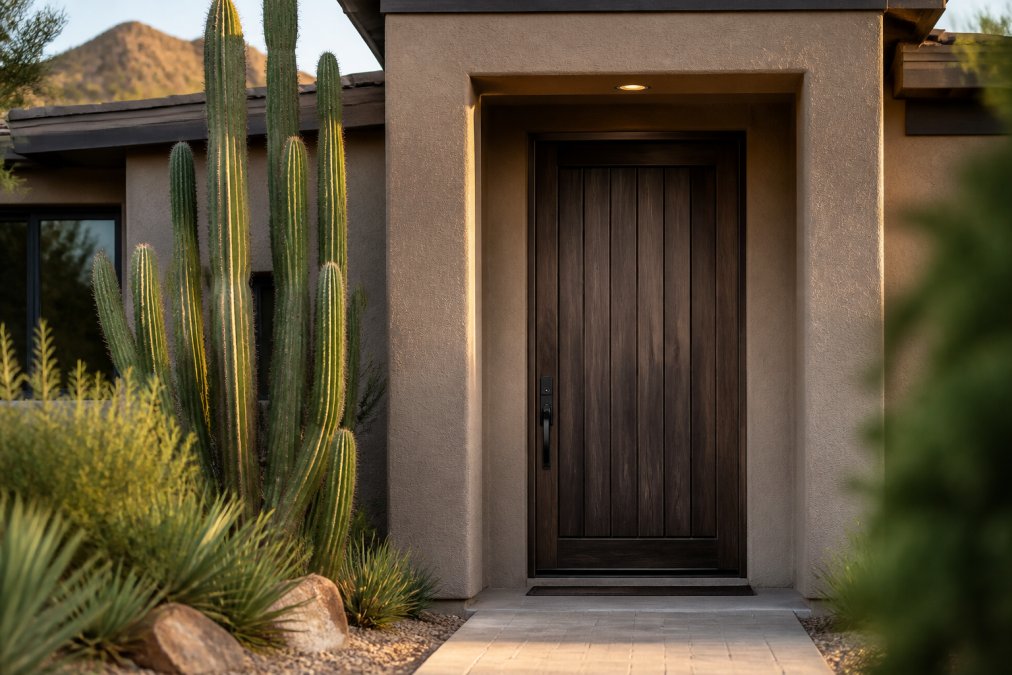
A standard exterior door can look flawless on install day and be a warped, sticking, sun-bleached problem two summers later. At Arizona Door Store, we see it constantly: doors that were never built for sustained heat, direct sunlight, and dramatic day-night temperature swings. Choosing among the best exterior door materials for Arizona heat isn't about the prettiest slab, it's about how a material handles thermal stress over years, not months.
Fiberglass vs Steel Doors for Hot Climates: A Head-to-Head Comparison
Fiberglass and steel are the two leading choices for hot climates. Fiberglass resists heat-driven warping and holds its finish; steel offers strength and security at a lower entry point. The right pick depends on whether you value long-term appearance or upfront cost.
Thermal Performance and Insulation Core
Fiberglass doors typically use a high-density polyurethane foam core, delivering strong R-value and resisting heat transfer through the slab. Steel doors also offer insulated cores, but the metal surface absorbs heat and gets hot to the touch in direct sunlight. For HVAC efficiency, the foam core and the thermal break around the frame matter as much as the surface material, a great core with poor weatherstripping still leaks conditioned air.
Durability and Structural Integrity
Fiberglass holds its shape under extreme heat and resists denting, cracking, and swelling. Steel is strong and secure but can dent, and if the finish is compromised, moisture reaches the metal and causes rust. Wood offers unmatched curb appeal but demands the most attention, since sun exposure causes fading, cracking, and warping without regular care.
How to Prevent Door Warping from Sun Exposure
Warping happens when uneven heat and moisture absorption push a door out of true. To prevent door warping from sun exposure, control three things: material choice, finish quality, and moisture management. Fiberglass and steel resist warping far better than solid wood, which moves with every humidity shift.
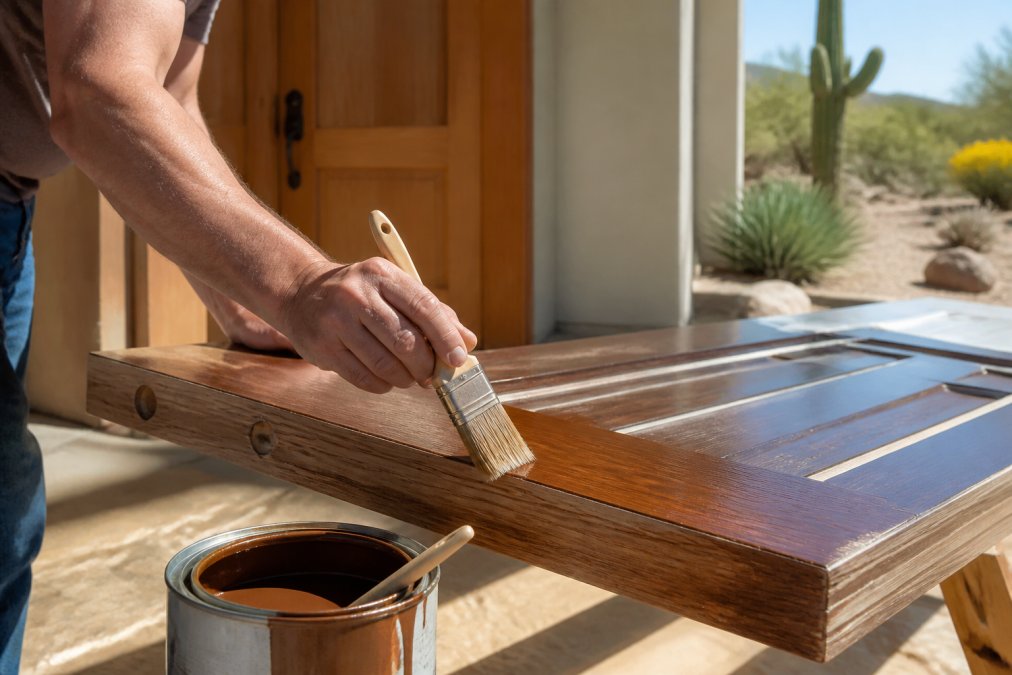
- Seal all six sides of a wood door, including the top and bottom edges
- Keep weatherstripping and the door sweep in good condition
- Repaint or re-stain before you see cracking, not after
- Ensure the door frame itself is plumb and square so the slab isn't stressed
Front Door Maintenance in Desert Weather
Front door maintenance in desert weather is lighter than most people expect, provided you chose the right material. Fiberglass and vinyl need little beyond cleaning and hardware checks. Steel needs its finish inspected so scratches don't invite rust. Wood is the outlier: it needs scheduled sealing, staining, and crack inspection.
The Best Exterior Door Materials for Arizona Heat: Pros and Cons
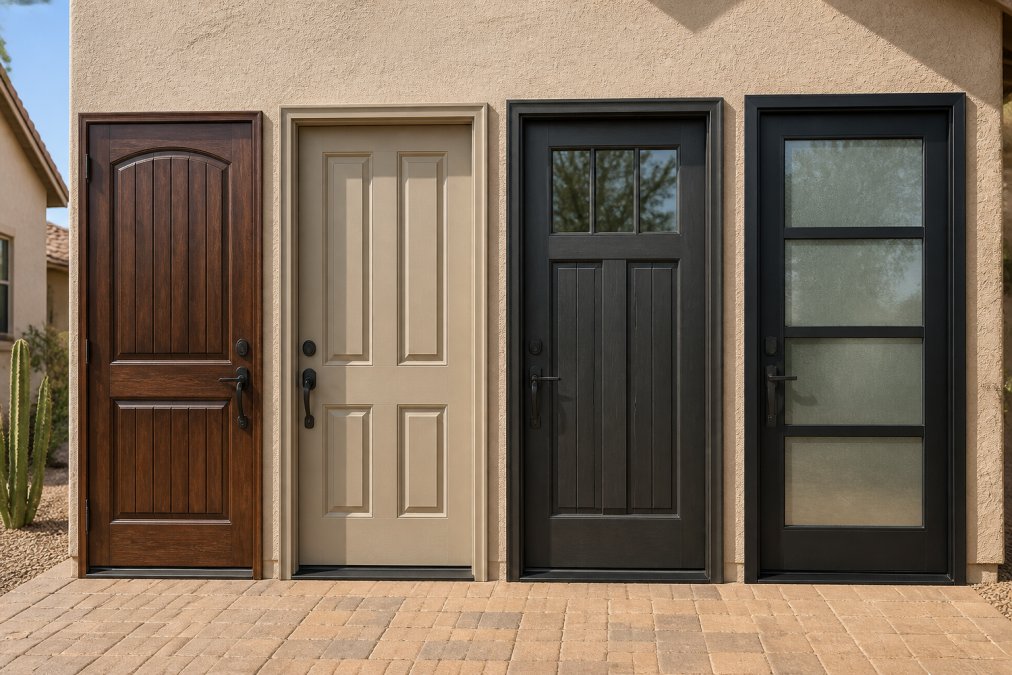
Every material trades something. Fiberglass trades a higher upfront cost for durability and low maintenance. Steel trades appearance for affordability and security. Wood trades maintenance for beauty. Vinyl trades some long-term UV resilience for energy efficiency. Matching material to each opening's exposure and budget separates a door that lasts from one you replace in three years.
| Material | Heat Performance | Maintenance | Best For |
|---|---|---|---|
| Fiberglass | Resists warping and fading | Low | Long-term durability in full sun |
| Steel | Strong, but hot to the touch | Low to moderate | Budget-conscious security |
| Wood | Prone to warping and cracking | High | Custom aesthetics |
| Vinyl | Good thermal insulation | Low | Sliding patio doors |
Fiberglass: The Top Performer
Fiberglass is the best all-around exterior door material for intense sun exposure. It resists warping, swelling, and cracking, and its finish holds up against UV degradation far better than wood. Brands like Therma-Tru fiberglass entry doors build doors specifically to resist warping and fading in extreme heat, using high-density polyurethane foam cores for insulation. The trade-off is a higher initial investment than basic steel.
Steel: Budget-Friendly Security
Steel delivers the most security per dollar and is the most affordable option, a solid pick for budget-conscious projects that still need structural integrity. The drawbacks are real: steel gets hot to the touch in direct sun and it dents. If the factory finish is scratched and left unsealed, rust takes hold.
Wood: Aesthetic Appeal with High Maintenance
Nothing matches the look of a solid wood door. Simpson exterior wood doors offer craftsmanship and custom design that fiberglass imitates but rarely equals. The cost is maintenance. In desert conditions, wood needs regular sealing and staining to prevent sun-induced cracking and warping, and even then it moves with moisture changes.
Vinyl: Energy Efficiency for Sliding Doors
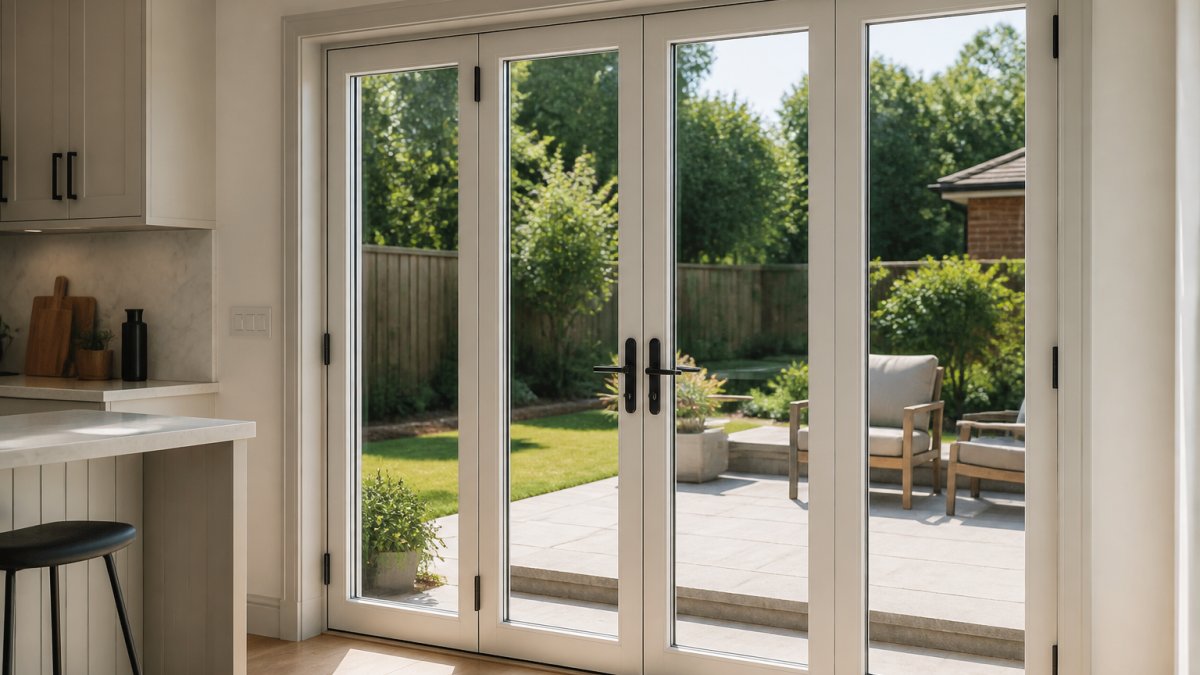
Vinyl shines at patio and sliding-door openings. Multi-chambered frames and Low-E glass coatings reflect heat and deliver strong thermal insulation, helping HVAC efficiency. The caveat: vinyl can degrade under prolonged, intense UV exposure, so quality matters.
Hardware and Installation Standards for Desert Homes
Hardware fails quietly in the heat long before the door slab does, and most buying guides ignore it. On a west- or south-facing entry, a dark metal handle or lockset can reach temperatures high enough to cause a contact burn, and cheap locksets' internal lubricants can thin or cook off, leaving the cylinder stiff or seized.
Hardware That Survives the Heat
- Handles and pulls: Specify hardware with a powder-coated or anodized finish rather than bare polished metal. Dark, uncoated metal absorbs solar heat and holds it. A brushed or light-toned finish stays noticeably cooler to the touch.
- Locksets and deadbolts: Look for ANSI/BHMA Grade 1 or Grade 2 residential hardware. Higher grades mean better internal tolerances that resist binding as the door expands. Avoid no-name builder-grade locksets; their internal lubricant is the first thing to fail in sustained heat.
- Hinges: Use ball-bearing hinges rated for exterior use, and consider a third hinge on taller or heavier slabs. As a door expands and contracts daily, hinges carry the load, and undersized hinges let the slab sag and drag on the threshold.
- Thresholds and sweeps: A metal or composite threshold with an adjustable riser lets you re-seal the gap as the door and frame move seasonally. A fixed threshold cannot be tuned, so it leaks dust and air once the door settles.
Why Installation Matters More Here Than Almost Anywhere
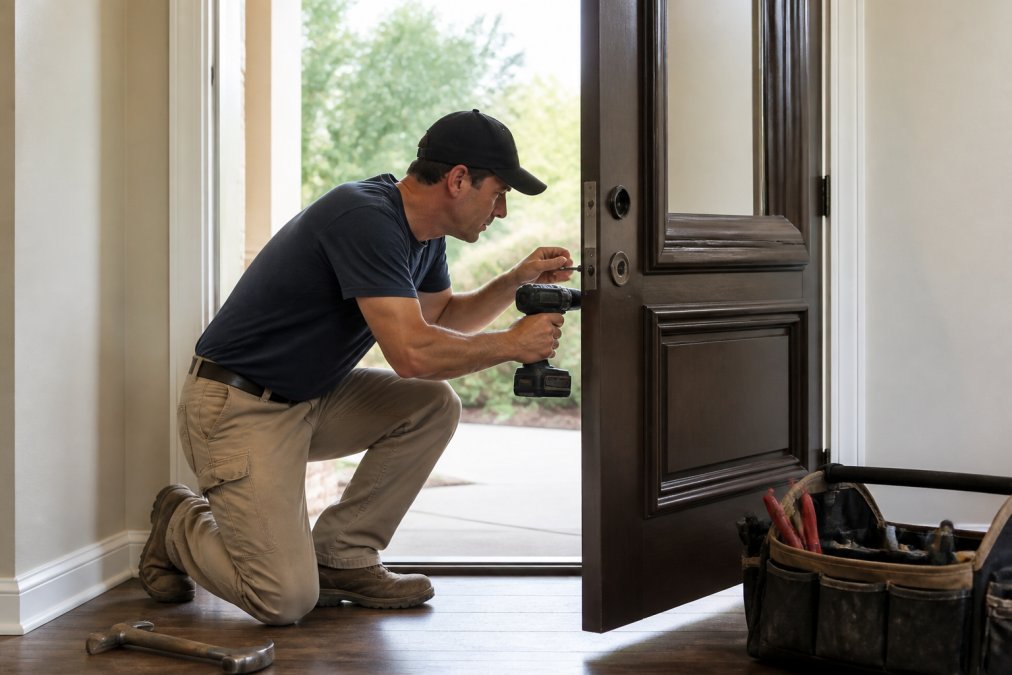
A door set into a frame that isn't plumb and square will bind as temperatures swing. In older homes with uneven floors and walls that aren't true, the installer must shim and adjust rather than force a fit, a forced fit leaves the slab stressed, and stressed slabs warp faster under heat.
- Clearance. Leave the manufacturer's specified gap around the slab. Too tight and the door binds in summer; too loose and it leaks air and dust year-round.
- Sealing the perimeter. Weatherstripping and threshold seals are what actually keep fine desert dust out. Dust infiltration is a major complaint in this climate, and it comes through the gaps around the slab, not through the slab itself. A door with an excellent core but worn seals still lets conditioned air escape and grit inside.
Color Selection, Solar Heat Gain, and Warranty Nuances
Color choice isn't just curb appeal. It affects how hot a door surface gets, how fast its finish breaks down, and whether the manufacturer will stand behind it, the part most guides skip, and where expensive surprises live.
How Color Drives Surface Temperature and Lifespan
Dark colors absorb more solar radiation and reach higher surface temperatures than light colors under the same sun. A dark-painted door on a west-facing wall soaks up afternoon heat, stressing the finish and the material beneath it. Over years of daily expansion and contraction, a dark door in full sun shows finish breakdown, fading, and surface checking sooner than a light-colored door on the same wall.
The practical guidance:
- Light and mid-tone colors reflect more solar energy and run cooler. They are the safer choice for west- and south-facing entries that take direct afternoon sun.
- Dark colors are workable, but they put more thermal load on the door and its finish. If you want a dark door, choose a material and factory finish rated for it, and expect to inspect the finish more often.
- Factory finishes generally outperform field-applied paint because they cure evenly and are formulated for UV resistance. On a fiberglass or steel door, the factory finish is part of the product's heat story, not just its look.
Solar Heat Gain, in Plain Terms
The solar heat gain coefficient (SHGC) measures how much solar radiation passes through a door or its glass and ends up as heat inside. Lower values mean less heat entering. On a door with glass, the glazing and any Low-E coating drive the SHGC; on a west-facing entry, the difference between a low-SHGC door and plain clear glass shows in how hard your cooling system works.
Warranty Nuances for High-Heat Exposure
This is the fine print that catches people. Many door and finish warranties shorten or exclude coverage for damage tied to extreme heat, prolonged UV exposure, or improper installation. A finish that fails in full sun may not be covered the way a buyer assumes, and some manufacturers treat direct, unshaded southern or western sun as an excluded condition.
Before you buy:
- Read the finish warranty separately from the structural warranty. They are often different documents with different terms.
- Look specifically for exclusions naming UV exposure, fading, heat, or unshaded sun.
- Confirm whether the warranty requires a specific installation method or a protected overhang, since a voided installation can void the finish coverage too.
- Keep your installation documentation and receipts. Warranty claims often hinge on proof of proper installation.
Conclusion
Getting the material right is the difference between a door that survives a decade of summers and one you replace twice. Match material to each opening's sun exposure and your maintenance appetite, then get the frame, hardware, and seals right.
Frequently Asked Questions
What type of front door is best for extreme heat?
Fiberglass doors are the best choice for extreme heat. They resist warping, cracking, and swelling because they don't absorb moisture like wood. Their polyurethane foam core provides high R-value insulation, keeping your home cooler. Unlike steel, fiberglass doesn't become hot to the touch and won't dent. Look for doors with UV-resistant finishes to prevent fading from direct sunlight exposure.
Do fiberglass doors warp in high temperatures?
No, fiberglass doors are engineered to resist warping in high temperatures. The composite material expands and contracts minimally compared to wood or vinyl. This dimensional stability is why fiberglass is a top recommendation for desert climates. However, proper installation is key. Ensure the door frame is secure and the door is hung with adequate clearance to allow for thermal expansion without binding.
Is steel a good choice for front doors in direct sun?
Steel doors offer high security and are budget-friendly, but they have drawbacks in direct sun. The surface can become very hot to the touch, posing a burn risk. Steel also dents easily and can rust if the finish is scratched. While an insulated steel door provides decent thermal performance, its finish may fade or chalk faster than fiberglass under intense UV radiation.
How often should you refinish a wood door in high-heat environments?
In high-heat environments like Arizona, a wood door may need refinishing every 1-2 years to prevent sun-induced cracking and fading. The intense UV radiation and low humidity cause wood to dry out and lose its protective finish quickly. Regular maintenance is essential to maintain the door's structural integrity and appearance. For a lower-maintenance option, fiberglass doors mimic wood's look without the frequent upkeep.
What are the most energy-efficient door materials for desert homes?
Fiberglass and vinyl are the most energy-efficient door materials for desert homes. Both can be built with insulated cores (polyurethane foam) and multi-pane glass with Low-E coatings. These features improve thermal conductivity and reduce solar heat gain coefficient, easing the load on your HVAC system. Look for doors with high R-values and tight weatherstripping to maximize energy efficiency.
How does direct sun exposure affect exterior door finishes?
Direct sun exposure causes UV degradation, leading to fading, chalking, and cracking of exterior door finishes. Darker colors absorb more heat, accelerating this damage. Wood finishes break down and require frequent refinishing. Steel paint can fade and peel. Fiberglass with a UV-resistant finish holds up best. Choosing a lighter color with a high solar heat gain coefficient rating can also reduce heat absorption and prolong finish life.