 ultimate-guide
Why Professional Door Installation Matters
Table of Contents
- Why Professional Door Installation Matters for Your Home
- Warranty Protection and Manufacturer Requirements
- Common Door Installation Mistakes Homeowners Make
- Energy Efficiency and Thermal Insulation Benefits
- DIY vs Professional Door Installation: What You Need to Know
- Door Installation Cost Estimate and Long-Term Savings
- Structural Integrity and Safety Considerations
- Conclusion
- Frequently Asked Questions
Last Updated: September 21, 2026
Why Professional Door Installation Matters for Your Home
Professional door installation ensures your home remains secure, energy-efficient, and structurally sound. Correct installation means the door performs as designed. Improper installation causes drafts, security vulnerabilities, moisture damage, and premature hardware wear.
The difference between DIY and professional installation comes down to precision, building code knowledge, and handling structural quirks. This guide explains why professional door installation matters, what goes wrong when corners are cut, and how to evaluate installer quality.
Warranty Protection and Manufacturer Requirements
Most quality door manufacturers require professional installation to honor their warranty. DIY installation voids this protection.
Manufacturer warranties cover defects only when doors are installed per specifications, exact measurements for rough openings, shimming, sealant, and hardware calibration. A manufacturer won't honor claims if installation is found incorrect, even if the defect is unrelated to the error.
Professional installers know which doors require specific flashing systems, how to handle thermal expansion in Arizona's climate, and when reinforcement is necessary. This knowledge protects your investment and ensures warranty recourse if problems arise.
Professional installation typically includes a workmanship guarantee from the installer.
Common Door Installation Mistakes Homeowners Make
The most frequent mistake is underestimating precision requirements. A door off by a quarter-inch creates binding, uneven gaps, and hinge stress that causes sagging, hardware failure, and closure problems.
Improper shimming is a major issue. Too many shims create pressure points that warp the frame; too few leave it misaligned. The frame must be perfectly plumb and square.
Sealant application is where many DIY attempts fail silently. Gaps allow air infiltration and moisture, leading to mold, structural damage, and energy loss. Professional installers know exactly where and how much sealant is needed for Arizona's climate.
Hardware calibration is often overlooked. Hinges, closers, and locks need precise alignment and adjustment. Skip this, and your door won't operate smoothly or securely.
Energy Efficiency and Thermal Insulation Benefits
In Arizona's climate, improper door installation creates air infiltration, forcing your HVAC system to work harder and driving up utility costs year-round.
Professional installation ensures proper weather stripping, perimeter sealing, and thermal insulation. A high-performance door installed incorrectly performs like a standard door; a standard door installed correctly outperforms a high-performance door installed poorly.
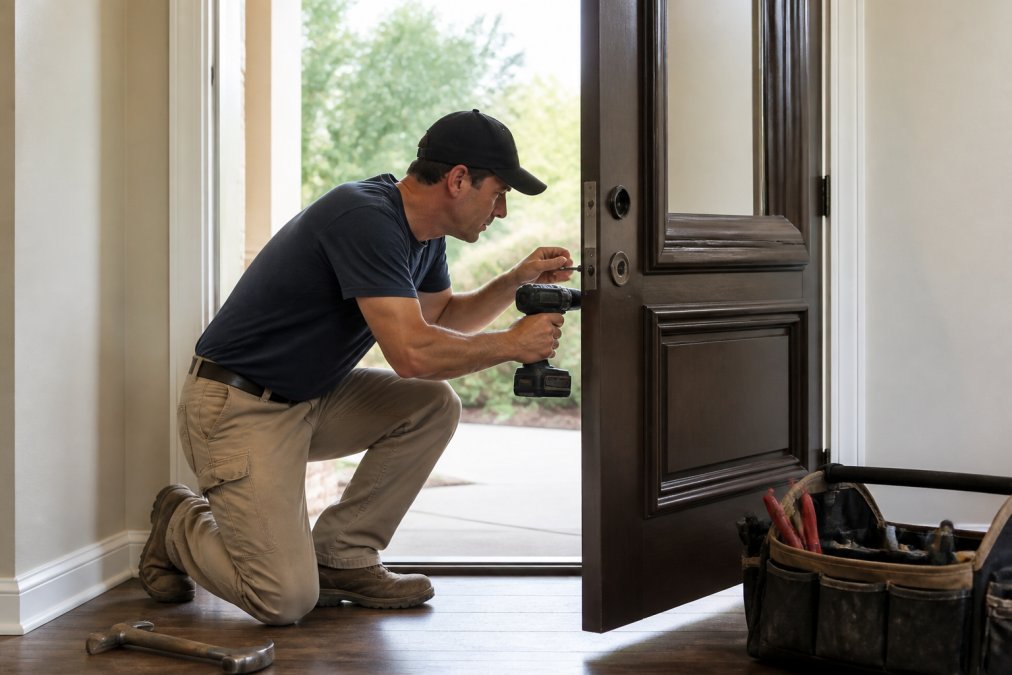
Installers use expanding foam to fill gaps between frame and rough opening, then seal the perimeter with caulk. This creates a barrier against air and moisture infiltration while providing structural support and sound dampening. Homeowners often skip or carelessly apply sealant, negating energy performance.
The threshold must be perfectly level and properly sealed to prevent air and water infiltration. Professional installers adjust door sweeps to create an effective seal without binding.
DIY vs Professional Door Installation: What You Need to Know
The choice between DIY and professional installation depends on skill, tools, and risk tolerance. If hiring a professional, evaluating their qualifications is critical.
When DIY Installation Is Realistic
DIY works best when you have prior installation experience, the opening is standard size (36" × 80"), walls are plumb and square, you have required tools, you've reviewed manufacturer specs and local codes, and you accept responsibility for mistakes.
When Professional Installation Is Necessary
Professional installation is necessary when:
- The opening is non-standard, or the walls are out of plumb by more than 1/4 inch
- The door is high-performance (thermal-rated, impact-resistant, or solid core) where installation precision directly affects performance
- You want the manufacturer warranty honored (most require professional installation)
- The door is load-bearing or in a structural wall
- The door is in a fire-rated wall or high-wind zone requiring code-compliant installation
- You need the work completed quickly and correctly the first time Such rigorous standards underscore the importance of installation precision, a principle that remains equally vital when securing heavy cabinetry to structural framing.
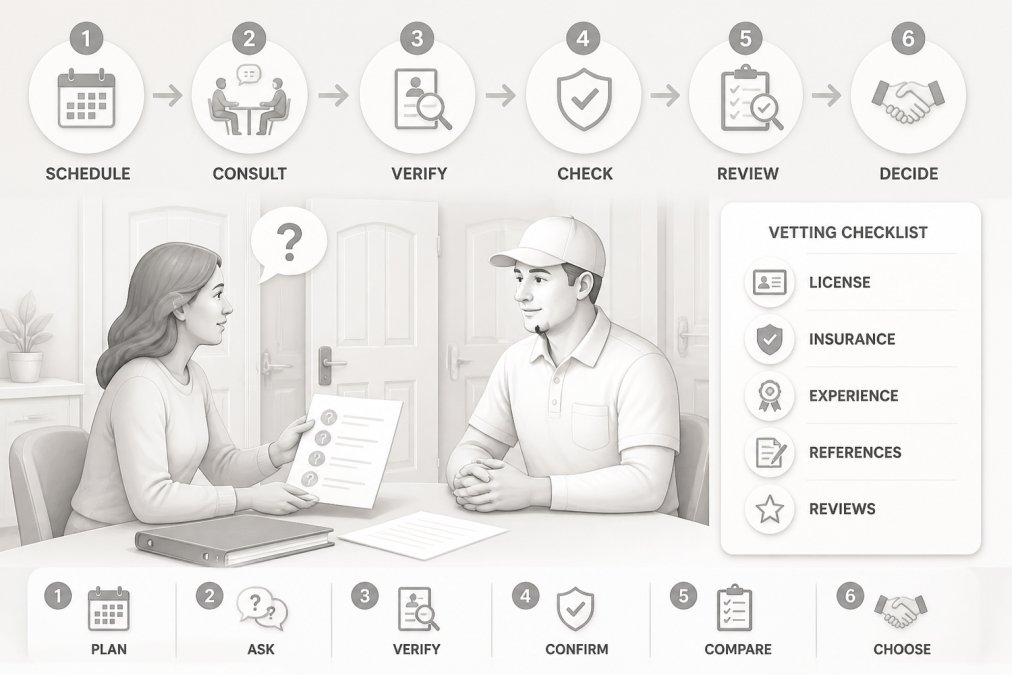
How to Vet a Professional Installer: Questions to Ask
Before hiring, ask these questions:
- Licensing and Insurance: Verify state contractor license and general liability/workers' compensation coverage.
- Manufacturer Certification: Ask if certified by door manufacturers (Andersen, Pella, Marvin, etc.).
- Building Code Knowledge: Can they discuss code requirements for your situation (exterior vs. interior, load-bearing, wind zone)?
- Warranty Coverage: What workmanship warranty do they offer, and for how long? Get it in writing.
- References: Request three recent references and ask about timeliness, quality, post-installation issues, and responsiveness.
- Non-Standard Situations: Ask how they'd handle out-of-plumb walls, look for specific techniques, not generic answers.
- Materials: What sealant and flashing materials do they use, and why?
- Process: Can they walk through frame prep, shimming, fastening, sealing, hardware adjustment, and final inspection?
Red Flags to Avoid
- Installer has no references or refuses to provide them
- Installer is not licensed or insured
- Installer quotes a price significantly lower than competitors without explaining why
- Installer dismisses manufacturer specifications or building code requirements
- Installer offers no written warranty on their work
- Installer cannot explain their shimming, sealing, or hardware adjustment process
- Installer rushes the job or suggests skipping steps to save time
The Cost-Benefit Reality
The cost difference between DIY and professional installation is often smaller than homeowners expect. Add in the cost of tools you'll buy and use only once, plus hours of your time, and the financial advantage of DIY narrows significantly. For most homeowners, professional installation is the more cost-effective choice when you factor in the risk of doing it wrong.
Door Installation Cost Estimate and Long-Term Savings
Professional door installation protects you from hidden costs that emerge when the work isn't done right. Understanding the true financial impact of DIY failure versus professional installation requires looking at the total cost of ownership, not just the upfront labor price.
The Hidden Costs of DIY Installation Failure
When a door is installed incorrectly, the financial damage extends far beyond the initial mistake. Here's what typically happens:
-
Premature hardware failure: Misaligned hinges and improper shimming create stress that causes hinges to fail prematurely.
-
Air infiltration and energy loss: An improperly sealed door frame can increase heating and cooling costs annually.
-
Moisture damage and mold remediation: Gaps in sealant allow water infiltration into wall cavities. Mold remediation or larger moisture damage requiring repair can be costly. Insurance may not cover moisture damage caused by improper installation, classifying it as a maintenance failure rather than a covered loss.
-
Reinstallation costs: If the door binds, won't seal properly, or creates security gaps, removing and reinstalling it professionally can be a significant expense.
-
Security vulnerabilities: A door that doesn't close securely or has gaps in the frame can affect your homeowner's insurance. Some insurers may adjust premiums or deny claims related to break-ins if the door installation is found to be substandard.
Real-World Total Cost Comparison
Consider a standard exterior door installation:
- Professional installation: (one-time cost)
- DIY installation with initial failure: can lead to significant hidden costs from hardware replacement, excess energy costs, moisture damage remediation, and reinstallation labor.
Even if the DIY installation doesn't fail catastrophically, the energy loss alone means professional installation can pay for itself through energy savings.
Long-Term Value
A professionally installed door that performs correctly for 20+ years is far more cost-effective than a DIY installation that requires repairs, energy waste, or replacement within 5-10 years. When evaluating the cost of professional installation, factor in the warranty protection, the energy efficiency gains, and the elimination of structural and security risks.
Structural Integrity and Safety Considerations
A door frame is part of your home's structural system. It supports the weight of the door, withstands wind loads, and maintains the integrity of the wall. Improper installation compromises this structural function.
When a door frame isn't properly shimmed and secured, it shifts under load. The hinges carry stress they weren't designed for. The frame warps.
Conclusion
Professional door installation is an investment in your home's security, energy efficiency, and long-term structural integrity. A properly installed door performs as designed, maintains its warranty protection, and avoids the hidden costs of repairs that come from cutting corners.
Frequently Asked Questions
Does professional installation affect door warranty coverage?
Yes, significantly. Most manufacturers require professional installation by a certified installer to honor the warranty. DIY installation or use of uncertified installers typically voids manufacturer warranties on defects, hardware, and finish. This means any issues with the door frame, hinges, or seal after DIY installation become your financial responsibility. Professional installation protects this coverage and ensures your investment is protected long-term.
What are the most common door installation mistakes?
The most frequent errors include improper shim placement (causing misalignment), inadequate weather stripping and sealant application, failing to check for plumb and level before securing hinges, and incorrect threshold adjustment. These mistakes lead to air infiltration, moisture damage, and premature wear on hardware. Professional installers follow installation standards that account for structural variations and ensure proper alignment, preventing these costly failures.
How much does professional door installation typically cost versus DIY?
Professional installation costs depend on door type, complexity, and local labor rates. However, the cost-benefit analysis often favors professionals: a single failed DIY installation can lead to significant costs in repairs, moisture damage, and potential HVAC inefficiency. Professional workmanship prevents these hidden costs and maintains thermal insulation performance. For accurate pricing on your specific project, contact a local installer or supplier for a detailed estimate.
Why is proper door alignment critical for energy efficiency?
Precise alignment ensures proper weather stripping contact and perimeter seal integrity, which directly reduces air infiltration and improves HVAC efficiency. Misaligned doors allow conditioned air to escape, forcing your heating and cooling system to work harder and increasing energy costs year-round. Professional installation includes hardware calibration and threshold adjustment to maintain this seal, protecting your long-term energy efficiency and home security.