 Comparison
Steel Doors in Phoenix: Pros, Cons, and Heat Performance
Quick Summary
Steel doors are a popular Phoenix entry choice because they offer strong security and lower upfront cost than many alternatives. Their drawbacks include denting, rust risk when the finish is damaged, weight, and heat conduction unless the door has a good insulated core and seals.
- Steel offers strong security and resists forced entry better than many door materials.
- Steel is usually less expensive upfront than fiberglass or solid wood.
- Steel can dent, and chipped paint can let rust start on the surface.
- Ask for the whole-door U-factor when comparing models, since lower means better insulation.
- Choose light or reflective finishes and add shade to reduce heat on a sun-exposed entry.
Table of Contents
- Why Phoenix Homeowners Consider Steel Doors
- The Main Advantages of Steel Doors
- Steel Door Disadvantages to Weigh Before Buying
- Steel Doors in Hot Climates: Heat and Sun Exposure in Phoenix
- Steel vs. Fiberglass Entry Doors for Phoenix Homes
- Steel Door Lifespan and Maintenance Schedule
- Choosing Your Steel Door: Next Steps for Your Project
- Frequently Asked Questions
Steel doors are one of the most common entry-door choices in Phoenix, and for good reason. They offer strong security and solid resistance to forced entry, and they are often priced below many alternatives. They also come with trade-offs, especially under the intense desert sun. This guide walks through the real pros and cons of steel doors in Phoenix, including how they handle heat, what they cost to keep up, and how they compare with fiberglass.
Our goal is an objective breakdown. Steel is a good fit for many Phoenix homes, but it is not the right answer for every one.
Why Phoenix Homeowners Consider Steel Doors
Phoenix homeowners look at steel doors for three main reasons: security, price, and durability. An entry door is often the first barrier against a break-in, and steel is widely regarded as one of the stronger materials for that job. Sources comparing door materials, such as The Window Depot's comparison of fiberglass, steel, wood, and iron doors, describe steel as offering better security at a lower cost than several alternatives.
Homeowners also pick steel because it holds up to daily wear. A well-built steel door resists warping and can take years of use without the kind of swelling or cracking that affects wood.
The Main Advantages of Steel Doors
Steel's biggest advantage is security. The material is difficult to force, and a steel slab paired with a reinforced frame and quality hardware makes a strong entry point.
Other advantages include:
- Strength: Steel resists dents better than many door materials, though it is not dent-proof.
- Lower cost: Steel is usually less expensive upfront than fiberglass or solid wood.
- Insulated options: Many steel doors come with an insulated foam core that improves thermal performance.
- Low maintenance: A factory-applied finish requires little routine care.
4feldco's overview of steel door advantages and disadvantages covers security, energy efficiency, durability, and maintenance as the core benefits to weigh.
Steel Door Disadvantages to Weigh Before Buying
Steel has real drawbacks, and a fair comparison has to name them.
Denting. Steel can dent from impacts such as furniture, deliveries, or a stray bicycle. A dent can be cosmetic, but it can also expose the substrate underneath.
Rust risk. Steel rusts when the finish is damaged. Chipped paint is the usual entry point for corrosion, and that is a particular concern on exposed exterior doors. 4feldco's guide to steel door drawbacks flags chipped paint as a path to rust.
Weight. Steel doors are heavier than fiberglass, which can make installation harder and may require stronger hinges and framing.
Energy performance. Steel conducts heat more readily than wood or fiberglass unless the door has a well-insulated core and good weatherstripping. To understand how these ratings translate into thermal performance, see what a good U-factor for exterior doors looks like. Ask for the door's U-factor rating when you compare models. A lower U-factor indicates better insulation.
Cost of upgrades. Decorative glass, custom designs, and high-end finishes can raise the price. Pricing depends on the door, the glass package, and the hardware, so ask Arizona Door Store for a current quote.
Steel Doors in Hot Climates: Heat and Sun Exposure in Phoenix
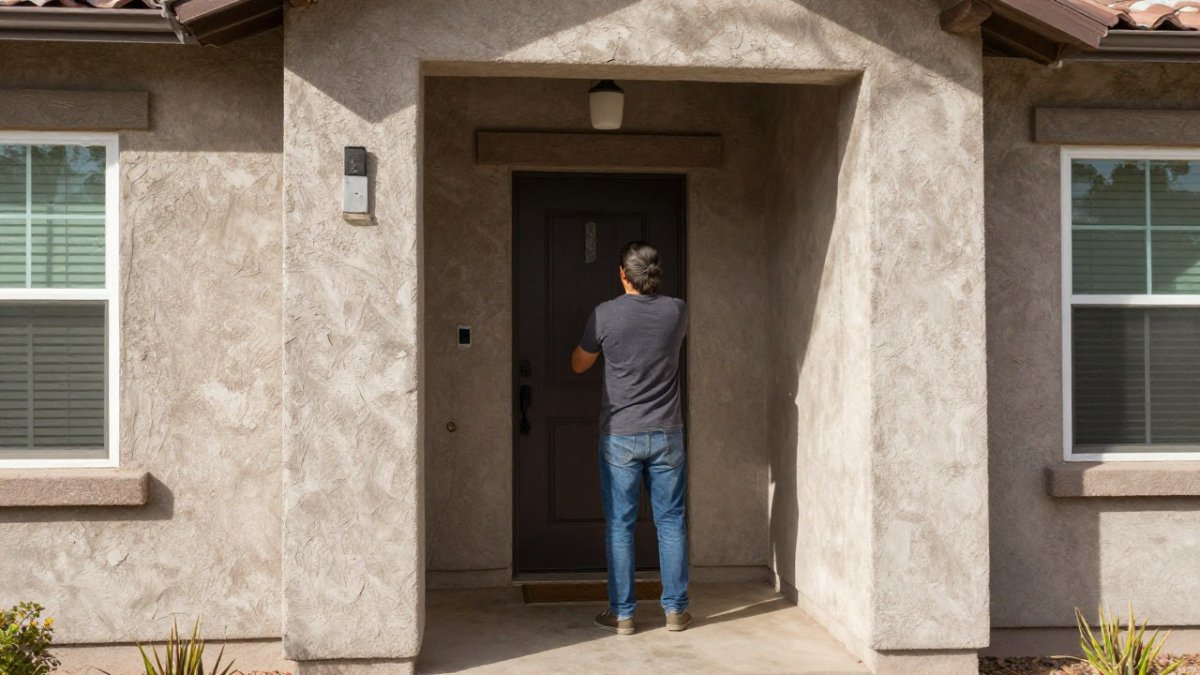
Heat is where this market differs from most. On a summer afternoon, an unshaded west- or south-facing exterior door can reach surface temperatures far above the air temperature, and steel, being a conductor, moves that heat inward quickly. A dark-painted steel slab in direct afternoon sun can become hot enough to be uncomfortable to touch, and that heat load transfers to the frame, the seals, and eventually the room behind it.
The mechanism matters more than the slogan. Steel has a high thermal conductivity, so an uninsulated slab conducts heat readily between outdoors and indoors. Three things interrupt that path: an insulated core (polyurethane or polystyrene foam), a thermal break in the frame and threshold, and weatherstripping that stops hot air from leaking around the edges. A door with a good core but worn seals still underperforms, because air infiltration bypasses the insulation entirely.
When you compare models, ask for the whole-door U-factor rather than the core's R-value. U-factor measures the entire assembly, slab, frame, glass, and spacers, and a lower number means better resistance to heat flow. Also ask about solar heat gain coefficient (SHGC) if the door has glass; a low SHGC reduces the radiant heat that comes through the panel. These are metrics used in National Fenestration Rating Council (NFRC) ratings, and they let you compare two steel doors on performance rather than marketing language.
Practical ways to manage heat in a desert entry:
- Choose light or reflective finishes. Lighter colors absorb less solar radiation than dark ones, and a reflective or cool-roof-style coating can lower surface temperature further.
- Add shade. A covered porch, deep overhang, or shade screen cuts direct sun exposure during the worst afternoon hours.
- Insulate the core and seal the edges. A foam-filled slab plus a thermally broken threshold and quality weatherstripping reduces heat transfer at both the panel and the perimeter.
- Size and place glass carefully. Large unshaded glass panels admit heat as well as light; low-SHGC glazing and shaded placement help.
- Mind the color of the frame and trim, too. Dark trim around a light door still absorbs heat and can raise temperatures at the edges where seals live.
Steel also expands and contracts with temperature swings, and daily swings in the desert are large. A door installed with correct clearances and shimmed hinges will move without binding; one forced into a tight frame can rub, wear the finish at the edges, and stress the weatherstripping. That is why installation quality matters as much as the slab itself in a hot climate.
A door that faces the afternoon sun with no overhang and a dark finish will generally run hotter than the same door on a shaded wall, so judge any model against your actual exposure rather than a showroom sample.
Steel vs. Fiberglass Entry Doors for Phoenix Homes
Fiberglass is the main alternative to steel, and the two suit different priorities.
| Factor | Steel | Fiberglass |
|---|---|---|
| Security | Strong | Good, depends on construction |
| Upfront cost | Generally lower | Generally higher |
| Weight | Heavier | Lighter |
| Dent resistance | Moderate, can dent | Strong |
| Rust risk | Yes, if finish is damaged | None |
| Heat in direct sun | Can run hot without good finish | Insulates better in many models |
Steel tends to lead on security, while fiberglass tends to lead on dent resistance and rust immunity. For a Phoenix home with heavy direct sun on the entry, fiberglass is often the easier choice to live with, while steel remains a strong option when security and budget come first.
Steel Door Lifespan and Maintenance Schedule
A well-maintained steel door can last for many years, and lifespan depends on the finish and the seals as much as on the steel itself. The slab is painted at the factory to keep moisture away from the metal; once that barrier is breached, corrosion starts at the breach and spreads under the surrounding paint. In a sunny, dusty climate, the two biggest enemies are ultraviolet exposure that breaks down paint and caulk, and dust that traps moisture against hinges, thresholds, and the bottom edge of the door.
A practical schedule:
- Monthly: Wipe the surface and the bottom sweep, and check the threshold and weatherstripping for gaps, hardening, or tears. Dust buildup on the sweep holds moisture against the door's bottom edge, which is a common rust starting point.
- Every six months: Inspect for chips, scratches, and early rust spots, especially along the edges, the bottom rail, and around hardware. Touch up bare metal promptly with a matching paint or primer, bare steel exposed to moisture will rust, and a small chip is far cheaper to fix than a rusted-through panel.
- Once a year: Check hinges, lock hardware, and the strike plate; tighten loose screws and lubricate hinges. Also inspect the caulk line between the frame and the wall, since failed caulk lets water in behind the frame.
- As needed: Repair dents before they crack the finish, and replace worn weatherstripping promptly. A dent that breaks the paint is a corrosion site, not just a cosmetic issue.
Corrosion prevention comes down to three habits: keep the finish intact, keep water from sitting against metal, and keep the seals working. Pay particular attention to cut edges and the bottom of the door, where factory coating is thinnest or absent. If you live where blowing dust is common, rinse the door and frame periodically rather than dry-wiping, so grit does not abrade the paint.
Installation also affects how long a door lasts. A door hung with proper clearances and adequate hinge support wears more slowly than one that binds, because binding flexes the slab and stresses the finish at the edges. If the frame is not reinforced for a heavy steel door, hinges can pull loose over time and the door can sag, which then distorts the seals.
Watch out: a door that looks fine on the face can be rusting along the bottom edge or behind the hinges, so check those hidden areas during every inspection rather than judging by the visible panel alone.
Choosing Your Steel Door: Next Steps for Your Project
Start with your priorities. If security and budget lead the list, steel is a strong fit for most Phoenix homes. If heat exposure and dent resistance matter more, weigh fiberglass carefully. Either way, pick a model with a quality insulated core, good weatherstripping, and a finish suited to desert sun.
Next, measure your opening, confirm the frame can support the door's weight, and ask about the U-factor and warranty. If you are unsure whether your current door needs replacing, the warning signs that point to a new exterior door can help you decide. Arizona Door Store can help you compare options and get a quote based on your project. Browse our door selection for exterior and entry projects to see what is available, and read our guide to wood door alternatives if you are weighing other materials.
Frequently Asked Questions
What are the downsides of steel doors?
Steel doors can dent from impacts, and chipped paint can expose bare metal to rust, especially on exterior surfaces. They are also heavier than many alternatives, which can make installation more demanding and may require reinforced framing. In hot, sunny conditions such as Phoenix, a dark steel door can absorb significant heat, so color, finish and shading matter. Regular inspection of the finish and prompt touch-up of chips help prevent most problems. Pricing varies by size, finish and glass options, so request a quote from Arizona Door Store for current figures.
What is the life expectancy of a steel door?
A well-maintained steel door can last for many years, and its lifespan depends largely on finish care, exposure to sun and moisture, and the quality of installation. Keeping the paint or coating intact prevents corrosion, while periodic cleaning and checking weatherstripping and hardware extend service life. Doors with reinforced frames and quality hinges and strike plates tend to hold up better under daily use. Arizona Door Store can advise on specific products for your project.
Do steel doors get hot in direct sunlight?
Yes, a steel door facing direct afternoon sun can become noticeably hot to the touch, particularly in darker colors. Phoenix's extended summer heat makes this more pronounced. Choosing lighter colors, adding a covered porch or shade, and selecting a door with an insulated core can reduce heat transfer into the home. Discuss color and glass options with a consultant at Arizona Door Store before ordering.
How do steel doors compare with fiberglass doors?
Steel doors generally offer strong forced-entry resistance and a lower material cost, while fiberglass doors are often valued for lower maintenance and resistance to denting and rust. Fiberglass can also be finished to resemble wood. Both can be insulated, so energy performance depends more on core and weatherstripping than on material alone. Your choice should reflect budget, security priorities and how much finish maintenance you are willing to do. Arizona Door Store can help compare options for your specific entry.