 comparison
Fiberglass vs Steel Entry Doors for Arizona
Table of Contents
- Fiberglass vs Steel Entry Doors: Quick Comparison
- Durability and Dent Resistance
- Energy Efficient Entry Doors and Thermal Performance
- Front Door Heat Resistance in Desert Climates
- Entry Door Maintenance Tips and Long-Term Care
- Rust, Corrosion, and Weather Resistance
- Aesthetic Options, Cost, and Curb Appeal
- Which Door Is Right for Your Home
- Frequently Asked Questions
Last Updated: September 30, 2026
Fiberglass vs Steel Entry Doors: Quick Comparison
When you're replacing an entry door in Arizona, the choice between fiberglass and steel matters more than most homeowners realize. Both materials perform differently in desert heat, intense UV exposure, and monsoon moisture. At Arizona Door Store, we've guided contractors and homeowners through this decision, and the answer depends on your priorities: durability, energy efficiency, maintenance, or upfront cost.
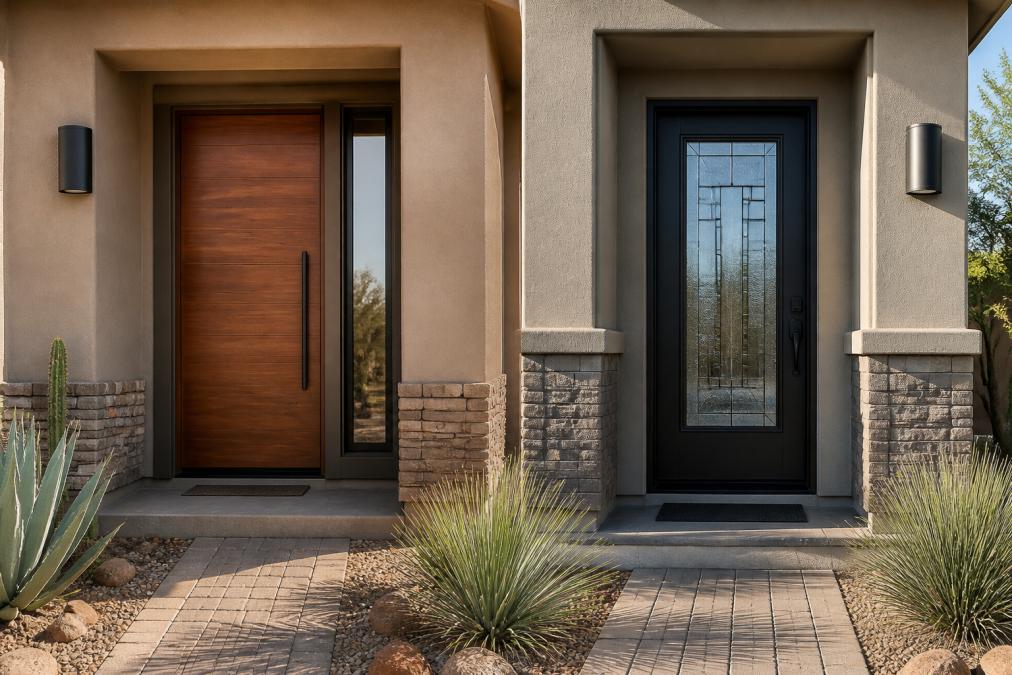
Here's the quick verdict: fiberglass wins for long-term durability and energy efficiency in Arizona's extreme climate. Steel wins on upfront affordability and security. The real difference comes down to how you value your time and money over the next 20 years.
| Feature | Fiberglass | Steel | Arizona Winner |
|---|---|---|---|
| Dent Resistance | Excellent | Poor | Fiberglass |
| Energy Efficiency | Superior R-value | Moderate | Fiberglass |
| Rust/Corrosion Risk | None | Moderate | Fiberglass |
| Maintenance | Minimal | Regular upkeep | Fiberglass |
| Initial Cost | Higher | Lower | Steel |
| Heat Resistance | Excellent | Good | Fiberglass |
| Lifespan | 20-30 years | 15-20 years | Fiberglass |
Durability and Dent Resistance
Fiberglass entry doors resist denting far better than steel in Arizona's harsh conditions. The compression-molded construction absorbs impact without permanent deformation. Steel, by contrast, dents easily, a hail storm or accidental bump from a ladder leaves a visible mark that's difficult to repair.
In Arizona's desert environment, thermal expansion is a real concern. Steel doors expand and contract with extreme temperature swings (80°F at dawn to 115°F by afternoon is common). Over years, this cycling weakens the door frame and weatherstripping. Fiberglass expands at a similar rate to wood, meaning it stays stable and maintains its seal better.
Steel's structural integrity depends on the gauge of the steel used. Thicker gauge (16-18) resists denting better than thinner options, but adds cost. Most budget steel doors use thinner gauge, which means dent vulnerability is built in from the start.
Fiberglass also resists splitting, warping, and rotting, issues that can affect wood doors and even some lower-quality fiberglass alternatives. The material is engineered to withstand temperature extremes without structural failure.
Energy Efficient Entry Doors and Thermal Performance
Energy efficiency matters in Arizona because your entry door is a major thermal weak point. A poorly insulated door means your air conditioning works harder, driving up utility costs year-round.
Fiberglass entry doors typically feature foam-core insulation with R-values between 4.5 and 6.5, depending on the manufacturer. The material itself is a poor conductor of heat, so less thermal energy transfers through the door frame.
Steel doors with foam-core insulation offer moderate energy efficiency, typically R-values between 3.5 and 4.5. While adequate, they conduct heat more readily than fiberglass. In Arizona summer, this means more heat enters through the door, and in winter (when it does get cold), more heat escapes.
The weatherstripping on your door matters as much as the insulation. Fiberglass doors often come with triple-layer weatherstripping that compresses when the door closes, creating a tight seal. Steel doors typically use standard double-layer stripping, which degrades faster in Arizona's dry climate.
Energy Star certified doors meet specific efficiency standards. Many fiberglass doors qualify; fewer budget steel doors do. If you're looking for maximum energy savings, check for the Energy Star label.
Front Door Heat Resistance in Desert Climates
Arizona's UV intensity is among the highest in the nation. The desert sun delivers unfiltered UV radiation that degrades materials over time. This is where fiberglass and steel diverge significantly.
Fiberglass resists UV degradation better than most materials. Quality fiberglass doors use gel coat or powder-coated finishes that protect against UV fading and surface damage. After 10 years in direct sun, a fiberglass door maintains its color and finish integrity.
Steel doors are vulnerable to UV exposure in a different way: the paint finish fades and peels, exposing the underlying steel to rust risk. Even galvanized steel (treated to resist corrosion) shows color degradation under intense UV. Once the protective finish cracks, rust begins.
Thermal expansion is the hidden killer in Arizona. When a steel door sits in 120°F heat, it expands. When night temperatures drop to 70°F, it contracts. This constant cycling loosens fasteners, warps the frame, and compromises the weatherstripping seal. Fiberglass expands and contracts at a rate closer to wood, reducing stress on the frame and hardware.
A steel door in direct Arizona sun can reach surface temperatures of 150°F or higher. Touching the handle becomes uncomfortable. Fiberglass stays cooler because it's a poorer conductor, the exterior gets hot, but the interior remains closer to ambient temperature.
Entry Door Maintenance Tips and Long-Term Care
Fiberglass doors require minimal maintenance. Wipe them down with mild soap and water annually. If the finish dulls, a light cleaning restores shine. No painting, staining, or refinishing needed. The gel coat or powder finish lasts the life of the door.
Steel doors demand more attention. The paint finish needs inspection every 2-3 years. If you spot chips or cracks, touch them up immediately to prevent rust. In Arizona's dry climate, you may need to repaint the entire door every 7-10 years to maintain protection. This adds labor and material costs.
Weatherstripping on both door types should be inspected annually. In Arizona's heat, the rubber can harden and crack. Replacing weatherstripping is inexpensive (typically under $50), but it's easy to overlook until you notice air leaks or drafts.
Hardware maintenance applies to both. Hinges, locks, and deadbolts should be checked for corrosion and lubricated occasionally. Stainless steel or powder-coated hardware resists rust better than bare metal.
The door frame itself needs attention. Caulk around the frame seals gaps where water and air enter. Reseal every 5-7 years or when you notice cracks. This protects the wall structure and prevents moisture damage.
For fiberglass doors, you can paint them if you want a color change, but you don't have to. For steel doors, repainting is sometimes necessary for protection, not just aesthetics.
| Maintenance Task | Fiberglass | Steel | Frequency |
|---|---|---|---|
| Cleaning | Soap and water | Soap and water | Annually |
| Paint/Finish Touch-ups | Optional | Required | Every 2-3 years |
| Full Repainting | Never needed | Possibly required | Every 7-10 years |
| Weatherstripping Inspection | Yes | Yes | Annually |
| Weatherstripping Replacement | As needed | As needed | Every 10-15 years |
| Hardware Lubrication | Occasional | Occasional | Every 2-3 years |
Rust, Corrosion, and Weather Resistance
Arizona's monsoon season brings intense moisture, dust storms, and occasional hail. Your entry door must withstand these conditions without structural failure or visible damage.
Fiberglass is immune to rust and corrosion. The material doesn't oxidize, doesn't require protective coatings to resist moisture, and doesn't degrade when exposed to salt air (relevant if you're near Phoenix's urban areas with road salt). Even if the finish is scratched, the underlying fiberglass remains stable.
Steel doors are vulnerable to corrosion if the protective finish is breached. Galvanized steel (zinc-coated) resists corrosion better than bare steel, but it's not corrosion-proof. Moisture + exposed steel = rust. In Arizona's dry climate, rust develops slowly, but it does develop. Once it starts, it spreads beneath the paint, creating bubbling and peeling.
Monsoon moisture is the real test. During heavy rains, water sits against the door frame and seal. If the weatherstripping fails or the caulk cracks, water enters the wall cavity. Fiberglass doesn't absorb water; steel's frame can rust from inside if moisture penetrates. The door itself may survive, but the frame and wall structure suffer.
Dust storms in Arizona are severe.
Aesthetic Options, Cost, and Curb Appeal
Fiberglass entry doors come in realistic wood-grain textures and smooth paintable finishes. You get the appearance of wood without the maintenance burden.
Which Door Is Right for Your Home
Choose fiberglass if you prioritize durability, energy efficiency, and low maintenance. This is the better choice for most Arizona homeowners and contractors. Fiberglass handles desert heat, UV exposure, and monsoon moisture without degradation. You won't repaint it, and it resists denting better than steel.
Frequently Asked Questions
Should I get a steel or fiberglass entry door?
Steel entry doors cost less upfront and offer strong security, but are prone to dents and rust if the finish scratches. Fiberglass doors resist denting, warping, and corrosion better, making them ideal for harsh desert climates where UV exposure and thermal expansion are concerns. Choose steel if budget is the priority; choose fiberglass if durability and minimal maintenance matter more over the door's lifetime.
Which is more energy efficient: fiberglass or steel entry doors?
Fiberglass doors typically deliver superior energy efficiency with higher R-value insulation and advanced weatherstripping systems that reduce heat transfer. Steel doors with foam-core insulation can be Energy Star certified, but fiberglass's thermal properties and better resistance to warping make it the stronger choice for maintaining consistent insulation in extreme temperature swings common in desert regions.
Will a fiberglass door warp or fade in direct sunlight?
Quality fiberglass entry doors are engineered to resist warping, rotting, and UV degradation. Unlike wood doors, fiberglass won't split or warp from thermal expansion in desert heat. Premium finishes like DuraFuse systems provide long-lasting color protection against intense sun exposure, though all exterior doors benefit from periodic inspection and maintenance to preserve their appearance.
What maintenance do fiberglass and steel entry doors require?
Fiberglass doors are maintenance-free compared to wood or steel. Clean the surface occasionally with mild soap and water. Steel doors require more attention: inspect the finish regularly for scratches that expose bare metal, touch up paint promptly to prevent rust, and check weatherstripping annually. In arid climates, steel's vulnerability to corrosion makes fiberglass the lower-maintenance choice.