 comparison
Door Repair DIY vs. Professional: Safety & Costs
Table of Contents
- DIY Door Repair: When It's Safe and What You Need
- Professional Door Repair Services: What You're Paying For
- Door Repair vs. Replacement: Making the Right Call
- How to Find and Vet a Trusted Door Repair Professional
- Comparing Your Options: Decision Framework
- Frequently Asked Questions
Last Updated: October 8, 2026
DIY Door Repair: When It's Safe and What You Need
When a door sticks, squeaks, or won't close properly, your instinct may be to grab a screwdriver. Some door issues are genuinely straightforward for homeowners. Understanding door repair DIY vs professional work isn't about confidence, it's about knowing where the safety line is.
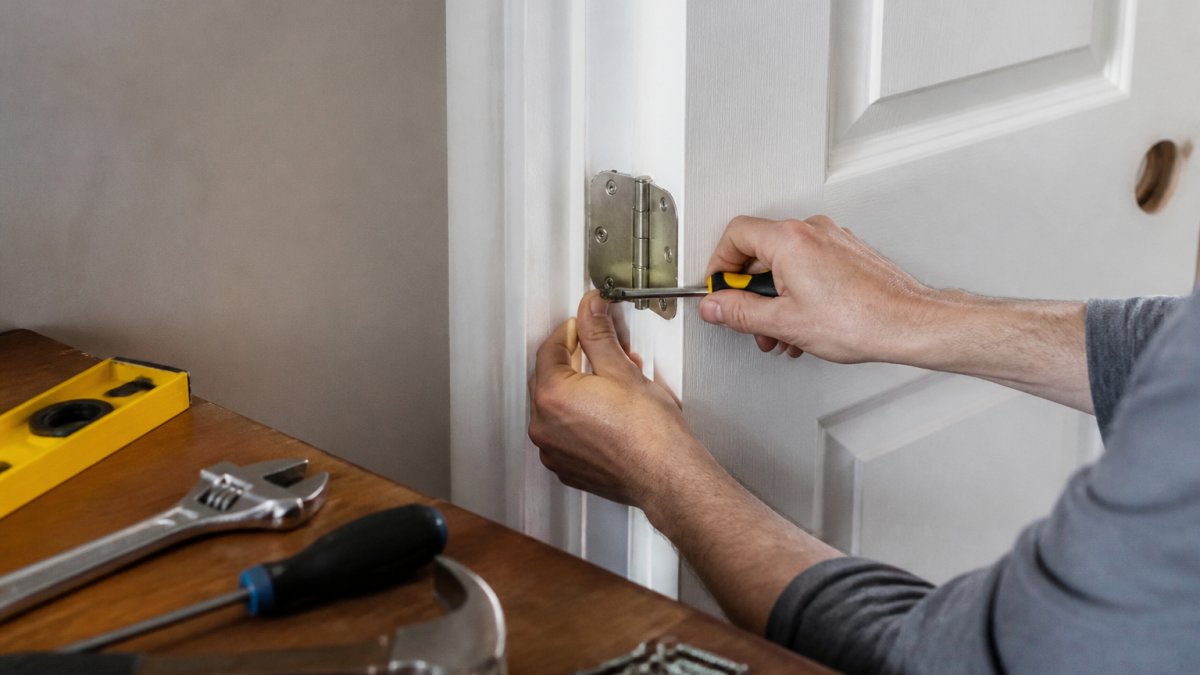
Many door problems fall into a sweet spot where a capable homeowner can repair them safely. Others require professional expertise to avoid damage, injury, or code violations. Knowing which is which saves money and prevents bigger problems.
Common DIY-Friendly Repairs
Most interior door issues start simple. A door that won't latch often just needs hinge adjustment, since hinges settle over time and shift the frame out of alignment.
Squeaky hinges are equally straightforward: a few drops of penetrating or light machine oil on each hinge eliminates the noise within minutes. No special tools, just a rag for excess oil.
Minor frame gaps respond well to weatherstripping. Self-adhesive foam or rubber strips cost under ten dollars, take thirty minutes to install, and seal air leaks, reduce noise, and improve efficiency without permanent modification.
Loose handles and deadbolts are another common fix. Most interior hardware uses set screws tightened with an Allen wrench or screwdriver. Exterior locks need more care, but replacing a basic exterior handle is manageable if you're comfortable removing a few screws.
Door Repair Tools for Homeowners
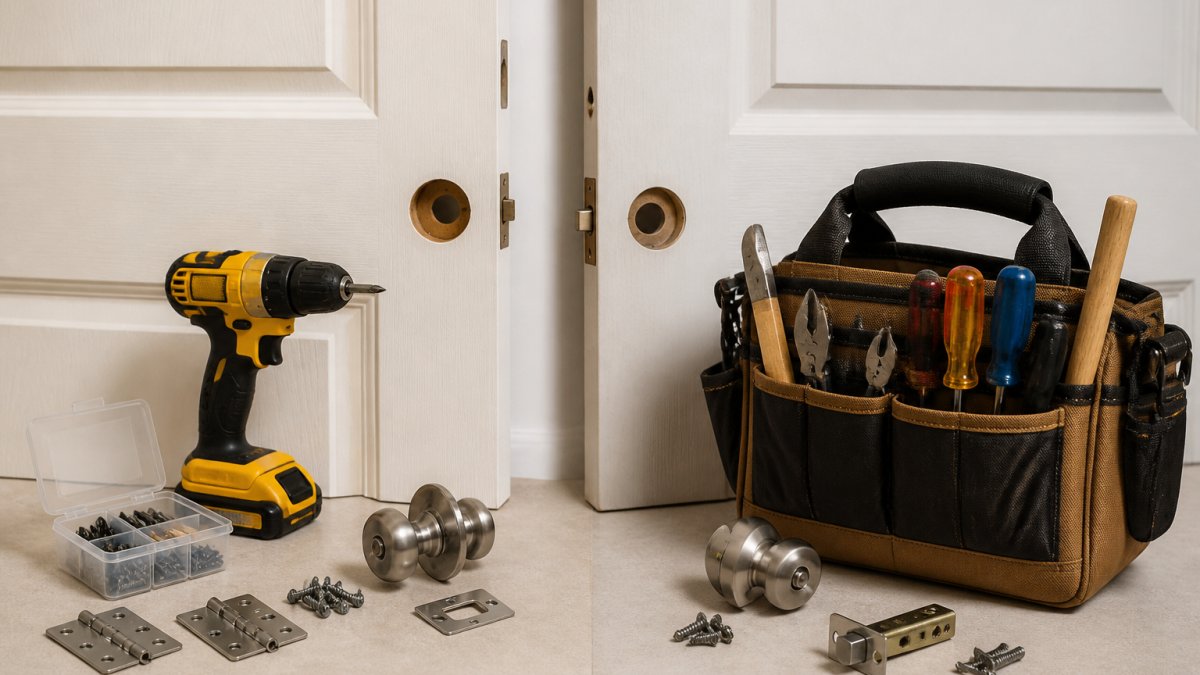
You don't need a professional-grade toolkit for basic door repairs. A few essentials cover most situations:
- Cordless drill-driver, makes screw work faster and more reliable than hand tools
- Level, ensures hinges and frames stay plumb and square
- Adjustable wrench or socket set, handles bolts on locks and hardware
- Screwdriver set, Phillips and flathead in multiple sizes
- Shims and cardboard, for hinge and frame adjustments
- Measuring tape, critical for checking alignment and gaps
- Penetrating oil, loosens stuck hardware and quiets squeaks
Most homeowners already own several of these; a basic kit costs under fifty dollars from scratch.
Safety Boundaries: When to Stop and Call a Professional
This is where door repair DIY vs professional work becomes critical. Call a professional if you encounter any of these situations.
Structural damage to the frame signals a deeper problem.
Springs under tension are dangerous. Garage door springs store enormous energy and can snap violently, causing serious injury.
Locks that won't turn often indicate internal damage or misalignment. Forcing a stuck lock can break the mechanism and leave the door unsecure.
Doors that bind across their entire length suggest frame damage or foundation settling.
Exterior doors with gaps or misalignment need professional attention when security or weather is involved. A door that doesn't seal compromises security and energy efficiency.
Any repair involving permits belongs with a professional. Most jurisdictions require permits for exterior door replacement and certain structural repairs.
Professional Door Repair Services: What You're Paying For
When you hire a professional for door repair, you're paying for diagnosis, liability coverage, and the ability to spot problems the untrained eye misses.
A professional technician has experience across hundreds of doors, spotting early warning signs of frame damage, settling, or hardware failure. They know which problems are quick fixes and which signal deeper structural issues.
Professional services also include accountability. If something goes wrong, they're responsible. They carry liability insurance, use proper equipment, and follow building codes, protection that matters most for exterior doors or repairs affecting home security. Investing in these professional safeguards often prompts homeowners to weigh the long-term value of security door costs against the immediate peace of mind provided by reinforced entry points.
Repair Severity and Service Scope
Professional services fall into three categories based on complexity and cost.
Minor repairs include hinge adjustment, weatherstripping, lock lubrication, and handle tightening. They take under an hour, involve no structural work, and several can be handled in one visit.
Moderate repairs include replacing hardware, installing new locks, adjusting frames, or repairing minor frame damage. These take one to three hours and may add material costs beyond labor.
Major repairs include frame reinforcement, structural assessment, door replacement, or water damage. They require multiple visits, contractor coordination, significant materials, and often permits.
Scope determines both time and cost; a professional can assess your situation and recommend the right service level.
Understanding Door Repair Cost Factors
Several factors influence professional door repair costs. Understanding them helps you evaluate estimates and avoid surprises.
Door type and material affect complexity. Interior repairs cost less than exterior work. Solid wood, steel, and specialty doors (like fire-rated) may require specialized knowledge or parts.
Accessibility matters. Easy-to-reach doors cost less than those needing special equipment. Second-story or tight-space doors take longer.
Parts and materials add to the total. New hardware, hinges, weatherstripping, or frame reinforcement come out of your pocket on top of labor.
Urgency and scheduling affect pricing. Emergency or same-day service costs more than advance scheduling, and off-hours work carries a premium.
Travel and service area influence the quote. Local professionals reach you quickly; outside their typical area, travel time and mileage may apply.
Get multiple written estimates to compare what's included. A detailed estimate should specify the work, materials, timeline, and total cost.
Door Repair vs. Replacement: Making the Right Call
Sometimes the smart choice isn't repair, it's replacement. Knowing when to replace saves money and headache long-term.
If your door is over twenty years old with multiple problems, replacement often costs less over time than repeated repairs. A new door costs more upfront but includes a warranty, modern security, and better efficiency, while an aging door may need a new lock, weatherstripping, and hinge work within a few years anyway.
Signs Your Door Should Be Replaced
Replace your door if you notice any of these:
Severe warping or rot means the structure is compromised. A warped door won't seal and can't be fixed by adjustment; rot spreads. Replacement is the only real solution.
Cracks in the door itself (not the frame) typically require replacement. Filling them is temporary; structural cracks expand with temperature changes and seasonal movement.
Hardware that can't be repaired suggests the door is obsolete. If replacement parts are unavailable or hardware is damaged beyond repair, a new door is often cheaper than sourcing specialty hardware.
Broken glass or panels that are expensive to replace may justify a new door. If a glass panel costs three-quarters of a new door's price, replacement makes sense.
Doors that no longer meet code may have to be replaced. Older doors often lack modern safety, accessibility, or efficiency standards, and replacement is mandatory when facing code compliance issues.
Multiple simultaneous problems signal replacement time. Needing a new lock, weatherstripping, hinge repair, and frame work at once means heavy investment in an aging door; a new one eliminates all of it.
Climate Considerations for Local Durability
Local climate directly affects door longevity and repair frequency, so understanding how your environment stresses doors helps you decide between repair and replacement.
Heat and intense sun accelerate degradation. Wood doors fade, warp, and crack faster in direct sun, while metal doors expand and contract with temperature swings, misaligning hardware.
Humidity and moisture cause different damage: swelling, rot, and corrosion accelerate, weatherstripping fails faster, and hardware rusts sooner.
Dust and sand in arid climates wear hinges and locks, clog weatherstripping, and accumulate in frames, affecting sealing.
Seasonal temperature swings cause expansion and contraction. Doors that fit in summer may bind in winter, and frames can shift out of alignment. Extreme variation increases repair frequency.
Choosing a material suited to your climate extends lifespan: steel handles heat better than wood, and fiberglass resists moisture. Weatherstripping and maintenance matter more in harsh climates.
How to Find and Vet a Trusted Door Repair Professional
Finding the right professional matters as much as deciding whether to repair or replace. A good technician diagnoses accurately, charges fairly, and stands behind their work.
Start with local referrals from neighbors, friends, and family. Personal recommendations carry weight because they come from people who've experienced the work. Online reviews add perspective, but a few detailed ones tell you more than dozens of one-liners.
Check credentials. Ask whether the technician is licensed and insured, since insurance protects you if something goes wrong. Licensing varies by region, but professionals should know what applies locally.
Request written estimates before committing. A professional should visit, assess the work, and provide a detailed quote.
Ask about warranty and guarantees. Most reputable technicians offer at least a 30-day warranty on labor and parts, which protects you if problems arise after the repair.
What to Look for in a Repair Estimate
A good estimate tells you exactly what you're paying for, including:
- Specific work description, not just "repair door" but "adjust hinges, install weatherstripping, repair frame damage"
- Materials and parts, itemized, with costs for each
- Labor hours, how long the work should take
- Total cost, the final number, with any conditions or assumptions noted
- Timeline, when the work will happen and how long it will take
- Warranty or guarantee, what's covered and for how long
Red flags: vague descriptions, refusal to give written estimates, pressure to decide immediately, or unwillingness to explain costs. A professional answers questions clearly and lets you compare options.
Comparing Your Options: Decision Framework
Deciding between DIY, professional repair, and replacement requires weighing several factors. Use this framework:
| Factor | DIY Best For | Professional Repair Best For | Replacement Best For |
|---|---|---|---|
| Door Age | Under 10 years, good condition | 10-20 years, minor-moderate issues | Over 20 years, multiple problems |
| Problem Type | Squeaks, loose hardware, weatherstripping | Misalignment, frame damage, locks | Warping, rot, structural damage |
| Complexity | Single, straightforward issue | Multiple issues, diagnosis needed | Door no longer meets needs |
| Safety Risk | None (hinges, handles, weatherstripping) | Low-moderate (frame work, hardware) | High (structural, security, sealing) |
| Time Available | Few hours, flexible schedule | 1-3 hours, can schedule in advance | 1-2 days for installation |
| Budget | Under $50 in tools and materials | $200-$800 depending on scope | $500-$2,000+ depending on door type |
| Skill Level | Basic (turning screws, following instructions) | Not required (hire the professional) | Not required (hire the professional) |
Start with the problem type: a squeaky hinge or loose handle is DIY, frame damage or a stuck lock needs a professional, and a warped or rotting door should be replaced.
Consider age and condition: a newer door with one problem merits repair, while an aging door with multiple issues points toward replacement.
Be honest about your skill level and time.
Cost matters, but factor in quality and longevity. A fifty-dollar DIY fix that fails in six months costs more than a three-hundred-dollar professional repair lasting five years.
When you're ready to move forward with repair or replacement, Arizona Door Store provides expert guidance and high-quality products for both scenarios.
Deciding between DIY repair, professional service, and replacement comes down to your door's age, the problem's severity, and your comfort with the work.
Frequently Asked Questions
Can I repair a door myself, or should I hire a professional?
Simple repairs like tightening hinges, fixing squeaks, or adjusting door alignment are safe DIY tasks. However, structural damage, frame issues, broken springs (especially on garage doors), or security concerns require professional help. If you're unsure whether the damage is structural or cosmetic, contact a professional for assessment before attempting repairs yourself.
What door repair tools do I need for basic fixes?
For routine maintenance and minor repairs, keep a cordless drill, screwdriver set, level, measuring tape, and hinges on hand. For door alignment adjustments, you may need shims. Most homeowners already own these basic tools. Specialized equipment like spring replacement tools or frame repair kits should only be used by professionals due to safety risks and the precision required.
How much does professional door repair typically cost?
Door repair costs vary based on damage severity, repair type, and local labor rates. Minor repairs like hinge adjustments or weatherstripping replacement are less expensive than frame repairs or panel replacement. Get written estimates from at least two professionals that itemize labor and materials separately. Arizona Door Store can help you understand what's involved in your project.
When should I repair a door instead of replacing it?
Repair your door if damage is cosmetic, localized to one component (hinge, latch, weatherstripping), or the frame is sound. Replace the door if it has structural warping, large cracks, severe rot, security compromise, or if repair costs are substantial compared to replacement. Climate stress from heat cycles can weaken older doors, making replacement more practical in the long run.