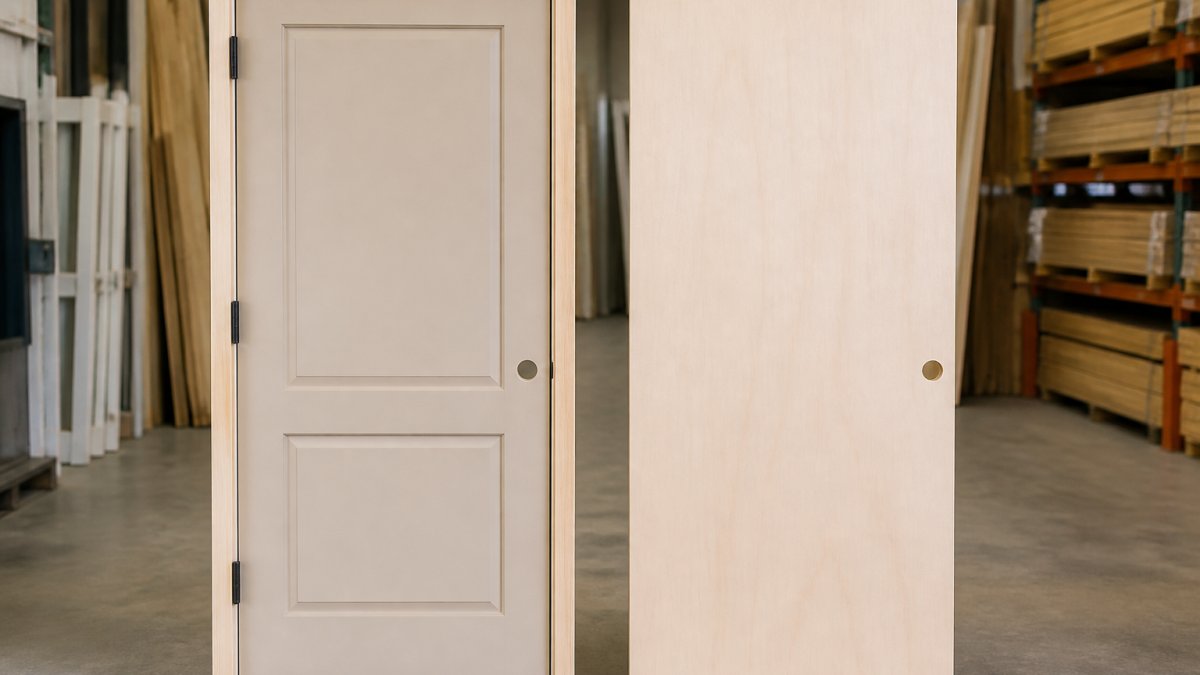
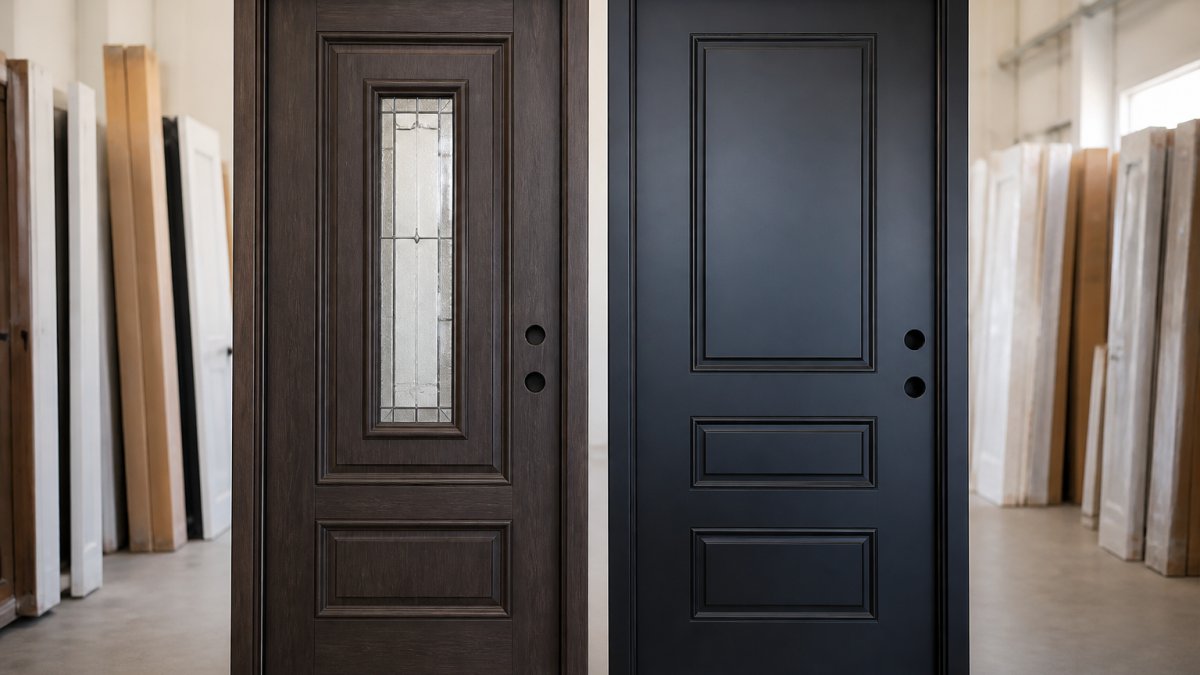
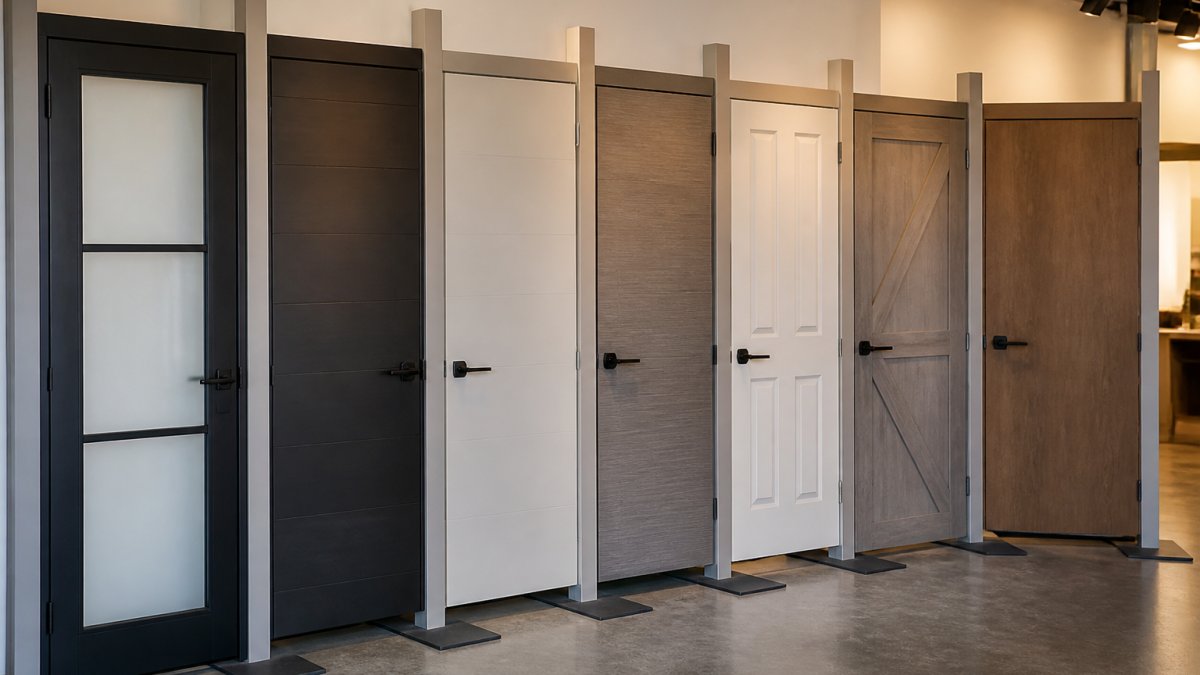
 comparison
Wood Door Alternatives for Homes: A 2026 Guide
Table of Contents
- Why Homeowners Are Moving Beyond Wood Doors
- Fiberglass Entry Doors Benefits and Performance
- Steel vs Fiberglass Doors for Hot Climates
- Energy Efficient Door Replacement Options
- Composite and Solid Core Doors as Wood Door Alternatives
- Comparison Table: Material Performance and Cost
- Making Your Choice: Which Alternative Works Best
- Frequently Asked Questions
Last Updated: October 2, 2026
Why Homeowners Are Moving Beyond Wood Doors
Wood doors are increasingly impractical in this region. Extreme heat, intense UV exposure, and low humidity cause warping, cracking, and fading within years. This is where wood door alternatives become essential.
The real issue is maintenance: refinishing every few years, replacing weather stripping, addressing moisture damage. Selecting materials engineered for the climate from day one eliminates this burden.
We offer fiberglass, steel, and composite alternatives that resist warping, handle UV exposure, and require minimal refinishing over their lifespan.
Fiberglass Entry Doors Benefits and Performance
Fiberglass doors combine the aesthetic appeal of wood with genuine durability. Unlike wood, fiberglass doesn't warp, crack, or splinter in temperature swings and intense sunlight.
Fiberglass can be finished to look like natural wood grain, painted any color, or left in contemporary styles, working for both traditional and modern homes. It also provides decent insulation value, reducing cooling costs.
Fiberglass resists moisture and UV degradation far better than solid wood. It won't absorb water, avoiding swelling and structural damage, and doesn't require frequent refinishing.
Fiberglass costs more upfront than hollow-core alternatives but less than premium steel.
Steel vs Fiberglass Doors for Hot Climates
The choice between steel and fiberglass depends on priorities: security versus ease of maintenance.
Steel doors offer superior strength and security. Steel provides excellent thermal resistance when properly insulated, but conducts heat, the frame can become uncomfortably hot without proper insulation.
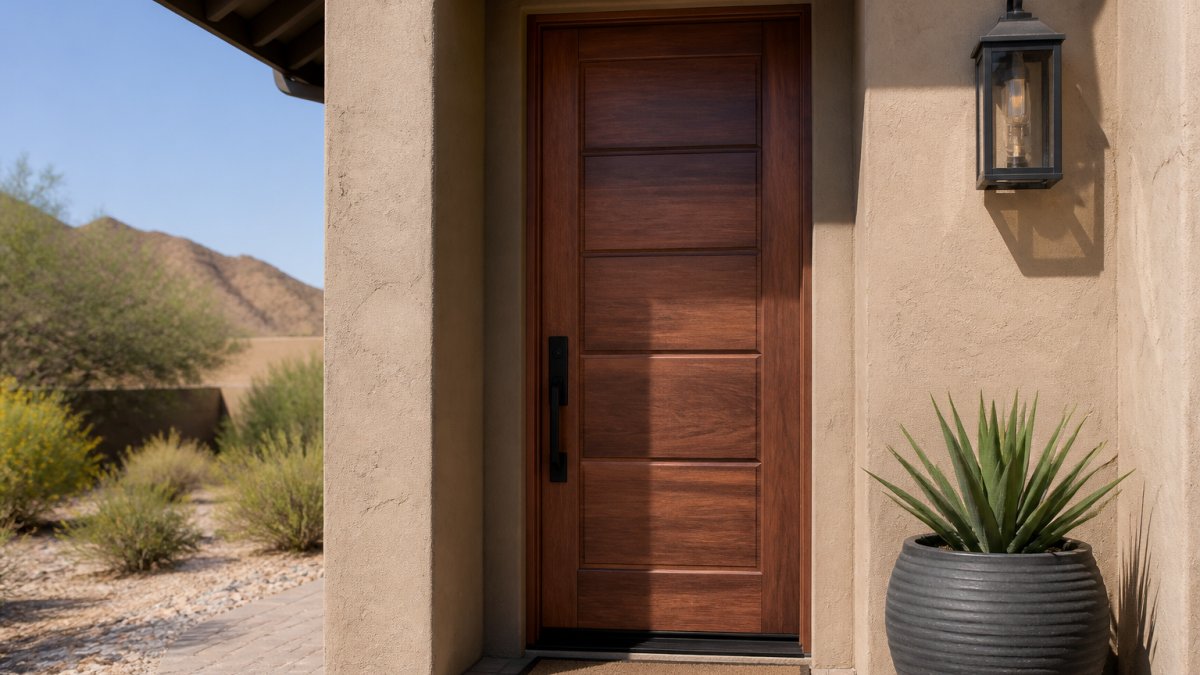
Fiberglass doesn't conduct heat like steel, staying cooler to the touch and more comfortable for high-traffic entryways. It's also easier to customize and refinish.
Steel wins for security; fiberglass for comfort and aesthetic flexibility.
Energy Efficient Door Replacement Options
Energy efficiency depends on insulation value (R-value) and air sealing. Upgrading to high-performance alternatives reduces utility bills, particularly critical where cooling costs dominate.
R-Value Performance by Material
Fiberglass doors with polyurethane foam-core insulation can achieve R-values between 5.0 and 6.5, a meaningful improvement over hollow-core wood doors (R-2 to R-3).
Steel doors with insulated cores can deliver R-values of 6.0 to 8.0. However, steel's high thermal conductivity means the frame conducts heat unless the core is thick enough to create an air gap.
Composite and solid-core doors can achieve R-values of 4.5 to 6.0, balancing cost and performance.
Air Sealing and Installation Impact
R-value alone is incomplete. A door with an R-6 rating installed with gaps performs no better than an R-3 door sealed properly.
Cooling Cost Reduction in Extreme Heat
A standard 36-inch entry door represents approximately 20 square feet of surface area. Upgrading from a hollow-core wood door (R-2) to a fiberglass door with foam core (R-5.5) reduces heat transfer by approximately 65%, translating to measurable reductions in air conditioning runtime.
A homeowner upgrading from hollow-core to high-performance fiberglass can potentially recover the material cost difference through reduced cooling costs, assuming direct afternoon sun exposure.
Thermal Comfort Beyond Energy Bills
Beyond utility savings, insulation affects occupant comfort. Steel doors with inadequate core thickness can become uncomfortably hot to touch in direct afternoon sun, creating a safety concern for children and pets.
Composite and Solid Core Doors as Wood Door Alternatives
Composite doors combine multiple materials, typically a wood or composite core with fiberglass or vinyl exterior, to create a hybrid that captures benefits of each.
These alternatives deliver excellent sound dampening, making them popular for interior applications and homes near busy roads. The engineered construction resists warping and splitting better than solid wood while costing less than premium fiberglass or steel options.
Solid core doors represent this category well. They're affordable relative to custom options, available in various styles, and require professional installation for optimal performance. The foam-core insulation provides decent thermal resistance without the premium price tag of high-end alternatives.
The trade-off is customization. Composite and solid core doors come in standard configurations and finishes. If you need a specific size, unusual shape, or custom aesthetic, you'll need to move up to fiberglass or steel.
Maintenance is minimal, cleaning and occasional hardware adjustment. Unlike wood, they won't need refinishing. Unlike steel, they don't conduct heat excessively. They occupy the practical middle ground for many homeowners.
Comparison Table: Material Performance and Cost
| Material | Durability | Insulation | Maintenance | Best For | Typical Lifespan |
|---|---|---|---|---|---|
| Fiberglass | Excellent | Good | Minimal | Aesthetic flexibility, comfort | 20+ years |
| Steel | Excellent | Excellent | Minimal | Security, maximum insulation | 25+ years |
| Composite/Solid Core | Very Good | Good | Minimal | Budget-conscious, standard sizes | 15-20 years |
| Wood | Fair | Fair | High | Traditional aesthetics only | 10-15 years |
The table reveals a consistent pattern: non-wood alternatives cost more upfront but deliver lower total cost of ownership through reduced maintenance and longer usable life. Wood requires active management to prevent degradation, while engineered alternatives are designed to perform with minimal intervention.
Making Your Choice: Which Alternative Works Best
Start by identifying your primary goal. Are you prioritizing security, aesthetics, energy efficiency, or budget? Your answer narrows the field significantly.
HOA Compliance and Aesthetic Requirements
Many neighborhoods enforce strict architectural guidelines that limit door material choices or require doors to maintain a "wood-look" appearance.
- Aesthetic requirements: Many HOAs mandate that doors must appear to be natural wood or maintain a traditional finish, even if the underlying material is fiberglass or composite. This eliminates bare steel or contemporary non-wood finishes from consideration.
- Color restrictions: Some HOAs limit entry door colors to earth tones or require doors to match existing trim colors. This affects which fiberglass or composite options are viable.
- Material specifications: A few HOAs explicitly prohibit steel doors (citing security concerns or industrial appearance) or require doors to be "wood or wood-grain finished materials."
Composite doors also work well for HOA compliance because they're designed to mimic wood appearance.
Steel doors are the most restrictive choice for HOA compliance.
UV Degradation: The Sonoran Desert Factor
Fiberglass UV Performance: Fiberglass itself is UV-stable, the resin matrix doesn't degrade under ultraviolet exposure. However, the finish applied to fiberglass (stain, paint, or gel coat) can fade or chalk over time. Quality fiberglass doors use UV-stabilized topcoats with UV absorbers that slow degradation. Expect:
- Painted fiberglass doors: Color may fade noticeably after 8-12 years of direct sun exposure, though the material remains structurally sound. Repainting is straightforward.
- Stained fiberglass doors: Wood stains fade faster than paint, typically showing visible color loss after 5-8 years. Restaining requires stripping the old finish, which is more labor-intensive than repainting.
- Gel-coat fiberglass doors: Factory gel-coat finishes are more UV-resistant than field-applied stains, but still fade gradually. Gel-coat doors typically maintain color better than stained options for 10-15 years before noticeable fading occurs.
Steel UV Performance: Steel itself is not affected by UV exposure, but powder-coated finishes can fade or chalk. High-quality powder coatings with UV inhibitors resist fading better than standard industrial coatings. Expect:
- Premium powder-coated steel: Color remains stable for 10-15 years under intense UV exposure. Fading is minimal if the coating includes UV absorbers.
- Standard powder-coated steel: May show visible fading after 5-8 years.
- Bare steel: Will rust rapidly if the coating is compromised, making UV-induced finish degradation a serious concern.
Composite/Solid-Core UV Performance: Engineered wood composites are more UV-stable than solid wood but less stable than fiberglass. The exterior layer (usually vinyl or fiberglass-reinforced plastic) protects the core, but:
- Vinyl-wrapped composites fade similarly to painted fiberglass, with noticeable color loss after 8-12 years.
- The seams where vinyl wraps meet the frame can separate if UV exposure causes differential expansion, requiring re-sealing.
Practical UV Strategy: If your door receives direct afternoon sun (west or southwest exposure), prioritize materials with UV-stabilized finishes.
Integrating All Factors
For maximum security and insulation with HOA compliance: Choose a fiberglass door with a wood-grain gel-coat finish.
For maximum security without HOA constraints: Steel with premium powder coating is your answer.
For aesthetic flexibility combined with durability and HOA compliance: Fiberglass with hand-applied wood stain remains the most popular choice.
Consider your climate-specific factors alongside HOA requirements.
Installation quality matters as much as material choice. A perfectly specified door installed poorly becomes a liability.
Frequently Asked Questions
Why is fiberglass a better choice than wood for exterior doors in hot climates?
Fiberglass resists warping, cracking, and UV degradation that plague wood in extreme heat and intense sun exposure. Unlike wood, fiberglass doesn't expand and contract with temperature swings, maintaining structural integrity and seal performance. It requires no staining or refinishing, eliminating maintenance cycles wood demands. Fiberglass doors are designed for long-term performance in desert conditions.
What are the most energy-efficient door materials for desert homes?
Steel and fiberglass doors with insulated cores can provide high thermal resistance. Composite doors with foam insulation also perform well. All three resist heat transfer better than hollow-core alternatives. In extreme heat, an insulated fiberglass or steel door with weather stripping and a low-emissivity (low-E) glass panel minimizes cooling costs. Solid core composite doors offer a mid-range option balancing insulation and affordability.
Do steel doors get too hot in direct sunlight?
Steel conducts heat more readily than fiberglass, so steel doors in direct sun can become warm to the touch. However, 16-gauge steel doors used for security applications are designed to manage heat in desert climates. The interior insulation layer prevents excessive heat transfer into the home. Many manufacturers apply reflective or light-colored finishes to reduce solar absorption. For maximum heat resistance, fiberglass or composite doors with insulated cores are the better choice in full-sun exposures.
How do composite doors compare to traditional wood doors?
Composite doors (engineered from wood fibers, plastic, and resin) eliminate wood's warping and cracking problems while offering a wood-like appearance. They resist moisture, UV damage, and temperature extremes far better than solid wood. Composites require minimal maintenance, no staining, sanding, or refinishing. They cost less than premium solid wood but more than hollow-core alternatives. They offer enhanced durability compared to wood in harsh desert conditions.
Are there low-maintenance alternatives to wood entry doors?
Yes. Fiberglass, steel, and composite doors all eliminate wood's refinishing requirements. Fiberglass doors never need staining and resist fading; steel doors require occasional touch-up paint but no sanding or sealing; composites need only occasional cleaning. All three resist moisture damage, UV degradation, and temperature-induced warping. For homeowners avoiding annual maintenance cycles, fiberglass is the lowest-maintenance option, followed by composite, then steel.