 comparison
Are Flush Doors Good for Bedrooms? A 2026 Guide
Last Updated: October 23, 2026
Quick Summary
Yes, flush doors are good for bedrooms, provided you choose a solid-core model rather than a hollow-core one. Solid-core flush doors block sound better, hold hardware tighter, and resist warping, making them the better fit for rooms where quiet and privacy count.
- Hollow-core slabs often weigh 20-30 lb, while solid-core slabs often weigh 50-80 lb.
- Standard interior doors are 1-3/8 inches thick, and 1-3/4-inch slabs add mass where acoustics matter.
- Pair a solid-core slab with a sweep and weatherstrip, since perimeter gaps leak more sound than the slab blocks.
- Match hinges to door weight, because heavy solid-core doors can pull screws loose from light-duty hinges.
- Seal the top and bottom edges, since factory primer often skips them and moisture gets in first.
Table of Contents
- Are Flush Doors Good for Bedrooms? The Short Answer
- What a Flush Door Is and How It Is Built
- Hollow Core vs Solid Core Interior Doors
- Why a Solid Core Flush Door for Bedroom Use Makes Sense
- Flush Door Pros and Cons for Bedroom Spaces
- Flush Door vs Panel Door: Which Suits a Bedroom?
- Durability, Warping, and Long-Term Care
- Conclusion: Choosing the Right Bedroom Door
- Frequently Asked Questions
Are Flush Doors Good for Bedrooms? The Short Answer
Yes, flush doors are good for bedrooms, provided you choose a solid-core model rather than a hollow-core one. A flush door is a flat, smooth-faced interior door with no raised panels or moulding, and that simple construction makes it quiet, easy to clean, and visually calm in a room built for rest. At Arizona Door Store, we supply both core types to contractors and homeowners across the Phoenix metro, and the difference in how they perform in a bedroom comes down almost entirely to what is inside the slab.
What a Flush Door Is and How It Is Built
A flush door is an interior door with a completely flat surface on both faces, built from a core covered by a thin skin and finished with paint, primer, or veneer. There are no stiles, rails, or raised panels interrupting the face. That flat construction is what gives flush doors their clean, minimalist look.
Core, Skin, and Surface Finish
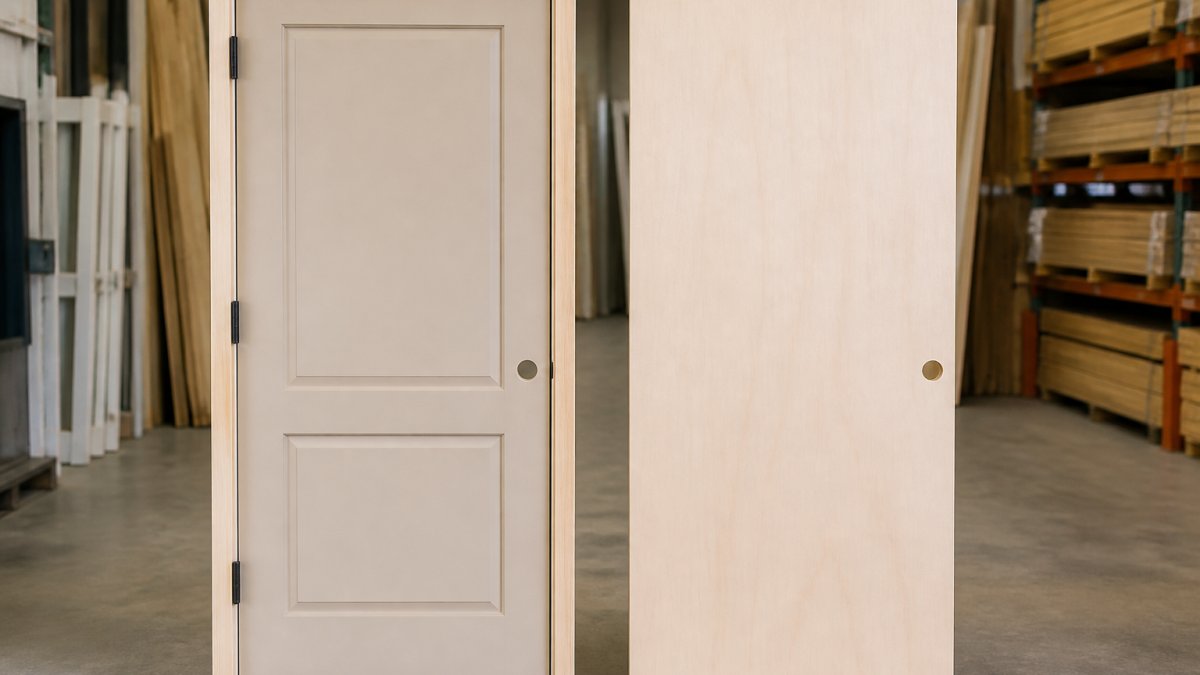
The core is the structural middle: either a solid particleboard or engineered wood block, or a hollow honeycomb or frame-and-void assembly. The skin is a thin facing sheet glued to both sides, and the surface finish is what you see and touch. Most bedroom flush doors arrive primed and ready to paint, while wood veneer options show natural wood character. For a closer look at how these layers come together, see our guide on what flush panel doors are made of.
Hollow Core vs Solid Core Interior Doors
Hollow core and solid core interior doors differ in weight, sound blocking, hardware hold, and price. A hollow-core door has a lightweight perimeter frame with a honeycomb or corrugated void inside, so the slab weighs less and costs less.
That mass is what you feel when you close the door and what interrupts sound traveling from room to room. If you already own hollow-core doors and want to keep them, our article on hollow core door repair and maintenance tips covers patching, re-hanging, and protecting the surface.
| Feature | Hollow Core | Solid Core |
|---|---|---|
| Weight | Light (often 20-30 lb for a standard slab) | Heavy (often 50-80 lb for a standard slab) |
| Sound blocking | Low | Noticeably better |
| Price | Lower | Higher |
| Best for | Closets, low-traffic rooms | Bedrooms, bathrooms |
| Hardware hold | Limited, screws can pull loose under repeated use | Strong, hinges and locksets stay tight |
| Warp resistance | Lower; thin skins flex more | Higher; dense core holds shape |
| Repair after damage | Harder to patch a crushed face | More forgiving; filler and paint hide dents |
A Direct Decision Guide for Bedroom Use
Rather than treating bedroom suitability as a passing example, use the questions below to pick a core type for your situation.
- Is the bedroom next to a noisy space (living room, hallway, bathroom)? Choose solid core. The extra mass is the single biggest upgrade you can make without changing the frame.
- Is the door for a guest room or a rarely used bedroom? A hollow-core slab can be acceptable if budget is tight, but expect more sound transfer and lighter feel.
- Do you have kids or pets who slam doors? Solid core holds hinges and locksets better over years of impact; hollow core is more prone to face damage and screw loosening.
- Are you matching existing doors in the home? Match the core type across a hallway or adjacent rooms so the doors feel and sound consistent when opened and closed.
- Is the bedroom in a humid or coastal climate? Solid core resists warping better, but the finish matters more than the core, seal all six sides.
What the Core Does Not Fix
The door slab is only part of the privacy equation. Gaps at the floor, around the latch, and along the frame leak more sound than the slab blocks. A solid-core slab paired with a quality sweep and weatherstrip will outperform a hollow-core slab with the same seals, but neither will feel private if the frame is out of square or the undercut is too large. Plan the core and the seal as one system.
Why a Solid Core Flush Door for Bedroom Use Makes Sense
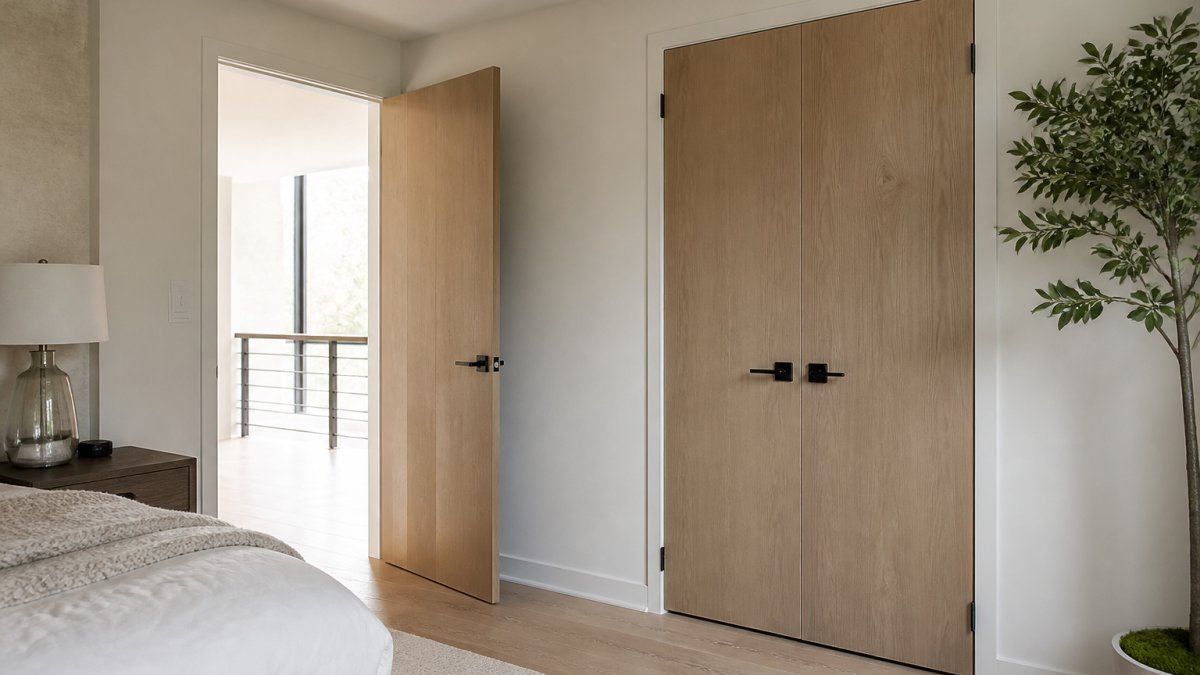
A solid core flush door for bedroom use makes sense because mass, a tight perimeter, and a flat face work together to reduce sound transfer and visual clutter. Bedrooms are where noise reduction and privacy matter most, and the slab does more of that work than any surface style. The flat face also resists dust collection in grooves and cleans with a single wipe.
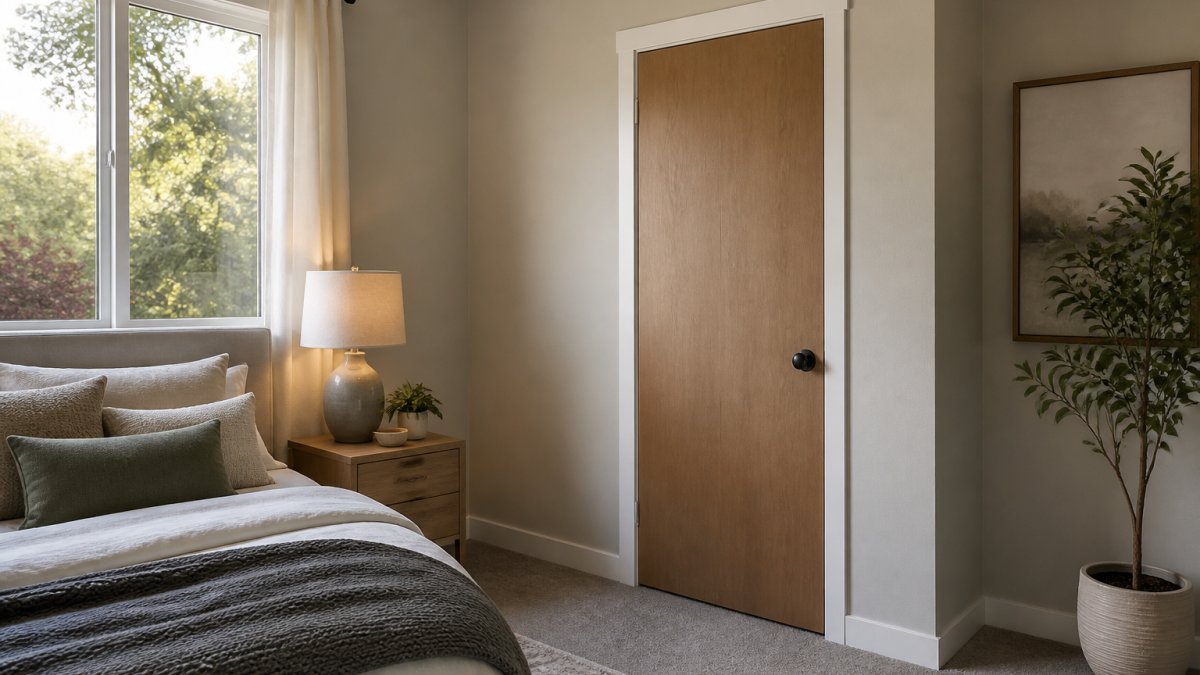
How a Bedroom Door Actually Blocks Sound
Sound moves through a door assembly in three ways: through the slab itself, around the edges, and through flanking paths such as the frame and the wall. A solid-core slab raises the mass per square foot, which makes the door harder for airborne sound to vibrate. A hollow-core slab has thin skins and a mostly empty interior, so it flexes more easily and transmits more of what hits it.
Most practitioners find that the perimeter is where the biggest gains are lost. A typical interior door has a gap under the bottom edge and small gaps around the latch and hinges. Those gaps act as a leak path.
Door thickness also matters. Standard interior doors are 1-3/8 inches thick; thicker slabs (1-3/4 inches) add mass and stiffness, and are common where acoustic performance is a priority. If quiet is the goal, ask for the thicker option when the frame and hardware allow it.
Privacy Is More Than Sound
Privacy in a bedroom is also visual and physical. A solid-core slab feels more substantial when closed, holds a lockset more securely, and resists the flex that can show gaps around the latch over time. For shared walls or adjacent bathrooms, that combination, mass, a tight seal, and secure hardware, is what makes a bedroom feel genuinely private rather than just closed off.
What to Ask For at the Counter
- Confirm the core type and the slab thickness before ordering.
- Ask whether the door is prepped for hinges and a lockset, and whether the prep matches your frame.
- Specify a sweep or seal if the bedroom shares a wall with a noisy room.
- Check the undercut: a large gap under the door is the most common privacy leak.
Flush Door Pros and Cons for Bedroom Spaces
Flush doors bring real advantages to a bedroom, but they are not the right pick for every taste. Here is the honest list.
Pros:
- Clean, modern style that suits minimalist design
- Flat surface resists scratches and stains and wipes clean easily
- Solid-core versions block sound and add privacy
- Budget-friendly compared with heavily detailed doors
- Works with many hardware and finishes
Cons:
- Hollow-core versions feel light and block little sound
- The plain face offers less visual character than a panel door
- Surface damage on a veneer can be harder to hide
- Custom sizing and solid cores raise the cost
Flush Door vs Panel Door: Which Suits a Bedroom?
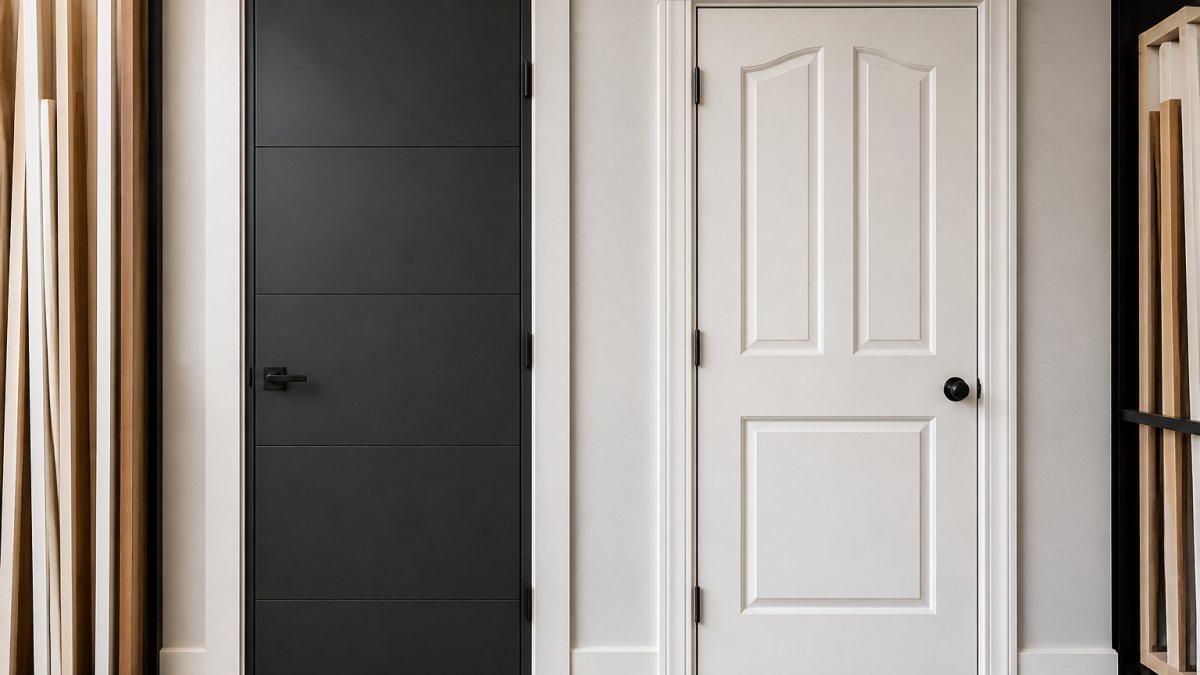
A flush door vs panel door decision comes down to style and upkeep, not performance. Flush doors give you a flat, modern face that reads as calm and contemporary. Panel doors add depth and shadow lines that suit traditional interiors.
Neither style is better in the abstract. A modern bedroom with clean lines tends to suit a flush slab. If you are weighing the two looks, our comparison of modern vs traditional interior door styles walks through how each reads in a real room.
Durability, Warping, and Long-Term Care
Durability and warping resistance depend on the core, the finish, and the room's humidity. Solid-core flush doors hold their shape better than hollow-core doors because dense engineered wood resists twisting and shrinking. A sealed, painted, or veneered surface keeps moisture out, which is the main cause of warping.
In a dry climate, interior doors can still move as seasons shift. Keep the finish intact, avoid leaving raw edges exposed near a bathroom or laundry, and wipe spills promptly. For climate-specific guidance, read our advice on how to choose interior doors for a desert climate.
Conclusion: Choosing the Right Bedroom Door
The challenge is not finding a door; it is matching the core, style, and hardware to how the room actually gets used. For most bedrooms, a solid-core flush door gives you the quiet, privacy, and clean look that make the room feel finished. When you are ready to install, our guide on how to install an interior door slab into an existing frame covers the steps.
Frequently Asked Questions
Do solid-core flush doors block sound in a bedroom?
A solid-core flush door reduces sound transfer better than a hollow-core door because its denser core absorbs more airborne noise. The door alone is only part of the equation, though. Gaps around the edges, a hollow frame, and unsealed hardware all leak sound. Pair a solid-core flush door with a properly fitted frame, weatherstripping or a door sweep, and solid hinges to get the privacy and noise reduction most bedrooms need. For a quiet bedroom, the door plus the seal matters more than the door by itself.
What is the difference between a flush door and a panel door?
A flush door has a flat, smooth surface with no raised panels, so it reads as minimalist and modern. A panel door is built from framed stiles and rails with recessed or raised panels, giving it more traditional visual depth. In a flush door vs panel door decision for a bedroom, flush doors are easier to clean, easier to paint, and less likely to collect dust in grooves. Panel doors offer more decorative character. Both come in solid and hollow cores, so construction quality matters as much as the style.
Should a bedroom door be solid core or hollow core?
For most bedrooms, solid core is the better choice. It feels heavier, closes with less rattle, blocks more sound, and holds screws for hinges and handles more reliably over years of daily use. Hollow core is lighter and budget-friendly, which suits closets, utility spaces, or tight budgets. If the bedroom shares a wall with a hallway, bathroom, or another bedroom, the sound insulation of a solid core flush door is usually worth the extra cost.
Are flush doors durable enough for everyday bedroom use?
Yes, when the door is solid core and the surface finish is specified for the room. Solid-core flush doors resist warping, twisting, and shrinking better than hollow options because the core is denser and more stable. Look for a primed or factory-finished surface with scratch and stain resistance, and keep the door sealed on all six edges. In humid rooms or near bathrooms, moisture resistance matters. With basic maintenance, a quality flush door handles daily bedroom traffic for decades.