 how-to
Hollow Core Door Repair and Maintenance Tips
Table of Contents
- Assessing Damage to Your Hollow Core Door
- How to Repair a Hole in a Hollow Core Door
- Choosing the Right Hollow Core Door Repair Kit
- Hollow Core Door Maintenance to Prevent Damage
- Hollow Core Door Repair or Replacement: Making the Right Call
- Drying Times and Repair Timeline
- Frequently Asked Questions
Last Updated: October 17, 2026
Assessing Damage to Your Hollow Core Door
Hollow core doors are common in homes and offices because they're affordable and lightweight. But they're also vulnerable to damage. A dent, puncture, or hole can happen quickly. The good news: many issues are fixable without replacing the entire door.
The first step is understanding what you're dealing with. Not all damage requires the same repair approach. A small puncture needs different treatment than a large hole. Location matters too.
Identifying the Type and Size of Damage
Small holes are typically under 1 inch in diameter. These punctures often come from impacts with doorknobs, furniture, or tools.
Medium holes range from 1 to 3 inches. These might result from a foot going through the door or a sharp impact.
Large holes exceed 3 inches. These are serious. A large hole means the hollow core structure is significantly compromised. You'll need to assess whether repair or replacement makes more sense.
Check the damage type:
- Punctures are clean holes with minimal surrounding damage
- Dents compress the surface without breaking through
- Cracks radiate from a central point
- Splintering occurs when the paper covering tears and pulls away
Determining the Location and Severity
Location changes everything. Damage in the center of the door is easier to fix than damage near the edges or corners.
Check these factors:
- Height from the floor: Damage near the floor is more visible and gets more wear
- Distance from the frame: Holes near the edge are harder to reinforce
- Proximity to hinges or the lock: Structural damage here is more serious
- Surface area affected: Does the damage extend across multiple areas or is it isolated?
Severity depends on whether the hollow core structure is exposed. If you see the paper backing or the hollow cavity, the damage is more serious.
Assess the backing. Press gently around the damage. If the area feels hollow and unstable, the interior support is compromised. This affects which repair method will work best.
How to Repair a Hole in a Hollow Core Door
Repairing a hollow core door requires a methodical approach. You'll remove damaged material, add backing support, fill the hole, and finish the surface. The process typically takes a few hours, depending on damage size.
Preparing Your Door and Work Area
Start by removing the door from its hinges. This makes repair easier and safer. Lay the door flat on sawhorses or a sturdy work table.
Protect your work area. Lay down drop cloth or cardboard to catch dust and debris. Repair work creates mess. You'll sand, fill, and prime, all of which produce particles.
Gather your tools before starting:
- Utility knife or sandpaper
- Putty knife (2-3 inches wide)
- Filler material (wood filler, lightweight spackling, or expanding foam)
- Primer and paint
- Sandpaper (120-grit and 220-grit)
- Damp cloth for cleanup
Inspect the hole edges. Loose or damaged material needs to come off first. Rough edges prevent good adhesion for filler.
Removing Loose or Damaged Material
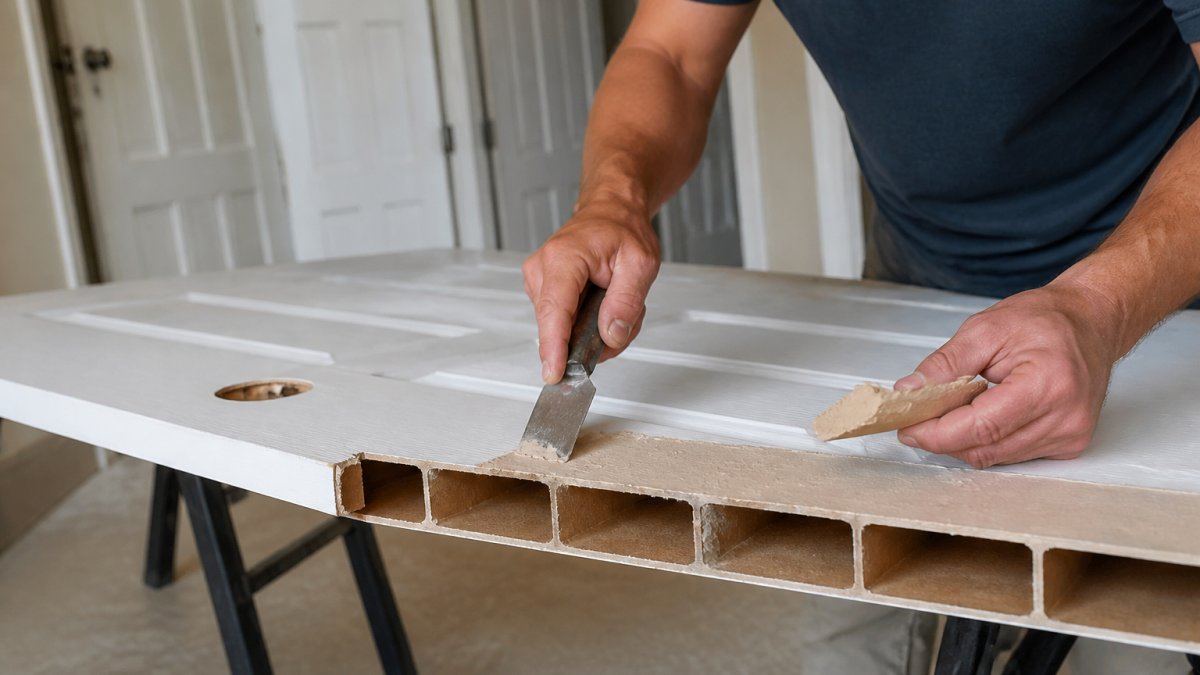
Use a utility knife to cut away any loose paper or damaged material around the hole. Work carefully. You want to remove only what's damaged, not enlarge the hole.
For splintered edges, sand them smooth with 120-grit sandpaper. This creates a clean surface for filler to grip. Sand in circular motions around the damaged area.
Wipe away dust with a damp cloth. Let it dry completely. Dust prevents filler from bonding properly.
Supporting the Hole from Inside
This step is critical for medium and large holes. The hollow core needs internal support. Without it, filler will sag or collapse as it dries.
For small holes, you can skip this step. The filler alone will work. For larger damage, you need backing.
Use one of these backing methods:
- Expanding foam: Spray foam into the cavity from the damaged side. It expands and fills the hollow space. Trim excess once it dries (usually 2-4 hours). This approach works well for larger holes.
- Fill strips: Cut strips of rigid foam or cardboard to fit inside the hollow cavity. Insert them through the hole. They provide structure for the filler material to grip.
- Lightweight filler: Some fillers are designed to be applied directly without backing for small holes. Check the product instructions.
- Paper stuffing: Crumpled paper or newspaper can provide temporary support for small repairs.
Let any backing material cure fully before applying surface filler. Read the product instructions for drying times. Most expanding foam needs 2-4 hours. Lightweight fillers may cure faster.
Applying Filler and Finishing
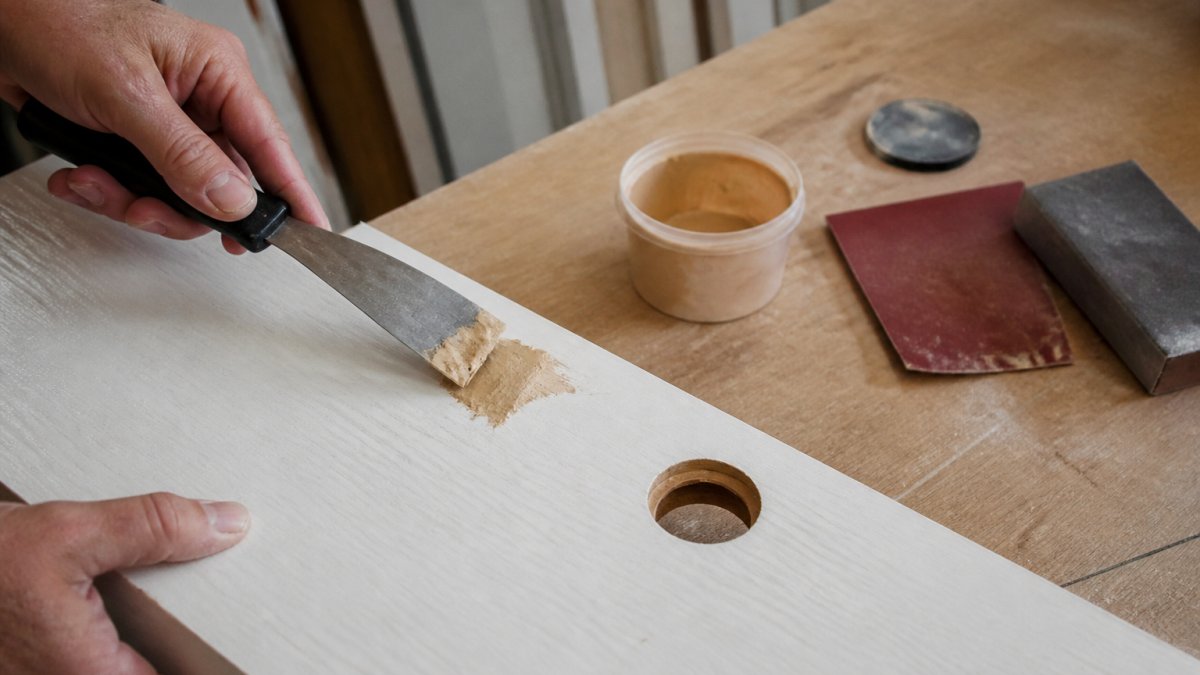
Apply your chosen filler material over the backing. Use a putty knife to press it into the hole.
Smooth the filler flush with the door surface. Overfill slightly, filler shrinks as it dries. Once dry, sand smooth with 220-grit sandpaper.
Apply primer over the repair. Primer seals the filler and ensures even paint coverage. Let primer dry per manufacturer instructions.
Multiple thin coats work better than one thick coat. Sand lightly between coats for better adhesion.
Choosing the Right Hollow Core Door Repair Kit
A hollow core door repair kit bundles the materials you need into one package. Kits save time and ensure compatibility between materials. They're a good choice if you're new to door repair.
Essential Tools and Materials
Not all kits are the same. Check what's included before buying. A complete kit should have:
- Filler material (wood filler or spackling compound)
- Putty knife
- Sandpaper (multiple grits)
- Primer
- Paint or stain
- Instructions specific to hollow core doors
Filler material is the most important component. Quality matters. Cheap fillers shrink excessively or don't harden fully. Better fillers provide a smooth finish that accepts paint well.
Look for kits that include both 120-grit and 220-grit sandpaper. You'll use 120-grit for rough work and 220-grit for final smoothing.
Some kits include expanding foam. This is useful for medium and large holes. Kits without foam work for small punctures only.
Material Compatibility and Selection
Choose materials designed for hollow core doors specifically. These products account for the door's lightweight construction.
Expanding foam works well for backing. It's lightweight and bonds to the hollow core structure.
Lightweight spackling compound is better than heavy-duty joint compound for hollow core doors.
Water-based primers and paints are easier to clean up and dry faster than oil-based options.
Check compatibility before mixing products. Some fillers don't bond well with certain primers. Read labels and follow manufacturer recommendations.
Hollow Core Door Maintenance to Prevent Damage
Prevention is easier than repair. Regular maintenance keeps hollow core doors in good condition and extends their life. A few simple steps reduce the risk of damage.
Regular Cleaning and Inspection
Clean your doors monthly. Dust and dirt accumulate and can trap moisture. Use a soft cloth and mild soap solution. Wipe gently to avoid scratching the surface.
Inspect doors quarterly for signs of damage. Look for:
- Small dents or soft spots
- Cracks in the paper covering
- Moisture stains or discoloration
- Loose hinges or hardware
- Paint peeling or bubbling
Catch problems early. A small dent is easier to fix than a large hole. Early treatment prevents damage from spreading.
Check the paper covering around the edges. If it's peeling, seal it with construction adhesive. Exposed edges let moisture in, which weakens the hollow core structure.
Protecting High-Risk Areas
Certain areas get more impact. Protect them proactively.
Install door edge guards or bumpers in hallways and near furniture. These absorb impacts that would otherwise damage the door.
Use doorstops to prevent doors from slamming against walls. Slamming causes dents and can crack the frame.
Keep furniture away from doors. Move chairs, tables, and equipment that might hit the door during normal use.
Protect doors from foot traffic damage. Reinforce the bottom 3 feet of doors in high-traffic areas with protective film or guards.
Addressing Moisture and Environmental Issues
Moisture is the enemy of hollow core doors.
Keep doors away from bathrooms and kitchens when possible. If that's not feasible, ensure good ventilation in these areas.
Wipe up spills immediately. Water on the door surface can seep into the edges and cause damage.
Avoid placing humidifiers near doors. High humidity over time can damage the door structure.
Seal gaps around the door frame. Gaps let moisture in and reduce the door's insulation value.
Hollow Core Door Repair or Replacement: Making the Right Call
Not every damaged door should be repaired. Sometimes replacement makes more sense. Understanding when to repair and when to replace saves money and hassle.
Repair Limits and When Replacement Makes Sense
Repair works well for:
- Holes under 3 inches
- Surface damage that doesn't affect the frame
- Damage in one area only
- Doors with no structural issues
Replace the door if:
- The hole exceeds 4-5 inches
- Multiple areas are damaged
- The frame is cracked or warped
- The door won't close or latch properly
- The damage is near hinges or the lock mechanism
- The door has water damage or delamination
A damaged door frame is a red flag. If the frame is bent or cracked, repair won't hold. The door needs replacement.
Delamination is serious. If the paper covering is separating from the core, the door is failing. Repair won't restore structural integrity.
Cost and Timeline Considerations
Repair costs depend on damage size and materials needed. Small repairs might cost under $50 in materials. Larger repairs could reach $100-150.
Replacement costs more upfront. A new hollow core door runs $50-150 depending on quality.
Timeline matters for your project. Repair takes a few hours to a full day.
Consider the door's age and condition. An old door with multiple issues might be near the end of its life.
Drying Times and Repair Timeline
Patience is crucial during repair. Rushing through drying times leads to poor results. Here's a realistic timeline for a typical repair:
Hour 1-2: Remove the door, prepare the work area, and remove damaged material.
Hour 2-3: Apply backing material (if needed). Let it cure per manufacturer instructions.
Hour 4-6: Apply filler in layers.
Hour 6-8: Sand smooth and apply primer. Primer usually dries in 1-2 hours.
Hour 8-10: Apply paint. Multiple coats need drying time between applications.
Total time: Plan 8-12 hours for a complete repair, spread over 1-2 days.
Don't rush.
Temperature and humidity affect drying times. Cold or humid conditions slow drying.
Hollow core door damage doesn't always mean replacement.
Frequently Asked Questions
How do you fix a large hole in a hollow core door?
Large holes (over 3 inches) require backing material and multiple filler coats. First, remove loose material and insert a backing support like expanding foam or fill strips through the damaged area. Once the backing sets, apply lightweight filler or Bondo in layers, allowing each coat to dry fully before sanding and applying the next. Finish with primer and paint. For holes exceeding 6 inches, hollow core door repair or replacement should be evaluated based on the door's condition and cost.
What's the best hollow core door repair kit for small holes?
Small punctures and holes under 2 inches typically need just wood filler, sandpaper, primer, and paint. Many hollow core door repair kits include these basics plus a putty knife and applicator. Choose a kit with lightweight filler that doesn't require backing support for small damage. Check that the filler is compatible with your door's material (paper-faced or veneer) and accepts paint smoothly.
How often should you perform hollow core door maintenance?
Inspect hollow core doors monthly for damage, moisture, or loose hardware. Clean surfaces every few months to prevent dirt buildup that can trap moisture. Check door panels for warping or soft spots, especially in high-humidity areas. Tighten hinges and hardware twice yearly. Address minor damage immediately before it spreads. In Arizona's dry climate, focus on protecting doors from direct sunlight and temperature fluctuations that can cause the hollow core to shift or crack.
When should you repair a hollow core door instead of replacing it?
Repair hollow core doors when damage is localized (holes under 6 inches, minor dents, or surface damage), the door frame is sound, and the door is relatively new. Replacement makes more sense if the door has multiple large holes, significant warping, water damage, or structural failure. Consider replacement cost versus repair time and durability. A professional assessment helps determine if the repair will last or if a new door is the better long-term investment.