 how-to
Choose Interior Doors for Desert Climate: A Guide
Table of Contents
- Understand How Desert Climates Affect Interior Doors
- Solid-Core vs Hollow-Core Interior Doors for Dry Climates
- Best Interior Door Material for Dry Climate Conditions
- Wood Door Acclimation Before Installation
- Interior Doors for Rooms with Direct Sunlight Exposure
- Selection Checklist for Desert Interior Doors
- Maintenance Schedule for Long-Term Performance
- Frequently Asked Questions
Last Updated: October 5, 2026
Understand How Desert Climates Affect Interior Doors
Interior doors desert climate conditions create unique challenges that differ fundamentally from exterior door exposure.
Desert climates are characterized by extreme aridity (relative humidity often 10-25%), intense solar radiation, and large diurnal temperature swings (40°F+ between day and night). However, the interior of a conditioned home creates a second microclimate.
Interior doors sit at the boundary of these microclimates. A bedroom door separates a conditioned sleeping space from a hallway that may be slightly warmer or cooler depending on HVAC ductwork layout.
This cycling stress affects materials differently than steady-state heat does:
Wood and wood composites are hygroscopic, they absorb and release moisture based on relative humidity. In a desert home with HVAC cycling, wood doors experience repeated micro-expansions and contractions as humidity fluctuates. Over months and years, this cycling weakens glue joints, loosens hardware, and can cause the wood grain to raise and splinter. The rate of dimensional change depends on the wood species and grain orientation. Softwoods like pine expand and contract at roughly 0.3% per 1% change in moisture content along the grain, and 3-5% across the grain. A door that cycles between 8% and 12% moisture content repeatedly will experience measurable dimensional changes.
Fiberglass and composite materials are non-hygroscopic. They do not absorb moisture, so they maintain stable dimensions regardless of humidity swings. This is why fiberglass doors are often the preferred choice in desert climates, they eliminate the expansion-contraction cycle entirely.
Thermal expansion adds another layer of stress. All materials expand when heated and contract when cooled. The thermal expansion coefficient for wood is roughly 0.000003 per degree Fahrenheit along the grain. While this sounds tiny, it compounds across a 36-inch door width and thousands of temperature cycles.
Understanding these forces helps you choose interior doors desert climate conditions demand for reliable performance over years. The key is matching material properties to what your climate will demand, not just the outdoor desert environment, but the specific interior conditions your HVAC system creates.
Solid-Core vs Hollow-Core Interior Doors for Dry Climates
Choosing between solid-core and hollow-core doors is one of the most important decisions you'll make. The difference in performance under desert conditions is dramatic.
Structural Integrity Comparison
Solid-core doors have a dense interior made of wood composite, foam, or mineral material. This mass resists warping and maintains dimensional stability across temperature swings.
Hollow-core doors have a thin wood frame around an empty or loosely-filled interior. They're lightweight and affordable, but they lack the structural strength to handle desert stress.
Solid-core doors cost more upfront, but they deliver:
- Better resistance to warping and cracking
- Superior sound dampening
- Longer lifespan in extreme climates
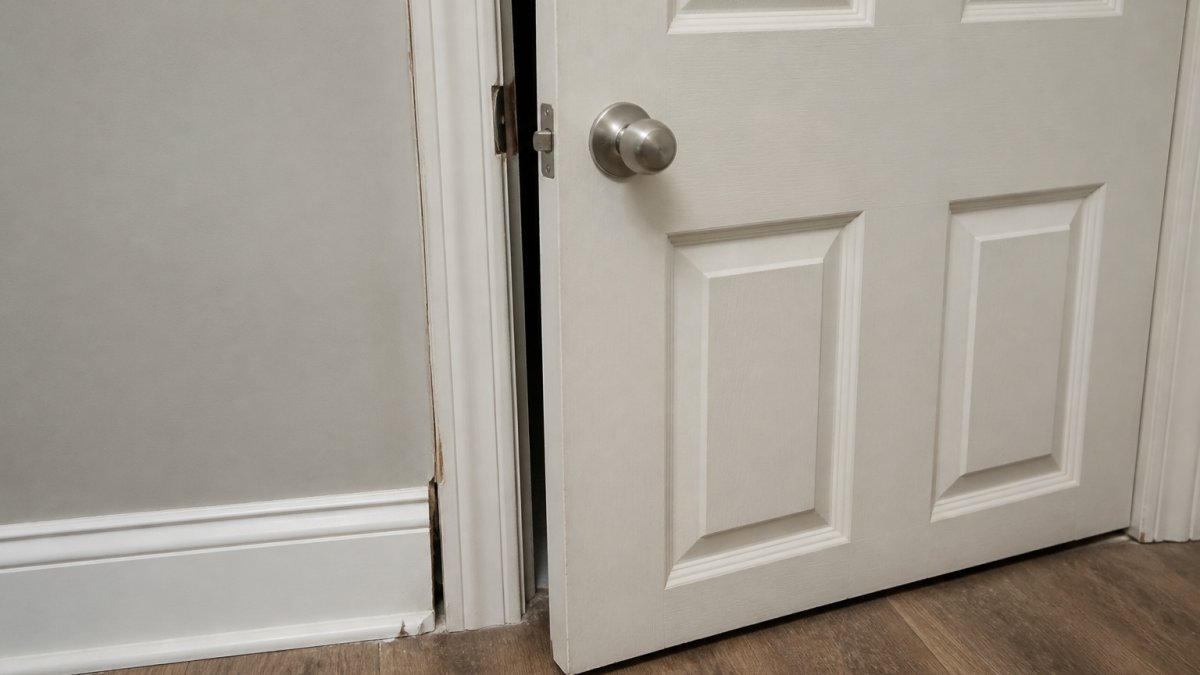
- Tighter door-to-frame seals
Hollow-core doors are fine for interior closets in mild climates. In a desert home, they'll start to warp within 2-3 years of use. The thin veneer buckles as the hollow interior contracts.
For bedrooms, bathrooms, and high-traffic areas in desert climates, solid-core is the only choice that makes sense long-term.
Thermal Bridging and Energy Efficiency
Thermal bridging occurs when heat transfers through a material from one side to the other. Hollow-core doors conduct heat readily because air inside them doesn't insulate well.
Solid-core doors with insulating material reduce thermal bridging. This matters in desert homes where air conditioning runs constantly. A door that leaks cold air costs you money every month.
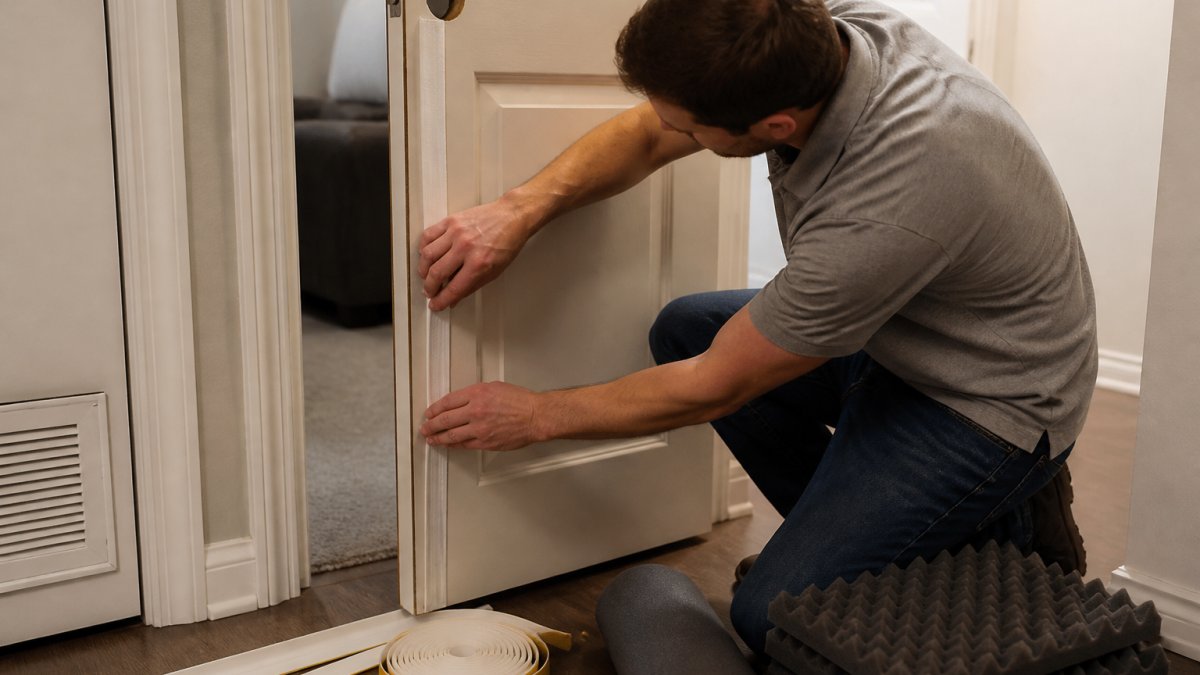
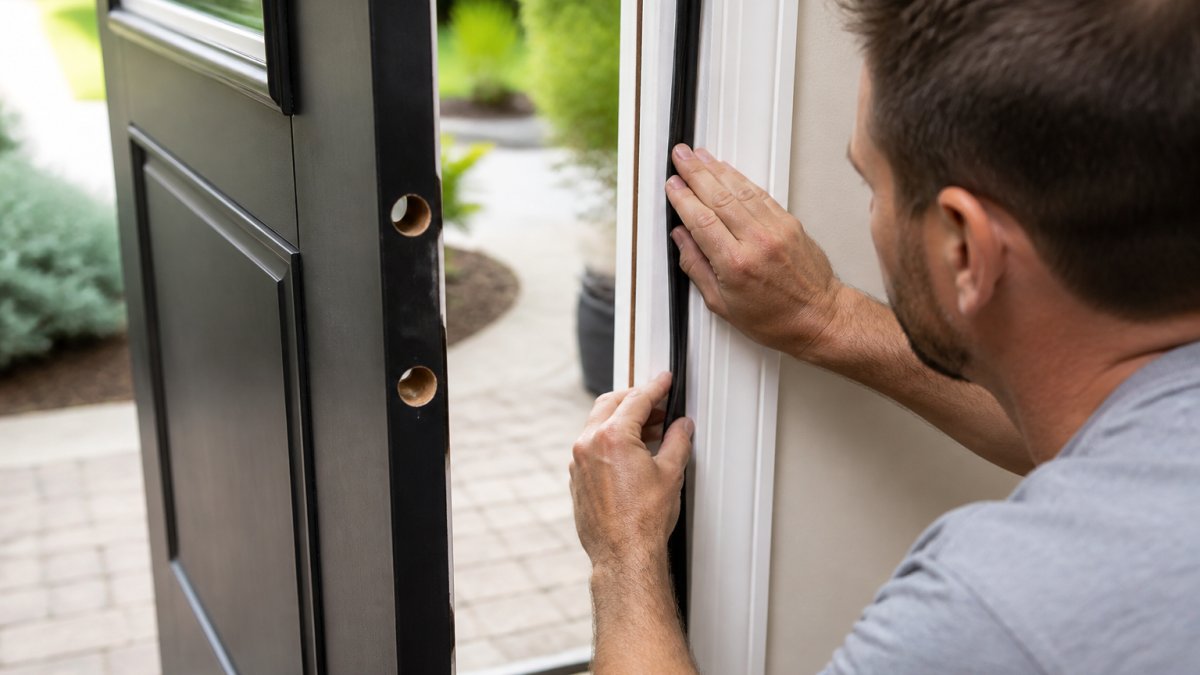
Energy-efficient doors also need proper weatherstripping. Gaps around the frame allow conditioned air to escape. We recommend checking weatherstripping annually, desert heat degrades rubber seals faster than in temperate climates.
Best Interior Door Material for Dry Climate Conditions
Three materials dominate the interior door market. Each responds differently to desert heat and low humidity.
Wood Doors and Pre-Finished Options
Solid wood doors offer beauty and warmth. They're available in dozens of species and finishes. However, wood is hygroscopic, it absorbs and releases moisture based on air humidity.
In desert climates, wood doors need protection:
- Pre-finished doors arrive sealed, slowing moisture loss
- Quality finish coatings resist UV degradation
- Solid wood (not veneer over hollow core) resists warping
- Hardwoods like oak and maple are more stable than softwoods
The trade-off: solid wood doors cost more and require more maintenance. You'll need to refinish them every 5-10 years as UV exposure breaks down the coating.
Pre-finished options from Arizona Door Store include doors already stained or sealed. This gives you immediate color and protection without on-site finishing.
Fiberglass Composite Doors
Fiberglass composite doors combine a rigid fiberglass shell with an insulating core. They don't absorb moisture, so they maintain dimensional stability in any climate.
Benefits in desert conditions:
- Zero warping from moisture loss
- Excellent thermal performance (lower cooling costs)
- Durable finish that resists UV degradation
- Minimal maintenance, just clean and occasionally touch up
- Can be stained to look like wood or painted any color Coordinating these versatile door finishes with the right exterior paint options ensures a cohesive aesthetic that stands up to the harsh desert sun.
Fiberglass doors cost slightly more than hollow-core wood but less than premium solid wood. Over a 20-year lifespan, they often cost less because you avoid refinishing and repairs.
The main limitation: fiberglass doesn't feel exactly like wood. If authenticity matters, solid wood is your choice. If performance and durability matter, fiberglass wins in desert climates.
Wood Door Acclimation Before Installation
Installing a wood door straight from the truck is a mistake. Wood needs time to adjust to your home's humidity level before you hang it.
Acclimation Timeline and Storage Requirements
Wood doors shipped from humid regions can have 12-14% moisture content. Your desert home may have 8-10% humidity. That gap causes the wood to shrink after installation, creating gaps and loose joints.
Acclimate wood doors for at least 5-7 days before hanging:
- Store doors flat or standing upright indoors
- Keep them in the room where they'll be installed (or a similar climate zone)
- Avoid stacking doors directly on concrete, moisture wicks up from the slab
- Don't expose doors to direct sunlight during storage
- Maintain normal HVAC operation so doors experience actual home conditions
If your home is under construction, wait until HVAC is running and interior humidity has stabilized before bringing doors inside.
Checking Moisture Levels Before Hanging
Use a wood moisture meter to check whether your door has acclimated. Target 8-12% moisture content for desert climates.
Steps:
- Measure at three points: top, middle, and bottom of the door
- Take readings on both faces
- If readings vary by more than 2%, wait longer
- Once stable, the door is ready to hang
Arizona Door Store staff can help you interpret readings if you're unsure.
Interior Doors for Rooms with Direct Sunlight Exposure
Rooms with south or west-facing windows get intense desert sun. This UV exposure breaks down finishes and can cause uneven fading.
UV Degradation and Protective Finishes
UV rays penetrate clear finishes and damage wood fibers beneath. Over 3-5 years, a door finish exposed to direct sun will fade, chalk, and peel.
Protect doors in sunny rooms with:
- UV-blocking window film on nearby windows (reduces heat and light)
- Solid stains instead of clear finishes (pigment blocks UV better)
- High-quality polyurethane or conversion varnish (more durable than lacquer)
- Periodic maintenance, refinish every 5-7 years if the door gets direct sun
Pre-finished doors from Arizona Door Store use industrial-grade coatings that resist UV better than on-site finishes.
Fiberglass doors handle direct sun better than wood. The material doesn't degrade under UV, and the finish stays stable for 15+ years without refinishing.
Glass Inserts and Solar Control
Glass inserts in doors add light and visual interest. However, glass transmits heat. A door with a large glass panel becomes a heat source in direct sun.
Consider:
- Smaller glass panels (less heat transfer)
- Tempered glass (safer, required by code in some locations)
- Low-E coatings on glass (reduces heat transfer)
- Interior blinds or shades to block afternoon sun
- Exterior shading (awnings, trees) to reduce sun exposure
Glass doors look beautiful, but they're less energy-efficient in desert climates. If you want a glass insert, pair it with solid-core construction and quality weatherstripping to minimize energy loss.
Selection Checklist for Desert Interior Doors
Use this checklist when comparing doors:
| Criteria | Solid-Core Wood | Fiberglass Composite | Hollow-Core Wood |
|---|---|---|---|
| Warping Resistance | Excellent | Excellent | Poor |
| Moisture Stability | Good | Excellent | Poor |
| Energy Efficiency | Good | Excellent | Fair |
| Maintenance | Moderate | Low | Low |
| Initial Cost | Higher | Moderate | Low |
| Lifespan (Desert) | 15-20 years | 20-25 years | 5-10 years |
| UV Resistance | Fair (needs refinish) | Excellent | Poor |
Before ordering, confirm:
- Door is solid-core or fiberglass (not hollow-core)
- Pre-finished or sealed (not unfinished)
- Moisture content is 8-12% at time of delivery
- Weatherstripping is included and high-quality
- Hardware is rated for desert temperature swings
- Door frame material matches your climate needs
Maintenance Schedule for Long-Term Performance
Desert doors need regular attention to stay in good condition. A simple maintenance schedule prevents expensive repairs.
Every 3 months:
- Check weatherstripping for gaps or damage
- Inspect door finish for cracks or peeling
- Test door operation, hinges should be smooth
Every 6 months:
- Tighten hardware (screws loosen from temperature swings)
- Clean door and frame
- Check for gaps between door and frame
Every 1-2 years:
- Reapply weatherstripping if worn
- Touch up finish scratches before they spread
- Inspect door edges for moisture damage
Every 5-7 years (wood doors only):
- Refinish or restain to restore UV protection
- Replace weatherstripping if original is hardened
Every 10 years:
- Have a professional inspect structural integrity
- Consider replacing weatherstripping even if it looks okay
- Evaluate whether door is still performing well
Fiberglass doors need less maintenance, mostly cleaning and occasional touch-ups. Wood doors demand more attention but reward you with warmth and character if you stay on top of care.
Choosing the right interior doors for desert climates means prioritizing structural stability and moisture resistance over cost. Solid-core wood and fiberglass composite doors outperform hollow-core options in extreme heat and low humidity. We carry pre-finished doors, fiberglass composites, and solid wood options built to last in desert conditions. Visit our Scottsdale or Phoenix design center to see samples in person, or call us for guidance on which door material fits your project timeline and budget.
Frequently Asked Questions
What type of door is best for hot, dry desert climates?
Solid-core doors with fiberglass composite or pre-finished wood construction perform best in desert climates. Solid-core doors resist warping and cracking better than hollow-core options because they have greater dimensional stability under extreme temperature fluctuations. Pre-finished doors arrive sealed, which prevents moisture absorption in low-humidity environments. Fiberglass composite doors don't expand or contract with humidity changes the way wood does, making them ideal for arid regions where moisture content in the air drops significantly.
How should interior wood doors be acclimated before installation in a desert home?
Wood doors must acclimate to your home's climate for 48 to 72 hours before installation. Store them flat or standing upright in the room where they'll be hung, with temperature and humidity matching your home's conditions. This allows the wood's moisture content to stabilize and prevents warping after installation. In desert climates, acclimation is critical because the low humidity will cause the wood to lose moisture rapidly; skipping this step often results in cracking or gaps around the door frame once the wood fully dries.
What finish protects interior doors from sun exposure in bright desert rooms?
UV-resistant finishes and pre-finished primed coatings protect doors from sun degradation. Look for doors with factory-applied protective finishes that include UV blockers, which prevent fading and deterioration of the door's surface. Polyurethane or conversion-varnish finishes offer excellent UV resistance. For rooms with direct sunlight, avoid unfinished or lightly stained doors; the sun's rays will cause the finish to crack and the wood underneath to bleach. Primed doors give you flexibility to paint with UV-protective exterior-grade paint indoors if needed.
Are solid-core or hollow-core interior doors better for desert homes?
Solid-core doors are significantly better for desert climates. Hollow-core doors contain air pockets that allow the thin outer veneer to warp and crack under thermal expansion stress. Solid-core doors have a dense insulating core that maintains structural integrity through temperature swings of 30 to 50 degrees Fahrenheit between day and night in desert regions. Solid-core doors also provide better sound insulation, thermal bridging reduction, and energy efficiency, keeping HVAC costs lower. While solid-core doors cost more upfront, they last longer in harsh desert conditions and require less maintenance.