 comparison
Solid Core vs Hollow Core Doors: Full Comparison
Table of Contents
- Solid Core vs Hollow Core Doors: Side-by-Side Comparison
- What Is a Hollow Core Door?
- What Is a Solid Core Door?
- Interior Door Soundproofing: How Each Type Performs
- Solid Core Door Weight and Installation Requirements
- Door Installation Cost: Hollow Core vs Solid Core
- Which Rooms Need Solid Core Doors vs Hollow Core Doors?
- Conclusion
Last Updated: August 22, 2026
Solid Core vs Hollow Core Doors: Side-by-Side Comparison
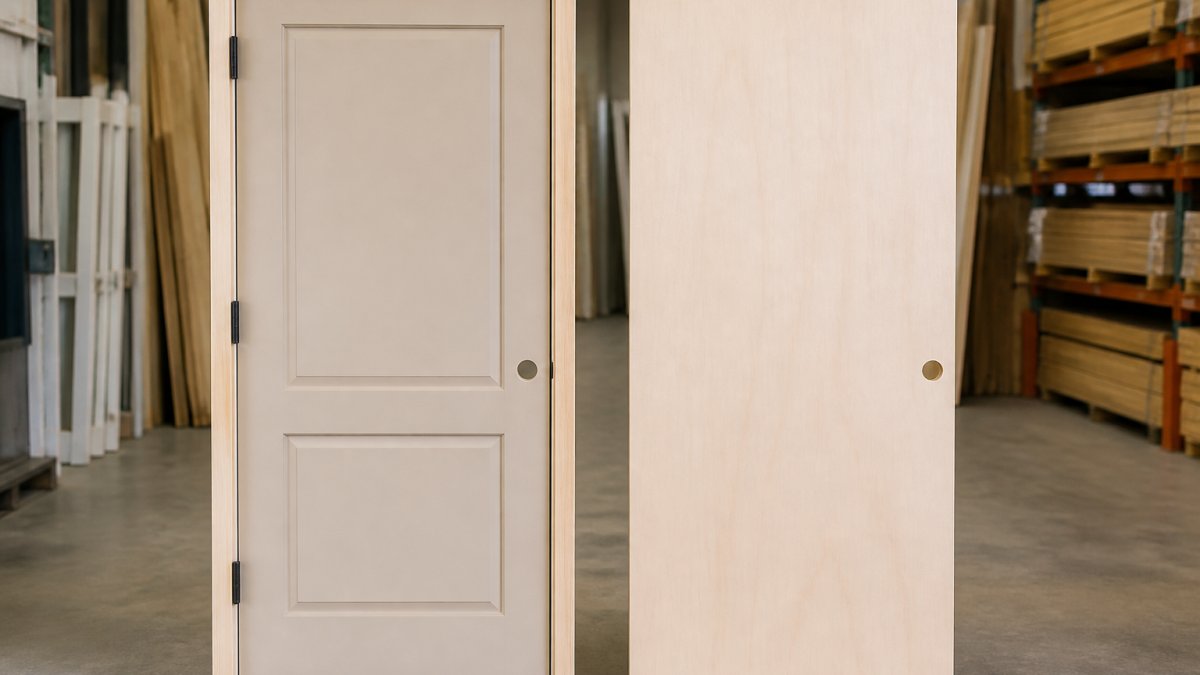
The choice between solid core vs hollow core doors affects acoustics, durability, fire safety, resale value, and whether your existing door frames can handle the swap. Hollow core doors are lightweight, budget-friendly, and adequate for closets and low-traffic secondary spaces. Solid core doors are heavier, quieter, and worth the premium for bedrooms, bathrooms, and home offices where privacy and durability matter.
| Feature | Hollow Core | Solid Core | Winner |
|---|---|---|---|
| Weight | 25-30 lbs typical | 60-80 lbs typical | Hollow Core |
| Sound Transmission Class | ~20-25 STC | ~27-35 STC | Solid Core |
| Impact resistance | Low | High | Solid Core |
| Cost | Lower | Higher | Hollow Core |
| Installation difficulty | Easy | Requires more effort | Hollow Core |
| Fire rating availability | Limited | Yes (20-min rated options) | Solid Core |
| Best for | Closets, pantries, laundry | Bedrooms, offices, baths | Depends on room |
What Is a Hollow Core Door?
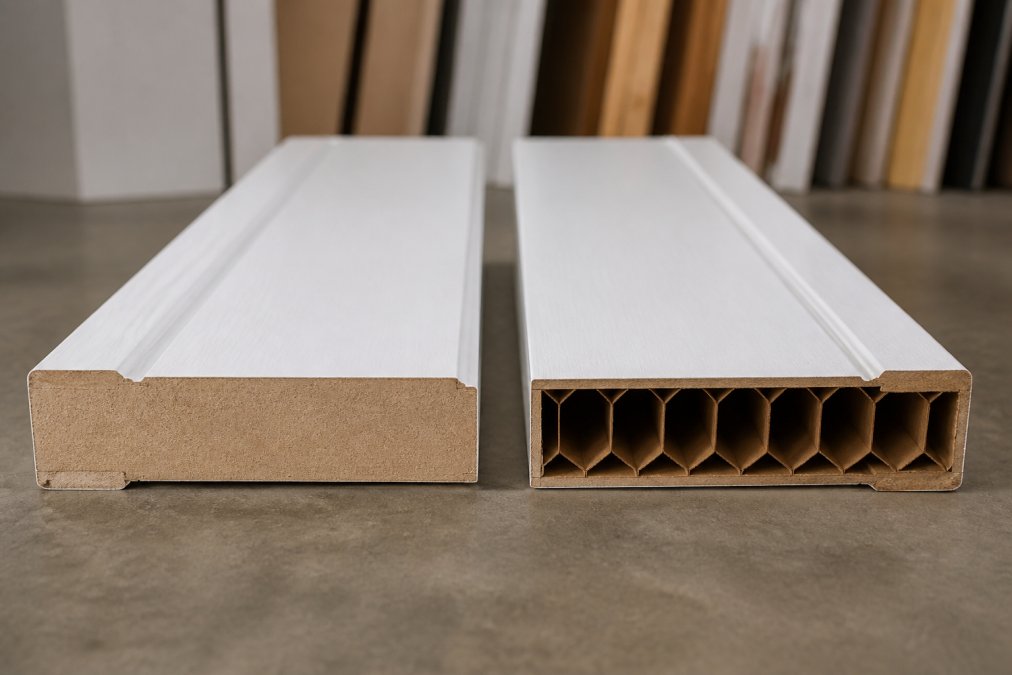
A hollow core door is an interior door slab with a thin wood or molded composite facing stretched over a lightweight internal framework, typically a honeycomb or grid structure made from cardboard or wood composite.
Construction and Materials
The interior of a hollow core door is mostly air. The structural skeleton is usually a cardboard honeycomb or wood stringer grid, with solid wood blocks added only at lock and hinge locations. The outer skins are typically molded wood composite (MDF-based) or flush wood composite.
This construction keeps manufacturing costs low and weight minimal. A standard 80-inch hollow core door slab weighs roughly 25-30 pounds, making it easy for a single installer to handle.
The trade-off is structural integrity. The honeycomb core offers almost no resistance to impact, and the thin skins dent and crack under moderate force. Hollow core doors also transmit noise freely, since there's no dense material to absorb or block sound waves.
According to the Architectural Woodwork Standards published by the Architectural Woodwork Institute, hollow core flush doors are classified for interior non-rated applications only.
Pros and Cons of Hollow Core Doors
Pros:
- Significantly lower cost per door slab
- Lightweight construction reduces installation labor time
- Easy to transport and maneuver in tight spaces
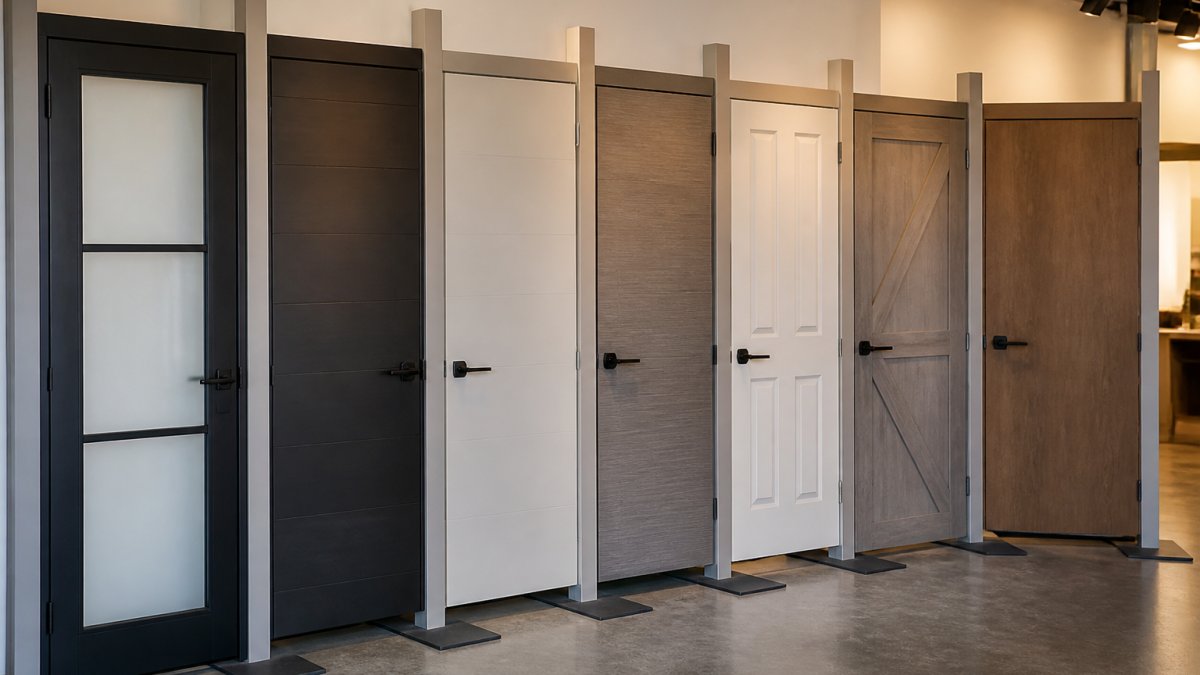
- Available in many styles and finishes
- Adequate for closets, pantries, laundry rooms, and secondary spaces
Cons:
- Poor acoustic performance, with STC ratings typically in the 20-25 range
- Low impact resistance, susceptible to dents and punch-through damage
- Limited fire rating options, generally not suitable for fire-separation applications
- Hardware can pull loose from the honeycomb core if not anchored to solid wood blocks
- Shorter lifespan in high-traffic areas
What Is a Solid Core Door?
A solid core door is an interior door constructed with a dense composite or engineered wood core, typically medium-density fiberboard (MDF) or particleboard composite, sandwiched between two wood or molded composite face panels. The result is a door with genuine mass, structural integrity, and measurable acoustic performance.
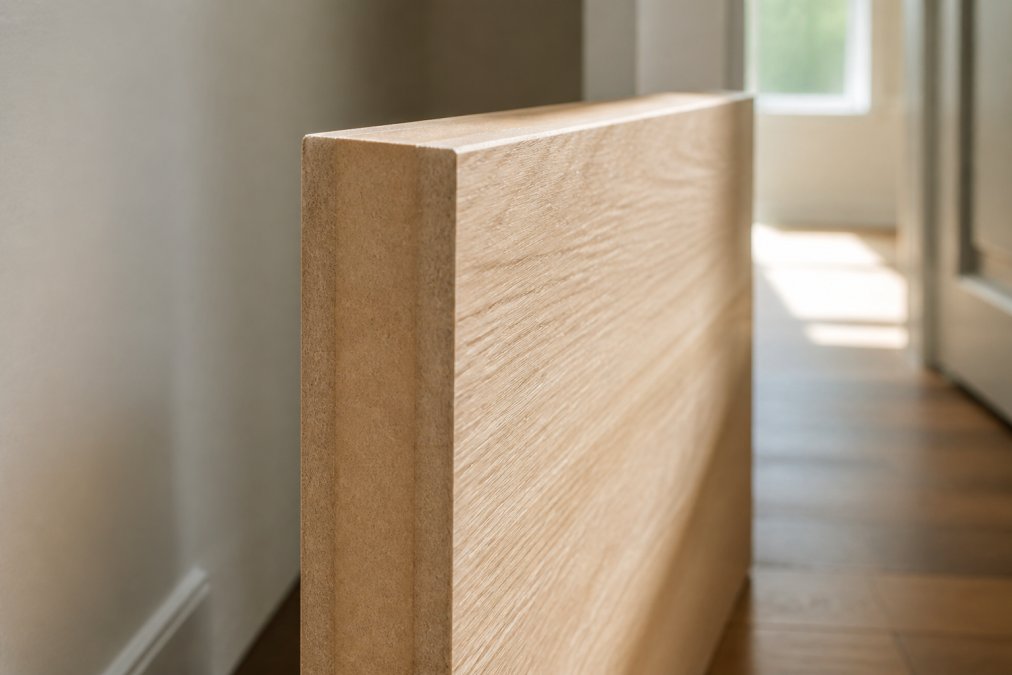
Solid core doors are the standard choice for bedrooms, bathrooms, and home offices. They feel substantial when opened and closed, and the latch engages with a solid, dampened sound rather than the hollow knock of a lightweight slab.
Construction and Materials
The core is the defining element. Most solid core doors use an MDF or particleboard composite fill that runs the full interior of the door slab, bonded to face veneers or molded composite skins. Some higher-end options use a staved lumber core.
Manufacturers like JELD-WEN use ProCore MDF construction, which provides STC ratings between 27 and 30 for standard configurations. Masonite's solid core line uses a similar dense composite approach, designed to mimic the look of solid wood doors at a lower price point.
The increased density also provides better thermal insulation between rooms.
Pros and Cons of Solid Core Doors
Pros:
- STC ratings of 27-35 provide meaningful interior door soundproofing
- High impact resistance, resistant to dents, cracks, and everyday wear
- Supports a premium feel with substantial sound and weight when operated
- Available with fire-rated core options for code-compliant assemblies
- Better long-term durability in high-traffic areas
- Improved resale value perception in residential properties
Cons:
- Heavier weight (60-80 lbs) requires two-person installation in most cases
- Higher cost per door slab compared to hollow core alternatives
- Heavier slabs may require hinge upgrades on older door frames
- Slightly more difficult to maneuver in tight spaces during installation
Interior Door Soundproofing: How Each Type Performs
Interior door soundproofing is one of the most misunderstood factors in residential door selection. Many buyers assume any interior door provides reasonable privacy. The data tells a different story.
Sound Transmission Class (STC) is the standard rating used to measure how well a building assembly reduces airborne sound. A higher STC number means less sound passes through. For reference, the National Institute of Building Sciences' Whole Building Design Guide notes that an STC of 25 allows normal speech to be heard clearly, while an STC of 40 makes speech inaudible.
Hollow core doors typically achieve STC ratings in the 20-25 range, where normal conversation in the adjacent room is clearly audible. Solid core doors typically reach STC ratings of 27-35, which meaningfully reduces speech intelligibility through the door.
A common mistake is assuming that upgrading the door alone solves all sound leakage. The door slab accounts for roughly 50-60% of the acoustic performance of the assembly. The door frame, weatherstripping, threshold seal, and the gap under the door all contribute to the final STC of the installed system.
For home offices, bedrooms adjacent to living areas, and bathrooms, solid core doors are the only practical choice if acoustic performance matters. For closets, pantries, and laundry rooms, the STC difference between hollow and solid core is rarely worth the added cost.
Solid Core Door Weight and Installation Requirements
Solid core door weight is the single factor that catches most DIY installers off guard. A standard 32-inch by 80-inch solid core slab weighs approximately 60-80 pounds depending on core density and facing material. That's two to three times the weight of a comparable hollow core door.
This weight difference has direct implications for installation:
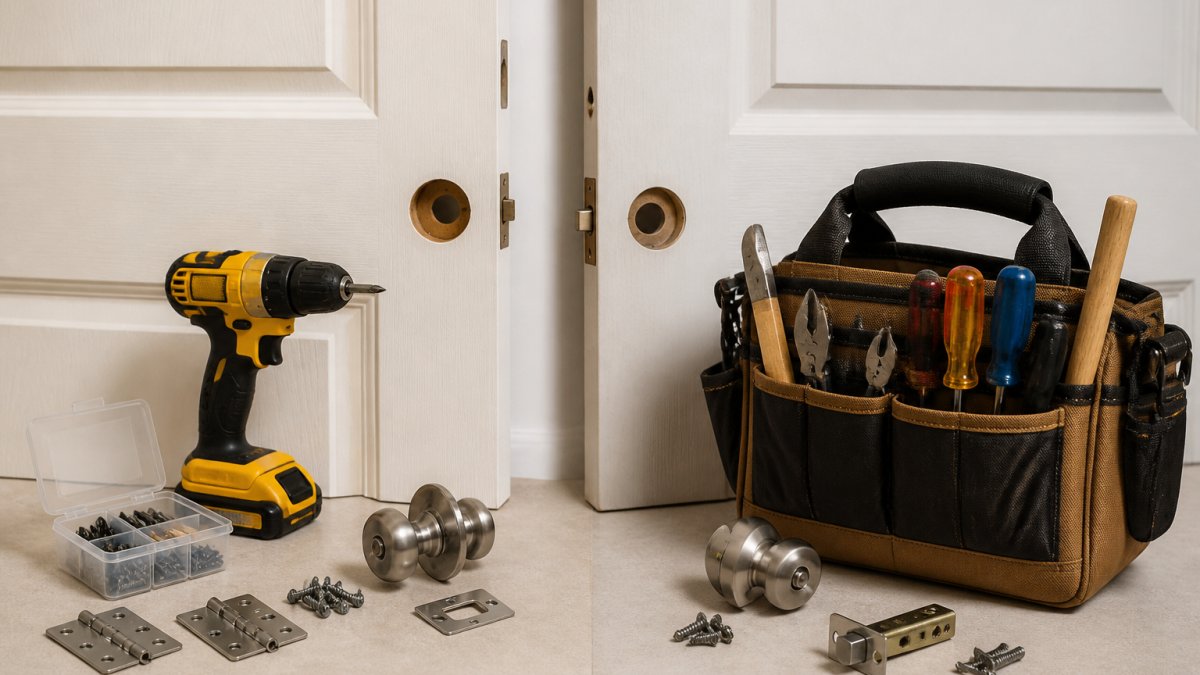
- Hinges: Standard residential hinges rated for hollow core doors are typically adequate for 30-40 lbs. Solid core doors require heavy-duty hinges, usually 4-inch ball-bearing hinges rated for 80+ lbs per hinge. Under-rated hinges cause the door to sag over time, misaligning the latch and creating gaps at the frame.
- Pre-hung vs. slab: Installing a solid core door slab into an existing frame is a two-person job.
- Door frame integrity: Older frames may not have the structural reinforcement needed to support a heavy solid core slab without modification.
Hardware Compatibility and Retrofitting Older Frames
Retrofitting a solid core door into an existing hollow core opening is a common renovation scenario where most installation problems originate.
Most hollow core door installations use two hinges. Solid core doors require three hinges minimum to distribute the weight load correctly and prevent frame stress. If the existing frame has only two hinge mortises, a third needs to be cut.
The door frame itself also needs evaluation. If the frame shows signs of rot, warping, or inadequate anchoring to the rough opening, those issues need to be addressed before hanging a heavier slab. A warped frame will prevent a solid core door from sealing properly.
Hardware compatibility extends to locksets and deadbolts. Most standard residential locksets fit both door types, since the backset and bore dimensions are standardized.
Door Installation Cost: Hollow Core vs Solid Core
Door installation cost varies based on door type, frame condition, hardware selection, and labor rates. Solid core doors cost more per slab than hollow core doors, and installation labor costs more due to the weight and potential frame modifications involved.
The cost gap between hollow core and solid core door slabs is real, but it needs to be evaluated against the total project cost. For a full interior renovation replacing eight to twelve doors, the per-door premium for solid core adds up. For a targeted replacement of two or three bedroom and bathroom doors, the premium is more manageable relative to the labor cost of the full installation.
For current pricing on hollow core and solid core door slabs, contact Arizona Door Store directly. The team works with contractors and homeowners across a range of budgets and can match product selection to project requirements without pushing you toward the highest-priced option. As Joe A., a repeat customer, put it: "They are great at showing me products that match my need without trying to sell me the highest price door."
Fire Rating, Safety Standards, and Resale Value
Fire-rated interior doors are required by building codes in specific locations: the door between an attached garage and the living space, doors in certain multi-family configurations, and doors in fire-separation wall assemblies. the International Residential Code published by the International Code Council requires a minimum 20-minute fire-rated door assembly between an attached garage and the dwelling unit.
Hollow core doors cannot meet this requirement. Their honeycomb core provides no fire resistance. Solid core doors with a fire-rated MDF or mineral core can achieve 20-minute ratings, and some configurations reach 45-minute or 60-minute ratings depending on the assembly.
From a resale value perspective, the quality of interior doors is a visible signal to buyers and inspectors. Hollow core doors that show dents, punch-through damage, or sagging are a common inspection finding in older homes. Replacing them with solid core doors before listing is a renovation that buyers notice.
Many solid core doors use MDF or engineered wood composite cores that incorporate recycled wood fiber. Look for products that carry Forest Stewardship Council certification if environmental sourcing is a project requirement.
Which Rooms Need Solid Core Doors vs Hollow Core Doors?
The right door type depends entirely on what you need the door to do.
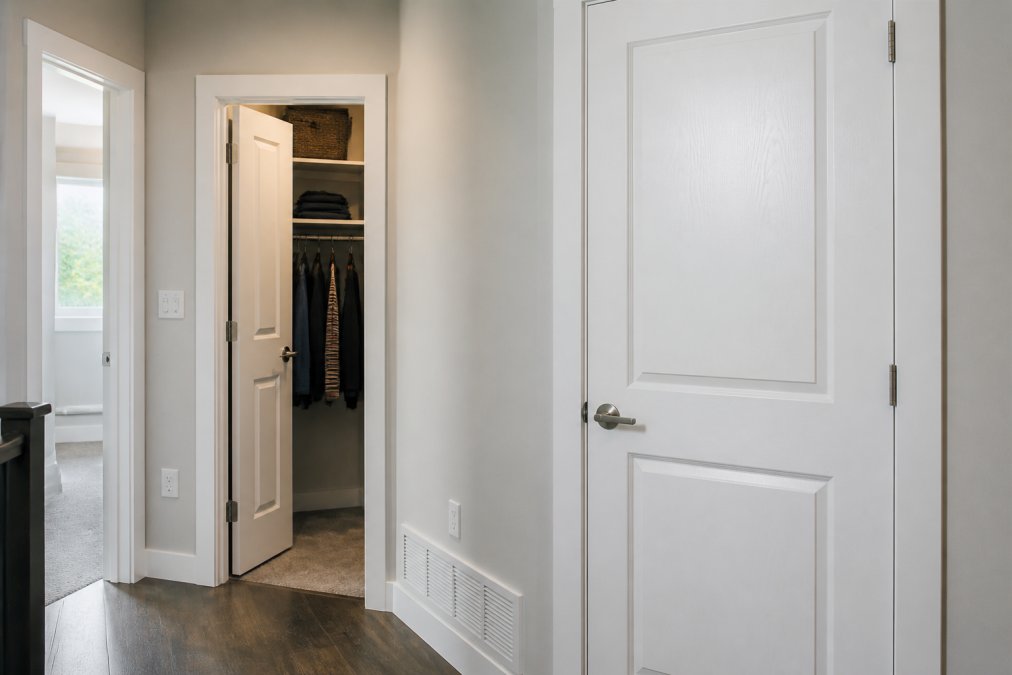
Rooms where solid core doors are the right call:
- Primary bedrooms: Acoustic privacy is the main driver. The STC improvement from hollow to solid core is most noticeable in sleeping areas adjacent to living spaces or hallways.
- Bathrooms: Privacy and impact resistance both matter. Bathroom doors take more wear than most interior doors.
- Home offices: Sound isolation is critical for video calls and focused work.
- Garage-to-home entry doors: Fire rating requirements make solid core (with a rated assembly) mandatory in most jurisdictions.
- Media rooms: Vibration dampening from the dense core helps contain low-frequency sound.
Rooms where hollow core doors are adequate:
- Closets: No acoustic or fire rating requirement. Cost savings here can offset solid core upgrades elsewhere.
- Pantries and laundry rooms: Secondary spaces where the door's primary function is separation, not privacy or sound control.
- Utility rooms: Budget-friendly hollow core performs the function adequately.
The most common mistake contractors see is uniform door selection across all rooms. Specifying solid core throughout adds cost without proportional benefit. Specifying hollow core throughout saves money on closets but creates acoustic and durability problems in bedrooms and bathrooms. A mixed specification, solid core for primary rooms and hollow core for secondary spaces, optimizes both budget and performance.
Choosing between solid core vs hollow core doors comes down to matching door performance to room requirements. For secondary spaces, hollow core delivers adequate function at a lower cost. For bedrooms, bathrooms, offices, and any fire-rated application, solid core is the correct specification. The Arizona Door Store team provides personalized guidance on door selection, with expert consultants who can assess your project requirements, frame conditions, and budget constraints. Visit one of the design centers in Scottsdale or Phoenix, or contact the team for reliable local delivery and expert product matching to get your project specified correctly from the start.
Frequently Asked Questions
Do solid core doors actually reduce sound between rooms?
Yes. Solid core doors reduce sound transmission meaningfully compared to hollow core alternatives. Their dense MDF or engineered wood core gives them Sound Transmission Class (STC) ratings typically between 27 and 30, versus roughly 20-22 for hollow core doors. That difference is audible in practice, making solid core doors a clear choice for bedrooms, bathrooms, and home offices where interior door soundproofing matters. Hollow core doors, with their honeycomb structure, do very little to block noise.
Are solid core doors fire-rated?
Some solid core doors carry a fire rating, but not all. Fire-rated doors must meet standards set by the National Fire Protection Association (NFPA) and are typically labeled with a UL or WH certification indicating their fire-resistance rating in minutes (20, 45, 60, or 90). Standard solid core doors are not automatically fire-rated. If your project requires a fire-rated door, confirm the specific rating on the door slab or pre-hung unit before purchasing.
How much does it cost to replace a hollow core door with a solid core door?
The total cost depends on the door slab or pre-hung unit you choose, the hardware needed, and labor. Solid core doors cost more than hollow core options at the product level, and they often require heavier-duty hinges and sometimes a reinforced door frame due to their greater weight. Labor costs also increase slightly because two people are generally needed for installation. For accurate pricing on specific models and installation scenarios, contact a supplier directly for a quote rather than relying on generic estimates.
What are the downsides of solid core doors?
The main drawbacks are weight, cost, and installation complexity. Solid core doors typically weigh between 25 and 30 kilograms depending on size and core material, which makes them harder to handle solo and may require upgraded hinges or a reinforced door frame. They cost more than hollow core doors both at purchase and during installation. For secondary spaces like closets, pantries, or laundry rooms, that added expense rarely delivers proportional value.
What is the average lifespan of a solid core door compared to a hollow core door?
Solid core doors generally last significantly longer than hollow core doors in high-traffic areas. Their dense core resists dents, warping, and surface damage far better than the thin veneer over a hollow core's cardboard or honeycomb structure. With proper care, a solid core door in a residential setting can last several decades. Hollow core doors in low-traffic areas like closets can also last many years, but they are much more vulnerable to impact damage and moisture in humid environments.
This article was written using GrandRanker