 comparison
Best Door Hardware Finishes for Desert Weather
Table of Contents
- Why Desert Weather Destroys the Wrong Door Hardware Finish
- Finish Comparison Table: Desert Performance at a Glance
- The Best Finish for Exterior Door Hardware in Sun and Heat
- Stainless Steel vs Brass Door Hardware: Which Survives the Desert?
- Coating and Substrate: What Actually Decides Finish Lifespan
- How to Clean Exterior Door Hardware in a Dusty Climate
- Exterior Door Hardware Maintenance: A Seasonal Routine That Works
- Warranty and Finish Ratings: What to Ask Before You Buy
- Frequently Asked Questions
Last Updated: October 20, 2026
Why Desert Weather Destroys the Wrong Door Hardware Finish
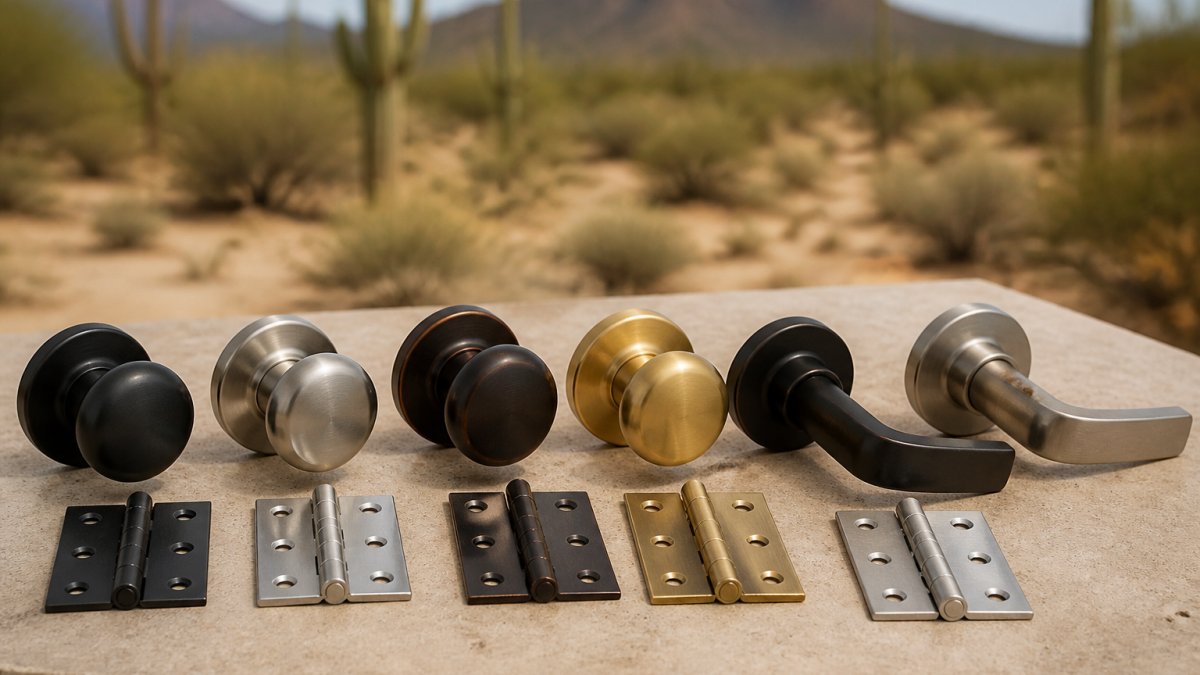
The best door hardware finishes for desert weather are satin nickel, brushed stainless steel, and matte black powder coat, because each resists UV fading, heat cycling, and dust abrasion better than polished or plated alternatives.
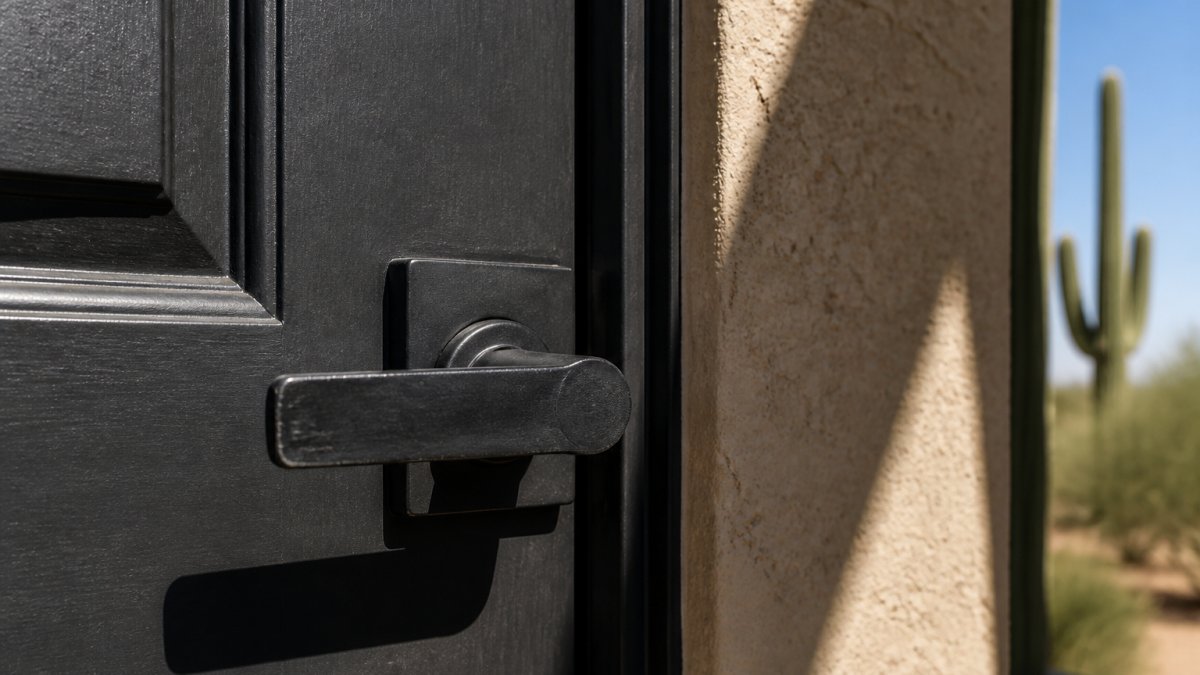
Three forces do the damage. Ultraviolet light breaks down clear coats and organic pigments. Daily temperature swings expand and contract metal, working finish layers loose at the edges. Wind-driven dust acts like sandpaper on any high-gloss surface.
The finish, not the style, decides how long your entry set survives. Below, we compare the leading options by desert performance and explain what drives lifespan.
Finish Comparison Table: Desert Performance at a Glance
| Finish | UV Resistance | Heat Tolerance | Dust and Scratch Visibility | Corrosion Risk | Maintenance Burden | Best For |
|---|---|---|---|---|---|---|
| Satin nickel (PVD or plated) | High | High | Low (hides marks) | Low if PVD; medium if thin plating | Low | Front doors in full sun |
| Brushed stainless steel | High | High | Low | Very low (304 grade) | Low | Modern entries, high traffic |
| Matte black powder coat | High (if powder coated) | High | Medium (shows dust) | Low if coating intact; high if chipped | Medium | Style-driven exteriors, shaded entries |
| Oil-rubbed bronze | Medium | Medium | Low | Medium (living finish can patina unevenly) | Medium | Shaded entries, vintage looks |
| Antique brass | Medium | High | Medium | Medium (clear coat wear leads to tarnish) | Medium to high | Traditional homes, covered entries |
| Polished chrome | Low | Medium | High (shows every mark) | Medium (pitting at edges) | High | Covered or interior doors |
The pattern is consistent: low-glare, satin surfaces outlast high-shine ones in desert exposure. Below is the finish-by-finish mechanism that drives each row.
Satin nickel. The satin sheen comes from a mechanical or PVD treatment that scatters light rather than reflecting it, reducing the concentrated UV energy that breaks down clear coats.
Brushed stainless steel. Many entry sets use 304-grade stainless steel with a brushed mechanical finish and no decorative coating at all, so there is no layer to peel, chalk, or fade.
Oil-rubbed bronze. This is often a living finish intended to patina and lighten at contact points.
Polished chrome. Chrome's mirror finish reflects sunlight, but the reflection amplifies UV and heat at the surface.
The mechanism behind the table: UV degrades organic coatings, heat cycling works finish layers loose at edges, dust abrades high-gloss surfaces, and monsoon moisture drives corrosion at any breach.
The Best Finish for Exterior Door Hardware in Sun and Heat
Satin nickel and brushed stainless steel are the best finish for exterior door hardware in full desert sun, because both use a matte surface that scatters light instead of reflecting it. That single property slows coating breakdown and hides the fine scratches dust creates.
Satin Nickel and Brushed Stainless: The Low-Glare Workhorses
Satin nickel is a plated or PVD-coated finish with a soft, warm-gray sheen that hides fingerprints, resists tarnish, and holds color through heat cycling. Brushed stainless steel skips the decorative coating entirely on many entry sets, so there is no layer to peel.
Where these finishes fall short: satin nickel plating can wear through at high-contact points like the thumb latch over many years, and brushed stainless reads modern, which may clash with a traditional facade.
Matte Black and Dark Bronze: Style With a Coating Caveat
Matte black is the most requested exterior finish we quote, and it performs well when the color comes from powder coating rather than paint.
The caveat: dark finishes absorb heat. On a west-facing door in direct afternoon sun, a black lever can get hot to the touch. Place dark finishes on shaded or north-facing entries, or accept the trade-off for the look.
Stainless Steel vs Brass Door Hardware: Which Survives the Desert?
Stainless steel wins on corrosion resistance and low maintenance; brass wins on repairability and traditional looks. Stainless steel resists rust, salt air, and UV without a decorative coating to fail. Brass, especially solid forged brass, is denser and can be re-polished or re-lacquered when its clear coat wears.
The real distinction is substrate versus coating. A zinc-alloy handle with a thin brass-colored plating will pit once moisture reaches the base metal. Solid brass or 304-grade stainless steel will not. For desert entries with monsoon exposure, we recommend stainless steel for modern homes and solid forged brass for traditional ones, provided the brass carries a lifetime finish warranty.
Coating and Substrate: What Actually Decides Finish Lifespan
Finish lifespan is decided by what sits under the color, not the color itself. In desert conditions, the substrate determines whether a scratch becomes a cosmetic blemish or the start of corrosion. Three build types dominate the market, and each fails differently.
- Solid forged brass: dense and corrosion-resistant through its full thickness. When the clear coat wears, the brass underneath can be re-polished or re-lacquered. In desert sun, the clear coat is the sacrificial layer, it fails before the brass does. It is heavy and expensive, but the most repairable option for traditional entries.
- Stainless steel (304 grade): inherently rust-resistant because of its chromium content. Satin or brushed treatments are mechanical, not painted on, so there is no coating to peel. It handles heat cycling well and resists dust abrasion. The limitation is aesthetic, you get the color of the metal, not a decorative finish.
- Zinc alloy with plating or paint: the most common budget construction. Lifespan depends entirely on coating integrity. A thick powder coat over zinc alloy will outlast a thin lacquer over the same base, but once moisture reaches the zinc, pitting begins. With monsoon exposure, zinc alloy is the highest-risk substrate.
A common pattern in desert failures: a handle labeled "brushed nickel" or "matte black" turns out to be zinc alloy with a thin decorative layer. The appearance name describes the color, not the performance.
Physical vapor deposition (PVD) coatings bond a hard, thin film to the substrate at the molecular level. In desert conditions, PVD resists UV fading, dust abrasion, and tarnishing better than plated or painted finishes.
What to ask before you buy: Ask your supplier what the base metal is before you ask about color. A spec sheet that lists "solid brass" or "304 stainless" tells you more about ten-year performance than any finish name on the box.
How to Clean Exterior Door Hardware in a Dusty Climate
Clean exterior door hardware monthly with a soft microfiber cloth and mild soapy water, then dry it completely. Skip abrasive pads, bleach, and ammonia-based cleaners, which strip coatings and accelerate corrosion.
A simple routine:
- Rinse loose dust with a damp cloth, working top to bottom.
- Wash with a few drops of mild dish soap in warm water.
- Dry immediately with a clean cloth, especially in lever crevices.
- Apply a thin coat of clear carnauba or silicone-free wax twice a year on brass and bronze.
What most guides miss: dust trapped in the latch pocket grinds against the mechanism every time the door closes. Vacuum or blow out the pocket seasonally.
Exterior Door Hardware Maintenance: A Seasonal Routine That Works
Exterior door hardware maintenance in the desert comes down to four checks a year: tighten fasteners, lubricate moving parts, inspect the finish at contact points, and re-seal around the door. Heat cycling loosens screws, and dust dries out lubricant faster than most homeowners expect.
Use a dry PTFE or silicone lubricant in the latch and cylinder, never grease, which collects grit. Check the finish at the thumb latch and lever edges, where wear starts first. Re-caulk around the door frame and threshold if you see gaps; wind-driven rain finds every one.
What to Check Before Monsoon Season
Before monsoon season, test the full entry set under load. Open and close the door a dozen times and listen for grinding. Confirm the strike plate aligns, the deadbolt throws cleanly, and no finish is lifting at edges. If you have a thermal storm door, check its closer and hinges, since the added layer changes heat and moisture exposure on the main door's hardware.
Warranty and Finish Ratings: What to Ask Before You Buy
Ask three questions before you buy: what is the substrate, what does the finish warranty actually cover, and is the hardware rated for exterior use. A "lifetime finish" claim means little if the warranty excludes sun exposure, salt air, or normal wear at contact points.
Read the fine print for exclusions. Many finish warranties cover tarnishing but not scratching or chipping. Exterior-rated hardware should carry a clear statement of suitability for outdoor exposure.
At Arizona Door Store, our team walks contractors and homeowners through these specs before ordering, so the finish you pick matches the exposure your door actually faces. Our design centers in Scottsdale and Phoenix stock hardware and doors together, and we deliver to job sites across the metro and Tucson.
Frequently Asked Questions
Which door hardware finish holds up best in intense sun and heat?
Satin stainless steel and satin nickel tend to hold up best because the finish is part of the metal rather than a coating sitting on top of it. There is no film to fade, peel, or chalk under UV exposure. Solid forged brass with a lifetime finish also performs well, though it costs more. Powder-coated matte black can work on shaded entries but shows sun damage faster on a west-facing door that takes direct afternoon light.
Is stainless steel or brass better for exterior door hardware in desert conditions?
Stainless steel wins on maintenance and heat tolerance. It resists corrosion, does not tarnish, and its satin surface hides dust and fingerprints. Brass, especially solid forged brass, offers a warmer look and excellent durability, but polished brass needs occasional attention to keep its shine and can feel hot to the touch in direct sun. Choose stainless for low effort, brass for a specific architectural look you are willing to maintain.
How often should exterior door hardware be cleaned in a dusty climate?
Wipe exterior hardware every two to four weeks during dry, windy stretches, and again after any dust storm. Use a soft cloth with mild soap and water, then dry it fully. Avoid abrasive pads and harsh cleaners, which scratch satin finishes and strip protective coatings. In dusty areas, a quick rinse and dry after monsoon winds keeps grit from working into the mechanism and dulling the surface.
Does direct sunlight fade or damage door hardware finishes?
Yes, mainly on coated finishes. Powder coats and painted finishes can chalk, fade, or peel after prolonged UV exposure, and dark colors absorb more heat, which speeds that breakdown. Bare-metal finishes like stainless steel and solid brass do not fade the same way because there is no coating to degrade. If your door faces west or south and gets hours of direct sun, a bare-metal finish is the safer long-term choice.
What should I look for in a finish warranty for exterior door hardware?
Look for a warranty that names the finish separately from the mechanical parts and states it covers exterior use. A lifetime finish warranty on solid brass or stainless is a stronger signal than a one-year cosmetic guarantee. Ask whether the warranty excludes sun exposure, salt air, or improper cleaning, since those exclusions tell you what the maker expects to fail. Get the terms in writing before ordering.
Desert heat, dust, and monsoon moisture punish the wrong finish, and replacing an entry set twice costs more than choosing well once. Arizona Door Store carries exterior-rated hardware in satin nickel, brushed stainless, and powder-coated matte black, backed by expert guidance on substrate and warranty terms. Visit our Scottsdale or Phoenix design center, or call for local delivery to your project, and let our team match the right finish to your door and your exposure.