 comparison
Modern vs Traditional Interior Door Styles
Table of Contents
- Modern vs Traditional Interior Door Styles: Key Differences
- Style Comparison Table
- Interior Door Materials and Finishes
- Performance Considerations: Privacy, Light, and Sound
- Cost and Value by Style and Material
- How to Choose Interior Doors for Your Home
- Accessibility, Safety, and Building Code Considerations
- Frequently Asked Questions
Last Updated: October 13, 2026
Modern vs Traditional Interior Door Styles: Key Differences
Choosing between modern and traditional interior door styles shapes how your home feels, aesthetically, and in light, sound, and privacy.
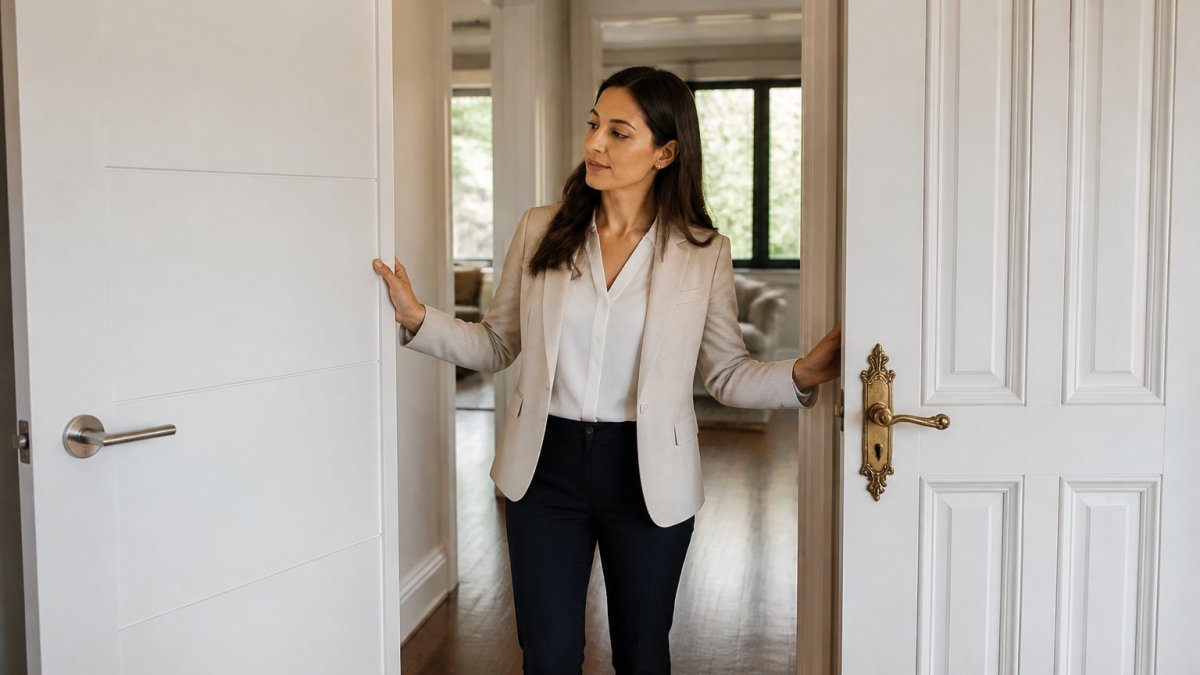
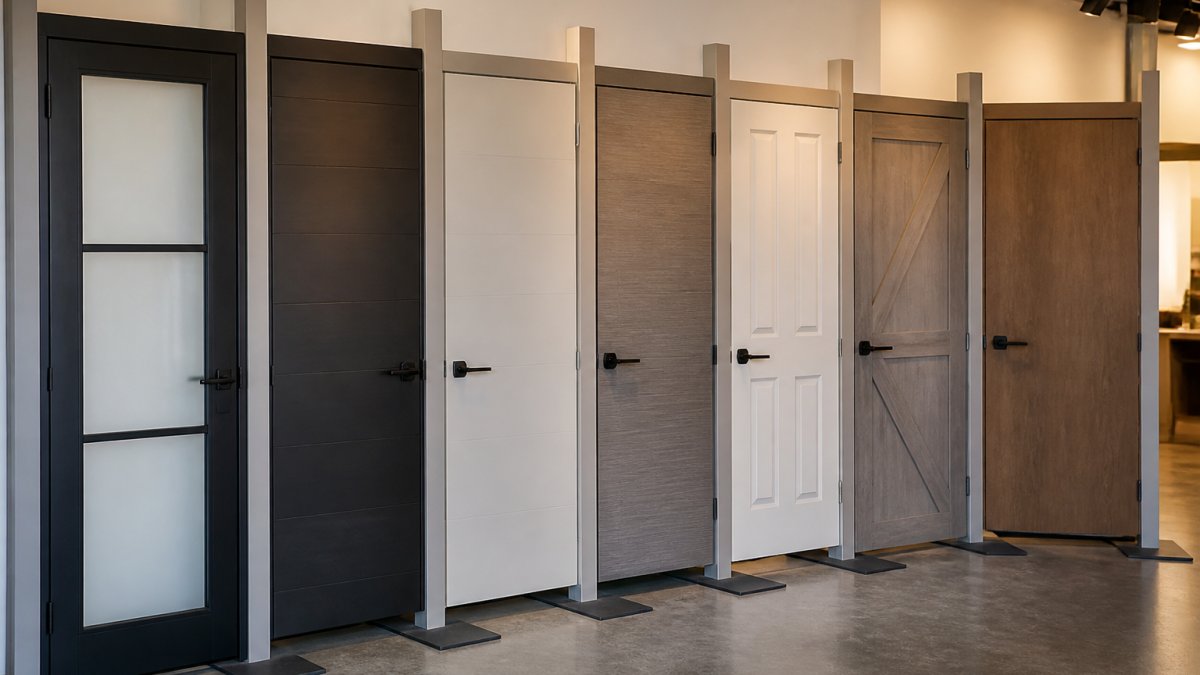
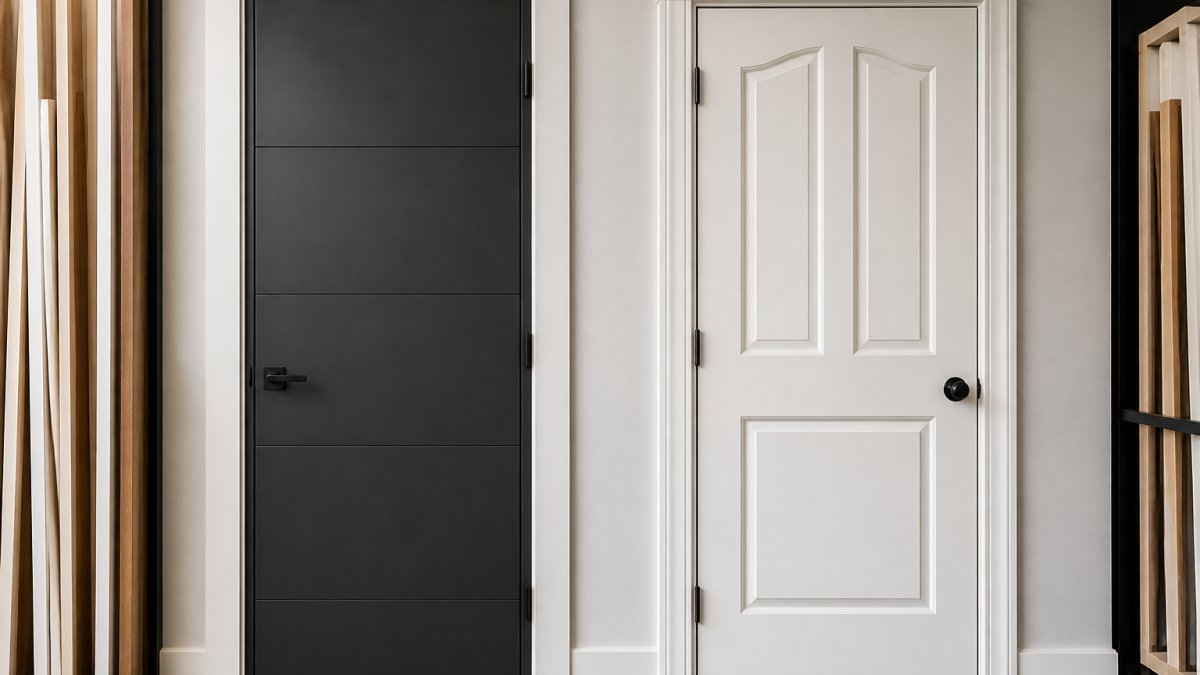
Modern interior door styles emphasize clean lines, minimalist hardware, and flat or slab designs. Traditional interior door styles feature raised panels, decorative moulding, and ornate hardware.
At Arizona Door Store, we work with contractors and homeowners daily who struggle with this choice.
Modern Interior Door Styles Explained
Modern interior door styles strip away ornamentation and focus on function.
Modern doors work best in contemporary architecture, open floor plans, and minimalist décor, where you want doors to disappear visually.
The appeal is simplicity, easy maintenance, and flexibility: a flat-panel modern door pairs with almost any colour scheme, and its hardware doesn't collect dust.
Traditional Interior Door Styles Explained
Traditional interior door styles emphasize detail and craftsmanship. A traditional door typically features four, five, or six raised panels arranged in a grid, each slightly elevated to create shadow lines and texture, with decorative hardware: brass knobs, ornate hinges, or detailed escutcheons.
Traditional doors anchor a room and add formality. Raised panels create depth flat surfaces can't match, working well in Colonial, Victorian, farmhouse, and transitional homes.
The trade-off is maintenance: raised panels collect dust in the grooves, and ornate hardware needs occasional polishing.
Style Comparison Table
The table below compares the two styles across the attributes that drive a purchase decision, plus a transitional column, because most homes today are neither purely modern nor purely traditional.
| Attribute | Modern | Traditional | Transitional |
|---|---|---|---|
| Door face | Flush or slab; single plane, no applied moulding | Raised or recessed panels, typically 3, 4, 5, or 6, set in stiles and rails | Shaker-style flat panel or 1-3 recessed panels with a simple frame |
| Panel profile | None, or a shallow reveal line | Raised (beveled or ogee edge), sometimes with applied bolection moulding | Flat recessed panel, square-edged, no bevel |
| Stile and rail width | Narrow to none (full slab) | Wide, often 4-5 in., with visible joinery | Medium, roughly 2-3 in., clean square edge |
| Casing and trim | Minimal or drywall return; no casing | 2-3 in. casing with backband, rosettes, or plinth blocks | 2-3 in. flat casing, no rosettes |
| Hardware | Recessed pull, flush pull, or bar handle; concealed hinges | Knob (glass, brass, porcelain, wood); exposed butt hinges | Lever or knob in matte black, satin nickel, or bronze; concealed or exposed hinges |
| Finish | Matte or satin paint; flat-sawn or rift-sawn veneer | Stained hardwood, glazed or antiqued paint, hand-rubbed oil | Painted or lightly stained; low-sheen |
| Glass | Full-lite or 1-lite frosted; no muntins | Multi-lite divided by muntins; leaded or beveled glass | 1-lite or 3-lite; simple muntins or none |
| Visual weight | Recedes; reads as wall plane | Anchors the opening; reads as furniture | Bridges the two; reads as trim |
| Cleaning | Wipe flat surface | Dust grooves and panel edges; polish hardware | Wipe panel and frame |
| Best-fit architecture | Contemporary, mid-century, industrial, modern farmhouse | Colonial, Victorian, Craftsman, Tudor, traditional farmhouse | Transitional, updated traditional, new-build spec homes |
| Typical construction | Hollow-core, solid-core, or solid wood | Hollow-core, solid-core, or solid wood | Usually solid-core |
| Common upgrade path | Concealed hinges, taller door height (8 ft), full-lite glass | Solid wood, hand-finish, period-correct hardware | Solid-core, taller height, upgraded casing |
How to Read the Table
The third column is the most useful. If you cannot decide between modern and traditional, you are almost certainly a transitional candidate: take the flat, square-edged panel from modern, keep the 2-3 in. casing from traditional, and finish in a low-sheen paint.
Two Attributes That Drive Cost More Than Style
Style itself does not set price. Two attributes do most of the work:
- Door height. A standard 6 ft 8 in. door is the baseline. Moving to 8 ft raises the slab, frame, casing, and labor, and the multiplier is larger than most homeowners expect. Taller doors also read as more modern regardless of panel profile.
- Panel count and profile. A 6-panel raised door has more machining, joints, and finishing steps than a 1-panel Shaker; a flat slab has the fewest. When comparing quotes, compare panel count and profile first, then material.
Where the Table Breaks Down
The table assumes a single door in isolation. In practice, doors are read against casing, baseboard, and floor. A modern slab door in a room with 5 in. traditional baseboard and rosettes will look like a mistake. Hold a door sample against the existing trim and flooring in the actual room, in the actual light.
Interior Door Materials and Finishes
The material you choose affects durability, appearance, sound control, and price. Both styles come in multiple materials, so your style preference doesn't lock you into one construction type.
Solid Wood vs Solid-Core Doors
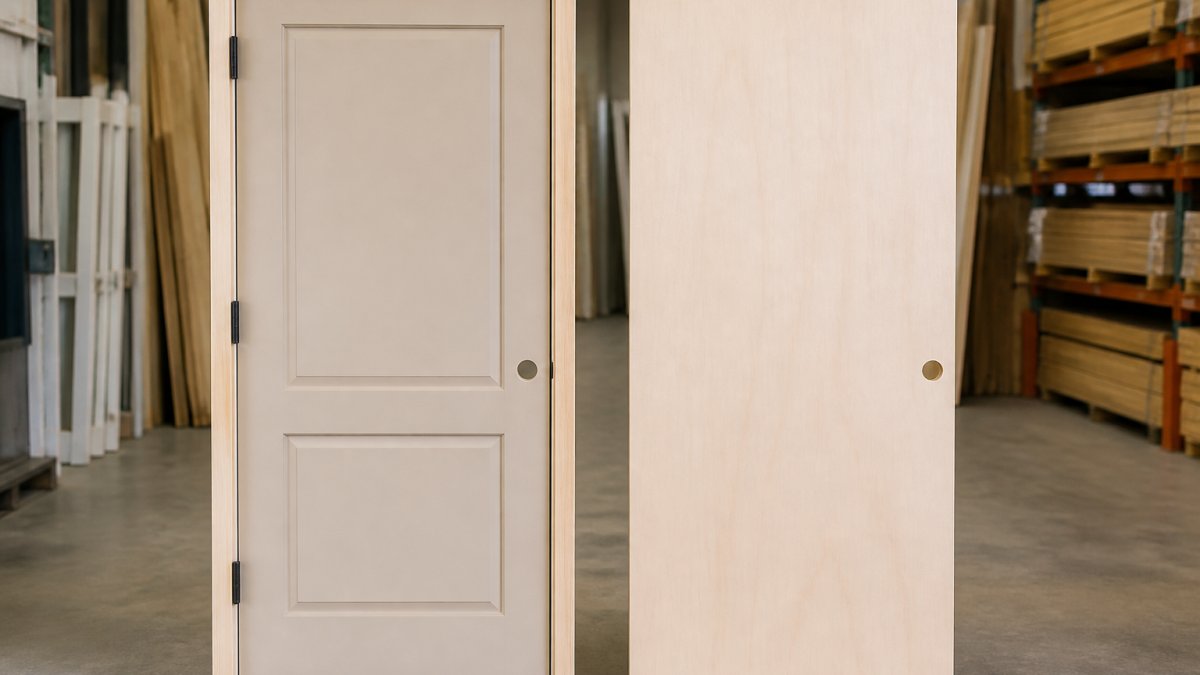
Solid wood doors are made from real wood, typically pine, oak, or other hardwoods. They're dense, heavy, and offer excellent sound dampening and genuine privacy, but can warp in humid climates and cost more.
Solid-core doors have a wood-composite core wrapped in a veneer or finish layer.
Both types outperform hollow-core doors, which are thin and provide minimal sound control. If privacy and quiet matter, solid wood or solid-core is worth the investment.
Finishes and Hardware Options
Your finish choice defines the door's personality.
Traditional doors embrace richer finishes. Natural wood stains, dark paints, or antiqued hardware create warmth and presence; a traditional door in cherry or walnut with brass hardware becomes a design feature.
Hardware is equally important. Modern doors use minimalist handles in stainless steel, matte black, or recessed designs; traditional doors feature decorative knobs and hinges in brass, bronze, or iron.
Performance Considerations: Privacy, Light, and Sound
Beyond aesthetics, doors have practical jobs: controlling light, sound, and privacy.
Privacy depends on construction, not style. A solid wood or solid-core door provides genuine privacy; a hollow-core door, modern or traditional, offers minimal privacy because sound travels through easily.
Light control is where glass inserts matter. French and glass-panel doors let light flow between rooms.
Sound control comes down to mass and seal.
Cost and Value by Style and Material
Style alone does not set price. What sets price is a short list of cost drivers, and once you understand them you can estimate any door in any style.
The Five Cost Drivers
- Construction. Hollow-core is least expensive, solid-core (composite or particleboard core with a veneer or hardboard face) sits in the middle, and solid wood, stave-core, or engineered hardwood is most expensive. This driver usually outweighs style.
- Panel count and profile. A flush slab has the fewest machining steps; a 1-panel Shaker adds a frame, a 3-panel adds more, and a 6-panel raised door adds the most because each panel is beveled and each joint finished. More panels and a raised profile cost more than fewer panels and a flat profile in the same material.
- Door height and width. Standard residential height is 6 ft 8 in. Moving to 7 ft or 8 ft increases the slab, jamb, casing, and labor, and oversize doors often require a longer lead time.
- Finish. Factory-primed or factory-painted is the baseline; factory-stained or hand-wiped stain adds cost, and a custom color match or hand-rubbed oil finish adds more. Field finishing shifts cost from the door to the painter.
- Hardware and prep. A basic passage knob with standard bore is the baseline. A lever, privacy or dummy function, concealed hinge, or magnetic latch each adds cost, and pre-hung versus slab-only changes the labor line significantly.
Relative Cost by Style
Holding material and size constant, the pattern most contractors see is:
- Flush or slab modern door: lowest cost at a given material, because there is no panel machining.
- 1-panel Shaker (transitional): slightly more than a slab, because of the frame joinery.
- 3-panel: more than 1-panel.
This is a relative ranking, not a price list. A hollow-core 6-panel door can cost less than a solid-core slab, because construction can outweigh style.
Where Upgrades Actually Pay Off
Not every upgrade returns value. A practical way to think about it:
- Solid-core construction pays off in bedrooms, bathrooms, and home offices, where sound control and privacy matter. It is the upgrade most homeowners notice daily.
- Taller doors (8 ft) pay off in open-plan main living areas, where the door is visible against high ceilings. In a closed hallway, the return is smaller.
- Upgraded hardware pays off on doors that are touched and seen often, such as the primary bedroom and main bathroom. On a closet door, it rarely does.
How to Compare Quotes Across Styles
When you get quotes for a modern slab and a traditional 6-panel, do not compare the totals directly. Compare them line by line:
- Construction (hollow-core, solid-core, solid wood)
- Size (height, width, thickness)
- Panel count and profile
Two quotes that look far apart often differ on only one or two of these lines. Normalize them and the gap usually shrinks.
The Value Question, Reframed
The useful question is not "which style costs more" but "which door will I notice every day, and which will I forget." Spend on the doors you touch and see; save on the ones you do not. That rule holds whether you choose modern, traditional, or transitional.
How to Choose Interior Doors for Your Home
The decision comes down to three questions: What's your home's architectural style? What's your practical priority? And are you willing to blend styles?
Matching Doors to Your Home's Architecture
Walk through your home and look at the details. Crown moulding, wainscoting, or decorative trim points to traditional; clean lines, minimal moulding, and open space point to modern.
Your doors should reinforce that language. A Victorian home with ornate moulding looks confused with flat-panel modern doors, and a contemporary home with minimalist trim looks equally confused with raised-panel traditional doors.
A transitional home, one that blends modern and traditional elements, can support doors that bridge both worlds.
Mixing Modern and Traditional Styles
You don't have to commit entirely to one style. Many homes benefit from mixed approaches.
A common strategy: use traditional doors in formal spaces (dining room, living room) and modern doors in private spaces (bedrooms, bathrooms).
Another approach: use the same door style throughout but vary the finish.
The key is intentionality. Mixed styles work when they're deliberate, not accidental.
Accessibility, Safety, and Building Code Considerations
Interior doors must meet building code requirements. These standards exist for safety and apply regardless of your style preference.
Door width is regulated.
Hardware accessibility matters.
Swing direction is regulated in certain spaces.
Building codes exist to protect safety. They're not negotiable and sometimes limit your style choices in specific locations.
At Arizona Door Store, we help contractors and homeowners navigate this choice every day.
Frequently Asked Questions
What is the difference between modern and traditional interior doors?
Modern interior doors feature flat panels, clean lines, minimalist hardware, and sleek finishes that complement contemporary homes. Traditional interior doors showcase raised panels, decorative moulding, ornate hardware, and classic details like turned knobs or brass hinges. Modern doors prioritize simplicity and function, while traditional doors emphasize architectural detail and timeless elegance. Both styles work well in the right setting; the choice depends on your home's existing architecture and your design preferences.
Can you mix modern and traditional interior doors in one home?
Yes, you can successfully blend modern and traditional doors by using a transitional style as a bridge. Transitional doors combine elements of both aesthetics, such as simple panel designs with subtle decorative details or flat doors with refined hardware. Keep the color palette and wood finish consistent throughout your home, and use the same hardware finishes (brushed nickel, matte black, or oil-rubbed bronze) across all doors. This creates visual cohesion while allowing each room to reflect its own style.
How do I choose an interior door style that matches my home?
Start by identifying your home's architectural style: Colonial, Victorian, or Federal homes suit traditional raised-panel doors, while contemporary and minimalist spaces call for modern flat-panel designs. Consider the existing trim, moulding, and hardware throughout your home, and select doors that complement those elements. Look at door panels, finishes, and hardware as a complete package. If you're unsure, a transitional style works well in most homes. Local design consultants can help you visualize options before committing to a purchase.
Which interior door style is easiest to maintain?
Modern flat-panel doors are generally easier to maintain because they have fewer crevices where dust and debris accumulate. Traditional raised-panel doors require more frequent cleaning around the panel edges and decorative details. Both solid wood and solid-core doors are durable, though solid wood may need occasional refinishing over time. Matte or satin finishes hide fingerprints better than glossy finishes. Regardless of style, regular dusting and gentle cleaning keep doors looking fresh with minimal effort.
Do modern or traditional interior doors cost more?
Pricing depends on material, construction, and customization rather than style alone. Traditional raised-panel doors with intricate details may cost more due to additional craftsmanship, but simple traditional designs can be affordable. Modern flat-panel doors are often competitively priced. Hardware, finishes, and custom sizing add to the overall cost regardless of style. Contact Arizona Door Store for a personalized quote based on your specific needs and budget.