 listicle
Modern Interior Door Trends 2026: Top Designs & Hardware
Table of Contents
- Modern Interior Door Trends 2026: What's Shaping Design This Year
- 1. Taller Doors and Ceiling Height Ratios
- 2. Fluted and Textured Door Surfaces
- 3. Glass Inserts and Light Flow
- 4. Bold Color Palettes and Deep Graphite Finishes
- 5. How to Choose Interior Door Hardware That Fits Your Project
- 6. Minimalist Interior Door Hardware: Clean Lines and Hidden Hinges
- 7. Modern Door Handle Finishes Trending in 2026
- Frequently Asked Questions
Last Updated: September 17, 2026
Modern Interior Door Trends 2026: What's Shaping Design This Year
Modern interior door trends 2026 are defined by one clear shift: doors are no longer treated as openings to fill. They're treated as architectural features. That change explains why taller slabs, fluted surfaces, and full-height glass are showing up in everything from Scottsdale remodels to new builds across the Phoenix metro. This guide from Arizona Door Store breaks down the seven trends driving that shift, plus the hardware decisions that make or break each one.
Below, we'll cover what's actually selling, what pairs well, and where homeowners and contractors get it wrong.
1. Taller Doors and Ceiling Height Ratios
Eight-foot doors have moved from luxury upgrade to baseline expectation in modern builds. The reason is proportion: a standard 6-foot-8 door under a 10-foot ceiling reads as undersized, while an 8-foot slab fills the visual gap and makes the room feel intentional.
The practical rule most designers follow is a door-to-ceiling ratio of roughly 1:1.25. If your ceiling is 10 feet, an 8-foot door hits that target. If you're working with 9-foot ceilings, a 7-foot door can work, but it will look noticeably shorter next to casing and trim.
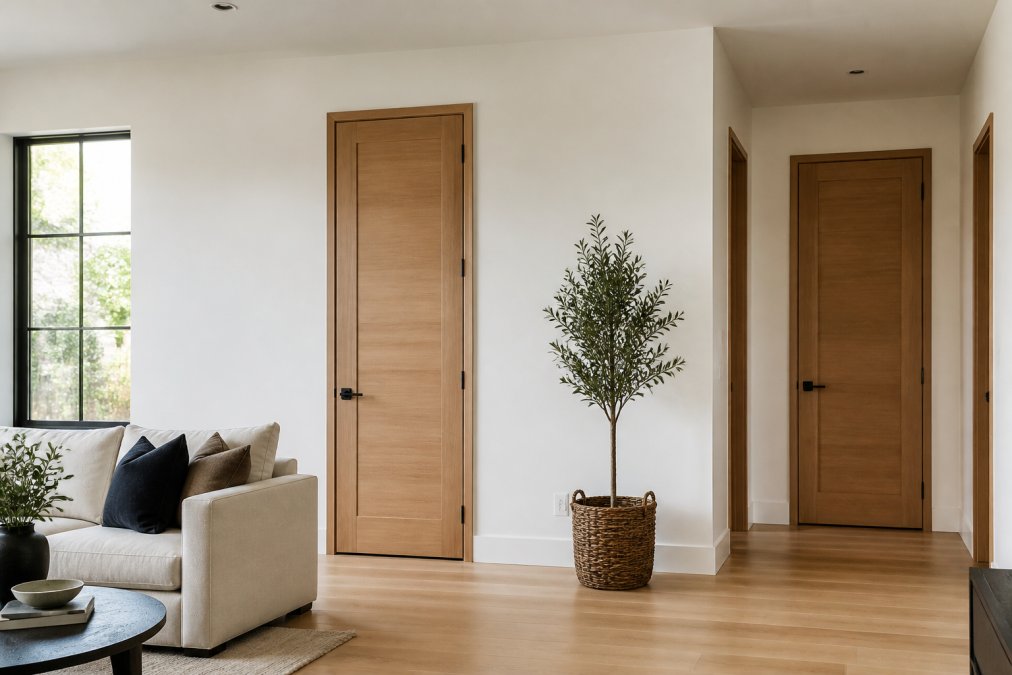
Retrofitting taller doors into older homes is where this trend gets complicated. Framing adjustments, header relocation, and matching existing casing profiles all add scope. Contractors working on uneven floors and out-of-plumb walls should plan for on-site measurement rather than relying on nominal sizes.
2. Fluted and Textured Door Surfaces
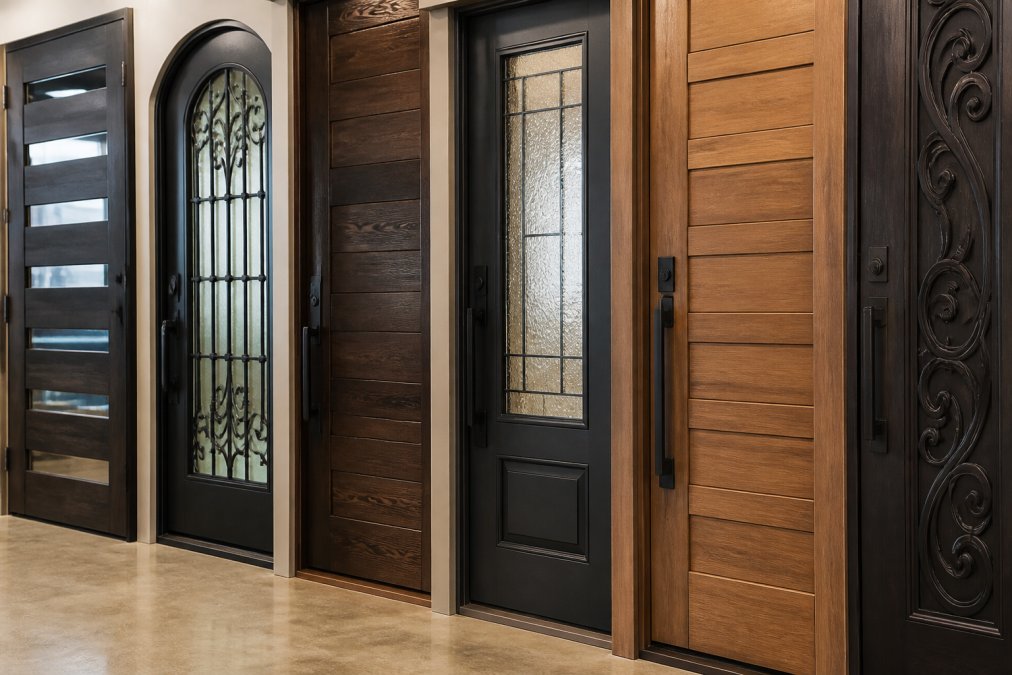
Fluted texture is the single most requested surface treatment for 2026. Vertical channel designs add depth without adding visual weight, which is why they pair so well with the taller slabs covered above.
What most guides miss is the material question. Fluted doors are typically built on MDF construction because it holds a machined channel cleanly and resists the warping that solid wood can develop in dry climates. That matters in Arizona, where humidity swings are brutal on improperly sealed wood.
Matte finishes dominate here. A fluted door in a high-gloss finish looks busy; the same door in matte reads as architectural.
3. Glass Inserts and Light Flow
Glass inserts solve a real problem: modern floor plans have fewer walls, and interior rooms can go dark fast. A full-lite or three-lite glass door moves light between spaces without sacrificing the ability to close a room.
Frosted and reeded glass are the two most common choices. Frosted gives privacy with soft diffusion; reeded adds texture that echoes the fluted trend. Clear glass works best in offices and studies where sightlines are a feature, not a bug. A less common but growing option is fluted or ribbed glass, which diffuses light while adding a vertical texture that reads as architectural rather than decorative.
The Acoustic Trade-Off Most Guides Skip
This is where glass doors get misunderstood. A hollow-core door with a glass panel will transmit more noise than most people expect, often in the low 20s on the Sound Transmission Class (STC) scale, which is roughly the same as an open doorway with a curtain. If you're closing off a home office, a nursery, or a primary suite, that matters.
STC is the standard rating for how well a partition blocks airborne sound. Higher is better. For reference:
| Assembly | Typical STC Range |
|---|---|
| Hollow-core slab, no glass | ~20-25 |
| Solid-core slab, no glass | ~30-35 |
| Solid-core with laminated or thick glass lite | ~35-40 |
| Double-glazed or dual-pane glass door | ~40-45 |
A few practical rules follow from that table. First, glass thickness and glazing count matter more than frame finish. A 1/4-inch single pane and a 3/8-inch laminated pane behave very differently. Second, a solid-core stile-and-rail door with a glass insert will outperform a hollow-core door with the same glass every time, because the slab itself is doing half the work. Third, sealing matters, an unsealed perimeter gap can drop effective performance by several points regardless of the glass.
Framing and Installation Notes
Glass doors are heavier than their hollow-core equivalents, and the weight sits differently. A full-lite door concentrates mass at the stiles, which means hinge placement and count need to be planned for the load, not copied from a standard slab. Pre-hung units are the safer path for most projects because the frame, glass, and hardware are aligned at the factory.
For retrofit work, measure the rough opening before ordering. Older homes rarely have square openings, and a glass door has less tolerance for out-of-plumb framing than a solid slab, the glass edge is unforgiving.
4. Bold Color Palettes and Deep Graphite Finishes
Deep graphite and anthracite are the color story for 2026. Both sit in the same family: near-black with enough warmth to avoid looking flat. Applied to a slab door with clean lines, the result is a focal point that doesn't need trim to carry it.
5. How to Choose Interior Door Hardware That Fits Your Project
Choosing interior door hardware starts with three variables: door weight, function, and finish consistency. Get those right and the rest is preference.
Here's a simple decision framework:
| Door Type | Recommended Hardware | Why |
|---|---|---|
| Standard hollow-core | Standard passage or privacy set | Light door, minimal stress on latch |
| Solid-core 8-foot slab | Heavy-duty hinges, longer backset | Weight requires reinforced support |
| Glass insert door | Non-mortise or concealed hinges | Protects glass edge from stress |
| Pocket door | Pocket door-specific hardware kit | Standard sets won't track correctly |
| Pivot door | Floor-mounted pivot hinge | Carries weight at floor, not frame |
Matching Hardware to Door Weight and Function
A common mistake is buying hardware by look alone. An 8-foot solid-core door can weigh considerably more than a standard hollow-core slab, and standard hinges will sag within months. Match hinge count and gauge to weight, then choose finish.
6. Minimalist Interior Door Hardware: Clean Lines and Hidden Hinges
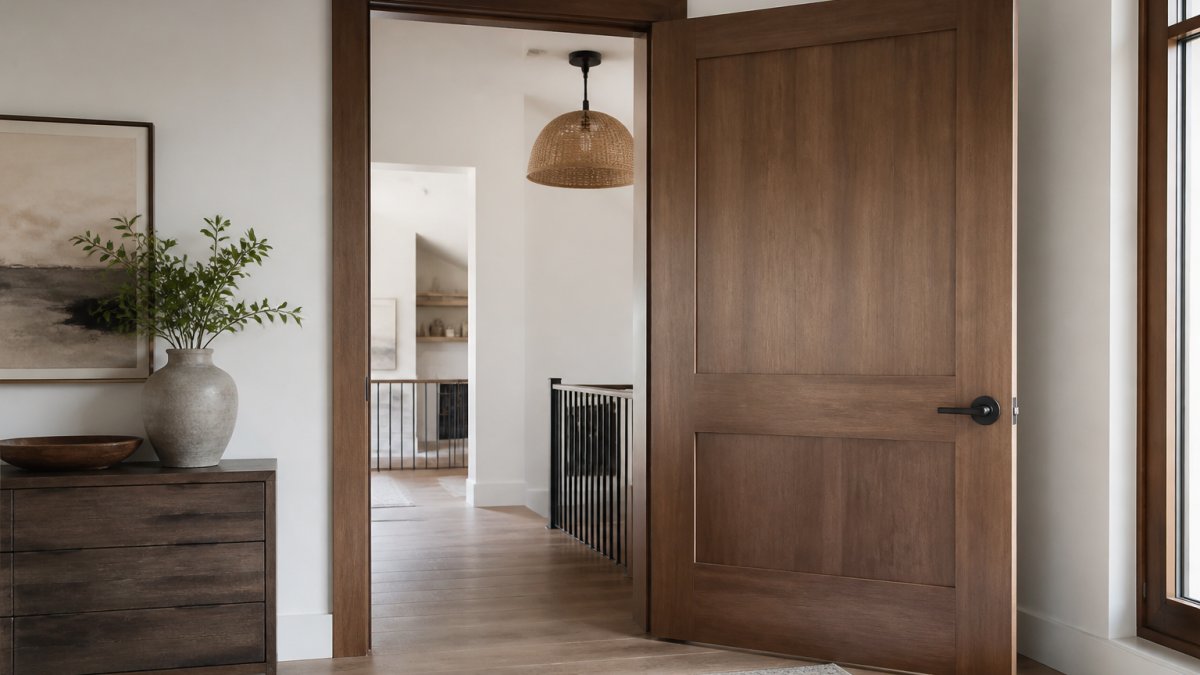
Minimalist interior door hardware is defined by what you don't see. Hidden hinges, trimless doors, and lever handles with a low profile all serve the same goal: let the door slab carry the design.
Hidden Hinges: What They Actually Require
Hidden (concealed) hinges sit inside a mortise routed into the door edge and the jamb, so nothing shows when the door is closed. The visual payoff is real, especially on a fluted or graphite slab where a barrel hinge would break the plane.
Trimless Doors and the Drywall Detail
Trimless doors take minimalism further by recessing the frame into the drywall. The result is architectural cohesion: no casing, no visible frame, just a clean edge. The mechanism is a metal or composite frame profile that is set flush with the finished wall, then the drywall is finished tight to it, often with a tear-away bead or a shadow-gap reveal.
Retrofitting Minimalist Hardware Into an Existing Home
This is the part most trend guides skip. If you're upgrading an existing door rather than replacing it, the practical path depends on what you have:
- Standard mortised hinges: You can often swap to a low-profile lever and a slim rosette without touching the hinge. This gets you most of the minimalist look for a fraction of the cost.
- Visible barrel hinges you want to hide: Concealed hinges require routing the existing door and jamb. On a hollow-core door, there may not be enough material at the edge to hold the mortise, check before committing.
- Trimless ambitions on an existing wall: Generally not worth it. The drywall detail alone usually costs more than replacing the door and casing.
7. Modern Door Handle Finishes Trending in 2026
Modern door handle finishes in 2026 cluster around three metals: matte black, brushed brass, and satin nickel. Each carries a different design message.
Matte Black, Brushed Brass, and Satin Nickel
Matte black is the most versatile. It works against white walls, natural wood, and dark slabs alike, and it hides fingerprints better than gloss black.
Frequently Asked Questions
What are the emerging interior door design trends for 2026?
Interior door trends for 2026 center on taller 8-foot door slabs, fluted and textured surfaces, glass inserts that move light between rooms, and deep graphite or anthracite finishes. Minimalist hardware with hidden hinges and trimless door casings continues to grow. Solid core construction is also gaining ground because it improves sound insulation without changing the look of the door.
What are the door handle trends for 2026?
Modern door handle finishes in 2026 lean toward matte black, brushed brass, and satin nickel. Minimalist lever handles and bar pulls dominate over ornate knobs. Many buyers now match handle finish to the door's hardware rather than the room's faucets, and matte finishes are favored because they hide fingerprints better than polished chrome in high-traffic homes.
Should interior door hardware match throughout the entire home?
Matching hardware throughout a home creates visual consistency, especially in open floor plans where several doors are visible at once. A common approach is to keep the same finish and handle style on all interior doors, then allow one accent finish in a single room like a home office. Consistency in modern door handle finishes also makes future replacements easier when a piece wears out.
How do I choose the right door finish for a modern interior?
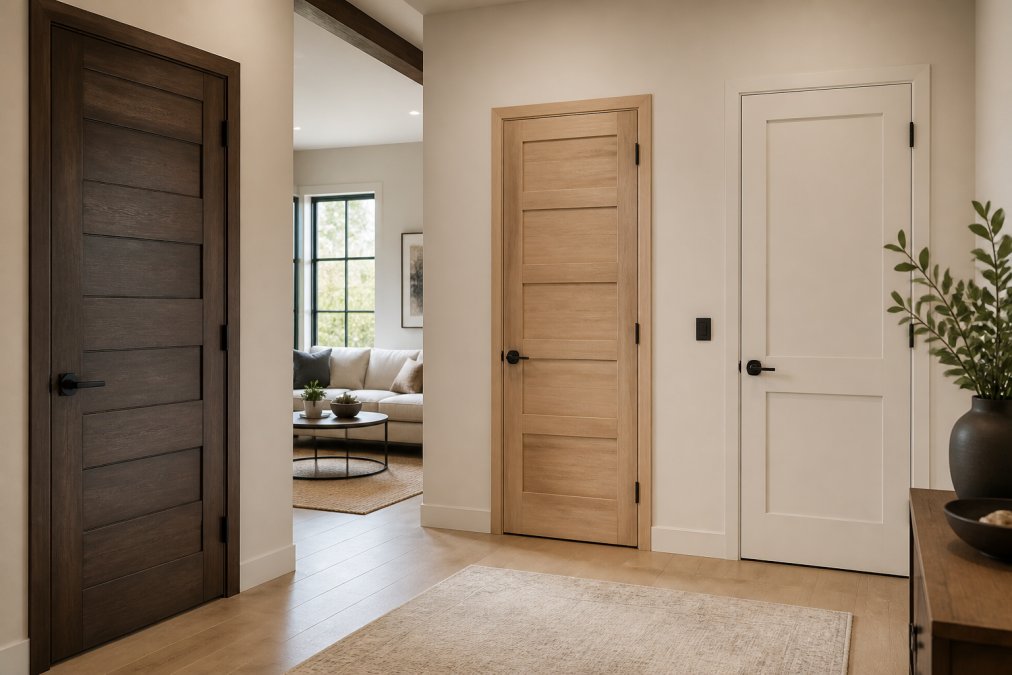
Start with your flooring and trim color, then decide whether you want the door to blend in or stand out. Natural wood tones and matte white suit minimalist interiors, while deep graphite or anthracite works well as a focal point against light walls. If you plan to paint later, a smooth flush or slab door gives you the most flexibility.