 listicle
7 Luxury Entry Doors That Transform Your Home
Table of Contents
- What Makes a Luxury Entry Door Different
- Quick Comparison: Luxury Entry Doors at a Glance
- ProVia Entry Doors: Security and Energy Efficiency
- Eris Home Products Iron Doors: Bold Modern Statement
- Custom Front Door Design with Scobis Millwork
- Luxury Door Installation Best Practices
- High-End Door Hardware Options That Elevate Your Entryway
- How to Choose the Right Luxury Entry Door for Your Home
- Step 1: Match Material to Climate Performance
- Step 2: Evaluate Energy Efficiency and Thermal Performance
- Step 3: Assess Customization Needs vs. Lead Times
- Step 4: Factor in Installation Complexity and Local Expertise
- Step 5: Budget for the Complete System and Long-Term Costs
- Step 6: Architectural Compatibility and Visual Impact
- Frequently Asked Questions
Last Updated: September 20, 2026
What Makes a Luxury Entry Door Different
A luxury entry door combines premium materials, advanced security features, and meticulous craftsmanship to create an entryway that reflects your home's character and value.
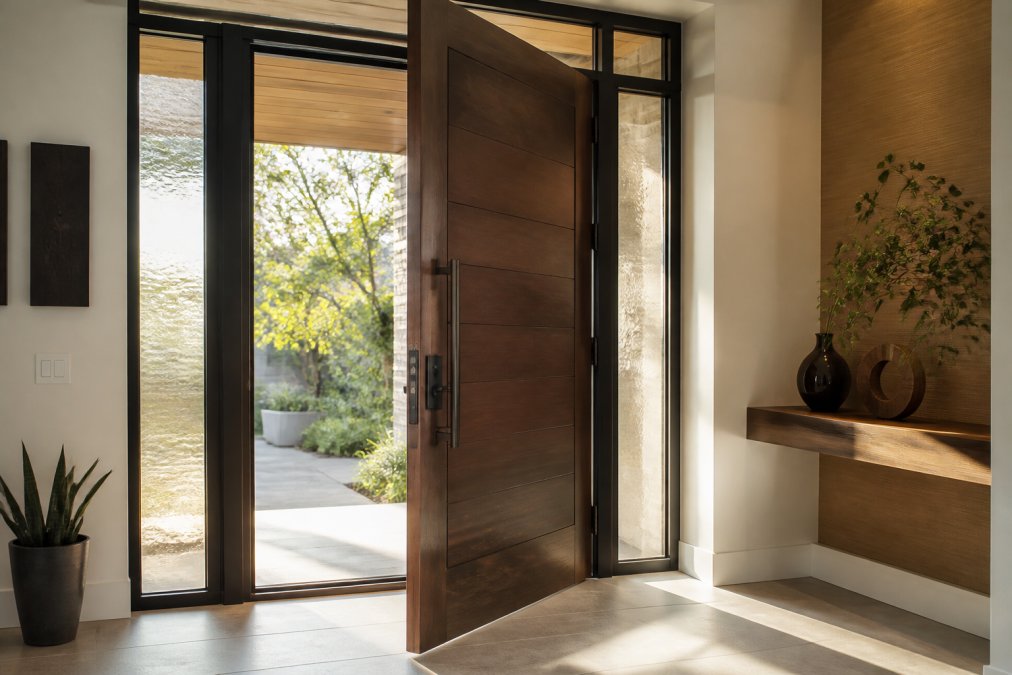
Luxury entry doors differ in three core areas: material quality, customization depth, and performance engineering.
Quick Comparison: Luxury Entry Doors at a Glance
| Option | Best For | Key Material | Customization | Maintenance |
|---|---|---|---|---|
| ProVia Entry Doors | Security-first homeowners | Fiberglass/Steel | Extensive | Minimal |
| Eris Home Products Iron Doors | Statement pieces | Iron | Moderate | Regular |
| Custom Wood Doors | Bespoke designs | Wood | Unlimited | Seasonal |
| Grand Entry Doors | Balanced luxury | Multiple | High | Variable |
| Fiberglass Doors | Design-forward homes | Fiberglass | Curated | Minimal |
ProVia Entry Doors: Security and Energy Efficiency
Installation requires precision: the frame must be perfectly plumb and level to ensure multi-point locking performance. Experienced installers make the difference between a good door and one that performs as designed.
Eris Home Products Iron Doors: Bold Modern Statement
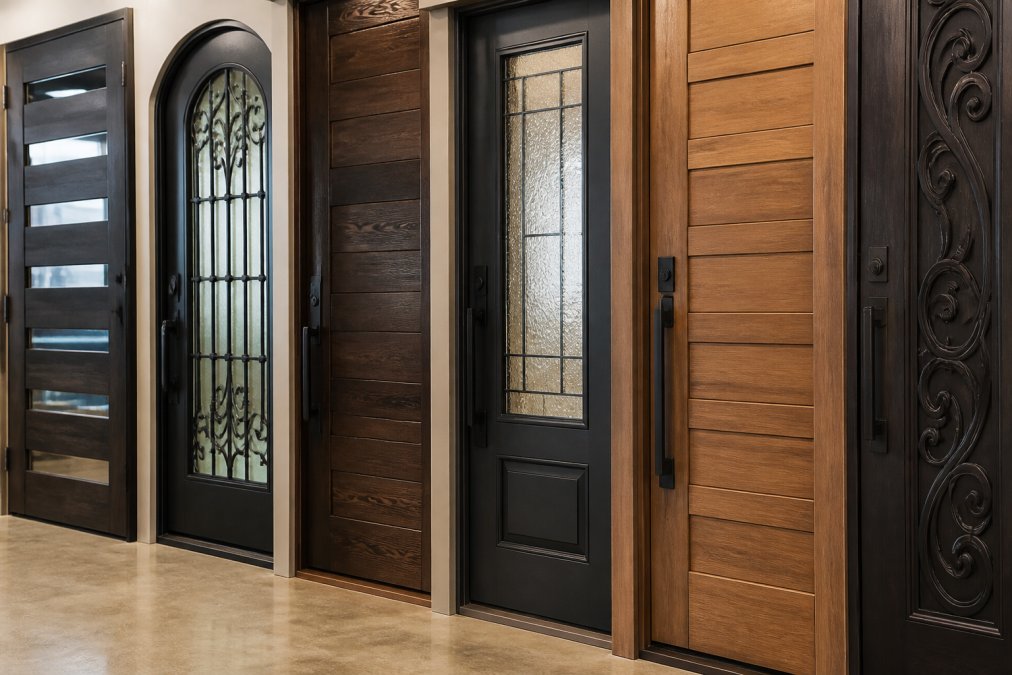
Iron doors are easier to customize than wood: you can add glass panels, change hardware, and adjust sizing without compromising structural integrity.
Custom Front Door Design with Scobis Millwork
Some custom millwork providers build entry doors to exact specifications: arch-top designs, craftsman-style panels, French configurations, or modern finishes in your chosen wood species.
The True Cost of Custom Wood Doors: Beyond the Price Tag
Custom wood doors represent a significant investment, and the real value extends across years of potential maintenance.
- Mahogany: Naturally rot-resistant, develops a silvery patina if left unsealed. Requires resealing every 2-3 years in Arizona's climate. Resealing costs vary depending on door size and finish complexity.
- Walnut: Dense and stable, but darker finishes show dust and water spots. Requires annual inspection and touch-ups. More forgiving than lighter woods in high-sun environments.
- Douglas Fir: Affordable premium option, but softer than mahogany. Susceptible to UV checking (fine surface cracks) within 3-5 years if not sealed. Requires more frequent maintenance than hardwoods.
Climate-Specific Performance: Why Material Choice Matters in Arizona
Arizona's climate presents unique challenges: intense UV exposure and 40°F+ temperature swings cause wood to expand and contract, developing checking within months without proper sealing. Low humidity (15-25%) causes wood to shrink, requiring acclimation time before installation. Summer monsoons bring sudden humidity spikes; doors without proper flashing and sealant will absorb moisture and warp. Installation quality is non-negotiable for custom doors.
Customization Complexity and Lead Times
Custom doors require 8-12 week lead times for handcrafted work. This is necessary if your opening is non-standard or you need specific architectural details.
When Custom Makes Sense vs. When It Doesn't
Custom doors are ideal for non-standard openings, architectural detail matching, historic renovations, or specific wood species. They're overkill for standard openings, low-maintenance priorities, or tight budgets. For Arizona homeowners, a semi-custom approach, fiberglass or steel with custom hardware or sidelites, delivers 80% of the aesthetic impact with 40% of the maintenance burden.
Luxury Door Installation Best Practices
Installation quality determines whether your luxury entry door performs as engineered. Frame preparation must be perfectly plumb and level within 1/8 inch over 10 feet. Threshold and weatherproofing require proper flashing and caulking, not just expanding foam. Multi-point locking systems must be adjusted so all latch points engage simultaneously. Precision in these mechanical details ensures that your investment remains as functional as it is aesthetic, much like how applying luxury furniture tips helps maintain the cohesive elegance of your interior spaces.
High-End Door Hardware Options That Elevate Your Entryway
Installation of architectural hardware demands precision: hinges must be perfectly aligned and locking mechanisms carefully adjusted. This requires professional experience.
How to Choose the Right Luxury Entry Door for Your Home
Prioritize what matters most: aesthetics, security, energy efficiency, or customization. The most overlooked factor is climate-specific performance, choosing a material that thrives in your regional conditions.
Step 1: Match Material to Climate Performance
Arizona's intense solar radiation, low humidity, temperature extremes, and monsoon moisture create specific demands that different materials handle differently.
Step 2: Evaluate Energy Efficiency and Thermal Performance
Luxury entry doors vary in insulation value (U-factor, lower is better): high-performance fiberglass (0.18-0.22), insulated steel (0.20-0.25), premium wood (0.25-0.35), and standard wood (0.35-0.50). A door with a lower U-factor can lead to significant savings on cooling costs over time.
Step 3: Assess Customization Needs vs. Lead Times
If your opening is standard size (36" × 80" or 42" × 80") and your aesthetic preferences align with available options, manufacturer doors like ProVia or Grand Entry Doors work efficiently. Lead times vary.
Step 4: Factor in Installation Complexity and Local Expertise
Some doors require specialized installation expertise. Iron doors need reinforced hinges and proper weight distribution. Custom doors need precision fitting. Standard fiberglass doors are more forgiving.
- How many doors of this type have you installed in the past year?
- Do you use shims and proper flashing, or just expanding foam?
- Can you adjust multi-point locking systems for proper engagement?
- What's your warranty on installation?
Step 5: Budget for the Complete System and Long-Term Costs
The door itself is one component. Add frame, hardware, installation, and potential modifications to your opening. A luxury entry door investment typically includes:
-
Door unit: $2,000-$12,000+ (depending on material and customization)
-
Frame and sidelites: $500-$2,000
-
Hardware: $300-$1,500
-
Installation: $500-$2,000
-
Total initial investment: $3,300-$17,500
-
Fiberglass: Low maintenance, minimal long-term costs
-
Steel: Moderate maintenance, occasional touch-ups
-
Wood: High maintenance, significant long-term costs
-
Iron: Moderate maintenance, periodic sealing
Step 6: Architectural Compatibility and Visual Impact
Look at your home's existing style. Modern homes benefit from clean-lined doors with minimal ornamentation. Traditional homes work with detailed panels and classic proportions. Coastal or transitional styles accept both approaches. Your entry door should feel like it belongs to your home, not like it was added afterward.
Frequently Asked Questions
What defines a luxury entry door compared to standard models?
Luxury entry doors feature premium materials like solid wood, high-grade fiberglass, or iron, combined with superior craftsmanship and architectural detail. They typically include multi-point locking systems, advanced weather-stripping, thermal insulation, and customizable hardware. Standard doors lack these performance features and aesthetic refinement. Luxury doors are handcrafted or precision-engineered to provide both security and curb appeal that transforms your home's entryway into a statement piece.
Which materials are best for high-end, durable entry doors?
The best materials for luxury entry doors include solid wood for traditional aesthetics, fiberglass for energy efficiency and low maintenance, steel for security, and iron for bold modern designs. Fiberglass offers excellent thermal performance and weather resistance without the maintenance demands of wood. Iron provides exceptional durability and unique architectural presence. Wood delivers authentic handcrafted appeal but requires regular maintenance. Your choice depends on climate, architectural style, and maintenance commitment. Arizona Door Store can help you select the right material for your specific needs.
How does custom front door design impact my home's value?
Custom luxury entry doors significantly enhance curb appeal and perceived home value. A bespoke design reflects architectural intention and quality craftsmanship, creating a strong first impression that influences buyer perception. High-end materials and finishes demonstrate investment in the home. Customization allows the door to match your home's architectural style, whether contemporary, traditional, or coastal, making it a focal point rather than an afterthought. Professional installation of a custom luxury door can significantly impact perceived home value, making it one of the highest-impact renovation investments.
What security features should I look for in a luxury entry door system?
Premium luxury entry doors include multi-point locking systems that secure the door at multiple points along the frame, providing superior protection compared to single-point locks. Look for solid core or solid wood construction that resists forced entry, reinforced frames, and impact-resistant glass options. High-end doors from various manufacturers offer security-grade steel construction and advanced locking hardware. Architectural hardware should include heavy-duty deadbolts and lever sets. Consider doors with sidelites and transoms that include laminated or tempered glass for added security. Arizona Door Store's experts can recommend the best security features for your home.
How often should luxury entry doors be maintained to preserve their finish?
Maintenance frequency depends on material. Solid wood doors require annual sealing or staining to protect against weather damage and maintain finish quality. Fiberglass doors need cleaning every 6-12 months and occasional re-sealing of hardware. Iron doors should be inspected annually for rust and touched up as needed. All luxury doors benefit from regular cleaning with appropriate products and inspection of weather-stripping to maintain thermal performance. In harsh climates or high-traffic areas, more frequent maintenance may be necessary. Proper maintenance preserves the door's aesthetic appeal and extends its lifespan significantly.