 how-to
Powder Coated Door Hardware in Arizona: Benefits Explained
Quick Summary
Powder coated hardware resists chips, scratches, and wear better than thin liquid paint because the dry powder cures into one tough, bonded layer. For Arizona's heat and monsoon moisture, it works well when the coating is rated for exterior use and applied correctly. It is widely used for handles, deadbolts, hinges, and kick plates.
- Powder is applied electrostatically and baked at around 350 to 400 degrees Fahrenheit until it forms a continuous film.
- The finish is thicker and more uniform than electroplating, which usually wears through at edges.
- Confirm the coating is designed for exterior exposure and ask for its UV-resistance claim before buying.
- Water usually gets in through scratches, unsealed cut edges, and fastener holes, so full edge coverage matters.
- Rinse hardware after pool or sprinkler contact, and touch up small chips quickly before corrosion spreads.
Table of Contents
- What Powder Coating Is and How the Process Works
- Durable Finishes for Exterior Door Hardware in Arizona's Climate
- Powder Coating vs. Electroplating Door Handles
- Heat, UV and Monsoon Moisture: How Powder-Coated Metal Holds Up Outdoors
- Limitations and Failure Modes to Watch For
- Choosing Hardware by Location and Exposure in Arizona
- Powder-Coated Door Hardware Maintenance and Inspection
- Booking Your Hardware Order With Arizona Door Store
- Frequently Asked Questions
What Powder Coating Is and How the Process Works
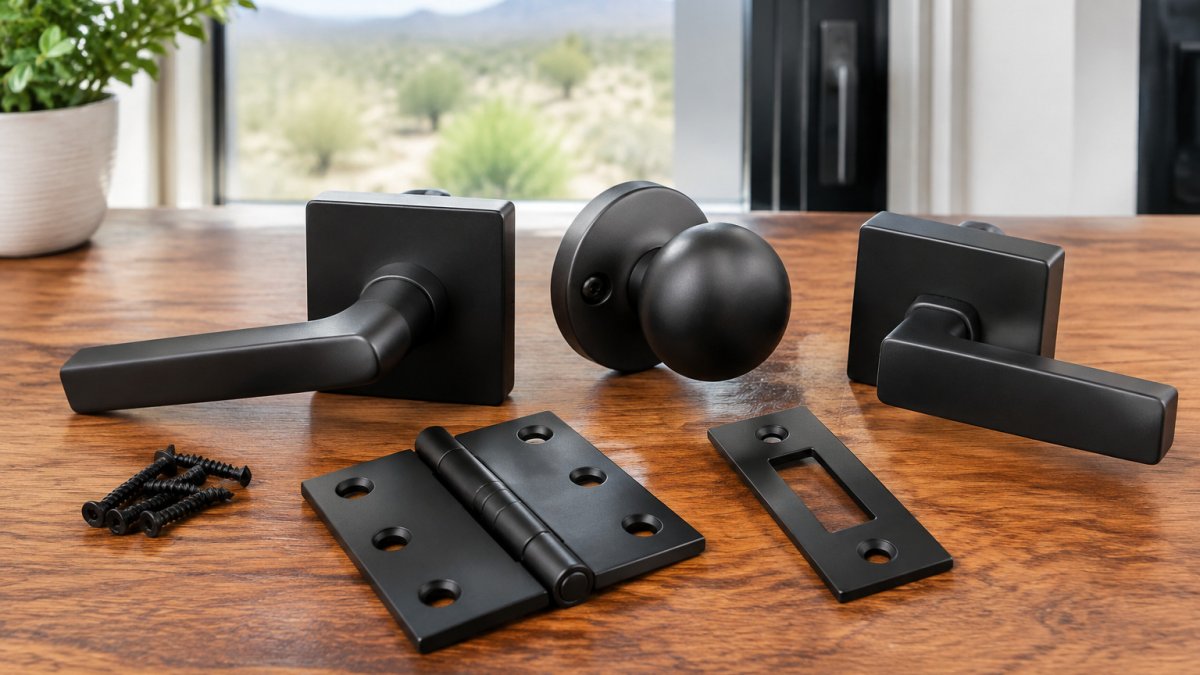
A powder coated hardware finish is applied electrostatically as a dry powder and then baked until it hardens into a tough, even layer. Door hardware, including handles, deadbolts, hinges, and kick plates, is often powder coated because the finish holds up better than many liquid paints.
The process has four main steps:
- Clean and pretreat. The metal is degreased and treated so the coating can bond to it.
- Electrostatic spray. Charged powder particles are sprayed onto the grounded part, where they cling evenly.
- Cure. The part goes into an oven, typically around 350 to 400 degrees Fahrenheit, where the powder melts and forms a continuous film.
- Cool and inspect. The finish hardens as it cools, and the part is checked for coverage and defects.
Because the powder is applied dry and cured in one heat cycle, there are no solvents to flash off and little overspray to waste.
What this means for hardware buyers: A properly cured powder finish is a single, bonded layer. It resists chips and scratches better than a thin liquid coat, which is why it is a common choice for exterior hardware.
Durable Finishes for Exterior Door Hardware in Arizona's Climate
Most exterior hardware needs a finish that can handle heat, sun, and occasional moisture. Powder coating is one of the most common options for this job, along with other finishes such as PVD and anodizing. Each has trade-offs in color range and wear resistance.
Powder coating is popular because it offers:
- Many colors and textures, including matte, satin, and gloss
- A thick, uniform film that covers corners and edges well
- Good resistance to wear from daily handling
- A finish that is easy to clean with mild soap and water
For Arizona homes, the key question is not whether a finish is "good," but whether it is rated and applied for outdoor use. Compare desert-weather finish options in more detail before you decide. Ask the supplier for the coating type and whether it is designed for exterior exposure.
Powder Coating vs. Electroplating Door Handles
Electroplating deposits a thin metal layer, such as chrome or nickel, onto a base metal using an electric current. It produces a bright, polished look, but the layer is usually very thin.
| Factor | Powder Coating | Electroplating |
|---|---|---|
| Finish thickness | Thicker, more uniform | Very thin metal layer |
| Color options | Wide range | Mainly metallic tones |
| Chip resistance | Generally stronger | Can wear through at edges |
| Typical use | Exterior and high-wear hardware | Decorative interior hardware |
Electroplated finishes can look excellent indoors, but powder coated hardware usually holds up better where sun, grit, and hand contact are heavy. For a front door handle that gets used every day in strong sun, powder coating is often the more practical choice.
Heat, UV and Monsoon Moisture: How Powder-Coated Metal Holds Up Outdoors
Arizona puts exterior door hardware through a specific sequence of stresses: months of intense sun and heat, wide day-to-night temperature swings, abrasive dust, and then short monsoon bursts of rain and humidity. Powder coating handles this sequence well when the coating system is matched to the exposure, but the failure modes are predictable and worth understanding before you buy.
Heat and temperature cycling. Metal expands in afternoon heat and contracts overnight. A properly cured powder film is flexible enough to move with the substrate, but the film only stays flexible if it is the right chemistry for exterior use and if it was cured within the manufacturer's specified time and temperature window. Under-cured powder looks fine at first but becomes brittle and can crack at edges and fastener holes after repeated cycling. See how extreme heat warps front doors when the same conditions act on the whole door.
UV exposure and color fading. Sun exposure breaks down the polymer chains in any organic coating. Exterior-grade powders use UV-stabilized resins and pigments to slow that breakdown. The practical signs of UV degradation are chalking (a powdery film that wipes off), gloss loss, and color shift. Ask the supplier whether the powder is formulated for exterior exposure and whether it carries a UV-resistance or color-fastness claim from the coating manufacturer.
Monsoon moisture and humidity. The coating itself is a barrier, but water finds the weak points: scratches, unsealed cut edges, fastener holes, and gaps where hardware meets the door. Once water reaches bare metal, corrosion starts under the film and lifts it from the inside. Hardware on doors that get direct wind-driven rain needs full coverage on all edges and sealed or gasketed mounting points.
Dust and abrasion. Fine desert dust is abrasive. It works into hinge knuckles, latch mechanisms, and the gaps around handles, and over time it can dull a gloss finish and wear at contact points.
Irrigation and pool exposure. Sprinkler overspray and pool splash carry minerals and chlorine that can etch or stain a finish if left on the surface. Hardware near irrigation heads or pool decks should be rinsed periodically.
What this means for buyers. Match the coating system to the worst exposure on the door. A covered north-facing entry can use a broader range of finishes than a west-facing door with full afternoon sun and monsoon rain. Choosing an exterior-rated coating and thorough pretreatment matters on any exposed metal surface, where the same principles behind durable paint finishes help protect against sun and weather.
Limitations and Failure Modes to Watch For
Powder coating is a strong option, but it has real limits:
- Edge coverage: Sharp edges can end up with thinner coverage, making them more prone to chipping.
- Surface preparation: Poor cleaning or pretreatment causes flaking and early failure.
- Thickness buildup: Too much coating can interfere with lock cylinders, hinge knuckles, and tight-fitting parts.
- Repairs: Chips are harder to touch up than on liquid paint, so plan for careful maintenance. See which finishes last longest to weigh these failure risks.
Watch out: Do not assume a finish is exterior-rated just because it is powder coated. Ask for the product specification.
Choosing Hardware by Location and Exposure in Arizona
Not every door faces the same conditions, and the right finish for one entry can be the wrong choice for another. A practical way to choose is to sort each door into an exposure tier, then match the coating system, substrate, and hardware design to that tier.
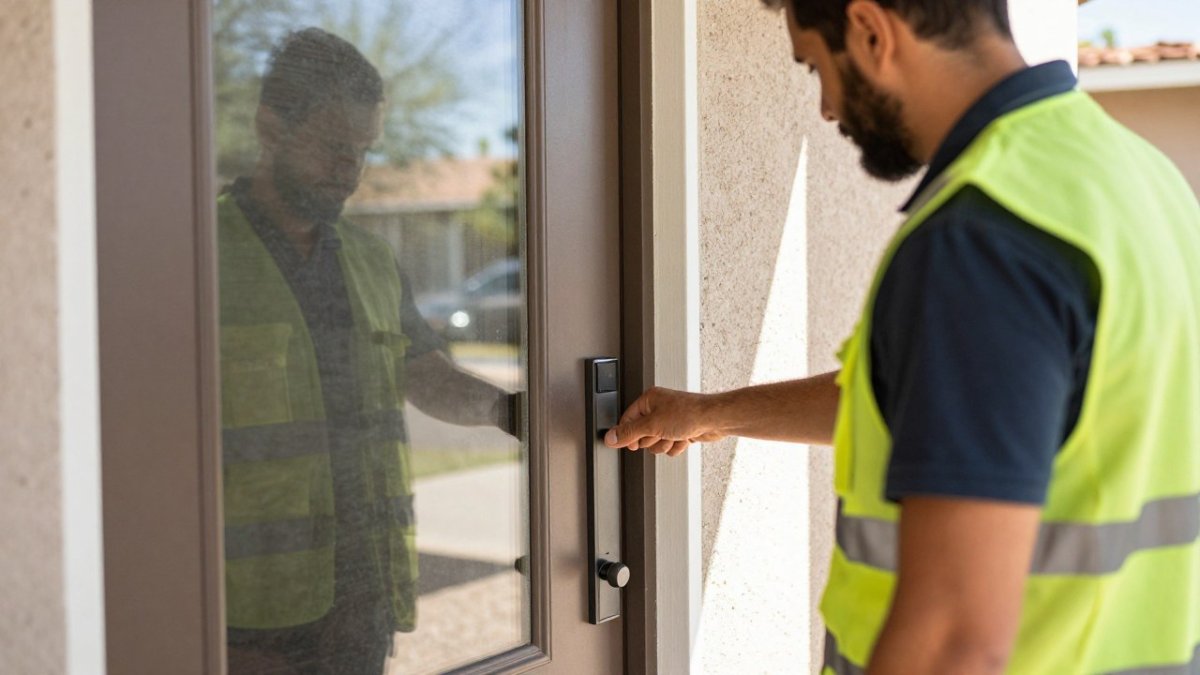
Tier 1: Protected entries. Covered porches, shaded courtyards, and north-facing doors that see little direct sun and no wind-driven rain. These doors can use a wider range of finishes, including decorative colors and gloss levels, because UV and moisture exposure are lower.
Tier 2: Partial exposure. East- and south-facing doors, covered entries that still catch morning or afternoon sun, and doors under deep overhangs but open to monsoon wind. Full edge coverage and sealed mounting points are important for these doors.
Tier 3: Full exposure. West-facing doors with full afternoon sun, doors with no overhang, and entries exposed to wind-driven monsoon rain. These are the hardest-working doors on the house. Confirm the pretreatment and cure schedule with the coater, and choose a substrate with good corrosion resistance.
Tier 4: Wet or chemical exposure. Doors near pool decks, irrigation heads, or coastal-influenced areas with salt air. These need the most chemically resistant finish available, frequent rinsing, and hardware designed with drainage and minimal water traps.
Hardware-specific considerations. Handles, deadbolts, hinges, and kick plates do not see the same wear. Handles and deadbolts get constant hand contact and should have a finish that resists oils and abrasion. Hinges are moving parts where coating thickness can interfere with knuckle clearance, so hinge manufacturers often specify which surfaces should be coated and which should be masked. Kick plates take impact from feet and equipment and benefit from a textured finish that hides scuffs. Thresholds and astragals sit closest to water and dirt and need full edge coverage and corrosion-resistant substrates.
Substrate matters as much as coating. Powder coating protects the metal, but it does not make a poor substrate suitable for exterior use. Ask what the hardware is made of before comparing finishes.
A simple selection checklist. For each exterior door, note: compass direction, whether it is covered or open, distance to irrigation or pool water, daily traffic level, and whether the door gets wind-driven rain. Then choose the lowest exposure tier that covers the worst condition on that door, and confirm the powder manufacturer's exterior rating, the pretreatment specification, and the cure schedule with your supplier. Matching the finish to the exposure is the single most reliable way to get long service life from powder-coated door hardware in this climate.
Powder-Coated Door Hardware Maintenance and Inspection
Simple care extends the life of powder-coated hardware:
- Clean regularly with a soft cloth, warm water, and mild soap. Avoid abrasive pads and harsh solvents.
- Rinse after pool or sprinkler contact to remove chlorine or mineral deposits.
- Inspect every few months for chips, lifted edges, or white or rusty spots.
- Touch up small chips promptly with a manufacturer-approved repair kit before corrosion spreads.
- Lubricate moving parts like hinges and latches with a product that will not attract dirt.
Early inspection is the easiest way to prevent a small chip from becoming a larger repair.
Booking Your Hardware Order With Arizona Door Store
Choosing the right finish is easier when you have a knowledgeable team to guide you. At Arizona Door Store, our family-owned team helps contractors and homeowners choose hardware for their projects, with delivery to Scottsdale, Phoenix, and Tucson. Pricing depends on quantity, dates, and delivery, so contact us or visit our website for a current quote.
If you are ready to browse options, you can also review our window options for Arizona heat and our guide to choosing door hardware for Arizona climates before you place your order.
Frequently Asked Questions
What are the downsides of powder coating?
Powder coating is durable but not indestructible. A thin or poorly cured film can chip when struck hard, and edges, sharp corners and moving parts such as lever ends can wear through first. Coating quality depends on surface preparation and curing, so a poorly prepared part can peel. Powder coating also cannot be easily touched up with a matching spray, so damaged areas may stand out. For high-contact hardware, ask about film thickness and cure specifications before ordering.
What is the most durable finish for exterior door hardware?
For most exterior door hardware in Arizona, a properly applied powder coat on a corrosion-resistant base metal such as stainless steel or aluminum offers strong resistance to UV exposure, moisture and abrasion. Electroplated finishes can look bright but often show wear sooner at high-touch points. Durability depends on the base metal, pretreatment and the specific product, so compare specifications rather than finish names alone. Contact Arizona Door Store or check the website for current options and quotes.
How long does powder-coated metal last outside?
Service life varies with the base metal, coating quality, sun exposure and how the piece is installed. Well-made powder-coated metal can hold its finish for many years in outdoor settings, but direct sun, heat cycling and monsoon humidity all add stress. Pieces installed in shaded or covered entries typically last longer than those facing west with full sun. Regular cleaning and periodic inspection help extend performance. Ask any supplier for warranty terms, since they reflect the manufacturer's expectation of service life.
How do you clean and maintain powder-coated door hardware?
Clean powder-coated hardware with warm water and a mild, non-abrasive soap, then rinse and dry. Avoid harsh solvents, abrasive pads and strong alkaline cleaners, which can dull or damage the finish. Check hinges, latches and lever joints every few months for loose fasteners, grit buildup and early chipping. Touch up small chips promptly to limit moisture reaching the base metal. Pricing for replacement parts or professional service depends on quantity, dates and delivery, so request a quote from Arizona Door Store for current options.