 how-to
Tips for Receiving Heavy Exterior Door Shipments
Last Updated: November 6, 2026
Quick Summary
The best tips for receiving heavy exterior door shipments are to measure your access route against the packaged crate dimensions before delivery day, inspect the crate and door before signing, and never unload alone. Note any damage on the delivery receipt before you sign, photograph everything, and keep all packaging until the door is installed.
- Measure gate, hallway, stair, and corner clearances against packaged dimensions, leaving a few inches of margin.
- Plan on three people for double doors, units with sidelights, or anything over roughly 200 pounds.
- Lay a crated door flat or stand it fully upright; leaning it against a wall can warp the frame.
- Write specific damage notes like crate crushed on top left corner and have the driver initial them.
- Confirm accessorial fees such as lift gate, inside delivery, and residential surcharges when you order.
Table of Contents
- Preparing Your Site Before the Door Shipment Arrives
- Freight Delivery Inspection Checklist for Every Shipment
- How to Unload a Heavy Door Safely Without Damage
- How to Inspect a Door for Shipping Damage Step by Step
- What to Do if a Door Arrives Damaged
- Managing the Delivery Appointment, Accessorial Fees, and Weather
- Planning Your Door Delivery With Arizona Door Store
- Frequently Asked Questions
Preparing Your Site Before the Door Shipment Arrives
Most door damage happens before the door ever reaches your hands. It happens because nobody measured the gate, the hallway, or the turn at the top of the stairs. Good tips for receiving heavy exterior door shipments start weeks before the truck shows up, and they start with a tape measure.
Most delivery problems we hear about are not defects. They come from a door that fits the opening but not the path to it.
Confirm Nominal and Packaged Dimensions First
Your order confirmation lists two different sets of numbers, and mixing them up causes real problems.
- Nominal dimensions describe the rough opening the door is built for.
- Packaged dimensions describe the crate itself, which is always larger.
A standard 36-inch door does not arrive in a 36-inch box. The crate adds inches on every side for protective packaging, corner blocks, and foam.
Check the shipment weight too. A solid wood exterior door is heavy on its own.
Clear the Access Route and Measure Every Clearance
Walk the full path from the street to the installation spot. Then measure it.
- Gate width, with the gate fully open
- Walkway width at its narrowest point
- Doorway and hallway clearances
Write the numbers down. Compare them to the packaged dimensions, and leave a few inches of margin.
If your home has a freight elevator, a loading dock, or a long driveway, note that for the carrier. Access details change the delivery appointment and sometimes the fees.
Freight Delivery Inspection Checklist for Every Shipment
A freight delivery inspection checklist turns a stressful ten minutes into a routine. Use the same list every time, and keep a printed copy near the door on delivery day.
| Check | What to Look For | Why It Matters |
|---|---|---|
| Crate exterior | Crushed corners, punctures, water stains, tilt indicators | Shows handling damage before you open anything |
| Crate stability | Loose bands, shifted contents, cracked bracing | A shifting crate means the door moved inside |
| Packaging | Torn protective covering, missing foam blocks | Exposed edges take hits in transit |
| Door face | Scratches, dents, finish flaws | Finished surfaces are the hardest to repair |
| Edges and corners | Chips, splits, crushed stiles | Corner damage often hides under wrap |
| Glazing | Cracks, chips, seal failure, fogging | Glass integrity is not always visible at a glance |
| Hardware and seals | Missing parts, bent handles, torn gaskets | Small missing pieces stall the whole install |
| Order details | Size, configuration, swing, finish | A wrong unit is a bigger problem than a damaged one |
Snap photographs of the crate before you open it. If you want a deeper walkthrough of catching problems before you sign, our guide on how to avoid damaged door deliveries covers the full process.
How to Unload a Heavy Door Safely Without Damage
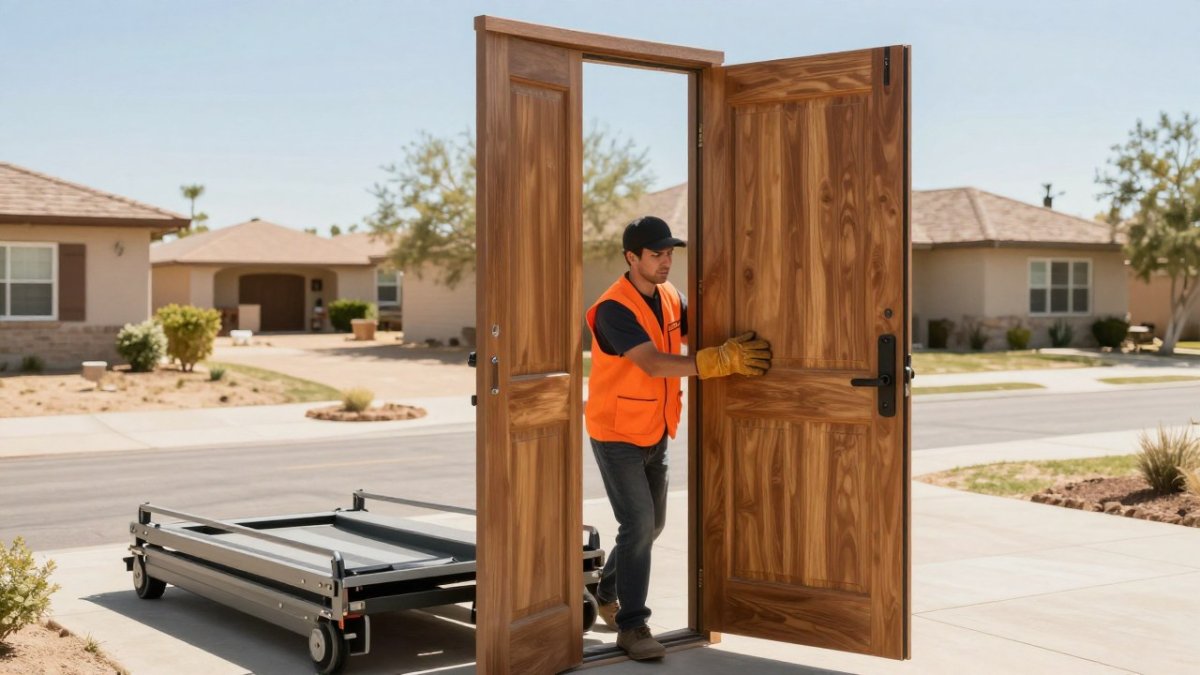
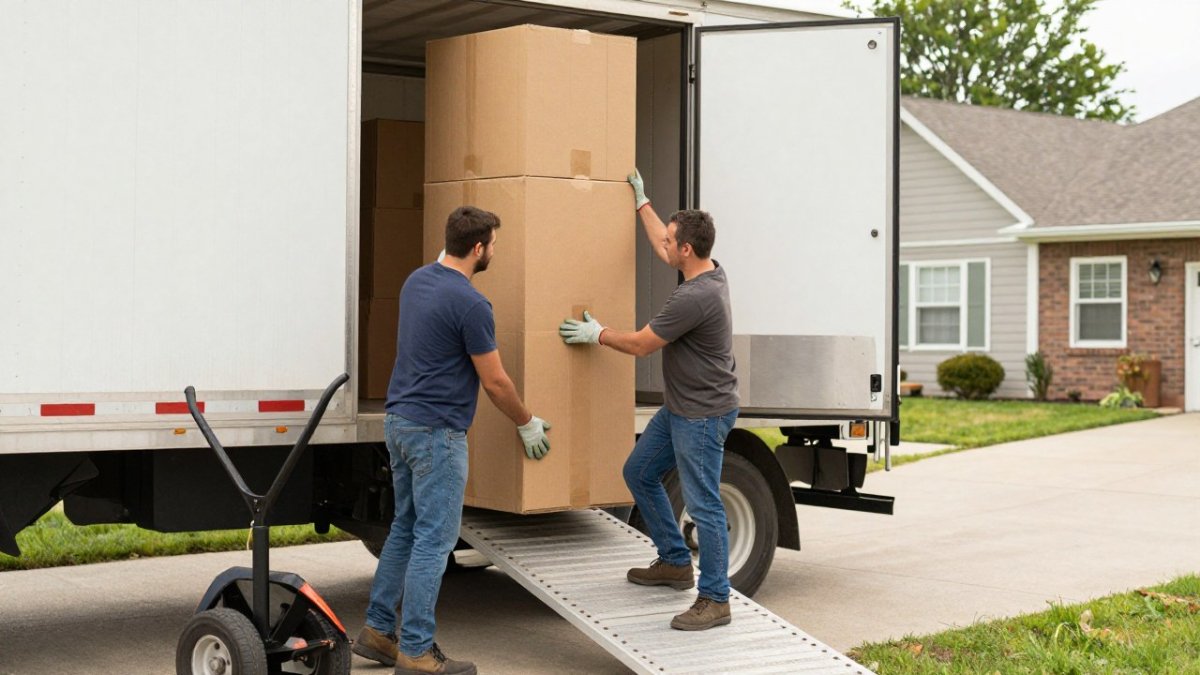
Never unload a heavy exterior door alone. A two-person lift is the minimum for a standard single door in its crate, and for a double door, a unit with sidelights, or anything over roughly 200 pounds, plan on three people: two lifting and one spotting.
Choose the Right Equipment Before the Truck Arrives
Match the equipment to the crate, not to what is already in the garage.
- Hand truck or appliance dolly for crates up to a few hundred pounds on a paved, level path. Strap the crate to the dolly at two points, top and bottom, before you tilt it.
- Furniture dolly or piano dolly for wide double-door crates that will not balance on a narrow hand truck.
- Lift gate on the truck when there is no loading dock or ramp. Confirm it is rated for the shipment weight with the carrier.
A common pattern is a homeowner renting a hand truck that is too short for a tall crated door, which forces the crate to lean, and leaning is how frames warp.
Use Team-Lift Mechanics, Not Just Extra Hands
Two people lifting the same crate without a plan is how backs get hurt and corners get crushed.
- Agree on who calls the lift and who counts the steps.
- Face the crate, feet shoulder-width, and grip the crate frame, never the door face or the banding.
- Lift with legs, keep the crate close to the body, and keep the top edge below eye level so the spotter can see the path.
- Move on the count, set down on the count, and never twist while carrying.
- Keep the spotter's hands free to guide corners and watch overhead clearance.
Watch out: the pinch points on a crated exterior door are the corners, the banding, and the gap between the crate and the truck bed or ramp edge. Gloves protect hands but do not protect fingers caught between a crate corner and a doorjamb, keep hands on flat surfaces, not edges.
Follow a Safe Unload Sequence
- Set the truck's ramp or lift gate before you touch the crate.
- Position a hand truck or furniture dolly at the crate's balance point.
- Tip the crate slowly toward the dolly, never sideways onto a finished face.
- Strap the crate to the dolly before you move it.
- Roll it down the ramp with one person steering and one spotting.
- Set it down flat in a dry, level spot, not leaning against a wall.
Watch out: leaning a crated door against a wall for even an hour can warp the frame or bow the slab. Lay it flat or stand it fully upright with support on both sides.
Know When to Step Back and Hire Help
Call a professional if any of these are true: the crate weighs more than your crew can safely control on the slope, the path includes stairs with a turn, the only access is through a narrow gate or over uneven ground, or the door is a large double or glass-heavy unit. A professional crew can also give you a second set of eyes on the crate condition before you sign.
How to Inspect a Door for Shipping Damage Step by Step
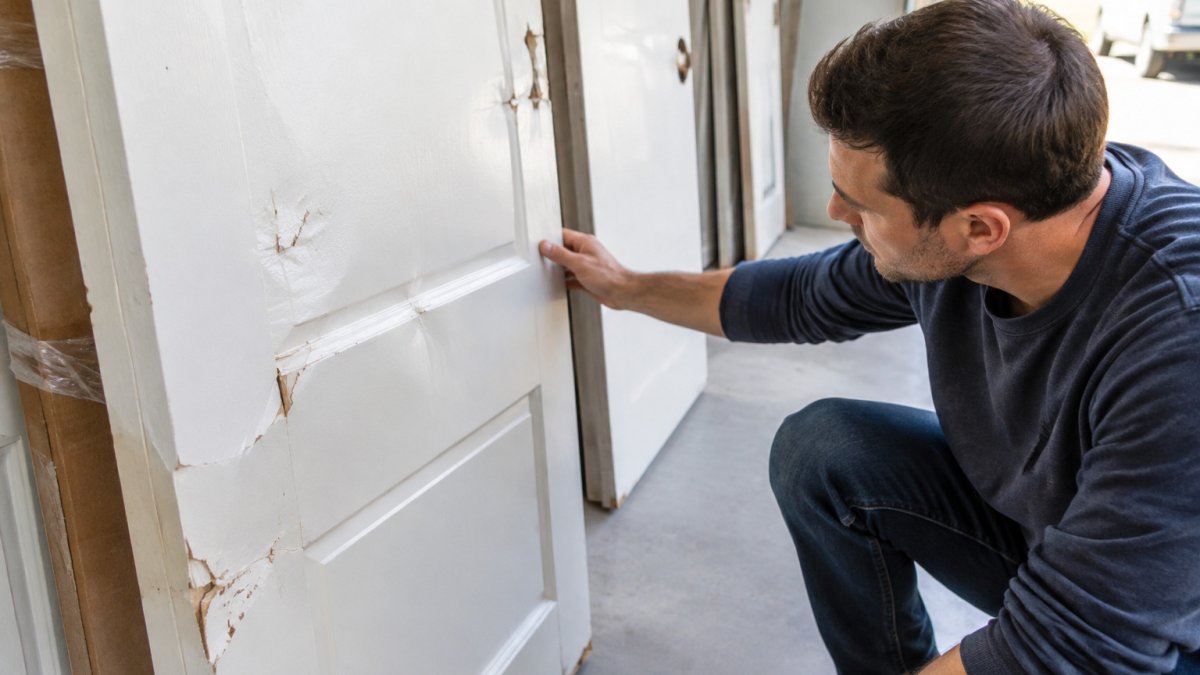
Inspect before you sign the delivery receipt. Once you sign clean, proving shipping damage becomes much harder.
Check the Crate, Then the Door Face, Edges, and Corners
Open the crate in a dry, flat area with good light. Work in this order:
- Photograph the sealed crate from all four sides.
- Remove the top and sides without prying against the door.
- Check the door face under direct light, at an angle.
Keep the packaging until the door is installed and working. You may need it for a claim.
Test Glass Integrity, Hardware, Gaskets, and Seals
Glass damage is not always a crack. Look for chips at the edges, fogging between panes, and seals that have pulled away from the frame.
Then check the small parts:
- Handles, hinges, and locks are all present
- Gaskets and weather seals sit flat with no tears
- Screens and trim pieces are undamaged
Our reference on common types of door shipping damage lists the specific defects to look for while you inspect.
What to Do if a Door Arrives Damaged
Note the damage on the delivery receipt before you sign. Write "damaged" or "subject to inspection" next to your signature, and photograph everything. Once you sign clean, proving shipping damage becomes much harder. A clear record of damage is part of preparing for delivery, whether the shipment is an exterior door or another heavy item that needs careful inspection on arrival.
Write the Right Words on the Proof of Delivery
The driver's paperwork is the first document in any claim, so make it specific.
- Write the exact damage you can see: "crate crushed on top left corner," "water stain on bottom rail," "glass cracked at lower right."
- Add "subject to inspection" if you cannot open the crate at the curb.
- Note the number of pieces received and any missing pieces.
A vague "damaged" note is easy for a carrier to dispute. A specific note with a driver initial is much harder to challenge.
Take a Complete Photo Set
Photograph in this order, before you move the crate:
- The shipping label and PRO number.
- All four sides of the sealed crate.
- Each area of damage, close up, with a coin or tape measure for scale.
- The damage in context, showing where it sits on the crate.
- The door itself once opened, including the face, edges, corners, glass, and hardware.
Keep the photos in one folder and do not edit or crop them. Timestamps help.
Notify the Supplier and Carrier Promptly
Contact the supplier the same day, and notify the carrier within the window stated on the delivery receipt, which is printed on the paperwork. Send one message that includes your order number, the PRO number, the photos, and a short description of the damage. Ask the supplier to confirm in writing whether to keep, refuse, or return the door.
Retain the Right Paperwork and Packaging
Keep the delivery receipt, the bill of lading, all photos, and every piece of packaging until the door is installed and working. Do not discard the crate, corner blocks, or banding, a carrier or inspector may ask to see them. If an inspector is assigned, schedule the inspection before you move or install the door.
Do Not Refuse the Shipment Unless Told To
Do not refuse the shipment unless the supplier tells you to. A refused freight shipment can sit in a terminal for days, and weather damage becomes your problem. If you need the full process, our guide to preventing and handling door delivery damage walks through every step.
Managing the Delivery Appointment, Accessorial Fees, and Weather
Freight carriers typically schedule delivery windows rather than exact times. Confirm the appointment ahead of time, and ask what accessorial services apply.
Common add-on fees include:
- Lift gate service if there is no loading dock
- Inside delivery beyond the threshold
- Residential delivery surcharges
Ask about these when you order, so the invoice holds no surprises.
Weather matters too. A crated door left on a driveway in monsoon season can take on water fast. Have a dry, covered spot ready before the truck arrives.
Planning Your Door Delivery With Arizona Door Store
The best protection against delivery damage is a supplier who knows the route, the crate, and the crew.
Arizona Door Store is a family-owned business with design centers in Scottsdale and Phoenix.
Ready to start? Browse front entry, French, sliding, and patio doors built for local homes, then talk to our team about delivery.
Heavy door shipments go wrong when nobody plans the unload, the inspection, or the paperwork.
Frequently Asked Questions
Should you sign for a freight delivery if the door is damaged?
Sign, but sign with notes. Refusing the shipment can leave you without a door and complicate the replacement timeline. Write 'damaged' or 'possible damage' on the delivery receipt next to your signature, note which side or component is affected, and photograph the crate and door before the carrier leaves. That notation plus photos is the foundation of any freight claim, and it protects you if the carrier later disputes that the damage happened in transit.
What equipment do you need to unload a heavy door safely?
Plan for a two-person lift at minimum, plus a hand truck or appliance dolly rated for the shipment weight. Gloves prevent cuts from crate staples and metal banding, and a pry bar helps open the crate without gouging the door face. For heavy units or a full prehung unit with glass, consider arranging a lift gate on the freight truck. Ask the supplier about shipment weight and packaged dimensions when you order so you can match equipment to the load.
How do you document shipping damage to a door?
Photograph the crate before you open it, then the damage itself from several angles, then the shipping label and delivery receipt. Keep the packaging until the claim closes, since carriers may ask to inspect it. Note the discrepancy on the delivery receipt at the moment of delivery, then contact your supplier the same day with photos and the order number. A freight delivery inspection checklist with these steps on it keeps the process consistent across every shipment.
How do you prepare for a heavy exterior door delivery?
Confirm the delivery appointment window, then measure the access route from the truck to the door's final location: gate width, hallway clearance, stair turns, and any freight elevator dimensions. Clear obstacles and park where the truck can reach. Have enough people on hand for the unloading, and check the crate and door against your order details, including nominal dimensions, configuration, and hardware, before the carrier leaves.