 how-to
How to Avoid Damaged Door Deliveries
Table of Contents
- Prepare Your Space Before Door Delivery Arrives
- Create an Inspecting Door Delivery Checklist
- How to Document Delivery Damage Properly
- Refusing Damaged Freight Delivery
- File a Damage Claim With Your Carrier
- Understand Your Consumer Rights and Carrier Liability
- Frequently Asked Questions
Last Updated: September 23, 2026
Prepare Your Space Before Door Delivery Arrives
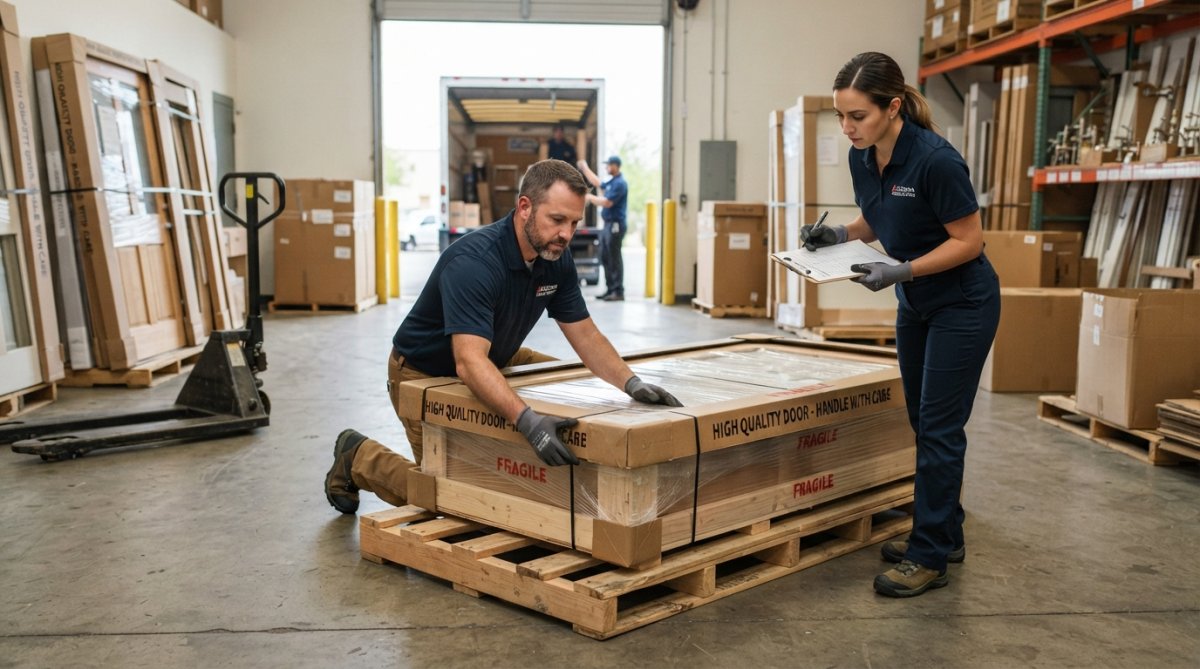
The best way to avoid damaged door deliveries starts before the truck arrives. A clear, safe delivery space protects your new doors from the moment they land on your property.
Set up a designated drop-off area. Choose a spot that's:
- Close to the delivery truck
- Protected from weather
- Away from foot traffic
- On level ground
- Well-lit so the team can see what they're doing
Create an Inspecting Door Delivery Checklist
An inspecting door delivery checklist is your first line of defense against accepting damaged freight delivery without realizing it. You have the right to refuse damaged shipments before signing. Once you accept, your options become limited.
What to Check Before Accepting the Shipment
When boxes open, inspect the door before touching it. Check for cracks, chips, warping, scratches, and bent hardware. Run your hand along the frame and edges to feel for splintering or finish damage.
Examine the Door Frame and Hardware
Inspect every side of the frame for cracks, separation, bent components, and damage to weatherstripping. Test the frame's square by measuring corner to corner in both directions, different measurements indicate twisting or bending. Document any issues with photos before the delivery personnel leave. Precise documentation of these structural irregularities ensures that any necessary claims are handled efficiently, much like the rigorous process of measuring for delivery when navigating tight entryways for large furniture.
How to Document Delivery Damage Properly
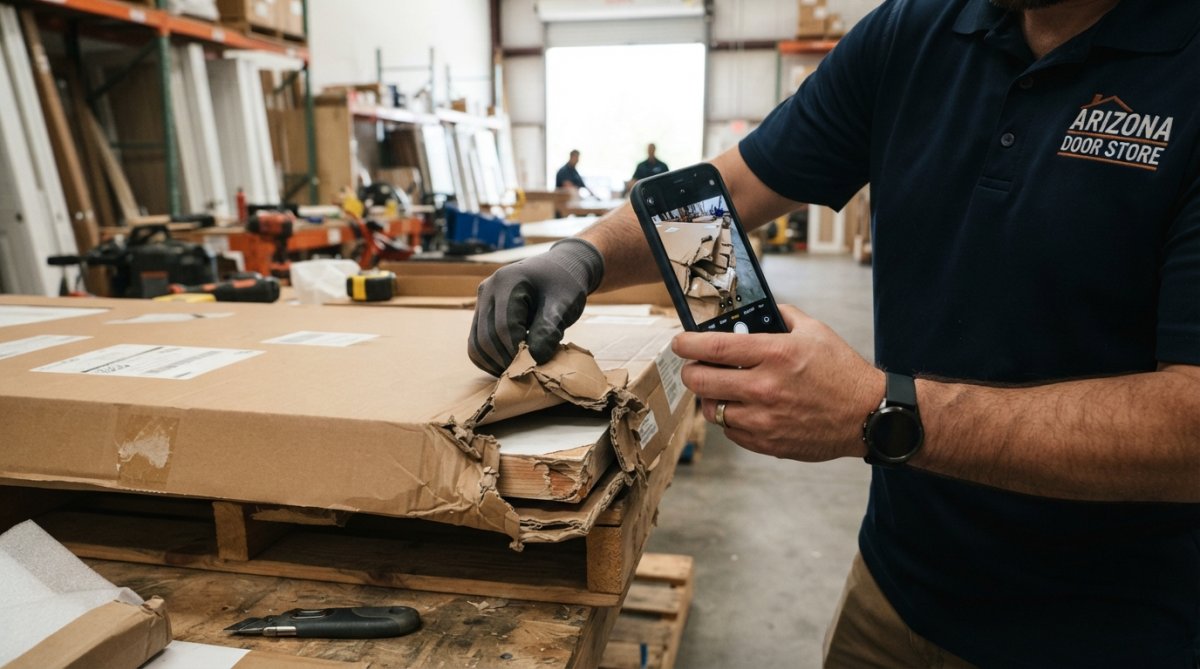
Document delivery damage immediately. Clear evidence is critical for successful claims.
Taking Photographic Evidence
Photograph every damaged area from multiple angles using natural lighting. Include overall views, close-ups, context, and packaging damage. Add a ruler or object of known size to show scale and severity. Date-stamp photos if possible.
Recording Driver Notes and Timestamps
Ask the driver to note damage on delivery paperwork and sign it. Record the driver's name, delivery date/time, carrier name, and tracking number. Photograph the signed paperwork and keep it with your damage photos.
Refusing Damaged Freight Delivery
You have the legal right to refuse damaged freight delivery. Understanding when to refuse versus negotiate depends on damage severity, your timeline, and carrier liability limits.
When Refusal Is Your Best Option
Refuse immediately if the door has structural damage (cracks, splits, warping), non-functional hardware, twisted frame, or damage costing as much as replacement. Refusal is strongest when documented at delivery, once you accept, carriers may claim you caused the damage.
When Negotiating a Partial Resolution Makes Sense
Negotiate if damage is cosmetic, the door is urgently needed, the carrier offers repair-cost discount, or only hardware is damaged. Get the carrier's written compensation offer before accepting.
How to Refuse Clearly and Legally
Tell the driver: "This door arrived damaged. I am refusing this delivery and requesting a replacement at no cost." Be specific about damage. Insist the driver note the refusal on delivery paperwork with your name, their name, date, time, and damage description. Do not sign the standard delivery confirmation; write "Refused, damage noted" on the signature line if required.
Documenting the Refusal for Your Claim
Photograph the damaged door with the delivery truck visible, plus close-ups of specific damage. Contact Arizona Door Store within 24 hours with photos, refusal notation copy, carrier details, and your description. Ask them to contact the carrier on your behalf. Keep all communication in writing and save responses.
What Happens After You Refuse
The carrier will pick up the refused shipment within 3 to 7 business days. Do not allow the damaged door to remain on your property. Arizona Door Store will order a replacement and arrange delivery. Discuss project timeline impacts with Arizona Door Store.
File a Damage Claim With Your Carrier
File a damage claim within the time limit specified on the bill of lading. Gather photos, packaging photos, signed paperwork, damage description, tracking number, and proof of door value. Contact the carrier in writing with all documentation. Keep the claim number and reference it in all communication.
Understand Your Consumer Rights and Carrier Liability
Carriers have legal obligations to deliver goods safely, but those obligations are limited by contract terms and federal regulations. Understanding your rights and liability limits helps you decide whether to accept settlement or pursue further action.
The Bill of Lading and Your Contract With the Carrier
The bill of lading is the contract between you and the carrier. Review it before accepting delivery for declared value (often much lower than actual door cost), exclusions, claim filing deadlines (typically 15-30 days), and proof-of-loss requirements.
Proof of Delivery and Its Legal Weight
The driver's signature on delivery confirmation typically means goods arrived in good condition. If damage is noted at delivery, it strengthens your claim. If you sign without noting damage and discover it later, the carrier may argue you caused it or should have noticed it. Inspect before signing to maintain leverage.
Carrier Liability Under Federal Regulations
Carriers must comply with the Carmack Amendment, which makes them liable for damage while goods are in their possession unless caused by excluded perils. Carriers cannot limit liability below actual value except by written agreement. However, most carriers use the bill of lading to set limits well below actual value, which is legal if disclosed in writing.
What Damages You Can Claim
Carrier liability typically covers:
- The cost to repair the damaged door, if repair is possible
- The cost to replace the door if repair is not practical
- The cost of the door itself if it cannot be used
Carrier liability typically does NOT cover:
- Labor costs to install a replacement door
- Project delays or lost income due to the delayed delivery
- Costs to remove and dispose of the damaged door
- Costs for temporary solutions while waiting for a replacement
- Emotional distress or inconvenience
If the damaged door causes you to miss a project deadline or incur additional labor costs, those damages are generally not recoverable from the carrier. This is why accepting damaged shipments and filing claims quickly is critical, the sooner you get a replacement, the sooner your project moves forward.
How to File a Claim and What to Expect
File a claim in writing within the time limit specified on the bill of lading (usually 15 to 30 days). Most carriers accept claims via email or through their website. Include:
- The tracking number and delivery date
- Photos of the damage from multiple angles
- Photos of the packaging and any damage to the packaging
- A written description of the damage, including measurements
- Proof of the door's value (receipt, invoice, or estimate from Arizona Door Store)
- The signed delivery paperwork showing the refusal or damage notation
The carrier will assign a claim number. Use this number in all future communication. Reference it in every email, call, or submission.
Expect the carrier to investigate. They may:
- Contact the driver for their account of what happened
- Request additional photos or documentation
- Hire an independent inspector to examine the damaged door
- Review the delivery route video if the truck has a dash camera
When Carriers Deny Claims and Your Options
Carriers deny claims for several reasons:
- The damage is deemed to be the shipper's responsibility (poor packaging)
- The damage is deemed to be caused by an excluded peril
- The claim was filed after the deadline
- The documentation is insufficient to prove the damage occurred during transit
- The damage is deemed to be pre-existing or caused by the recipient
If your claim is denied, review the denial letter carefully. It will explain the carrier's reasoning. Common denial reasons include:
- "Damage appears to be caused by shipper's packaging", This means the carrier argues that Arizona Door Store did not package the door adequately.
- "Damage appears to be pre-existing", This means the carrier argues the damage existed before shipment.
- "Claim filed outside the time limit", This is difficult to overcome. Always file within the deadline.
If you disagree with the denial, you have options:
- Appeal the denial: Most carriers have an appeals process. Submit additional documentation or a written explanation of why you believe the denial is incorrect.
- Request escalation: Ask to speak with a supervisor or claims manager. Sometimes a second review yields a different result.
- Consult with Arizona Door Store: They may have leverage with the carrier or experience with similar disputes. They can sometimes negotiate on your behalf.
- File a complaint with the FMCSA: If you believe the carrier violated federal regulations, you can file a complaint. This does not directly recover your money, but it creates a record that may pressure the carrier to reconsider.
- Pursue small claims court: If the damage is under the small claims limit in your state (typically $5,000 to $10,000), you can sue the carrier in small claims court. You will need your documentation and proof of the door's value.
- Hire an attorney: For high-value doors, consulting with an attorney who specializes in freight claims may be worthwhile. Some attorneys work on contingency, meaning they take a percentage of the recovery rather than an upfront fee.
Optional Insurance and High-Value Shipments
Some carriers offer optional insurance that covers damage above the standard liability limit. If you are ordering an expensive custom door, ask Arizona Door Store whether insurance is available and what the premium is.
Frequently Asked Questions
Who is responsible for damaged deliveries?
The shipping carrier is typically responsible for damage that occurs during transit. However, responsibility depends on the bill of lading terms and proof of damage. If you accept a damaged shipment without documenting it, the carrier may dispute liability. Always inspect your door delivery before signing and photograph any damage immediately. Your sales receipt and delivery paperwork establish the condition at the time of receipt, which is critical for filing a damage claim.
Can I refuse delivery of a damaged door?
Yes. You have the right to refuse damaged freight delivery at the time of arrival. Inspect the packaging and door condition before the driver leaves. If damage is visible, note it on the bill of lading, photograph the damage, and refuse acceptance. Contact your supplier immediately. Refusing damaged shipments protects your legal standing and ensures the carrier is responsible for return shipping and replacement. Never accept a damaged door to avoid complications later.
What should I look for when inspecting a door delivery?
Check the exterior packaging for crushing, moisture, or punctures. Examine the door frame for dents, warping, or cracks. Open the door and inspect the edges, surface finish, and hardware for damage. Test the hinges and locking mechanism. Document any issues with photos before the driver leaves your property.
What is the standard procedure for reporting shipping damage?
First, refuse the shipment or note damage on the proof of delivery. Take photographs of all damage from multiple angles. Contact your supplier within 24 hours with photos and the delivery details. File a formal damage claim with the carrier within 30 days, including the bill of lading number, photographic evidence, and your supplier's documentation. Keep copies of all correspondence. The carrier will investigate and issue a partial refund or authorize a replacement. Working with your supplier speeds the process since they often handle carrier communication on your behalf.