 how-to
Prevent Common Door Delivery Damage: A Complete Guide
Table of Contents
- Why Door Delivery Damage Happens So Often
- The Most Common Types of Door Delivery Damage
- How to Protect a Door Frame During Furniture Delivery
- How to Measure a Doorway for Furniture Delivery
- How to Document Delivery Damage Before You Sign
- The Delivery Damage Claim Process, Step by Step
- Conclusion
- Frequently Asked Questions
Last Updated: October 18, 2026
Why Door Delivery Damage Happens So Often
Door delivery damage is the harm that occurs to a door, its frame, or the surrounding property between the warehouse and the moment it's set in place. It happens more than most people expect, and the reasons are almost always the same. Doors are heavy, awkward, and easy to clip on a corner.
A delivery crew is usually moving fast. They're juggling a tight schedule, a heavy load, and a doorway that was never designed for a six-foot slab to pass through. One wrong angle and the edge of a door meets a doorframe. That's a scratch or a dent before the product ever leaves the truck.
At Arizona Door Store, we've learned that most damage is preventable. Below, we'll show you exactly how to protect your doors and your home.
The stakes are higher than a scuff mark. A damaged door can mean a delayed project, a fight over who pays, and a replacement order that sets your timeline back by weeks. Preparing ahead is the cheapest insurance you'll ever buy.
The Most Common Types of Door Delivery Damage
Most door delivery damage falls into two groups: damage to the door itself and damage to the frame and hardware. Knowing which is which helps you spot problems early and document them correctly.
Scratches, Dents, and Edge Damage
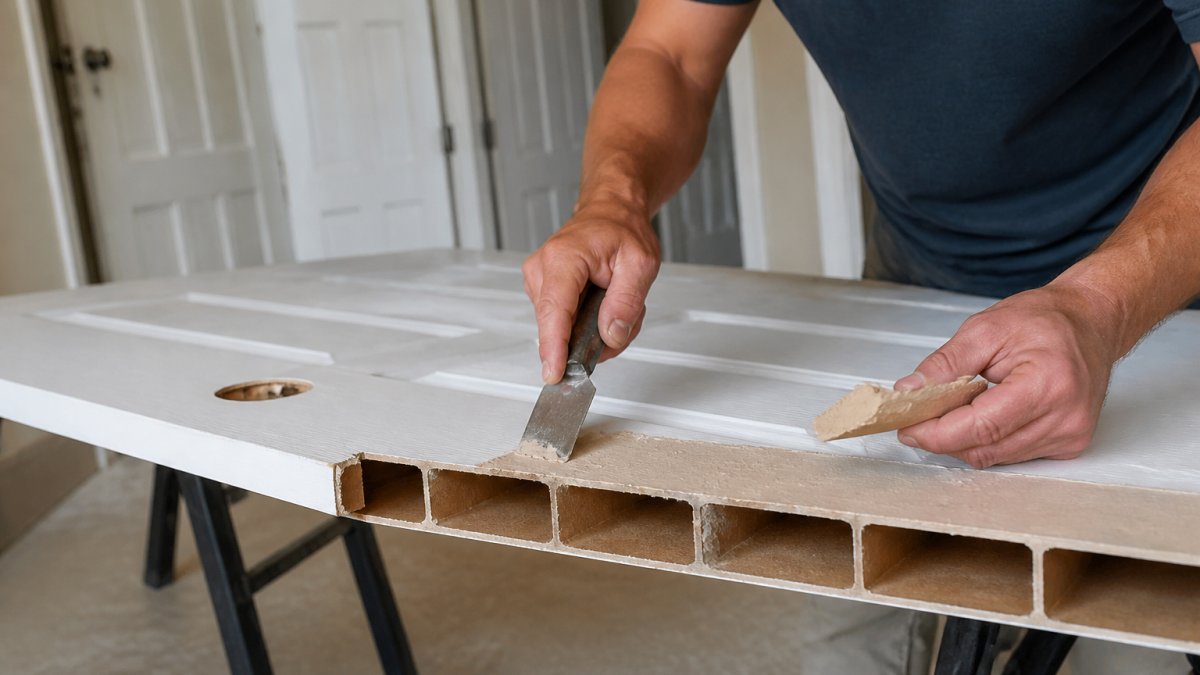
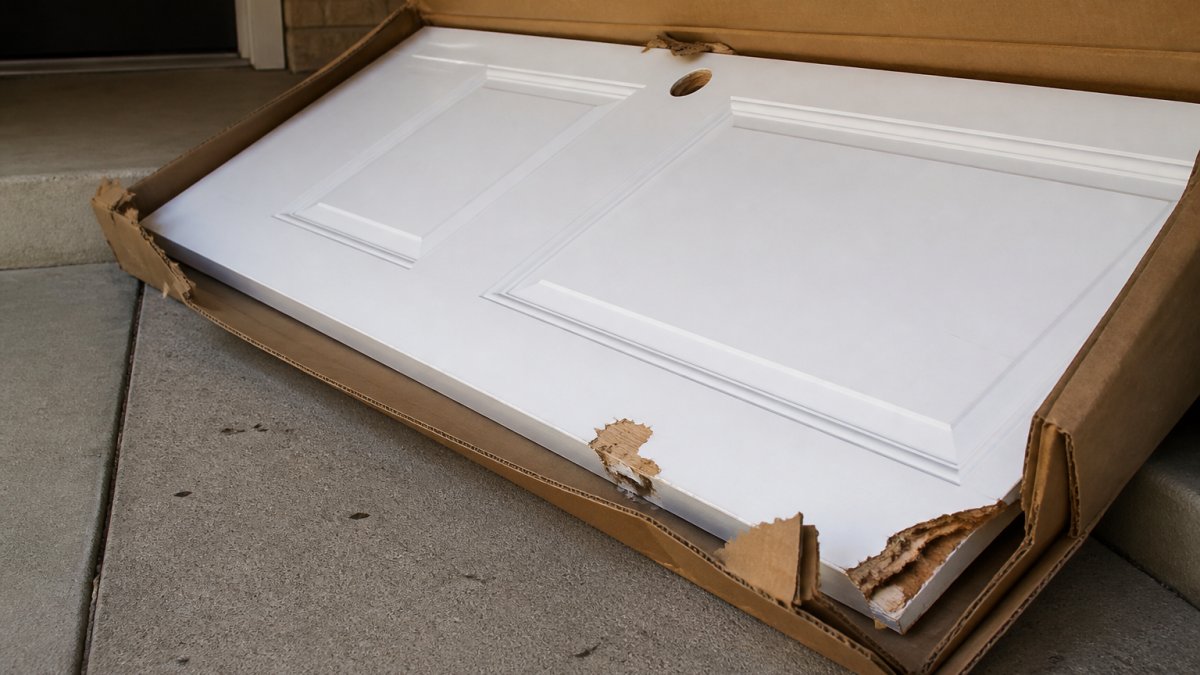
The face and edges of a door take the most abuse. Scratches come from sliding a door against a wall or another box. Dents happen when a corner strikes a hard surface. Edge damage is the worst kind, because a crushed edge on a wood door can't always be sanded out. On painted doors, a chipped edge often means a repaint before install.
Interior packaging matters here. A door wrapped only in a thin film offers almost no protection. Protective padding at the corners and edges is what actually absorbs impact.
Frame and Hardware Damage
The frame and hardware are just as vulnerable. A swinging door can hit a jamb and crack the trim. A door handle can gouge drywall as the crew pivots around a corner. Hinges and locksets get bent when a door is set down too hard.
How to Protect a Door Frame During Furniture Delivery
Protecting a door frame during furniture delivery means padding the frame, clearing the path, and controlling the door swing before the crew arrives. Do this first, and you remove the most common cause of property damage.
Here's how we'd handle it:
- Pad the frame. Wrap protective padding or cardboard around both jambs and the top of the frame. Tape it securely so it won't slip.
- Cover the floor. Lay down moving blankets or cardboard along the delivery route and through the doorway.
- Remove the door if you can. Taking the door off its hinges gives the crew a wider opening and protects the slab from contact.
- Control the door swing. Tape or tie back any door that could swing into the path. A door that swings freely is a door that gets hit.
- Clear the doorway. Move furniture, rugs, and anything loose out of the way so the crew has a clean entrance.
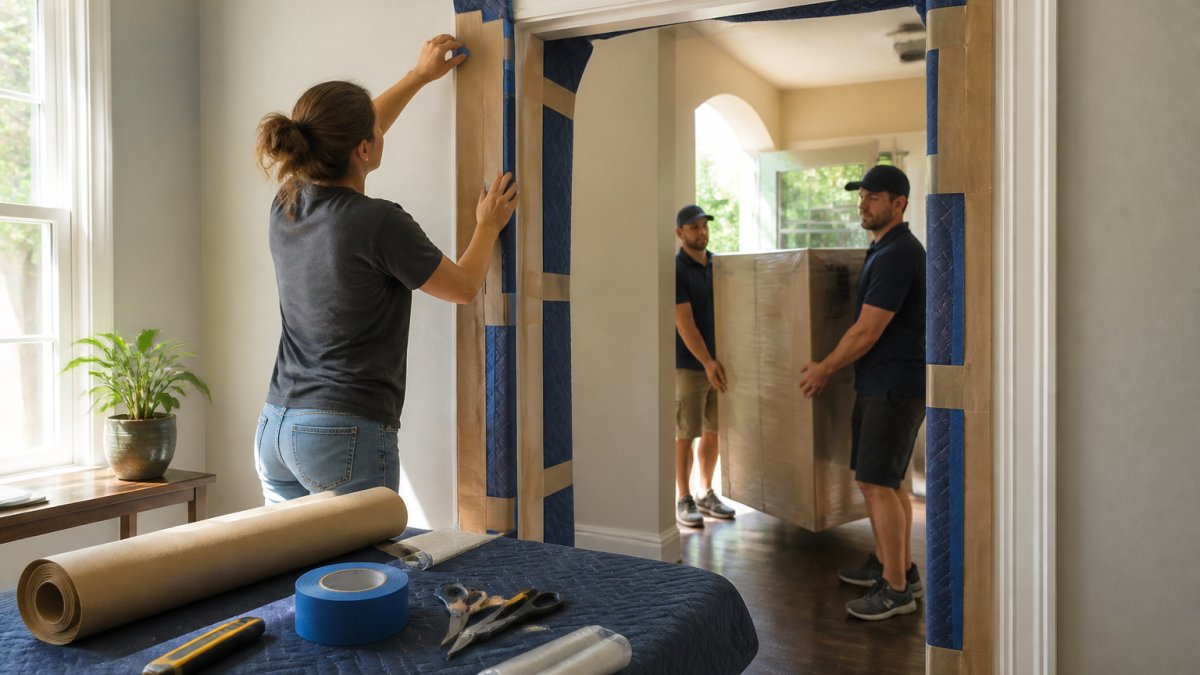
Small carts and door protection go a long way. Ask the crew to use them, and don't be shy about it. A few minutes of setup beats a repair bill later.
How to Measure a Doorway for Furniture Delivery
Measuring a doorway for furniture delivery means checking the width, height, and diagonal clearance of the opening, then comparing those numbers to the package dimensions. If the numbers don't fit, the crew won't force it, and you'll avoid damage on both sides. The gap most guides leave is the math: a doorway that clears on width can still fail on the diagonal, and a door that swings into the path adds a second collision point. Accounting for these tight maneuvers is essential for preventing delivery damage, especially when protecting vulnerable skirting boards from heavy items during the final transition into the room.
Grab a tape measure and check these in order:
- Doorway width: Measure between the jambs at the narrowest point, usually at the strike plate or hinge side. Record the smallest number, not the average.
- Doorway height: Measure from floor to the top of the frame at both sides; older openings often sag.
- Diagonal clearance: Measure corner to corner inside the frame. This is the number that decides whether a tall item can angle through. A 36-inch-wide, 80-inch-tall opening gives roughly 87 inches of diagonal, but trim and a threshold reduce that.
- Door-swing radius: With the door on its hinges, measure how far the slab swings into the room. A 32-inch door needs about 32 inches of clear arc; if furniture must pass through that arc, the door becomes an obstacle.
- Hallway and stair width: The doorway isn't the only squeeze point. Check the narrowest point of the entire route, including stairwell turns and elevator doors.
- Package dimensions: Compare box size to your smallest opening before delivery day, and add two inches on each side for padding and hand placement.
A simple rule of thumb: if the package's smallest two dimensions plus four inches exceed the doorway's width or diagonal, plan to remove the door or choose a different entrance. Measure the route from the truck to the final room, not just the front door. A path that clears the entry can still fail at a hallway corner or a stair landing.
If the numbers are close, schedule the delivery for a time when you can remove the door. A blocked doorway with a door still on its hinges is a recipe for scratches. Note the measurements on your delivery instructions so the crew knows the plan before they arrive.
How to Document Delivery Damage Before You Sign
Documenting delivery damage means photographing the package and the product before you sign anything, then noting any issues on the delivery paperwork. Once you sign a clean receipt, you've weakened your claim.
Follow this order:
- Photograph the outer packaging from every side before the crew unloads.
- Note any crushed corners or tears in the packaging on the delivery slip.
- Unbox and inspect the door in front of the driver when possible.
- Photograph any scratch, dent, or edge damage up close and from a distance.
- Write "damaged" on the receipt next to your signature if you see a problem.
- Keep the packaging until you've fully inspected the product.
A video doorbell can help too. Footage of the delivery gives you a timeline if a dispute comes up later. Before-and-after photos of the doorway and frame protect you if the crew damages your property on the way in.
The Delivery Damage Claim Process, Step by Step
The delivery damage claim process starts the moment you spot a problem, not the next day. Report it fast, keep your evidence, and follow up in writing. Most carriers and retailers publish claim windows that range from a few days to a few weeks, so same-day reporting keeps you inside every deadline.
Here's the sequence we recommend:
- Report it immediately. Tell the driver before they leave, and note it on the receipt. Ask for the driver's name and the delivery ticket number.
- Gather your evidence. Photos, video, the delivery slip, and the original order confirmation. Photograph the packaging before unboxing, the damage up close, and the surrounding frame or wall.
- Contact the seller or delivery company in writing. Email creates a paper trail. Include your order number, delivery date, photos, and a short description of the damage.
- File a property damage claim if your frame, walls, or flooring were harmed. Third-party delivery companies usually have their own claims channel separate from the product-damage process.
- Escalate if needed. If the first response stalls, ask for a supervisor and reference your documentation. Keep a log of names, dates, and reference numbers.
- Keep everything until the claim is resolved and the replacement arrives, including the packaging and any damaged parts.
A common pattern is that claims fail on evidence, not on merit. A photo of a crushed corner taken after the box is gone is weaker than a photo taken before unloading. Write "damaged" on the receipt next to your signature if you see a problem, and keep a copy of the signed slip.
For consumer protection guidance on delivery and returns, the Federal Trade Commission's consumer advice is a reliable starting point. It explains your rights when a product arrives damaged.
Conclusion
Delivery damage is frustrating, but it's rarely random. It comes from an unprotected frame, a doorway that was never measured, and a signature given too quickly. Fix those three things and you prevent most of it.
At Arizona Door Store, we help contractors and homeowners get the right doors and hardware without the headaches. Our team offers expert guidance, reliable local delivery, and fast will-call service so your project stays on schedule. We're family-owned and we treat every order like it's going into our own home.
Get started with Arizona Door Store and protect your doors, your frame, and your timeline from day one.
Frequently Asked Questions
Are delivery drivers liable for damage to a door?
It depends on who employed the driver and what you signed. If the driver is a third-party delivery contractor, liability usually falls on the retailer or carrier that dispatched them, not the individual driver. Signing a clean delivery receipt can weaken your claim, so inspect the door and frame before signing. Note any door delivery damage on the paperwork, photograph it, and file a claim with the retailer or carrier within their stated window.
What should I do if a delivery damages my door?
Stop the delivery crew before they leave and photograph the damage from multiple angles, including wide shots and close-ups. Write a description of the door delivery damage on the delivery receipt before signing, and keep a copy. Then contact the retailer or carrier in writing within their claim window, attach your photos, and request a repair or replacement estimate. Save all packaging and correspondence until the claim is resolved.
Should I document door damage before signing for a delivery?
Yes. Signing a clean receipt can be treated as confirmation the item and your property arrived undamaged. Walk the delivery route with the crew, check the door, frame, and surrounding walls, and note any door delivery damage directly on the receipt. Take dated photos and a short video. This documentation is the strongest evidence you can have if you need to file a property damage claim later.
How can I measure a doorway before a furniture or appliance delivery?
Measure the doorway's clear opening width and height, then measure the diagonal from bottom corner to opposite top corner to account for tilting the item through. Also measure the delivery route: hallways, stairwells, and turns. Compare those numbers to the item's packaged dimensions, not just the product size. Add a few inches of clearance for hands and padding, and remove the door from its hinges if the opening is tight.
This guide from Arizona Door Store covers common door delivery damage and how to prevent it. For current product availability and delivery scheduling, visit our design centers or contact our team directly.