 how-to
Why Your Front Door Is Warping in Extreme Heat
Table of Contents
- Why Front Door Warping Happens in Extreme Heat
- How to Identify Signs Your Front Door Is Warped
- Fiberglass vs. Wood Doors for Desert Climates
- How to Prevent Door Warping in Extreme Heat
- Repair vs. Replace: When It's Time to Act
- Best Professional Door Installation Services for Durability
- Frequently Asked Questions
Last Updated: September 24, 2026
Why Front Door Warping Happens in Extreme Heat
Front door warping in extreme heat is common in Arizona. Understanding why it happens helps you prevent it and know when to act.
Doors warp because wood and other materials expand and contract with temperature swings and moisture changes. In Arizona's desert climate, this stress happens constantly.
Thermal Expansion and Moisture Content
When temperatures spike above 110°F, materials absorb heat and expand unevenly. Outer layers heat faster than the inner core, creating internal stress. As temperatures drop 40°F or more at night, the material contracts rapidly. This daily cycle, repeated over weeks and months, weakens the door's structural integrity and causes permanent deformation.
Arizona's humidity also fluctuates wildly. Wood absorbs moisture during monsoon season and shrinks in dry months. This moisture movement compounds thermal stress, causing doors to no longer fit frames properly, creating gaps and making them harder to open and close.
Direct Sunlight Exposure and UV Damage
Direct sunlight accelerates warping by breaking down lignin, the material holding wood fibers together. South-facing and west-facing doors suffer most, receiving intense afternoon sun that creates uneven thermal expansion. Paint and stain protect against UV damage but fade over time, requiring refinishing every 2-3 years in Arizona. Metal hardware also absorbs heat, transferring stress directly into the door frame. Similar thermal stresses affect outdoor structures throughout the landscape, making the principles of preventing heat-related warping essential for maintaining the integrity of your perimeter fencing.
How to Identify Signs Your Front Door Is Warped
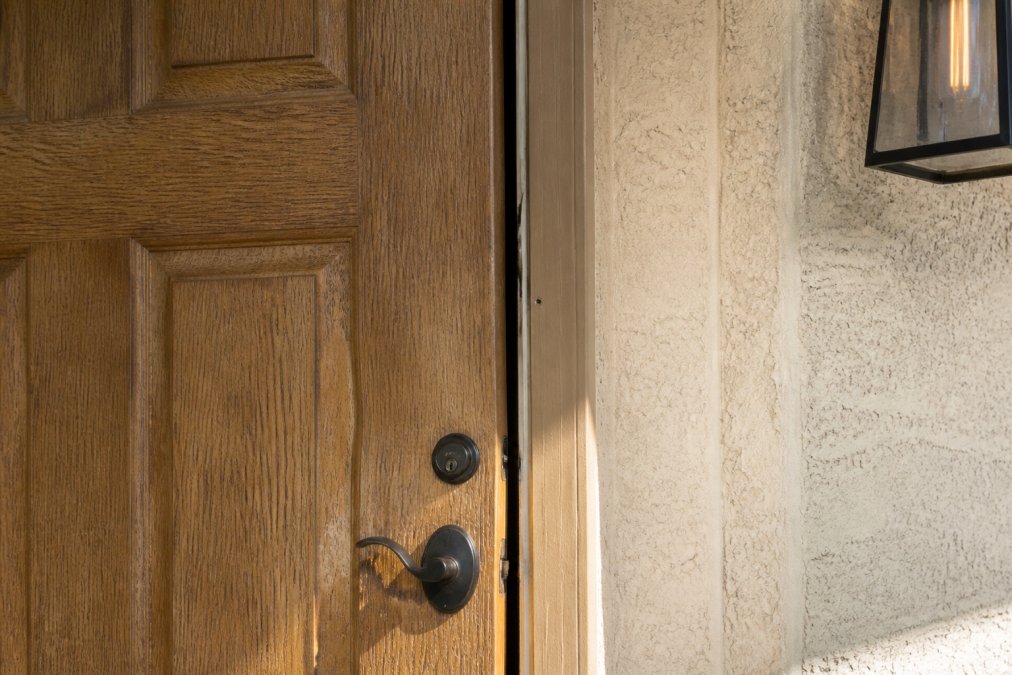
Catching warping early gives you repair options. Wait too long, and replacement becomes necessary.
Visual Inspection Checklist
Start with a simple visual check:
- Look for bowing. Stand back and view the door edge-on. A warped door bows inward or outward noticeably.
- Check for twisting. The top corner may lean away from the frame while the bottom corner leans in. This twisting means the door's structural integrity is compromised.
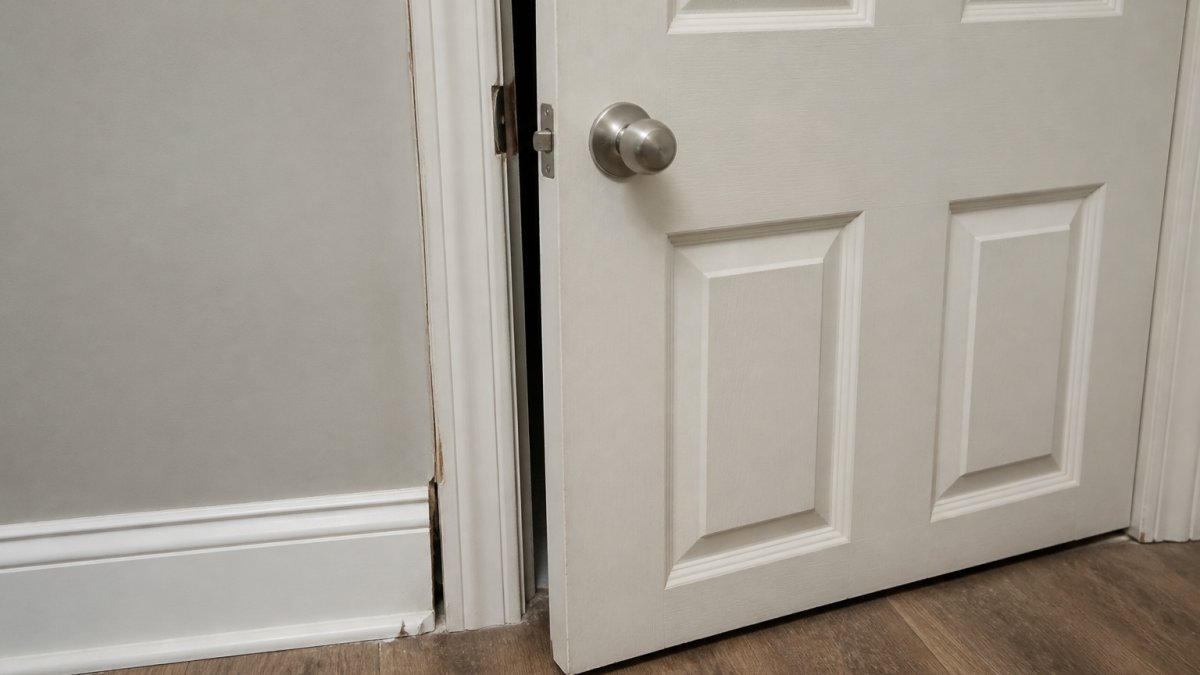
- Inspect the door jamb. Gaps between the door and frame indicate warping. Measure gaps at the top, middle, and bottom. Uneven gaps signal bowing.
- Look for cracks. Fine cracks radiating from corners or along grain lines show stress from thermal expansion.
- Examine the threshold. A warped door no longer sits flush on the threshold. You'll see gaps or uneven contact.
Performance Problems: Sticking, Jamming, and Air Leakage
Performance issues often appear before visible warping: sticking or jamming at the top, bottom, or side; uneven gaps causing air leakage; difficulty with locks due to misalignment; and squeaking hinges from strain. These problems worsen over time, a door that sticks slightly today may jam completely in six months.
Fiberglass vs. Wood Doors for Desert Climates
Material choice determines warping resistance and lifetime cost. The cheapest upfront option often becomes the most expensive over time.
Why Wood Warps More in Extreme Heat
Solid wood doors are hygroscopic, they absorb and release moisture based on humidity, the primary driver of warping in desert climates. Wood grain expands and contracts at different rates along versus across the grain (tangential expansion can be 2-3 times greater than radial expansion), creating internal stress that causes bowing and twisting.
In Arizona's climate, a wood door experiences daily thermal swings of 40°F or more during summer. A west-facing door may reach 150°F in afternoon sun while dropping to 75°F by midnight. This daily cycle, repeated 120+ times over a summer season, fatigues wood fibers and breaks down lignin.
Even quality hardwood doors warp within 5-10 years in Arizona, compared to 15-20 years in temperate climates. Solid wood doors require refinishing every 2-3 years to maintain UV protection. Skip refinishing and warping accelerates as UV rays penetrate the wood.
Fiberglass Stability and Long-Term Performance
Fiberglass entry doors don't absorb moisture or expand with humidity changes, making them dramatically more stable than wood in desert climates. They resist UV damage far better than wood and require refinishing every 5-7 years versus 2-3 years for wood. A quality fiberglass door won't bow, twist, or warp even after 20+ years in Arizona's heat.
A warped wood door creates gaps that leak conditioned air, increasing cooling costs for that room. A fiberglass door that stays flat reduces air leakage compared to a warped wood door.
Fiberglass doors need refinishing every 5-7 years with no structural repairs needed. Though fiberglass may cost more upfront, it becomes cost-competitive when factoring in refinishing and replacement likelihood.
Steel Doors and Thermal Bridging Concerns
Steel doors won't warp but conduct heat rapidly (thermal bridging), reaching 160°F+ in direct sun and radiating heat into your home. An uninsulated steel door increases cooling costs compared to fiberglass. Polyurethane foam insulation minimizes this effect. Steel also rusts if protective coatings fail. Steel doors suit high-security applications; for residential Arizona entries, the thermal penalty usually outweighs security benefits.
Composite Doors: A Hybrid Alternative
Composite doors (wood fiber core wrapped in fiberglass or vinyl) offer a middle ground. They resist warping better than solid wood but cost less than full fiberglass. Composites typically perform well for 10-15 years in Arizona before showing minor warping at the edges.
Composite doors require refinishing every 3-4 years, less frequent than wood but more often than fiberglass. They are a reasonable choice if aesthetics (wood-grain appearance) matter more than long-term durability.
Recommendation for Arizona: Fiberglass doors deliver the best balance of durability, energy efficiency, and low maintenance for Arizona's extreme heat. If budget is the primary constraint, composite doors offer acceptable performance at a lower price point. Avoid solid wood unless aesthetics are non-negotiable and you commit to refinishing every 2 years.
How to Prevent Door Warping in Extreme Heat
Prevention is far cheaper than repair or replacement. These strategies protect your door investment.
Weatherstripping, Gaskets, and Door Sweeps
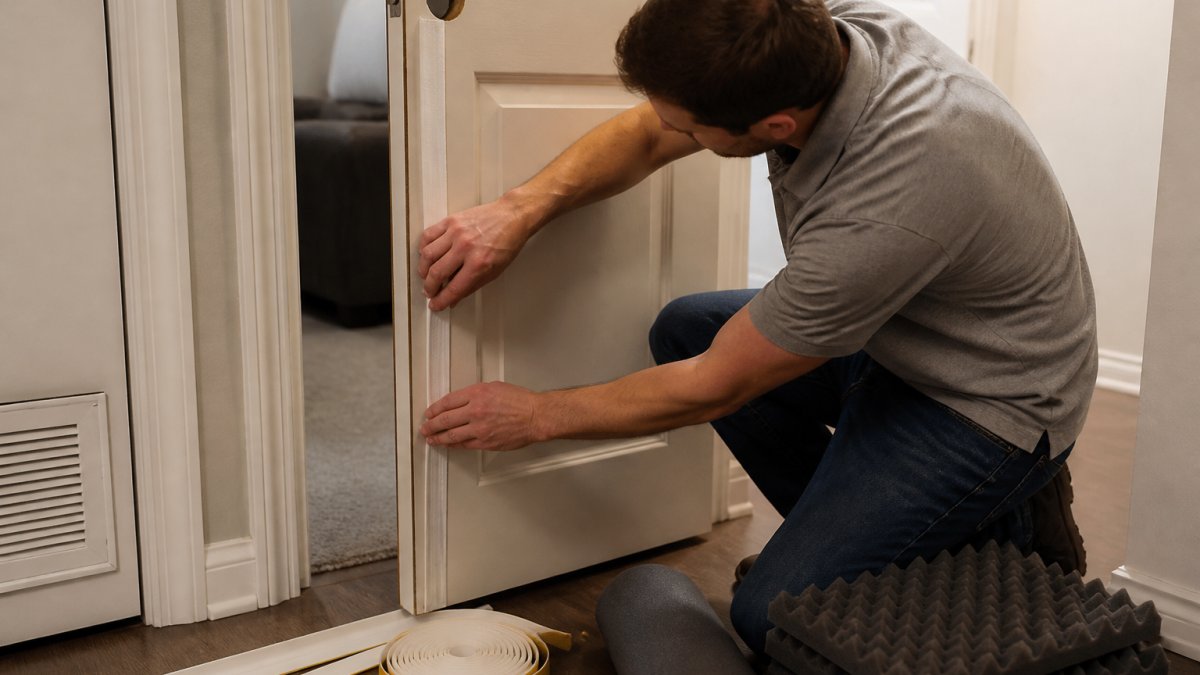
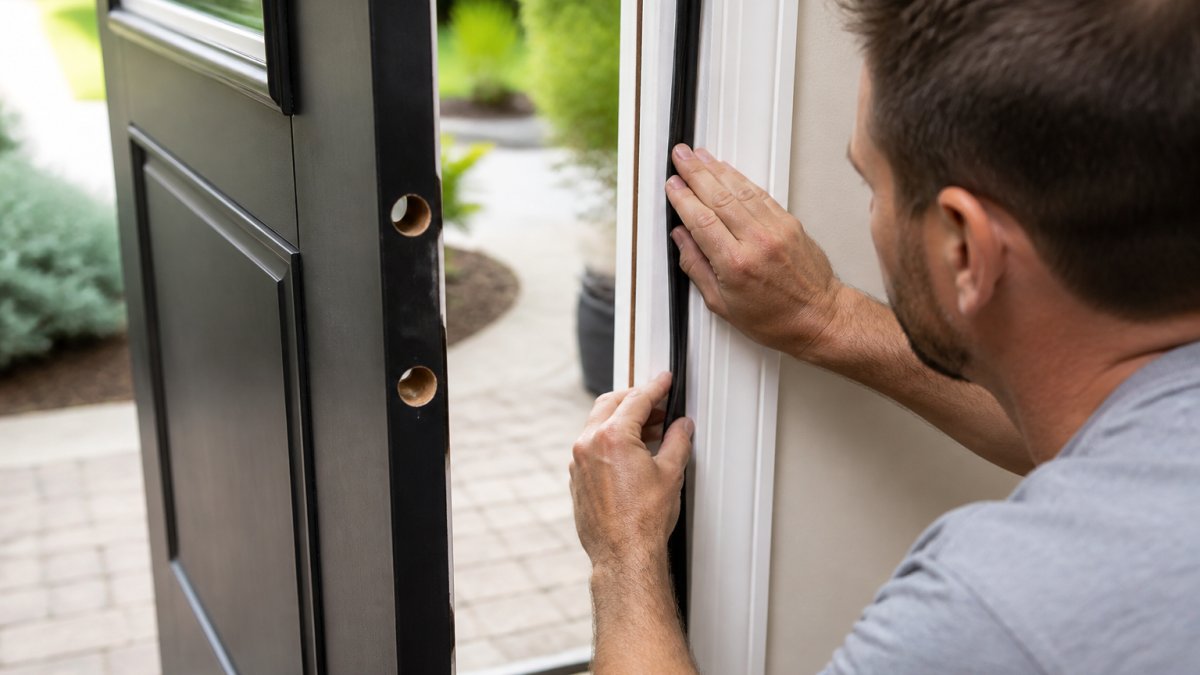
Quality weatherstripping seals gaps between the door and frame. This reduces air leakage and keeps heat away from the door's edges.
Door gaskets compress when the door closes, creating an airtight seal. A good gasket prevents hot air from reaching the door's perimeter.
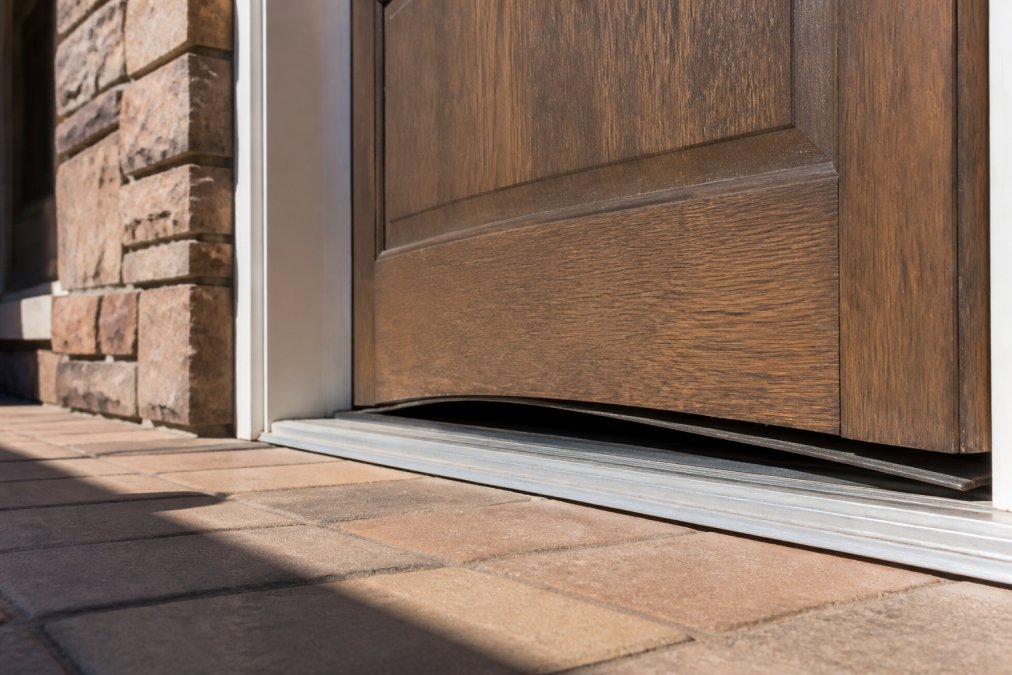
Door sweeps seal the bottom gap. This stops hot air from entering underneath and reduces thermal stress on the door's lower edge.
Check weatherstripping annually. Arizona's heat dries out rubber and foam seals. Replace them every 2-3 years to maintain protection.
Protective Coatings and Refinishing Schedules
Paint and stain protect wood from UV damage. They also reduce moisture absorption by creating a water-resistant barrier.
Refinish wood doors every 2-3 years in Arizona. The intense sun degrades coatings faster than in milder climates. Don't wait for visible damage, maintain the coating proactively.
Use high-quality exterior paint rated for extreme heat.
Door Frame Alignment and Maintenance
A properly aligned door frame distributes stress evenly. Misaligned frames concentrate stress on hinges and the door itself, accelerating warping.
Repair vs. Replace: When It's Time to Act
Not every warped door needs replacement. Small warping can be fixed. Severe warping demands a new door.
Minor Warping: Hinge Adjustment and Door Rollers
If gaps are less than 1/8 inch and the door closes with moderate force, repair is possible.
Structural Integrity Assessment
Larger warping requires professional assessment. Gaps over 1/4 inch, visible twisting, or cracks indicate structural compromise.
Best Professional Door Installation Services for Durability
Professional installation makes the difference between a door that lasts 10 years and one that lasts 20. Poor installation creates gaps and misalignment that accelerate warping.
Frequently Asked Questions
What causes a front door to warp in extreme heat?
Front door warping occurs due to thermal expansion and moisture content changes. Wood and some fiberglass materials absorb and release moisture as temperature and humidity fluctuate throughout the day. In extreme heat, direct sunlight exposure accelerates UV damage and causes the door's surface to expand faster than its core, creating stress that leads to bowing, twisting, or cracking. Steel doors can experience thermal bridging, where heat transfers through the frame, causing warping around the door jamb.
How can I prevent door warping in extreme heat?
Install quality weatherstripping, gaskets, and door sweeps to minimize moisture infiltration and air leakage. Apply protective sealants and refinish wood doors every 2-3 years to shield against UV damage. Ensure your door frame alignment is correct and maintain proper hinge adjustment. Consider fiberglass or steel doors designed for desert climates, as they resist warping better than solid wood. Keep gutters clean and maintain proper drainage around the door frame to prevent water damage.
When should I replace a warped front door instead of repairing it?
Replace your door if warping has compromised structural integrity, causing severe air leakage that affects energy efficiency, or if the door no longer closes properly despite hinge adjustment and door roller maintenance. If the bowing or twisting is severe enough that weatherstripping cannot seal gaps, replacement is more cost-effective than repeated repairs. A professional door installation service can assess whether repair or replacement is the better choice for your situation.
Are fiberglass doors better than wood doors for desert climates?
Fiberglass doors are generally superior for extreme heat environments. They resist thermal expansion and moisture content changes better than wood, experience less warping, and require less maintenance. Wood doors, while attractive, absorb and release moisture more readily, making them prone to bowing and cracking in temperature fluctuations. Fiberglass maintains better structural integrity over time and provides superior insulation, reducing energy efficiency loss from air leakage around the door frame.