 how-to
Reinforcing Door Frames for Heavy Hardware: A Step-by-Step Guide
Last Updated: November 1, 2026
Quick Summary
To reinforce door frames for heavy hardware, replace the short factory screws in the strike plate and hinges with three-inch screws that reach the wall stud, and fix any stripped holes first. For frames that stay loose, add a steel jamb reinforcement kit or backer plate that spreads the load into the framing.
- Factory screws are often about an inch long and only bite into soft jamb wood.
- Replace strike plate and hinge screws with three-inch screws that reach the stud.
- Fix stripped screw holes with wood glue and golf tees or wood filler before reinstalling.
- Use at least 12-gauge steel, 12 to 16 inches long, for a jamb reinforcement kit.
- Do not overtighten screws, since this can crush the jamb and strip the hole again.
Table of Contents
- Why Heavy Hardware Loosens Door Frames Over Time
- Gather the Tools and Materials Before You Start
- Replace Short Strike Plate Screws With Longer Screws That Reach the Studs
- How to Fix Stripped Door Hinge Screw Holes
- Install a Door Jamb Reinforcement Kit or Steel Plate
- Add a Door Frame Reinforcement Plate Behind the Strike
- Test the Frame and Decide When to Call a Professional
- Frequently Asked Questions
Why Heavy Hardware Loosens Door Frames Over Time
Heavy hardware can loosen a door frame long before the door itself looks wrong.
Here is what usually goes wrong. The screws that came with the frame are short, often about an inch long, and they only bite into the soft jamb wood.
A door that stays aligned is harder to force open. So learning how to reinforce door frames is less about making the door stronger and more about keeping the hardware anchored to the wall.
Gather the Tools and Materials Before You Start
Get everything ready before you touch the frame. Stopping halfway to find a bit or a screw makes it easy to strip a hole or leave the job unfinished.
You will need:
- Cordless drill with a bit set
- Phillips and flathead screwdrivers
- Pencil and tape measure
- Level
Check that the new screws are long enough to pass through the jamb and reach the wall stud. For general guidance on installing door hardware correctly, see door hardware installation tips.
Pricing depends on the materials you choose, quantities, and delivery. For current prices or a quote, visit the Arizona Door Store website.
Replace Short Strike Plate Screws With Longer Screws That Reach the Studs
The strike plate takes the most stress from a heavy latch.
Start by removing the existing strike plate screws. Keep the plate in place, and check whether the screw holes look worn or enlarged.
Next, drill pilot holes slightly smaller than the new screws. This keeps the wood from splitting near the edge of the jamb.
A quick check tells you it worked.
Watch out: Do not overtighten the screws.
How to Fix Stripped Door Hinge Screw Holes
Stripped hinge holes are the second most common cause of a loose door.
To fix a stripped hole, remove the hinge screw and pack the hole with wood glue. Push in short wood golf tees or wood filler.
For hinges, the best fix is a longer screw that reaches the wall stud.
Test the door after each hinge. It should swing freely and close without gaps.
Install a Door Jamb Reinforcement Kit or Steel Plate
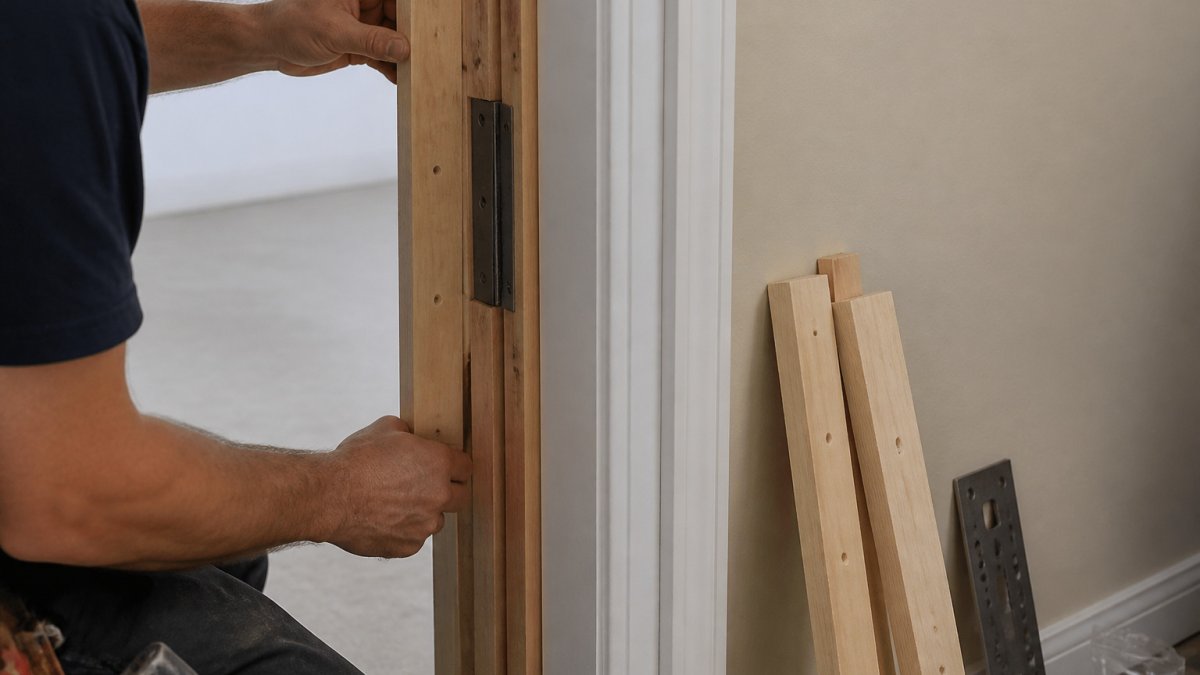
A jamb reinforcement kit adds a continuous metal load path to the frame so heavy hardware forces spread into the wall studs instead of splitting the jamb. This is the upgrade that matters most for exterior doors, commercial levers, door closers, and oversized pulls, because those loads are constant rather than a single kick.
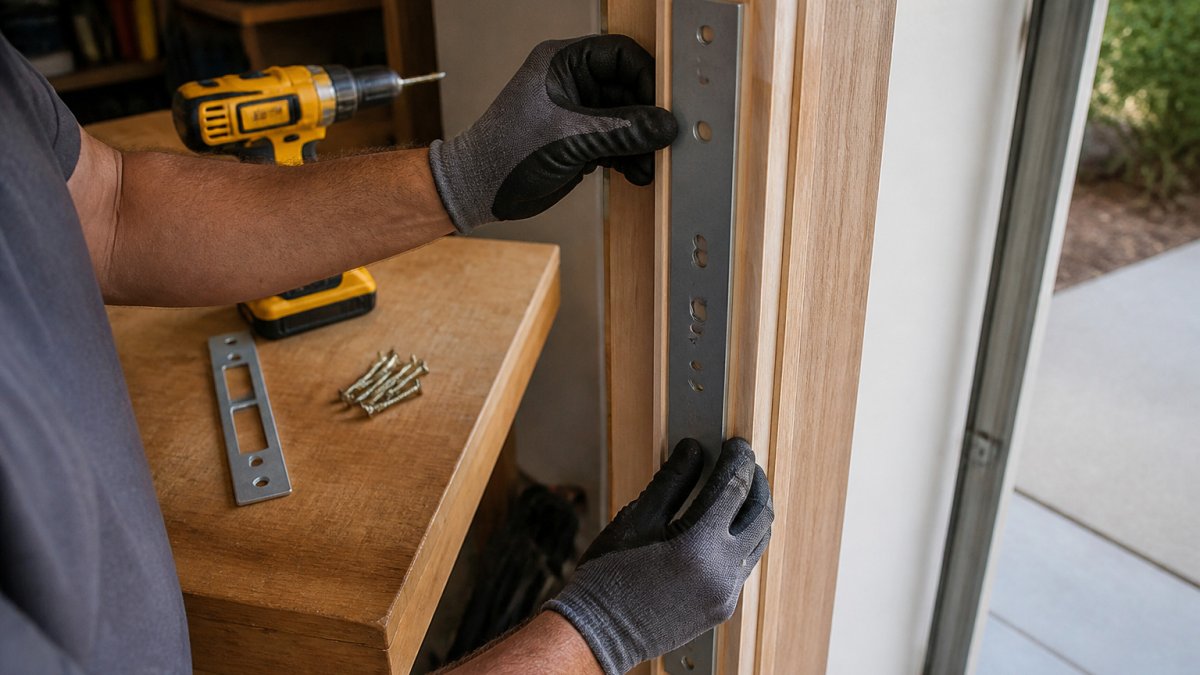
Match the kit to your frame construction
The right kit depends on what the frame and wall are made of, and most kits are sold for one condition only.
- Wood jamb with wood studs: A wraparound steel jamb reinforcer or a strike-side jamb shield is the common choice. Look for a plate that is at least 12 gauge (about 0.105 inch thick) and long enough to span from the strike plate to the nearest stud, usually 12 to 16 inches. Kits that wrap the face and return of the jamb resist prying better than flat plates.
- Steel frame: Do not chisel or drill a steel frame the way you would wood. Use a kit made for steel frames, which typically clamps or bolts through the frame into the rough opening. Confirm the kit is listed for the frame gauge; a plate sized for 16-gauge steel will not seat on a heavier 12-gauge frame.
- Composite or engineered jamb: These materials can crack when screws are driven near an edge. Use a kit with a wide backer plate and predrill every hole. Some composite jambs require a hardwood or steel backer block behind the strike before any plate is added.
- Masonry or hollow-wall openings: A surface-mounted plate that reaches the masonry or the stud pack is required; a kit designed only for a 2x4 stud bay will not anchor. In hollow walls, add blocking between studs first, then fasten the plate through the drywall into the blocking.
Size the plate and fasteners to the hardware
Measure before you buy. Proper alignment ensures that the structural integrity of the frame remains intact, which is a critical component when reinforcing entry doors against potential forced entry.
Fasteners matter as much as the plate. Use the structural screws supplied with the kit, or No. 10 or No. 12 wood screws long enough to pass through the jamb and at least 1 inch into the stud.
Install in the right sequence
- Remove the strike plate and set it aside.
- Dry-fit the kit against the jamb and mark the outline with a pencil.
- Chisel or rout a shallow recess so the plate sits flush with the jamb face; a plate that stands proud will bind the door.
- Predrill pilot holes through the plate holes, sized to the screw shank, not the threads.
- Drive the screws starting with the hole closest to the stud, then work outward so the plate pulls tight without bowing.
- Reinstall the strike plate over the reinforcement and check that the latch enters cleanly.
Check alignment before you close up
Open and close the door several times. The latch should enter the strike without rubbing, and the door should not drag at the top or bottom.
A kit is not a substitute for sound framing. If the stud behind the jamb is soft, split, or missing, the plate has nothing to hold.
The table below summarises the key specs for matching a reinforcement kit to your frame and fasteners.
| Item | Value | Note |
|---|---|---|
| Steel plate thickness | At least 12 gauge (about 0.105 in) | Wraparound or strike-side plates resist prying better |
| Plate length | 12 to 16 in | Must span from strike plate to nearest stud |
| Interior jamb thickness | 1-3/8 in | Typical for interior doors |
| Exterior jamb thickness | 1-3/4 in | Typical for exterior doors |
| Screw length, 1-3/4 in jamb | 3 in minimum | Must reach at least 1 in into the stud |
| Recess depth | Flush with jamb face | Proud plates will bind the door |
Add a Door Frame Reinforcement Plate Behind the Strike
A backer plate behind the strike is the fix for a specific failure: the jamb wood around the strike has crushed, split, or pulled away from the stud, but the rest of the frame is sound. Instead of replacing the jamb, you spread the latch load across a wider area and tie it back into framing.
Diagnose before you add metal
Confirm the problem is at the strike and not elsewhere. Remove the strike plate and look for these signs:
- Elongated or oval screw holes, or screws that spin without tightening
- A crack running from the strike opening toward the jamb edge
- A gap between the jamb and the wall that opens when you push the door
- A latch that marks the strike plate on one side only, meaning the door has shifted
If the hinge side is also loose, a backer plate alone will not fix the door; reinforce the hinges first, then reassess the strike.
Choose the right backer
A steel backer plate is the durable choice. Use 12- to 14-gauge steel, sized at least 1 inch larger than the strike plate on every side, so the load spreads beyond the damaged wood. A hardwood backer works for light hardware but will compress over time under a heavy closer or oversized lever.
Angle iron is a practical option when the jamb face is accessible: a piece of 1-1/2-inch by 1-1/2-inch by 1/8-inch angle, long enough to span from the strike to the nearest stud, can be fastened to the stud and the jamb face to tie the two together. This is the closest thing to a load path that a surface plate can provide.
Install and verify
- Cut the backer to size and dry-fit it behind the strike opening.
- Mark and chisel a recess so the plate does not stand proud of the jamb face.
- Predrill pilot holes through the backer and into the stud; use screws long enough to reach the stud, typically 3 inches for a 1-3/4-inch jamb.
- Fasten the backer to the stud first, then to the jamb, so the plate pulls the jamb toward the framing rather than away from it.
- Reinstall the strike plate and test the latch.
Test the repair under load
A backer plate is only proven when the door is worked under load. Close the door and push firmly at the latch height; the strike area should not flex or open a gap. Lock and unlock the deadbolt several times and watch for movement at the plate. If the gap returns, the stud behind the jamb is likely compromised and blocking or a full jamb kit is the next step.
Test the Frame and Decide When to Call a Professional
Once the reinforcement is in place, test the whole door. Push and pull the door with firm force.
Look for these signs of trouble:
- Gaps that change size when you press the door
- A strike plate that moves or cracks
- Hinge screws that spin or pull out
- Visible splitting in the jamb wood
If you see any of these after reinforcing, the frame may need more than a simple fix. See what happens if a door is not installed correctly for the consequences of leaving these problems unfixed.
For heavy commercial hardware or large doors, a professional installation is the safer choice. Read why professional door installation matters to weigh the decision.
Arizona Door Store carries heavy-duty strike plates, hinges, and related hardware for contractors and homeowners in Scottsdale, Phoenix, and Tucson.
Frequently Asked Questions
How do you reinforce a door frame for heavy hardware?
Start by replacing the short screws in the strike plate and hinges with longer screws, typically three-inch screws, so they reach through the jamb and into the wall studs. Then add a heavy-duty strike plate and, if the frame is still weak, a jamb reinforcement kit or a metal plate such as angle iron behind the lock area. Work through the hardware locations one at a time and check that the door closes and latches smoothly after each change. Pilot holes help prevent splitting in older wood.
Can you install heavy-duty hinges in an existing door frame?
Yes, in most cases. Heavy-duty hinges can go into an existing frame as long as the screws reach solid framing behind the jamb. Before installing, check whether the frame is solid or has rotted or split sections. If the existing screw holes are stripped, repair them first so the new hinges can grip properly. For very heavy solid-core or oversized doors, reinforcing the hinge side of the frame with longer screws and a jamb reinforcement kit improves stability.
Do you need to reinforce the frame before installing a heavy door?
It is strongly recommended. A heavy door puts constant load on the hinges and the frame, and a weak jamb can sag, shift, or let the latch miss the strike plate over time. Inspect the frame for cracks, gaps, or loose fasteners, then reinforce the hinge and strike locations before hanging the door. Checking the frame first prevents the new door from loosening the existing structure.
What screws should you use to secure heavy door hardware?
Use screws long enough to pass through the door jamb and reach the wall studs, often three-inch screws for exterior door frames. Choose screws made for exterior or structural use, and match the head type to the hardware. Avoid relying on the short screws that often come with standard strike plates. Placing screws at the locations the hardware manufacturer specifies gives the most consistent hold.