 how-to
7 Barn Door Maintenance Steps That Stop Sticking
Last Updated: October 30, 2026
Quick Summary
Barn door maintenance is the routine care of the track, rollers, and fasteners that keep a sliding door moving freely, and it takes minutes rather than hours. Vacuum and wipe the track monthly, lubricate rollers every 3 to 6 months, and tighten fasteners every 6 months to stop sticking.
- Cleaning a barn door track takes about 15 minutes: vacuum dry debris first, wet clean second, and dry last.
- Match cleaners to the track material; avoid chlorine bleach on stainless steel and ammonia on aluminum.
- Never spray cleaner into roller housings, since trapped moisture is the most common cause of squealing.
- Apply a dry silicone spray to roller bearings, not the whole track, and wipe away any excess.
- Replace rollers showing flat spots, cracks, or rough bearings, and replace a track bent in the travel path.
Table of Contents
- Why Barn Door Maintenance Matters More Than You Think
- Barn Door Track Cleaning Tools You Actually Need
- Step-by-Step Track Cleaning: From Vacuum to Dry Cloth
- How to Lubricate Barn Door Rollers Without Making a Mess
- Barn Door Track Alignment: Fixing Sticking and Noise
- Your Complete Barn Door Maintenance Checklist
- When to Repair or Replace Worn Hardware
- Get the Right Hardware for Your Barn Door Project
- Frequently Asked Questions
Why Barn Door Maintenance Matters More Than You Think
A sticking barn door is rarely a hardware failure.
Sliding door hardware is a common source of these complaints, and the same story comes up again and again.
Barn door maintenance is the routine care of the track, rollers, and fasteners that keep a sliding door moving freely.
Cleaning is only part of the job. Inspection and lubrication also help prevent sticking.
Barn Door Track Cleaning Tools You Actually Need
You do not need a specialty kit. A handful of household tools handle almost every job on a sliding door track.
Gather these barn door track cleaning tools before you start:
- A vacuum with a brush attachment
- A stiff brush or an old toothbrush for tight corners
- A spray bottle for your cleaning solution
Avoid wire brushes and steel wool on finished metal, as they can scratch the finish.
One more thing: check the track height before you climb. A barn door track often sits above head level, so check the stool or ladder before climbing.
Step-by-Step Track Cleaning: From Vacuum to Dry Cloth
Cleaning a barn door track takes about 15 minutes and follows a simple order: dry debris first, wet cleaning second, drying last. But the products and techniques you use depend on what the track and hardware are made of.
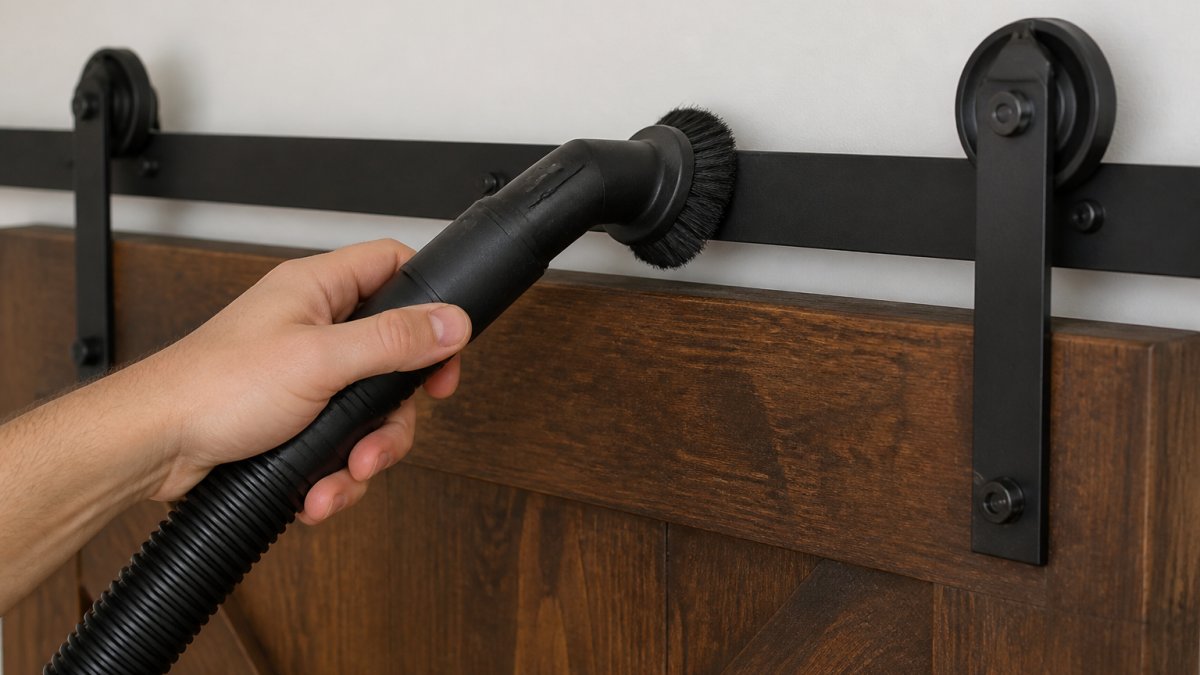
Step 1: Inspect before you clean
Run your hand along the track and look for buildup, rust spots, or bent edges. Note where the door drags. This is also your first safety check: if the door is heavy or the track is mounted high, ask a second person to steady the door before you climb. A heavy door that shifts off a partially unbolted track can create a pinch-point hazard.
Step 2: Vacuum the track
Use the brush attachment to lift loose dust, dirt, and debris out of the channel. On a barn door, pay special attention to the ends of the track and the area directly above the rollers, that is where dust compacts into a hard film that causes drag.
Step 3: Scrub the buildup
Work a stiff brush or toothbrush into the corners where grime collects. Skip the wire brush and steel wool on finished metal; they scratch the finish, and a scratched finish is where corrosion starts. A stiff nylon brush does the same job without the damage.
Step 4: Apply a cleaning solution matched to your track material
This is where most guides stop at "mild dish soap" and leave you guessing. Match the cleaner to the metal:
- Steel and stainless steel: Mild dish soap and warm water is safe. For heavier buildup, a white vinegar and water mix (about 1:1) works, but do not let vinegar sit on the surface, rinse and dry promptly. Avoid chlorine bleach, which pits stainless steel.
- Aluminum: Mild dish soap and water only. Avoid ammonia-based cleaners and harsh acids, which can dull or etch anodized finishes.
- Painted finishes: Mild dish soap and water. Avoid solvents, acetone, and abrasive powders that dull the paint.
Step 5: Wipe down and rinse
Wipe the track with a microfiber cloth, then rinse with a clean damp cloth. On a barn door, wipe in the direction of travel so you push loosened grit off the end of the track rather than back into the roller path.
Step 6: Dry completely
Run a dry cloth along the track. Moisture left on metal invites corrosion. If the track is in an outdoor or humid location, give it a few extra minutes of air drying before you re-hang or re-engage the door.
Step 7: Check for barn-door-specific trouble while the track is clean
A clean track is the best time to spot the problems generic sliding-door guides miss:
- Derailment: Look for a roller that sits outside the channel or a track end that has bent outward. A door that jumps the track usually has a bent end stop or a worn roller flange.
- Wobble: With the door closed, push gently side to side. Movement at the top means a loose hanger bolt or a worn roller; movement at the bottom means a misaligned floor guide.
- Noise: A squeal that persists after cleaning points to a dry or flat-spotted roller bearing, not dirt.
If you find any of these, address them before you lubricate, lubricant over a bent track or worn roller just masks the problem.
How to Lubricate Barn Door Rollers Without Making a Mess
Lubrication is often skipped or overdone, and both can cause problems. A dry roller grinds and wears flat. An over-lubricated roller collects dust and turns into a sticky paste.
Here is how to lubricate barn door rollers cleanly:
- Wipe the track dry and free of dust first.
- Apply a dry silicone spray or a light lubricant made for sliding hardware.
- Spray the roller bearings, not the whole track.
Avoid heavy grease on an exposed track. It grabs dust, and dust is what you just spent 15 minutes removing. A dry silicone spray leaves a thin film that repels grime instead of trapping it.
Barn Door Track Alignment: Fixing Sticking and Noise
A door that sticks or squeals is telling you something. Often, the track is out of alignment or a fastener has worked loose.
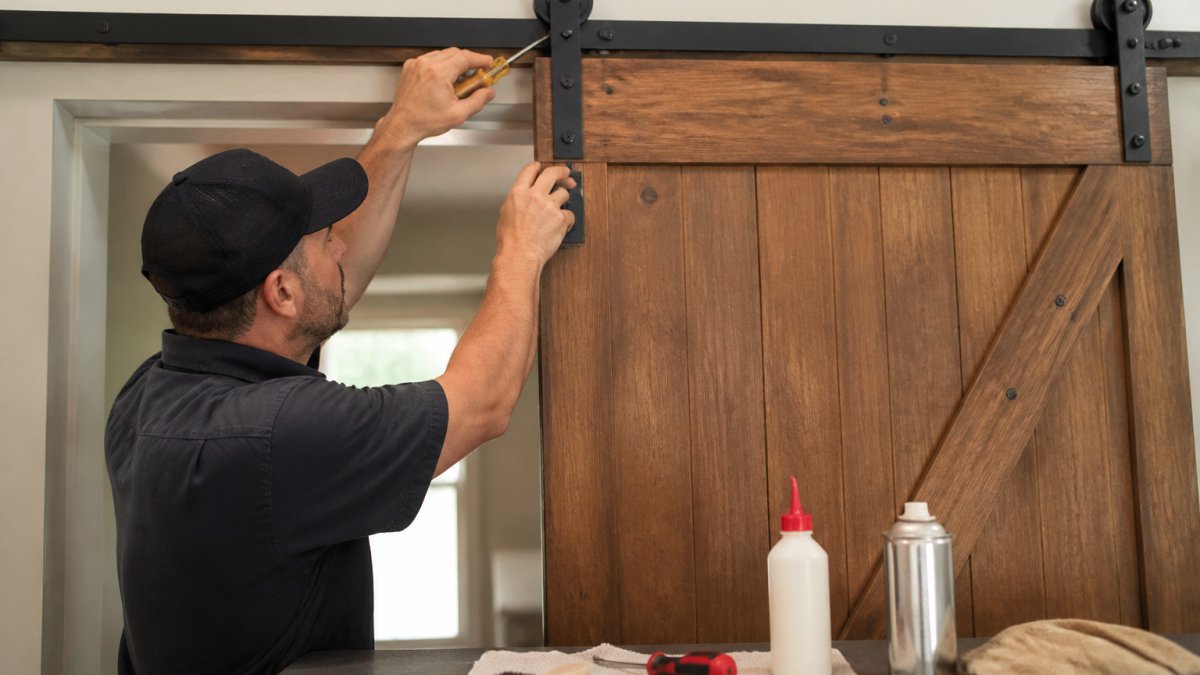
Start with the obvious: check that every screw holding the track to the wall is tight. Loose fasteners let the track sag, and a sagging track makes the door drag. Next, check that the rollers sit evenly in the channel.
For a door that still sticks after cleaning and tightening, the deeper fix is usually in the hardware itself. We walk through the full repair sequence in our guide to fix sticky sliding barn door hardware, which covers track alignment, roller swaps, and the adjustments that stop the noise.
Your Complete Barn Door Maintenance Checklist
A barn door maintenance checklist turns a vague chore into a quick routine. But a single schedule does not fit every door. A barn door in a dusty shop, a home with shedding pets, or an exterior entry needs attention far more often than one in a quiet bedroom. Use the baseline below, then adjust for your environment.
| Task | Baseline Frequency | Why It Matters |
|---|---|---|
| Vacuum track and clear debris | Monthly | Prevents buildup that causes drag |
| Wipe track with damp cloth | Monthly | Removes grime before it hardens |
| Lubricate rollers | Every 3-6 months | Keeps movement smooth and quiet |
| Tighten fasteners | Every 6 months | Stops track sag and misalignment |
| Inspect rollers for wear | Every 6 months | Catches flat spots early |
| Check finish for corrosion | Seasonally | Protects the metal finish |
Adjust the schedule to your environment and use
The baseline above is a starting point rather than a fixed rule. Use these adjustments:
- Pets in the home: Vacuum the track every two weeks. Pet hair wraps around roller axles and compacts into the channel faster than dust.
- Dusty shop or workshop: Vacuum weekly and wipe monthly. Sawdust is abrasive and accelerates roller wear.
- Exterior or covered outdoor door: Inspect monthly for corrosion and lubricate every 2-3 months. Humidity and temperature swings dry out lubricant faster.
Set a phone reminder for the first of each month. A two-minute vacuum beats a two-hour repair, and the reminder is the difference between a door that lasts five years and one that lasts fifteen.
Know the wear thresholds: when to repair vs. replace
A checklist is only useful if you know what to do with what you find. Use these thresholds:
- Loose fasteners: Tighten and re-check in 30 days. If the same screw loosens twice, the hole may be stripped, use a slightly larger screw or a wall anchor rated for the door weight.
- Worn rollers: Replace when you see flat spots, cracks in the wheel, or a bearing that spins roughly by hand. Rollers are inexpensive and usually the first part to fail.
- Bent track: A slight bend at an end stop can sometimes be straightened. A track with a bend in the travel path will keep snagging the door no matter how well you clean it, replace it.
If you are weighing a DIY fix against calling in help, our breakdown of door repair DIY vs. professional covers the safety and cost trade-offs. And when you are choosing replacement parts, it helps to know what to look for in high quality door hardware so the new rollers outlast the old ones.
When to Repair or Replace Worn Hardware
Some wear is normal. Some wear means it is time for new parts. The trick is knowing which is which.
Repair makes sense when the track is sound and only the rollers or fasteners are worn.
If you are weighing a DIY fix against calling in help, our breakdown of door repair DIY vs. professional covers the safety and cost trade-offs.
Get the Right Hardware for Your Barn Door Project
Good maintenance keeps hardware in good condition, and quality hardware is easier to maintain from the start.
We are a family-owned business that offers interior and exterior doors, moulding, hardware, and shelving for contractors and homeowners. You can browse doors that welcome with style and protect with confidence, including sliding and patio options with professional installation.
Get started with Arizona Door Store and give your barn door hardware the right foundation.
Frequently Asked Questions
How do you clean a barn door track?
Start by vacuuming loose dust and debris with a brush attachment. Scrub the track with a stiff brush or old toothbrush and a mild solution of white vinegar and dish soap. Wipe away residue with a damp microfiber cloth, then dry completely with a clean cloth. Avoid abrasive cleaners that can scratch the metal finish. For stubborn buildup, use a wire brush gently, and always inspect the track for wear or loose fasteners afterward.
What is the best way to remove dust and debris from a barn door track?
Use a vacuum with a crevice tool or brush attachment to pull out loose dirt from the track channel. Follow with a dry stiff brush to loosen packed debris, then wipe with a microfiber cloth. For sticky residue, dampen the cloth with a mix of white vinegar and water. Avoid blowing debris with compressed air, which can push particles deeper into the rollers. Regular vacuuming prevents buildup that causes sticking and noise.
Should you lubricate a barn door track?
Yes, but only the rollers and moving parts, not the entire track surface. Lubricating the track itself can attract dust and create a sticky mess. Apply a silicone-based or dry lubricant to the roller bearings and pivot points. Avoid oil-based lubricants that collect dirt. After application, slide the door back and forth several times to distribute the lubricant evenly. Wipe away any excess to prevent buildup.
How often should you clean and maintain barn door hardware?
Clean the track and rollers every three to six months in typical indoor conditions. In dusty environments or high-use areas, clean monthly. Lubricate rollers every six months, or sooner if you notice squeaking or stiffness. Inspect all fasteners and alignment every six months. A consistent barn door maintenance checklist prevents costly repairs and keeps the door sliding smoothly for years.
A barn door that sticks is a small problem with an easy fix, but only if you catch it early. If you are planning a new install or upgrading worn hardware, our team can help you pick the right track, rollers, and door for the space. Get started with Arizona Door Store and build a sliding door that runs smoothly for years.