 how-to
Are You Ordering Commercial Door Hardware Too Late?
Last Updated: October 24, 2026
Quick Summary
Managing lead times for commercial door hardware means measuring the full gap from order placement to delivery on site, not just the quoted number. Confirm the order-entry date in writing, add manufacturing, transit and receiving time, then add a buffer for site readiness. Treat every lead time as quoted until the supplier confirms it against a purchase order.
- Electrified hardware and access control components carry the longest and most variable lead times.
- A quoted four-to-six-week lead time can become six to eight weeks after credit approval and order entry.
- Record the quoted lead time, confirmed order-entry date, and required-on-site date for every long-lead item.
- Set a watch tier when float drops below two weeks and escalate when float goes negative.
- Split the package into early-release lots and order long-lead and specialty items first.
Table of Contents
- What Lead Time Means for Commercial Door Hardware
- Long-Lead Items in Construction Hardware: What to Flag First
- Submittals, Approvals, and the Dependencies That Add Weeks
- Building a Construction Procurement Schedule Template
- Construction Material Lead Time Tracking That Actually Works
- Construction Project Procurement Best Practices for Hardware
- Sourcing Your Hardware Package Before the Schedule Slips
- Frequently Asked Questions
What Lead Time Means for Commercial Door Hardware
Managing lead times for commercial construction hardware starts with one number: the gap between the day you place the order and the day the product lands on site, ready to install. At Arizona Door Store, we see contractors get burned most often not by long lead times, but by lead times they never measured in the first place.
Lead time is the total elapsed time from order placement to material delivery. That includes order processing, manufacturing, freight, and receiving.
How Lead Time Is Measured From Order to Delivery
Most suppliers quote lead time from the day the purchase order is confirmed, not the day you send it. That distinction matters.
Delivery date is the end of the clock, not a milestone in the middle. So build the schedule backward:
- Confirm the order-entry date in writing
- Add manufacturing time
- Add transit and receiving time
Watch out: treating the quoted lead time as an install date is the most common schedule killer we see. Delivery is when the material arrives, not when it is hung.
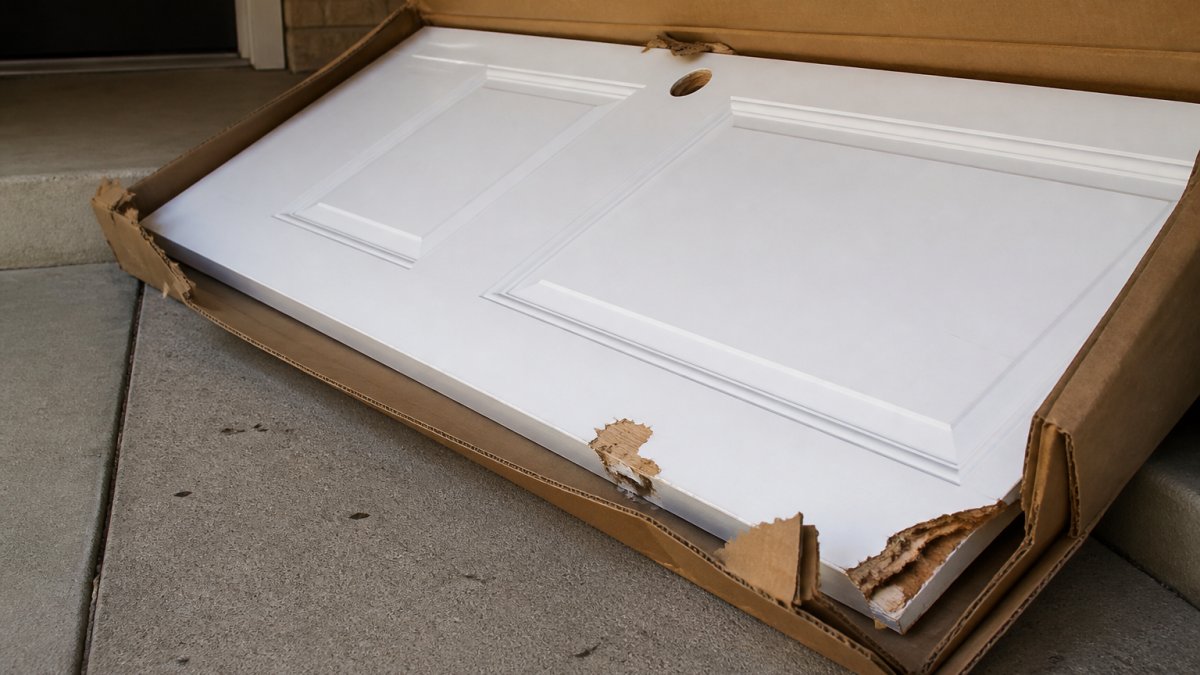
Since delivery closes out the lead time, damage in transit becomes a schedule problem, not just a product problem. How to inspect doors for shipping damage walks through what to check on arrival. Prevent common door delivery damage with a complete guide.
Long-Lead Items in Construction Hardware: What to Flag First
The long-lead items in construction are rarely the boxes you can pull off a shelf. They are the pieces tied to a specific opening, a specific finish, or a specific fire rating. Those are the ones that stall a job.
Flag these first, in roughly this order of risk:
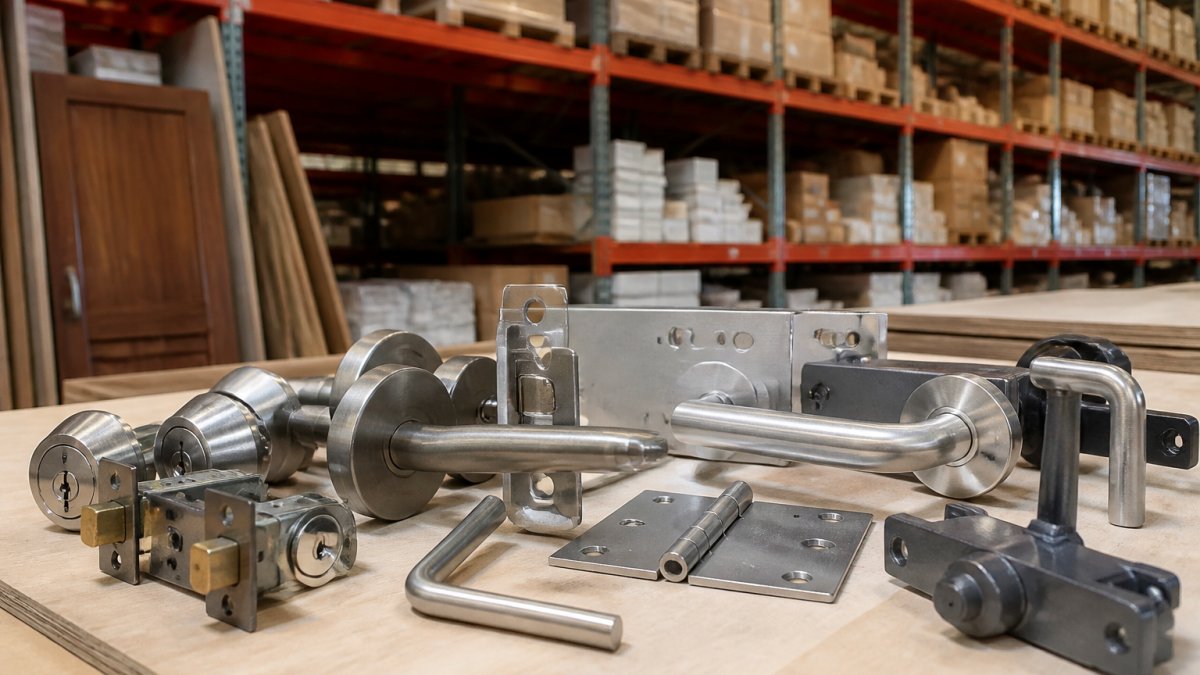
- Electrified hardware and access control components, electrified panic devices, electric strikes, maglocks, request-to-exit sensors, and power supplies. These carry the longest and most variable lead times because they combine a mechanical product with electronics, firmware, and often a security consultant's approval. A single card-reader or controller change can reset the whole opening.
- Fire-rated and specialty door assemblies, labeled frames, fire-rated pairs, and assemblies with coordinators, astragals, or smoke gaskets. The label itself is not the delay; the review of the label and the compatibility of every component on the opening is.
- Custom or non-standard hardware sets, anything built to a hardware schedule that departs from a catalog set: unusual backset, non-standard cylinder, custom keying, or a function that has to be assembled.
A common mistake is ordering the standard hollow-metal doors early and assuming the hardware will follow quickly. It usually does not.
Quoted Versus Confirmed Lead Time
A supplier can quote a number fast, but the real question is whether the stock or production slot exists. Treat every lead time as quoted until the supplier confirms it against a purchase order and an order-entry date.
When you flag a long-lead item, record three dates, not one:
- The quoted lead time and the date it was quoted
- The confirmed order-entry date and the confirmed delivery date
- The required-on-site date from the installation sequence
The gap between confirmed delivery and required-on-site is the item's float. Any long-lead item with thin or negative float belongs on a watch list from the day it is flagged, not the week it slips.
Material availability drives this more than price. Ask whether the stock or production slot exists before the schedule depends on it, and ask again when the purchase order is acknowledged.
Submittals, Approvals, and the Dependencies That Add Weeks
Submittals and approvals are where schedules quietly die.
The chain usually looks like this:
- You submit the hardware schedule and product data
- The design team reviews and returns comments
- You resubmit revised items
Each loop costs time. A rejected submittal does not just restart the clock, it restarts it after another round of review.
This is where substitutions get dangerous.
Best for: teams that submit hardware schedules early and in full. Skip if: you are still finalizing door selections and cannot lock a schedule yet.
Building a Construction Procurement Schedule Template
A construction procurement schedule template is a simple tool: one row per item, with the dates that decide whether the job stays on track. You do not need software to start. You need the right columns.
Build your template with these fields:
| Column | What It Tracks | Why It Matters |
|---|---|---|
| Item and spec | Door, frame, or hardware set | Ties the order to the opening |
| Submittal date | When approval is requested | Starts the dependency clock |
| Approval date | When review clears | Unlocks ordering |
| PO date | When the order is placed | Starts the supplier lead time |
| Quoted lead time | Weeks from order to delivery | Sets the expected date |
| Required-on-site date | When install needs it | The real deadline |
| Float | Buffer between delivery and install | Absorbs slippage |
| Status | Ordered, in production, shipped | Drives weekly monitoring |
Fill the required-on-site date first, then work backward. The gap between that date and the quoted delivery date is your schedule float. If the float is thin, that item is a risk, and it belongs on a watch list.
Construction Material Lead Time Tracking That Actually Works

Tracking that works is boring and weekly. The teams that avoid delays are not the ones with the fanciest dashboard. They are the ones who check status every week and act on the first slip.
Build a Lead-Time Risk Register
A risk register is not a second schedule. It is a filtered view of the procurement schedule that shows only the items where delivery could threaten installation. Keep one row per opening or hardware set, with these fields:
| Field | What It Records | Why It Matters |
|---|---|---|
| Item and opening | Hardware set tied to a door/frame | Connects the order to the install |
| Quoted lead time | Weeks quoted, and the quote date | Establishes the baseline |
| Confirmed order-entry date | Date the supplier acknowledges the PO | Starts the real clock |
| Confirmed delivery date | Supplier's committed date | The date you plan around |
| Required-on-site date | From the installation sequence | The real deadline |
| Float | Required-on-site minus confirmed delivery | The early-warning number |
| Status | Ordered / in production / shipped / received | Drives the weekly check |
| Owner | Who is chasing this item | Prevents orphaned orders |
| Escalation trigger | The threshold that forces action | Removes the judgment call |
Fill the required-on-site date first, then work backward. The gap between that date and the confirmed delivery date is your float. If the float is thin, the item is a risk, and it belongs on the watch list.
Set Escalation Thresholds in Advance
Escalation works only if the trigger is decided before the slip, not during it. A common pattern is a two-tier threshold:
- Watch tier, float drops below two weeks. The owner requests a written status update and a revised confirmed date from the supplier.
- Escalate tier, the confirmed delivery date moves past the required-on-site date, or float goes negative. The project manager, general contractor, and hardware consultant are notified the same day, and options are put on the table: expedite, split the shipment, approve a substitution, or resequence the installation.
Quick decisions early beat emergency expediting later. Expediting freight or production is almost always more expensive and less certain than resequencing a few openings.
Run a Weekly Rhythm
- Pull a written status update on every open order, not a verbal one
- Compare confirmed delivery dates to required-on-site dates
- Recalculate float and move items between watch and escalate tiers
Supplier communication is the whole game here. A supplier who tells you about a slip the day it happens gives you options. One who tells you at delivery gives you a problem. Put the expectation in writing at order: a weekly status, and immediate notice of any date change.
Construction Project Procurement Best Practices for Hardware
The best procurement practice for hardware is early release. Order the long-lead items as soon as approvals allow, and do not wait for the full package to be perfect.
What early release looks like:
- Split the package into early-release lots by lead time
- Order long-lead and specialty items first
- Hold standard items for a later release
Vendor prequalification matters too. Local door suppliers vs big box is worth comparing before you commit. Know which suppliers can hit dates, communicate clearly, and handle receiving issues before you are depending on them mid-project.
Substitutions and Compatibility Risks
A substitution is only safe when it clears approval and fits the existing door, frame, and prep. Discount door vs premium suppliers explains the tradeoffs to weigh. Change one item in a hardware set and you can break the function of the whole opening.
Before you approve any swap, confirm:
- The item still meets the specification and fire rating
- It fits the door and frame prep already in place
- It does not trigger a new approval cycle you cannot afford
If the swap saves a week on paper but adds two weeks of review, it is not a saving. It is a delay with extra steps.
Sourcing Your Hardware Package Before the Schedule Slips
The real fix for lead-time pain is sourcing the whole package from one place, early, with someone who knows the products.
At Arizona Door Store, we are a family-owned business serving contractors and homeowners with interior and exterior doors, moulding, hardware, and shelving.
Our customers tell the story better than we can.
Get started with Arizona Door Store and build a hardware package that keeps your schedule intact from order to install.
Frequently Asked Questions
When should commercial door hardware be ordered?
Order as soon as the hardware schedule is approved, not when the doors arrive on site. Commercial door hardware sits behind submittals, approvals, and finish selection, and each of those steps can add weeks. If your construction schedule shows doors hanging in week 20, work backward through approval and fabrication time and place the order with float to spare. Treat the hardware package as a long-lead item from day one rather than a last-minute finish purchase.
What construction hardware items commonly have long lead times?
The long-lead items in construction hardware tend to be anything made to order: custom door slabs, specialty finishes, electrified hardware, access control components, and matching sets that must come from a single manufacturer. Standard hinges, stops, and screws are usually stocked. The trap is assuming the whole package is stock when one electrified closer or one custom finish pushes the entire order into a longer production window. Flag each line item separately when you build the schedule.
How can contractors track material lead times without extra software?
A shared spreadsheet with one row per line item works for most projects. Include the item, quantity, supplier, order date, quoted lead time, promised delivery date, and current status, then update it weekly with a supplier check-in. Construction material lead time tracking fails when it lives in one person's inbox. Give the superintendent and the project manager the same view, and set an escalation threshold, such as any item slipping more than five business days, so delays surface before they hit the schedule.
How can teams reduce delays caused by hardware shortages?
Three moves cover most of it. First, release hardware as an early procurement package so it is ordered before the general construction sequence demands it. Second, lock finishes and functions at submittal rather than letting selections drift. Third, have a substitution plan ready: confirm which alternate finishes or manufacturers are compatible with the door prep and frame before a shortage forces a rushed decision. A local supplier who can confirm stock and delivery dates quickly shortens the loop when something goes wrong.