comparison
Local Door Suppliers vs Big Box: What to Know
Table of Contents
- Why Local Door Suppliers Beat Big Box on Product Quality
- Custom Entry Door Installation: What Big Box Stores Don't Offer
- Door Hardware and Moulding Selection: One-Stop vs. Scattered Sourcing
- Professional Door Installation Services and Warranty Coverage
- The Hidden Cost of Sub-Contracted Labor and Retail Markup
- Long-Term Maintenance, Repairability, and Energy Efficiency Ratings
- Frequently Asked Questions
Last Updated: September 11, 2026
Why Local Door Suppliers Beat Big Box on Product Quality
Walk into any big box store and you'll see rows of doors that all look roughly the same. That sameness is not an accident. Big box retailers stock a narrow slice of what manufacturers actually make, chosen for one reason: it moves volume at a low price point. When you're deciding why to choose local door suppliers over big box retailers, the answer starts with what's behind the skin of the door. Arizona Door Store works with contractors and homeowners across the Phoenix metro every week, and the quality gap shows up fast once you compare construction, not just appearance.
Product quality in doors comes down to three things: the core material, how the frame is assembled, and whether the door was built to your opening or built to a generic size. Big box inventory optimizes for the third option, and it shows.
Material Differences: Fiberglass, Wood, and Steel
Fiberglass, wood, and steel doors each solve a different problem, and the grade of material matters more than the material itself. Big box stores typically carry builder-grade versions of all three; a local supplier can source the same material at a higher specification.
- Fiberglass: Resists denting, warping, and moisture better than wood, and holds a factory finish longer. Higher-grade fiberglass doors use a thicker skin and a denser core, which affects both durability and how the door insulates.
- Wood: Offers the best paint and stain finish and is the easiest to repair. Solid-core construction costs more than hollow-core, but it holds up to daily use far better.
- Steel: Provides strong security at a lower cost, though it dents more easily than fiberglass and can rust if the finish is compromised.
The practical difference: a builder-grade fiberglass door and a professional-grade one can look identical in a showroom and behave completely differently after five years of sun exposure.
Custom Sizing and Pre-Hung Options
Standard door sizes fit standard openings. Real houses, especially older ones, rarely cooperate. A pre-hung door arrives already mounted in its frame with the hinges and threshold set, which cuts installation time and reduces the chance of a misaligned fit. Custom sizing matters when a rough opening is out of square or the wall isn't plumb, a common situation in older homes.
Big box stores stock a fixed set of widths and heights. A local supplier can order a door cut to your actual opening, which means less shimming, better weatherstripping contact, and a door that closes the way it should.

Custom Entry Door Installation: What Big Box Stores Don't Offer
Big box stores sell you a door. They don't install it, and they don't stand behind the fit. That gap is where most custom entry door installation problems begin. A door is only as good as its installation: if the frame isn't square, the threshold isn't level, or the weatherstripping doesn't seal, you get drafts, sticking, and premature wear no matter how much you paid for the slab.
A local supplier that also handles installation closes that loop. The same people who recommended the door are accountable for how it hangs. When something is off, there's one call to make, not a back-and-forth between a retailer, a manufacturer, and a subcontractor who has never seen your house.
Door Hardware and Moulding Selection: One-Stop vs. Scattered Sourcing
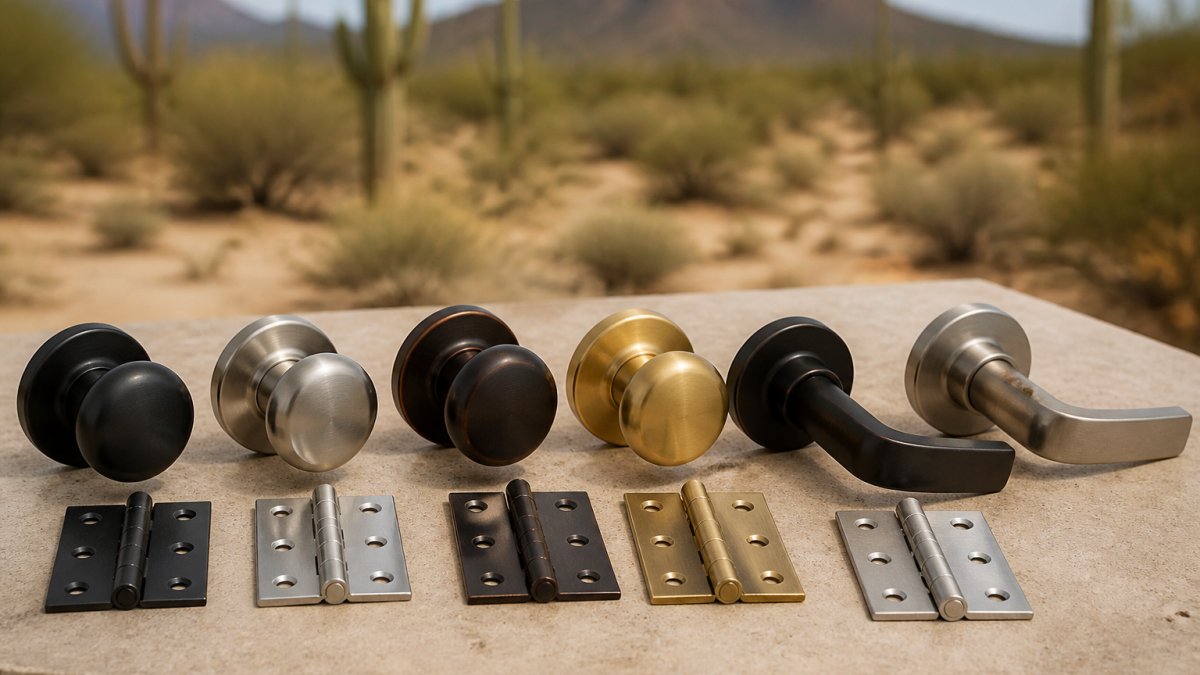
Door hardware and moulding selection is where scattered sourcing quietly costs you time and money. Order the door from one place, the hinges and handleset from another, and the casing and moulding from a third, and you own every compatibility problem that follows. Finish mismatches, backset dimensions that don't line up, and moulding profiles that don't match the rest of the house are all avoidable.
Sourcing everything from one supplier means the hardware is matched to the door's prep, and the moulding is chosen to fit the jamb depth you actually have. For contractors managing multiple projects, that consolidation is the difference between one delivery and three.
| Sourcing Approach | What You Coordinate | Typical Friction Point |
|---|---|---|
| Big box, one trip | Door and basic hardware | Limited profiles, no custom sizing |
| Online, mixed vendors | Door, hardware, moulding separately | Finish and dimension mismatches |
| Local one-stop supplier | Door, hardware, moulding, delivery | Fewer vendors to chase |
Professional Door Installation Services and Warranty Coverage
Professional door installation services do more than save you a weekend. They determine whether your warranty coverage actually applies, and they decide who is legally and financially on the hook when something fails. Most manufacturers condition their warranty on installation performed per the published instructions, plumb, square, properly flashed, and shimmed at the hinge and lock points (nfrc.org). A door hung out of square, or set without a sill pan and flashing, can void coverage on the spot, and the failure usually shows up as water intrusion or a sticking slab long after the installer has been paid.
The bigger difference is not the warranty document, it is the liability chain behind it.
In-House Crews vs. Sub-Contracted Installation Networks
Big box retailers typically sell the door and hand the install to a third-party network of independent installers. That structure creates three separate parties: the retailer (who sold the product), the manufacturer (who warrants the product), and the installer (who warrants the labor). When a door leaks, sticks, or delaminates, each party has an incentive to point at the others. The homeowner ends up coordinating the dispute.
A local supplier that runs its own install crews collapses that chain. The same company specifies the door, orders it to the opening, hangs it, and services it afterward. If the door was specified wrong or hung wrong, there is one call to make and one party accountable, not a retailer, a manufacturer, and a subcontractor who has never seen your house.
What to Verify Before You Sign
- Who performs the install. Ask for the name of the crew, not the name of a "partner network." If the answer is a network, get the warranty terms in writing and confirm which entity honors the labor portion.
- Whether the labor warranty is separate from the product warranty. Product warranties cover the slab and frame; labor warranties cover the fit, flashing, and seal. They are usually different documents with different durations.
- Whether flashing and sill pan are included. These are the details that prevent the most common failure, water behind the jamb, and they are frequently excluded from low-bid install quotes.
- Who handles the callback. Confirm in writing who you call if the door sticks, leaks, or fails to latch within the first year.
AAMA installation standards and installer certification programs
The Hidden Cost of Sub-Contracted Labor and Retail Markup
The sticker price on a big box door is not the full cost. Retail markup on doors and hardware can be substantial, and it's baked into a price that looks competitive until you add installation, delivery, and the time you spend coordinating subcontractors.
Sub-contracted labor adds a second layer of cost that rarely appears on any invoice. When installation is farmed out, each party takes a margin, and the person actually doing the work is paid the least. That's how you end up with a rushed install on a door you paid full price for. A local supplier that handles sourcing and installation under one roof removes those middle layers and puts accountability back on the party you hired.
Long-Term Maintenance, Repairability, and Energy Efficiency Ratings
Long-term cost is where local sourcing pulls ahead decisively, and it is the angle most buying guides skip entirely. A door that is repairable and efficient outlasts a cheaper one that has to be replaced, and the difference shows up in two places: the hardware that wears out first, and the energy label most buyers never read.
Repairability: What Fails First and What It Costs to Fix
On almost every exterior door, the door slab outlives its hardware. The components that fail first are predictable:
- Weatherstripping and door sweeps, compress and crack with UV exposure, usually within a few years. Cheap to replace; the cause of most draft complaints.
- Thresholds and sill gaskets, wear from foot traffic and lose their seal. Replacement is a same-day job if the threshold is a standard profile.
- Hinges and lock sets, a heavy solid-core or fiberglass door on undersized hinges will sag and bind. Upgrading to heavier-gauge hinges and a reinforced strike plate is a repair, not a replacement.
- Finish on wood and fiberglass, refinishing or recoating restores a door that would otherwise be replaced. Builder-grade doors with thin skins and hollow cores often cannot be patched economically, so they get replaced instead.
The practical test: can the door be rehung, refinished, and re-hardwared, or does the failure force a full replacement? Solid wood and high-grade fiberglass doors pass that test. Thin-skin, hollow-core doors usually do not. A local supplier who stocks hardware and moulding can help you maintain and repair rather than replace, and can match a replacement hinge or threshold profile to what is already on the door.
How to Read an NFRC Label
The NFRC rating is the standardized label showing a door's energy performance. It is the same label on a big box door and a locally sourced one, the difference is whether the supplier can match the rating to your climate and orientation instead of selling you whatever is on the shelf.
When you look at the label, focus on these fields:
- U-factor, the rate of heat loss. Lower is better. In cold climates, a lower U-factor matters most.
- Solar Heat Gain Coefficient (SHGC), the fraction of solar heat that passes through. Lower SHGC reduces cooling load in hot, sunny climates; higher SHGC can be beneficial in cold climates that want passive solar gain.
- Visible Transmittance (VT), how much daylight passes through. Relevant only if the door has glass.
- Air Leakage (AL), measured infiltration. Lower is better, and it is the field most often ignored.
A local supplier can pull the NFRC label for the specific door and glass package you are considering, so you are comparing U-factor to U-factor and SHGC to SHGC rather than marketing claims.
Matching the Rating to the Climate
The right rating depends on where the door faces and what the climate demands. A west-facing door in a hot, sunny climate benefits from a lower SHGC to cut afternoon heat gain. A north-facing door in a cold climate benefits from a lower U-factor to reduce heat loss. A local supplier can specify the glass package and core to match the orientation, a big box shelf cannot.
NFRC label and certified product directory
Frequently Asked Questions
What are the primary differences in door quality between local door suppliers and big box stores?
Local door suppliers typically stock higher-grade materials, including solid-core construction, thicker door jambs, and better weatherstripping than mass-market big box exclusives. The result is better material durability, tighter tolerances, and doors that hold up longer in Arizona's heat and monsoon cycles.
Do local door suppliers offer better installation support than big box retailers?
Yes. Local door suppliers often provide professional door installation services or connect you with vetted installers who know the product line. Big box stores frequently sub-contract installation to third parties, which can create accountability gaps when something goes wrong. A local supplier can walk the job site, measure for custom sizing, and handle warranty claims directly rather than routing you through a national call center.
Is it more cost-effective to buy doors from a local specialist?
The sticker price at a big box store is often lower, but the total project cost can be higher once you factor in retail markup on hardware, delivery fees, and rework from poor fit. Local door suppliers offer quote-based pricing that reflects the full scope, including door hardware and moulding selection, delivery to job sites, and after-sales support. For contractors managing multiple projects, that predictability reduces costly delays and callbacks.
How does the warranty process differ between local door companies and national chains?
Local door companies typically handle warranty coverage directly, which means faster resolution and a single point of contact. National chains often require you to file claims through a corporate process that can take weeks and may exclude labor. A local supplier can inspect the door, confirm the defect, and coordinate a replacement or repair without the back-and-forth. That direct accountability matters most on exterior door replacements where weather and security are at stake.