 how-to
Fix Sticky Sliding Barn Door Hardware: 7 Steps
Table of Contents
- Why Your Sliding Barn Door Is Sticky
- Step 1: Identify the Source of Friction
- Step 2: Clean and Maintain the Track
- Step 3: Inspect Floor Guides for Debris
- Step 4: Adjust Barn Door Roller Height and Alignment
- Step 5: The Best Lubricant for Barn Door Rollers
- Step 6: Adjusting Barn Door Floor Guide for Smooth Movement
- Step 7: How to Fix Sagging Barn Door Tracks
- Preventative Maintenance Schedule
- When to Call a Professional
- Frequently Asked Questions
Last Updated: September 25, 2026
Why Your Sliding Barn Door Is Sticky
A sticky sliding barn door usually comes down to one thing: friction. Something is stopping the door from gliding smoothly along its track. The problem could be dirt buildup, misaligned rollers, or a dry track that needs lubrication. The good news is that most of these issues are fixable at home with basic tools.
Step 1: Identify the Source of Friction
Open and close the door slowly, listening for scraping sounds and noting where it catches. Does it stick at the top, bottom, or middle? The location reveals the problem.
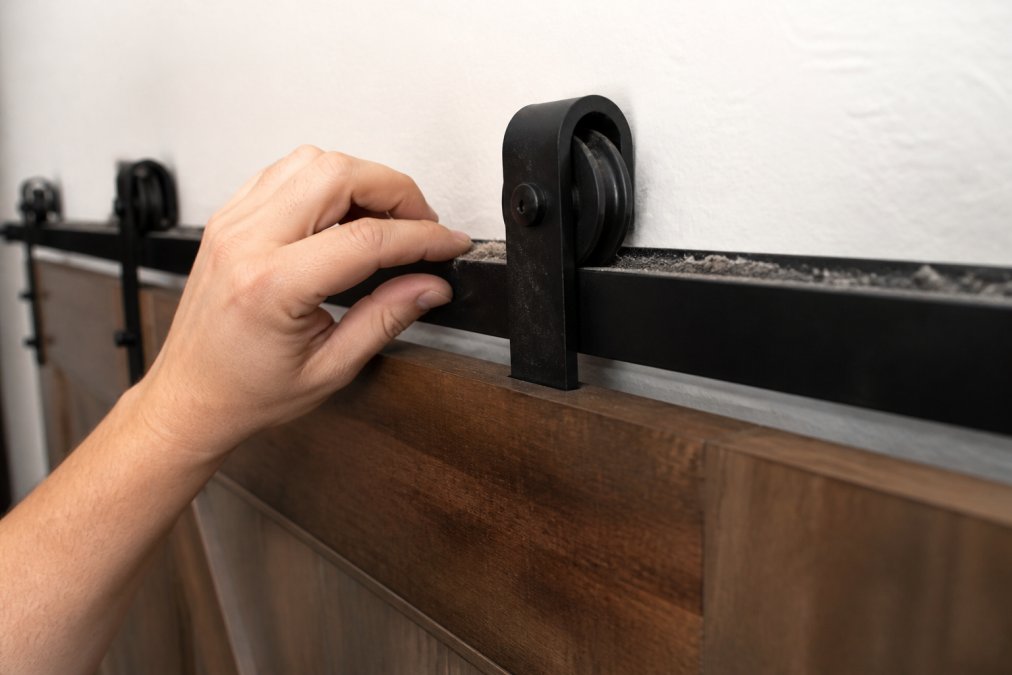
Here's what to check:
- Top track: Debris, dust, or misaligned rollers cause most top-track friction
- Bottom floor guide: Dirt buildup or bent guides create resistance at the bottom
- Roller assembly: Worn bearings or damaged rollers make the door stick at specific points
- Mounting brackets: Loose fasteners can cause the track to shift slightly, creating friction
Push the door gently along the track. Smooth movement in some spots suggests debris; heavy resistance throughout suggests a lubrication problem. Use a flashlight to inspect the track, dust and dirt are the most common culprits.
Step 2: Clean and Maintain the Track
Dust and debris are the leading cause of sticky barn doors. Vacuum the track thoroughly with a brush attachment, then wipe the inside with a damp cloth to remove fine dust and residue.
For stubborn buildup, use a soft brush to scrub gently, then wipe with a damp cloth and dry completely. Pay special attention to corners where debris collects. Test the door after cleaning, many sticky sliding barn door problems resolve here.
Step 3: Inspect Floor Guides for Debris
The floor guide at the bottom of the door prevents outward swing. Vacuum and wipe both the guide and floor rail clean, removing any debris or buildup.
If your floor guide is bent or damaged, it needs adjustment or replacement, as bent guides create constant friction.
Step 4: Adjust Barn Door Roller Height and Alignment
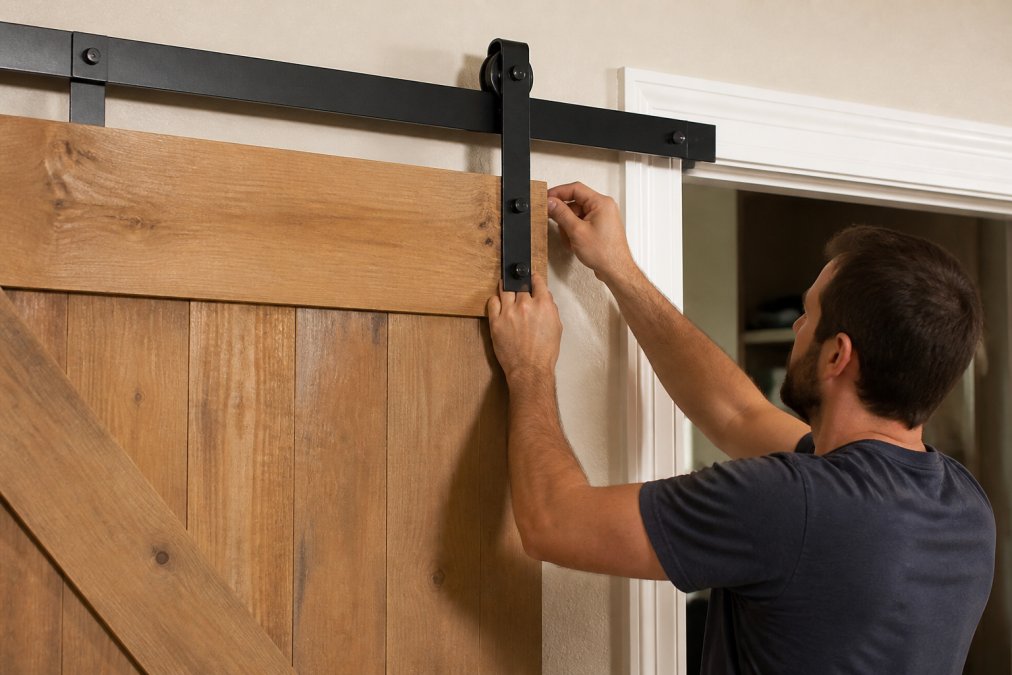
Rollers inside the top track support the door's weight. Misalignment causes sticking. Most barn door hardware includes adjustment bolts to fine-tune height and alignment.
Here's how to adjust:
- Find the adjustment bolts on the roller assembly. They're usually located on the side of the roller bracket.
- Loosen the bolts slightly, just enough to allow movement, not completely off.
- Gently lift or lower the roller to center it in the track. The roller should sit evenly in the track channel.
- Check alignment by looking at the gap between the roller and track on both sides. The gaps should be roughly equal.
- Tighten the bolts once the roller is centered. Don't over-tighten.
- Test the door by opening and closing it slowly. It should move smoothly.
Repeat this process for all rollers on your door. Even a small misalignment creates friction and makes the door sticky.
Step 5: The Best Lubricant for Barn Door Rollers
Once your track is clean and rollers aligned, the right lubricant keeps everything moving smoothly. The wrong lubricant can worsen sticky sliding barn door problems.
Lubricant Types and When to Use Them
Silicone-Based Spray (Best for Most Setups), Silicone spray is the standard choice for barn door hardware. It's a dry lubricant that doesn't attract dust, evaporates cleanly, and works well on steel rollers, aluminum tracks, and nylon bearings. Use it on any residential barn door system with steel or aluminum hardware.
Lithium Grease (For Heavy Doors and Ball Bearings), Use lithium grease for solid wood doors over 150 pounds or hardware with exposed ball bearings. The thick consistency provides longer-lasting protection under heavy load. Apply sparingly, excess grease attracts dust.
PTFE-Enhanced Lubricants (For Metal-on-Metal Friction), Use PTFE lubricants only for metal-on-metal contact systems (metal rollers on metal tracks without nylon bushings). If you see nylon bushings or plastic inserts, use silicone spray instead.
Lubricants to Avoid
Avoid: WD-40, general-purpose oils, automotive grease, and furniture polish, all attract dust, accumulate, or harden and worsen friction.
Material-Specific Lubrication Considerations
Solid wood doors: Use silicone spray every 3 months or lithium grease every 6 months. Hollow-core doors: Silicone spray every 4-6 months. Metal doors: Silicone spray on track and rollers; inspect frame for rust and apply light oil if needed.
How to Apply Lubricant Correctly
-
For silicone spray: Spray a light coat along the entire top track, focusing on the inside channel where rollers ride. Use short bursts, 3-5 seconds total per 3 feet of track. Spray the roller assembly lightly, just 1-2 bursts per roller. Wipe away excess with a clean cloth.
-
For lithium grease: Use a small brush or applicator to apply a thin line along the track. Apply a pea-sized amount to each roller bearing. Do not glob it on. Excess grease is counterproductive.
-
After application: Open and close the door 10-15 times to distribute the lubricant evenly. Wipe away any excess that drips onto the floor or wall.
Lubrication Schedule
- Light use (occasional opening/closing): Every 6 months
- Moderate use (daily opening/closing): Every 3 months
- Heavy use (multiple times daily or commercial setting): Every 4-6 weeks
- After cleaning: Always re-lubricate after you've cleaned the track, since cleaning removes existing lubricant
Regular maintenance prevents sticky sliding barn door hardware issues from returning. A quick spray every few months takes 5 minutes and extends the life of your hardware by years.
Step 6: Adjusting Barn Door Floor Guide for Smooth Movement
Locate adjustment bolts on your floor guide bracket and loosen slightly. Open the door and check the gap between the door edge and guide, it should be even and roughly 1/4 inch. Adjust the guide if needed and re-tighten. A properly adjusted floor guide eliminates friction at the bottom of the door.
Step 7: How to Fix Sagging Barn Door Tracks
Barn door tracks can sag over time, creating uneven pressure on rollers and friction. Sagging is usually a wall or fastening issue, not a track problem.
Diagnose the Real Cause of Sag
Use a 4-foot level on top of the track along its entire length. If the bubble isn't centered, your track has sag. Note where it occurs to identify wall or fastener problems.
Before you adjust anything, identify why the sag exists:
Wall Plumb Issues: Out-of-plumb walls cause tracks to sag. Check with a 4-foot level; if the wall is off by more than 1/4 inch over 4 feet, this is the primary problem. Fastener Type and Spacing: Tracks must be fastened into studs every 16 inches with 3/8-inch lag bolts. Wider spacing or drywall-only fastening causes sag. Stripped or Damaged Studs: Repeated tightening or wrong fastener sizes strip holes, causing sag. Inadequate Backing: Plaster-and-lath or horizontal-blocking walls can't support barn door tracks.
Step-by-Step Sag Repair
1. Locate and inspect all mounting brackets. Count how many brackets support your track. For a standard 6- to 8-foot barn door, you should have at least four brackets. If you have fewer, that's a contributing factor to sag.
2. Check fastener tightness. Using a wrench that fits your bolts (typically 1/2-inch for lag bolts), tighten each fastener.
When Sagging Indicates Track Damage
If the track itself is bent or warped (not just sagging due to wall or fastener issues), it needs replacement. Inspect the track channel for dents, bends, or visible deformation. A damaged track won't roll smoothly even after adjustment. Bent or warped tracks should be replaced with new hardware that matches your barn door system.
Prevention: Correct Installation from the Start
Sagging is easiest to prevent during installation. Ensure your track is mounted into solid studs with fasteners spaced no more than 16 inches apart. Use 3/8-inch lag bolts or equivalent fasteners rated for the weight of your door. For doors heavier than 150 pounds, consider a backer board from the outset. Check wall plumb before mounting, and use shims during installation if needed.
Preventative Maintenance Schedule
Keep your barn door running smoothly with regular maintenance:
- Monthly: Vacuum the track and wipe with a dry cloth
- Every 3 months: Clean the track thoroughly and lubricate with silicone spray
- Every 6 months: Inspect roller alignment and floor guide position
- Annually: Check all mounting bolts, brackets, and fasteners for tightness
Regular maintenance prevents sticky sliding barn door problems from developing in the first place.
When to Call a Professional
Most sticky barn door issues are fixable at home. But sometimes you need expert help.
Call a professional if:
- The track is visibly bent or damaged
- Rollers are cracked or won't spin freely
- The door sags even after adjusting the track
- Mounting brackets are loose and won't tighten
- The wall behind the track is severely uneven or not plumb
Frequently Asked Questions
What is the best lubricant for barn door rollers?
Silicone-based lubricants work best for barn door rollers because they reduce friction without attracting dust and debris. Apply a light coat to the roller assembly and track. Avoid heavy grease or oil-based products, which accumulate dirt and worsen stickiness. Wipe away excess lubricant with a clean cloth. Reapply every 3-6 months depending on usage frequency.
Why is my barn door not sliding smoothly?
Sticky sliding barn door hardware usually stems from debris in the track, misaligned rollers, or dry bearings. Start by cleaning the entire track with a damp cloth and inspecting the floor guide for obstructions. Check that mounting brackets are tight and the track is level. If the door still binds, the roller assembly may need height adjustment or the bearings may need lubrication.
How do you adjust barn door rollers to stop dragging?
Locate the adjustment bolts on each roller assembly (typically on the side or bottom). Use an Allen wrench or socket wrench to turn these bolts slightly, raising or lowering the roller height. Make small adjustments and test the door movement after each turn. The goal is even clearance between the door and track with no binding. Uneven adjustment causes the door to drift or scrape.
Can a sagging track cause a barn door to stick?
Yes. A sagging or uneven track forces rollers out of alignment, creating friction and binding. Check track levelness with a 2-foot level along its entire length. If the track sags more than 1/4 inch, tighten mounting hardware or add shims under the track mounting brackets. Severe sagging may require track replacement. Addressing sagging early prevents bearing wear and extends hardware life.