listicle
Anasazi Door Alternatives for Residential Projects
Table of Contents
- Why Homeowners Choose Door Alternatives
- Custom Interior Door Design Trends Reshaping Residential Spaces
- Pivot Doors: Modern Entryways with Architectural Impact
- Sliding Barn Doors: Space-Saving Solutions for Interior Transitions
- Choosing Between Custom and Semi-Custom Doors for Your Budget
- Solid Wood Door Installation Best Practices for Non-Standard Doorways
- Material Selection: Durability and Aesthetic Matching
- Cost Comparison: Custom vs. Mass-Produced Door Options
Last Updated: August 28, 2026
Why Homeowners Choose Door Alternatives
Standard mass-produced doors work for many homes, but they often miss the mark with non-standard openings, specific aesthetic goals, or the desire for something custom. Anasazi door alternatives for residential projects solve problems that off-the-shelf solutions simply can't address.
Custom and semi-custom options now offer genuine advantages over traditional hollow-core and basic solid-core alternatives. Whether you're working with an older home that has uneven frames, a contemporary space demanding architectural precision, or a budget-conscious project needing flexibility, the right door alternative delivers results.
At Arizona Door Store, we've helped contractors and homeowners navigate these choices for years. This guide walks you through the most practical anasazi door alternatives for residential projects, what makes each one work, and how to choose the option that fits your space, aesthetic, and timeline.
Custom Interior Door Design Trends Reshaping Residential Spaces
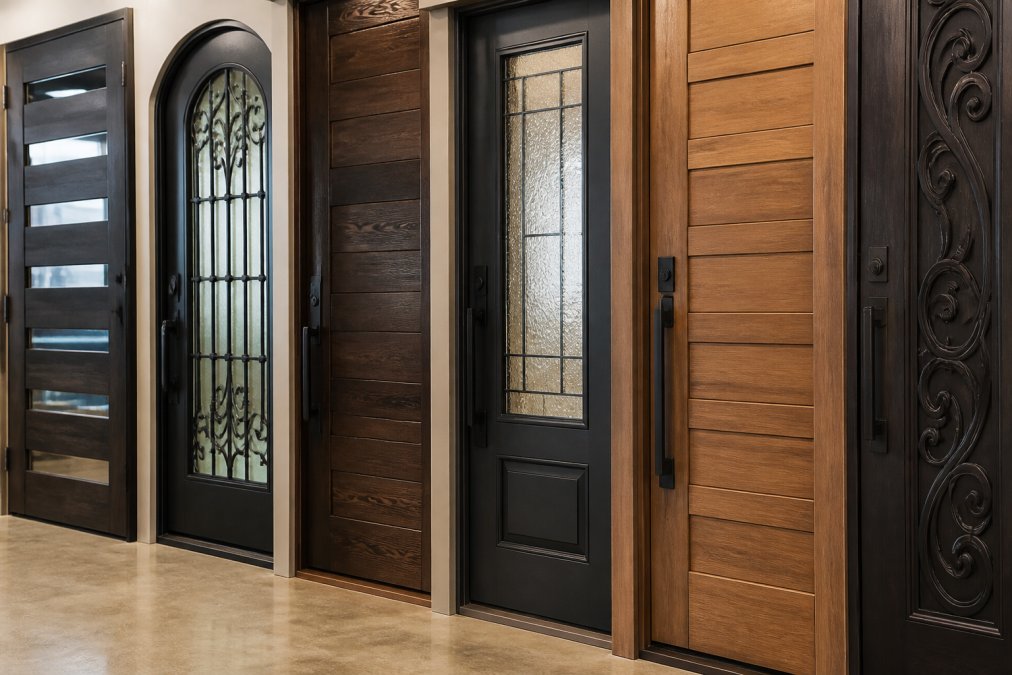
Interior doors have become design statements rather than afterthoughts. Custom interior door design isn't driven by luxury alone, it's driven by the realization that a standard 6-panel door doesn't match modern aesthetics, and contemporary spaces deserve doors that reflect intentionality.
What's changed is accessibility. Custom interior door design trends now include options at multiple price points. You can commission a handcrafted artistic door or choose a contemporary sliding or pivot system with extensive customization without the five-figure price tag.
The most common shift is toward minimalist hardware and clean lines. Invisible hardware systems appeal to homeowners who want visual impact without visible hinges or handles. Contemporary barn door aesthetics in matte black or brushed steel now work in modern and transitional homes equally well.
Material choices reflect this too. While solid wood remains popular for warmth and durability, engineered wood veneers and high-quality laminates deliver premium aesthetics with better stability in varying humidity. In Arizona's dry climate, engineered alternatives resist warping that solid wood doors often experience.
Custom interior door design options let you match doors to your actual aesthetic, not force your aesthetic to match available inventory.
Pivot Doors: Modern Entryways with Architectural Impact
Pivot doors represent a fundamental shift in how residential entryways function. Instead of swinging from a hinge mounted at the edge, a pivot door rotates on a central axis, typically offset from the traditional door edge. This creates distinctive visual and functional impact that standard swing doors cannot match.

How Pivot Door Mechanisms Work
A pivot door mechanism operates on a fundamentally different principle than a standard hinge. The door is supported by a pivot hinge mounted at the top and bottom of the frame, not along the edge. This distributes weight differently and allows the door to swing in a wider arc than traditional hinges permit.
The central axis rotation means the door can open wider relative to the doorway width. A standard 36-inch opening can accommodate a larger pivot door because the pivot point sits at the frame's edge rather than consuming interior space (peer-reviewed research). For architects and designers, this opens possibilities for dramatic entryways that feel more spacious than traditional doors allow.
Quality pivot systems use ball bearings and engineered tolerances that standard residential hinges don't require. This is why pivot doors typically cost more than swing doors of similar size and material.
Interior vs. Exterior Pivot Door Applications
Exterior pivot doors make a statement and often define an entire home's entryway character. An exterior pivot door in glass and steel reads contemporary; the same mechanism in solid wood reads traditional.
Interior pivot doors serve different purposes. In residential spaces, they often separate zones, a pivot door between a living area and home office creates a visual and acoustic boundary without swing clearance demands. In open-concept homes, a pivot door can define space while maintaining sightlines.
The practical difference comes down to durability demands and climate exposure. Exterior doors must resist weather, UV exposure, and thermal cycling. Interior doors face less stress and can prioritize aesthetics. An exterior pivot door in solid wood needs protective finishes and heat-treated wood to resist warping. An interior pivot door can use lighter finishes and more delicate materials.
Sliding Barn Doors: Space-Saving Solutions for Interior Transitions
Sliding barn doors have transcended their agricultural origins to become a legitimate architectural choice for residential interiors. They require zero swing clearance, in a bedroom where a traditional swing door would consume valuable floor space, a barn door slides along a track mounted above the opening.

Beyond space-saving, barn doors deliver aesthetic flexibility. A rustic wood barn door reads farmhouse or transitional; a modern barn door in steel reads contemporary. The same mechanism adapts to wildly different design contexts.
Installation is straightforward compared to pivot doors. A barn door system requires a track mounted above the opening and floor guides for stability. No structural modifications to the frame are necessary. For non-standard openings, this matters, a doorway that's slightly out of plumb can still accommodate a barn door. The track can be shimmed level, and the door will operate smoothly.
Maintenance is minimal with quality hardware. Heavy-duty tracks and soft-close systems keep barn doors operating smoothly for years. Occasional track cleaning and roller lubrication are the only requirements.
Choosing Between Custom and Semi-Custom Doors for Your Budget
This decision often determines the entire trajectory of a residential door project. Custom doors mean working directly with a manufacturer or craftsperson, specifying every detail and accepting lead times of 8-12 weeks or longer. Semi-custom doors come from manufacturers offering extensive options within established product lines, with shorter lead times of 2-4 weeks.
The cost difference is real. Custom handcrafted doors can exceed several thousand dollars per unit. Semi-custom doors typically range from a few hundred to a thousand dollars, depending on customization and materials. For a single statement entryway, custom may justify the investment. For multiple doors across a renovation, semi-custom options often provide better value without sacrificing quality.
Semi-custom doors sacrifice exclusivity but gain predictability. Manufacturer specifications are tested and documented. Lead times are reliable. Quality control is established. For contractors managing timelines and budgets, this certainty has real value.
Arizona Door Store carries both options. For projects with tight budget or timeline constraints, semi-custom doors from manufacturers like TruStile or Dayoris deliver architectural quality without the custom price tag. For homeowners with specific visions and timeline flexibility, we can source bespoke pieces from craftspeople like Craftsmen in Wood. The choice depends on your specific constraints, budget, timeline, and customization requirements.
Solid Wood Door Installation Best Practices for Non-Standard Doorways
Non-standard doorways are the norm in older homes and renovations working around existing structural elements. A doorway that's 35 inches wide instead of 36, a frame that's slightly out of plumb, or an uneven threshold, these are reality. The question is whether your door choice can accommodate them.
Solid wood doors offer flexibility if you understand installation requirements. Unlike pre-hung doors, solid wood slabs can be hung by experienced installers who adjust for frame irregularities. Professional installation is essential. An installer who understands shimming, adjusting clearances, and accounting for seasonal wood movement will deliver a door that operates smoothly for years.
Measuring and Preparing Non-Standard Openings
Accurate measurement is non-negotiable. For non-standard openings, measure the opening width, height, and depth at three heights (top, middle, bottom). If measurements differ, your frame is out of plumb. Measure diagonal distances corner-to-corner; if they're equal, the opening is square.
For solid wood doors, account for seasonal movement. Wood expands and contracts with humidity changes. In Arizona's dry climate, wood typically shrinks (usda.gov). Professional installers build in quarter-inch clearance at the top and sides, allowing for seasonal movement without binding or gaps that admit air and light.
Hardware and Track Maintenance for Long-Term Performance
Quality hardware determines whether a door operates smoothly or becomes a frustration source. For swing doors, heavy-duty hinges rated for the door's weight prevent sagging. A solid wood door weighs 80-100 pounds; standard residential hinges designed for hollow-core doors aren't adequate. Three quality hinges properly installed will support that weight indefinitely.
For sliding and barn doors, track maintenance is key. Quarterly cleaning and annual silicone-based lubrication prevent most issues. Avoid oil-based lubricants, which attract dust.
Soft-close hardware adds cost but delivers real value in residential settings. A door that closes quietly and doesn't slam is safer, reduces hardware wear, and improves perceived quality.
Material Selection: Durability and Aesthetic Matching
The material you choose determines performance over time and aesthetic matching. Solid wood delivers warmth but demands maintenance. Engineered materials offer stability and lower maintenance. Glass and steel provide contemporary aesthetics and durability.
Solid wood doors in Arizona present challenges. Low humidity causes wood to shrink, and temperature swings stress finishes. Craftsmen in Wood's "Lifetime Wood Doors" are engineered for harsh climates using heat treatment and construction methods that resist movement that plagues standard wood doors in Arizona.
Engineered wood veneers combine premium wood aesthetics with manufactured material stability. A veneer of premium wood over stable plywood or MDF core resists warping while delivering authentic wood aesthetics. For interior applications, engineered materials are increasingly practical, they cost less than solid wood, perform better in variable climates, and accept finishes that enhance wood grain.
Fiberglass and steel doors offer durability and low maintenance. JELD-WEN and Masonite produce fiberglass doors with authentic woodgrain replication that require only occasional cleaning. For exterior applications in Arizona, fiberglass often outperforms solid wood because it resists UV exposure and temperature cycling without maintenance demands.
Glass elements transform a solid door into a design statement and improve sightlines. Tempered glass is required for safety, and Low-E glass reduces solar heat gain, important for Arizona homes (energy.gov).
Cost Comparison: Custom vs. Mass-Produced Door Options
The cost difference between custom and mass-produced doors is substantial, but they're entirely different products serving different purposes.
Mass-produced doors from manufacturers like Masonite and JELD-WEN range from roughly $100-$700 for interior options and $200-$1,500 for exterior doors. These are readily available with established lead times and integrate into standard framing. For straightforward renovations needing functional doors without specific customization, mass-produced options deliver value.
Semi-custom doors from manufacturers like TruStile start around $800-$1,000 per door slab and extend into the thousands depending on customization. You're paying for extensive options, wood species, panel profiles, glass inserts, finishes, and manufacturer engineering. Lead times are typically 6-8 weeks.
Custom doors from local craftspeople and specialized manufacturers like Dayoris and Craftsmen in Wood begin where semi-custom ends and extend significantly higher. A handcrafted artistic door can exceed $5,000. Lead times often reach 10-14 weeks.
Your budget determines your options. For a single statement entryway, custom investment makes sense. For multiple doors across a renovation, a mix of semi-custom and mass-produced doors often delivers the best balance of quality, aesthetics, and cost.
| Door Type | Typical Cost Range | Lead Time | Best For | Customization Level |
|---|---|---|---|---|
| Mass-Produced (Masonite, JELD-WEN) | $100-$1,500 | 2-4 weeks | Standard renovations, budget projects | Limited |
| Semi-Custom (TruStile, Dayoris) | $800-$3,000+ | 6-8 weeks | Design-focused projects with budget constraints | Extensive |
| Custom Handcrafted (Craftsmen in Wood, local makers) | $2,000-$5,000+ | 10-14 weeks | Statement pieces, artistic doors, unique specifications | Unlimited |
| Specialty Systems (Pivot, Barn Door, Folding) | $1,500-$8,000+ installed | 4-12 weeks | Modern aesthetics, space-saving solutions, dramatic openings | High |
Selecting the right door alternative requires matching your aesthetic vision, functional needs, and budget constraints with the option that delivers on all three. Mass-produced doors work when you need reliable, affordable solutions. Semi-custom doors solve the problem of wanting design flexibility without custom pricing. Custom doors make sense when no off-the-shelf option captures your vision.
The real mistake is treating all doors as interchangeable. A solid wood door in Arizona's climate demands different specifications than the same door in a humid climate. A non-standard opening requires an installer who understands shimming and adjustment. A contemporary home deserves doors that reflect that aesthetic.
Arizona Door Store has helped contractors and homeowners navigate these decisions for years. Our design centers in Scottsdale and Phoenix show actual doors, discuss material performance in Arizona's climate, and help you understand what you're paying for when choosing custom versus semi-custom versus mass-produced options. We carry semi-custom options from TruStile and Dayoris, can source specialty systems like pivot doors from Dream Entries and barn doors from AZ Barn Doors, and can connect you with local craftspeople like Craftsmen in Wood when your project demands true custom work. Get started with Arizona Door Store and find the door alternative that matches your project's actual requirements.
Frequently Asked Questions
What are the best door alternatives to standard swinging doors for residential projects?
Pivot doors, sliding barn doors, multi-slide systems, and pocket doors all offer distinct advantages over traditional swinging doors. Pivot doors create a dramatic architectural statement with off-center rotation. Sliding barn doors save floor space and work well for interior transitions between rooms. Multi-slide systems maximize natural light and create seamless indoor-outdoor connections. Your choice depends on your space constraints, aesthetic goals, and whether the application is interior or exterior. Local suppliers like Arizona Door Store can help match these alternatives to your specific home layout and style.
How do custom interior door design trends compare to mass-produced options?
Custom interior doors offer unlimited design flexibility, allowing you to specify materials, finishes, hardware, and dimensions to match your home's architectural identity. Trends include minimalist designs with hidden hardware, contemporary barn doors, and pivot systems. Mass-produced doors cost less but offer limited customization and may not fit non-standard doorway dimensions. Custom options provide superior craftsmanship and durability, though they require longer lead times. For residential projects where doors are visible focal points, custom solutions typically deliver better aesthetic results and material longevity.
What should I know about solid wood door installation in older homes with uneven frames?
Non-standard doorway dimensions are common in older homes with settling foundations or uneven walls. Professional installation requires precise measurement, shimming, and frame adjustment to ensure doors hang plumb and operate smoothly. Solid wood doors may need custom sizing or frame modifications. Heavy-duty hardware and proper support are essential for larger custom doors. Expert installation prevents binding, gaps, and hardware failure. Arizona Door Store's team can assess your specific situation and recommend solutions for non-standard openings, ensuring doors function correctly for years.
How do I maintain hardware and tracks on custom sliding and pivot doors?
Regular maintenance extends the life of expensive custom doors. For sliding barn doors and multi-slide systems, clean tracks quarterly to remove dust and debris that can bind rollers. Lubricate track hardware with silicone spray, not oil-based products that attract dirt. For pivot doors, check hinges periodically to ensure they remain tight and properly aligned. Inspect weatherstripping on exterior doors and replace if cracked or compressed. Wipe down wood finishes with a damp cloth and reapply finish annually if exposed to direct sunlight. Professional installation usually includes maintenance guidance specific to your door system.
This article was written using GrandRanker