 Ultimate guide
Which Interior Door Finish Lasts in Desert Heat?
Last Updated: November 10, 2026
Quick Summary
The best interior door finish for a desert home is a flexible, UV-resistant, chemically cured topcoat that can move with the wood. Dry air, intense sun and temperature swings break down rigid, unprotected coatings, so choose a finish rated for UV resistance and dimensional stability.
- Desert homes run dry, so wood shrinks and swells; a flexible finish stays bonded where rigid coatings crack.
- Sun through west-facing windows causes yellowing and fading, so keep doors out of direct unfiltered sun where possible.
- Seal all six sides of a door before hanging it, since end grain moves moisture faster than the face.
- Satin hides minor dings and grain texture better, while semi-gloss cleans easily but shows imperfections more clearly.
- Apply two or three thin coats rather than one heavy coat, and respect the recoat window before adding another.
Table of Contents
- Why Desert Climates Are Hard on Interior Doors
- Choosing Between Stain Grade and Paint Grade Doors
- Semi-Gloss vs Satin for Interior Doors in Dry Climates
- Best Paint for Interior Wood Doors: Oil, Water and Chemically Cured Options
- Preventing Wood Door Cracking in Dry Climates
- Low-VOC Finishes and Desert Maintenance Routines
- Booking Your Door Finish Consultation in Arizona
- Frequently Asked Questions
Why Desert Climates Are Hard on Interior Doors
Interior door finish is the layer that takes the beating in a desert home, and it fails faster than most homeowners expect. A door that looked fine at installation can show hairline cracks, peeling edges or a chalky surface within a few seasons. The cause is rarely the door itself. It is the combination of dry air, intense sun and temperature swings that the finish was never designed to absorb.
Choosing the right interior door finish for a desert home starts with understanding those stresses. The sections below walk through them, then compare the finish and material options that handle them best.
Humidity Swings and Wood Expansion
Wood is hygroscopic, meaning it gains and loses moisture with the air around it. Desert homes often run very dry indoors, then pick up moisture during monsoon season or when air conditioning cycles change the room's humidity. Each swing makes the wood shrink and swell slightly, and the finish has to flex with it. A rigid, brittle coating cracks under that movement, while a flexible one stays bonded. This is why the finish chemistry matters as much as the wood species.
Heat, UV Exposure and Finish Breakdown
Sunlight streaming through west-facing windows delivers heavy UV exposure, and surface temperatures on interior doors can climb well above ambient air temperature. Over time, UV breaks down unprotected pigments and resins, causing yellowing, fading and a dull, weathered look. Heat also softens some lower-grade finishes, leaving them prone to marking. Look for coatings rated for UV resistance and dimensional stability, and keep doors out of direct, unfiltered sun where you can.
Choosing Between Stain Grade and Paint Grade Doors
The first decision is whether the door will be stained or painted, because that choice determines which wood and which finish make sense. Stain grade doors are meant to show the wood's grain, while paint grade doors are designed to be covered.
In a dry climate, stain grade doors reward careful finishing, but they demand more maintenance to keep the grain protected. Paint grade doors hide surface variation and are generally more forgiving, which suits many desert projects. Either way, confirm the door's moisture content and ask which topcoat was used before you commit.
Semi-Gloss vs Satin for Interior Doors in Dry Climates
Sheen level changes how a finish performs under desert conditions. Semi-gloss reflects more light, cleans easily and resists scuffs, which makes it popular for high-traffic areas. The trade-off is that it shows surface imperfections and wood movement more clearly.
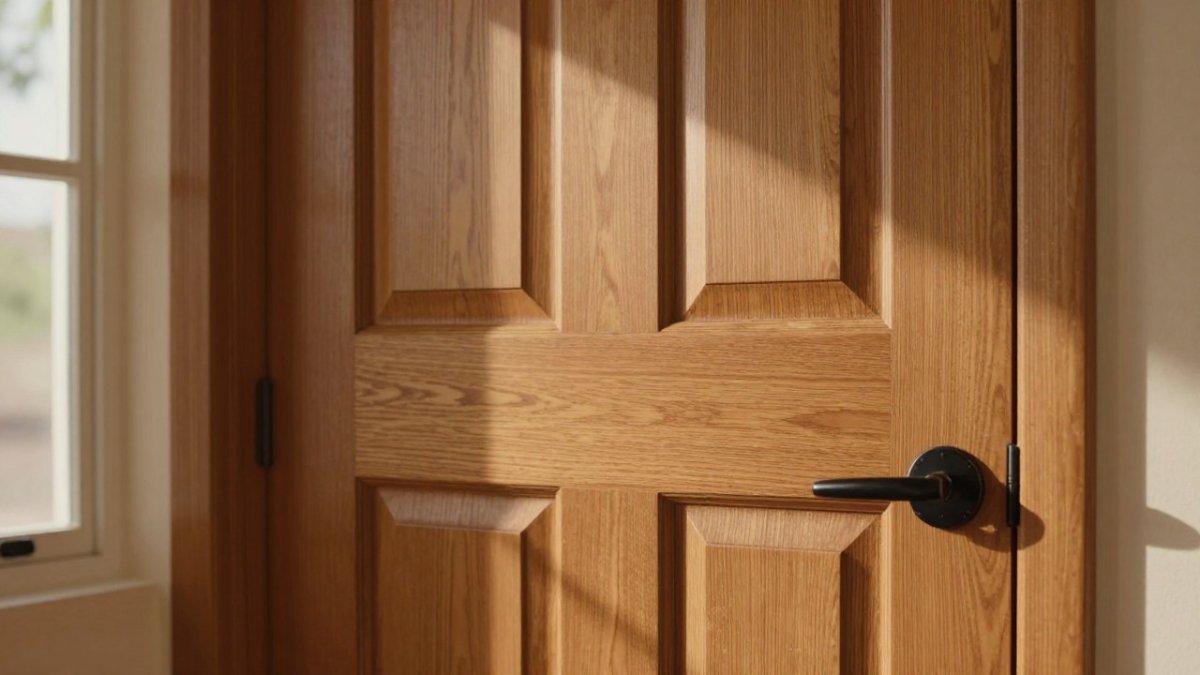
Satin offers a softer, more organic look and hides minor dings and grain texture better. Satin is often chosen for a warm, modern desert look, while semi-gloss suits doors that see heavy wear.
Best Paint for Interior Wood Doors: Oil, Water and Chemically Cured Options
Finishes generally fall into a few families. Oil-based paints bond well but take longer to cure. Water-based paints cure faster and clean up with water, though they require careful surface preparation. Chemically cured finishes form a hard, durable film, and they are often a strong choice in a hot, dry home.
Ask whether a finish is chemically cured and what its UV resistance rating is, since those details matter more for desert performance than the color name.
Preventing Wood Door Cracking in Dry Climates
Cracking in a desert home usually starts with moisture loss rather than a defect in the door. Wood releases moisture until it approaches equilibrium with the indoor air, and in a conditioned home with low relative humidity, that equilibrium can sit well below the moisture content at which the door was milled and finished. As the wood dries, it shrinks most across the grain, and the finish on the face resists that movement differently from the bare or lightly sealed edges. The result is a checked surface, a hairline split along a glue line, or a stile that pulls away from the rail.
The practical fix is to control the rate of change rather than chase a perfect humidity number. Keep indoor relative humidity as steady as your system allows, and avoid placing doors directly beside supply vents, heat-producing appliances, or west-facing glass where surface temperature swings are largest. Sudden changes, such as a cooling system cycling hard in the afternoon and then shutting off overnight, stress the finish more than a slow, steady drift.
Sealing all six sides matters because moisture moves through end grain much faster than through face grain. An unsealed top or bottom edge absorbs and releases moisture unevenly against the sealed faces, which encourages cupping and twist. Seal the edges before hanging the door, not after, and confirm that the topcoat on the edges matches the faces so the door moves as one unit. Our hollow core door repair and maintenance tips walk through checking edges and joints for early movement.
Clearances deserve more attention than most homeowners give them. Desert-installed doors that were hung tight at a humid time of year can bind when the wood shrinks and the edges pull back, which then pulls on hinges and stresses the joints. Work with your installer to set reveal gaps that allow for seasonal movement across the full range your home sees, and ask whether the door was hung with that allowance in mind.
To tell the difference between a moisture-driven crack and a finish failure, look at the pattern. Splits that follow the grain and open along joints usually indicate wood movement. Crazing or lifting that sits on the surface and does not follow the grain usually points to incompatible layers or a topcoat that has aged and lost flexibility. Address movement cracks with flexible filler and a matching topcoat once the moisture stabilizes; a surface problem will keep returning until the finish system itself is corrected.
Watch out: filling a crack before the wood has stabilized traps the problem, and the same split will reopen in the next dry season.
The article's cracking advice comes down to a few concrete fixes, summarised below.
| Fix | What it addresses | Note |
|---|---|---|
| Keep indoor humidity steady | Rate of moisture change | Avoid sudden swings |
| Keep doors away from vents and west glass | Surface temperature swings | Largest changes occur there |
| Seal all six sides | Uneven moisture movement | Seal edges before hanging |
| Set seasonal reveal gaps | Binding from edge pull-back | Allow for the full range |
| Fill cracks only after wood stabilizes | Problem reopening | Wait for moisture to settle |
Low-VOC Finishes and Desert Maintenance Routines
Low-VOC finishes can suit a sealed, air-conditioned desert home. Water-based and low-VOC urethanes generally release less odor during application and curing. The trade-off is that water-based films raise the grain more and need careful surface prep, and they can be less forgiving of high humidity during application. Check the manufacturer's recoat window and cure time before scheduling work, because a low-VOC film that is not fully cured will mark easily even if it looks dry.
Desert homes can also bring specific maintenance problems. Fine dust carried in through doorways and HVAC systems can settle into the finish and abrade it when the door is opened and closed, so light, regular dusting is often more effective than infrequent deep cleaning. Sun-driven fading is concentrated on doors that receive reflected light from exterior glazing or open to a sunlit hall, and it shows up as a lighter, slightly chalky band near the top rail or on the side facing the window. Keep a record of which doors see that exposure, because those are the ones that will need recoating first.
A maintenance routine that fits this environment is simple. Dust with a dry microfiber cloth regularly in high-traffic rooms and less often elsewhere. Clean with a mild cleaner only when there is visible soil, and dry the surface promptly. Inspect edges, the lock area, and the bottom rail each season for early checking or lifting. Touch up small scratches promptly with the same product and sheen, before dust or UV works into the damage.
When a door needs more than touch-up, a full recoat is more reliable than spot repairs. Start by removing loose film and sanding back to sound material, then apply thin, even coats, respecting the recoat window for the specific low-VOC product. Thick coats of water-based finish trap solvent and water, which can cause blushing and slow cure, so two or three thin coats usually outperform a single heavy one.
Watch out: applying a second coat before the first has fully cured can lift the underlying film and leave a soft, tacky surface that picks up dust.
Booking Your Door Finish Consultation in Arizona
If you are unsure which finish suits your home, the fastest route is a conversation with someone who knows desert conditions. Consultants at Arizona Door Store can help you think through your door type and sun exposure. Pricing depends on door type, quantity, finish selection and delivery timing, so the most accurate figure comes from a direct quote. Visit our website to request one.
Frequently Asked Questions
Does low humidity affect interior door finishes?
Yes. Desert air is very dry, so wood gives up moisture and shrinks, which can open small gaps and stress the finish along the grain. Film finishes are often chosen for desert conditions because they can stay flexible enough to move with the wood. Keep the home's humidity steady where you can, and seal all six sides of a door before it is hung so it moves evenly.
Is semi-gloss or satin better for interior doors?
For most desert homes, satin is the better default. It hides dust, fingerprints and minor dents better than semi-gloss, and it does not show every bump in a hollow or lightly textured surface. Semi-gloss cleans more easily and resists scuffs from hands and hardware, so it suits high-traffic doors, bathrooms and kitchens. Either sheen works well when the topcoat is a durable urethane or catalyzed product.
How do I prevent interior doors from cracking in dry climates?
Avoid placing the door directly in the path of a sunny window or a supply vent that blows dry air across it. Seal the top and bottom edges as well as the faces, then apply a UV-resistant topcoat. Regular touch-ups on worn spots keep moisture from escaping unevenly. If you see a crack starting, address it early before it spreads along the grain.
What is the most durable paint finish for high-traffic interior doors?
A catalyzed lacquer or a two-part urethane paint is the most durable choice for doors that take heavy daily use. These finishes are generally durable under heavy use. Choose a satin or semi-gloss sheen for the best balance of wipeability and appearance. Consult the product's data sheet for recoat times and the surface preparation it requires.