 ultimate-guide
Load Bearing Requirements for Wall Mounted Shelves Guide
Last Updated: November 4, 2026
Quick Summary
Load bearing requirements for wall mounted shelves depend on the weight of what you store, the span between brackets, and the wall material. Mounting into wall studs is the most reliable option for heavy loads, and drywall anchors should be used only for lighter shelves, installed in multiples.
- Estimate the heaviest realistic load, then add a safety margin rather than planning to the exact figure.
- Mount heavy shelves into wall studs, since they offer a consistent, load-tested substrate.
- Keep heavy items close to the wall, because longer lever arms increase stress on brackets.
- Install several anchors rather than one, and stay well below their published ratings.
- Recheck fasteners monthly and after any heavy load change to catch loosening early.
Table of Contents
- Understanding Load Bearing Requirements for Wall Mounted Shelves
- Why Studs Matter More Than Anchors for Heavy Shelves
- How to Find Studs for Shelves With a Stud Finder
- Shelf Load Calculation: Static Load, Dynamic Load, and Use
- Drywall Anchors for Shelves and Their Weight Rating
- Shelf Bracket Spacing and Weight Distribution
- Testing Wall Materials and Maintaining Shelves Over Time
- Planning Your Next Shelf Install With Arizona Door Store
- Frequently Asked Questions
Understanding Load Bearing Requirements for Wall Mounted Shelves
Load bearing requirements for wall mounted shelves depend on three things: the weight of what you store, the span between brackets, and what the wall is made of. Most shelving failures happen because one of those three was guessed rather than measured. Homeowners and contractors often plan a shelf around its appearance first and its mounting second. Reversing that order is the single most useful habit you can build.
Start by estimating the real load. A shelf holding a few decorative items carries very little, while a shelf of hardcover books can add considerable weight once fully loaded.
The next factor is use. A bracket does not simply hold weight straight down. The load pulls the top fastener outward and the bottom of the bracket downward, so the same shelf stresses the mounting hardware far more than its static weight suggests.
Why Studs Matter More Than Anchors for Heavy Shelves
Wall studs are the strongest mounting point in a standard wood-frame wall, and for any shelf carrying significant weight they should be your first choice.
Drywall anchors have their place, but their rated capacity is usually quoted for light loads in ideal conditions.
Where studs cannot be aligned with your bracket spacing, you can use a rail or board mounted across several studs to distribute the load, which is often the better solution than relying on multiple anchors.
How to Find Studs for Shelves With a Stud Finder
Finding studs accurately is the step most people rush, and it is the step that matters most. Follow this sequence:
- Turn on an electronic stud finder and slide it slowly across the wall at about waist height.
- Mark the edges of each detected stud with light pencil marks, then confirm the center.
- Drive a small finishing nail or pilot drill at the marked location to verify solid wood rather than an empty cavity.
- Measure from a known corner or outlet to check that the stud spacing is consistent.
Electronic finders can read false positives near pipes, wiring, or metal, so cross-check before drilling. A tiny pilot hole costs nothing to repair, while a shelf mounted into air is a serious problem.
Shelf Load Calculation: Static Load, Dynamic Load, and Use
Engineers distinguish between two kinds of load, and understanding both prevents much of the trouble homeowners run into. Static load is the constant weight of the shelf and everything resting on it. Dynamic load is the force added when items are placed, removed, or bumped, and it can briefly exceed the static figure. A book pulled sharply from a shelf, or a child climbing onto a bracket, creates dynamic force that the static calculation never accounts for.
The most practical approach is to work out the static load first, then apply a generous margin. A safety factor well above the expected load is a sensible planning margin for shelves that will carry heavy or frequently handled items.
Shelf length also matters. A longer shelf places more of its load farther from the wall, which increases the moment acting on the brackets.
Calculating Use and Torque on Bracket Mounts
Use is what turns a moderate load into a mounting failure. The torque acting on a bracket equals the load multiplied by its horizontal distance from the wall.
To reduce this stress, keep items close to the wall where possible, use deeper brackets for deeper shelves, and place the heaviest items near the supports rather than at the outer edge.
Drywall Anchors for Shelves and Their Weight Rating
When studs are not available, drywall anchors become necessary, but their weight rating must be read carefully.
The anchor types below are the ones most commonly sold for shelving. Because wallboard ratings are only one part of the load path, compare them with bolt load ratings before choosing hardware for a shelf.
- Plastic expansion anchors. These are the least expensive option and are suited to light loads such as small decorative shelves. They rely on the anchor expanding against the back of the wallboard, and their holding strength drops sharply if the hole is oversized or the gypsum crumbles.
- Self-drilling (zip) anchors. These cut their own hole and thread into the wallboard, which reduces installation error. They generally outperform simple plastic anchors for light-to-moderate loads but still depend on intact gypsum around the hole.
- Toggle bolts. A toggle bolt passes through the wall and opens a metal or plastic bar behind the wallboard, spreading the load over a larger area. They are the strongest common option for hollow walls and are the usual choice for heavier shelving where studs cannot be reached. They require a larger hole, and the bolt cannot be removed without losing the toggle behind the wall.
Whatever you choose, install several anchors rather than one, and treat the published rating as a ceiling you should stay well below.
Watch out: anchor pull-out strength depends on the density of the gypsum, how cleanly the hole was drilled, and whether the anchor was seated correctly.
Be cautious with hollow-core doors and older plaster walls, where anchor performance is less predictable.
The article compares the main anchor types used for shelving and how their ratings should be read:
| Anchor type | Best for | Key difference |
|---|---|---|
| Plastic expansion anchors | Light loads, small decorative shelves | Least expensive; holding strength drops if the hole is oversized |
| Self-drilling (zip) anchors | Light to moderate loads | Cuts its own hole and threads into wallboard, reducing installation error |
| Toggle bolts | Heavier shelving where studs are unreachable | Strongest common option in hollow walls; cannot be removed without losing the toggle |
| Molly (hollow-wall) bolts | Loads that may need removal later | Expanding sleeve that can be removed and reinstalled |
| Snap and strap toggles | Thick walls and one-person installs | Toggle held in place during installation |
Shelf Bracket Spacing and Weight Distribution
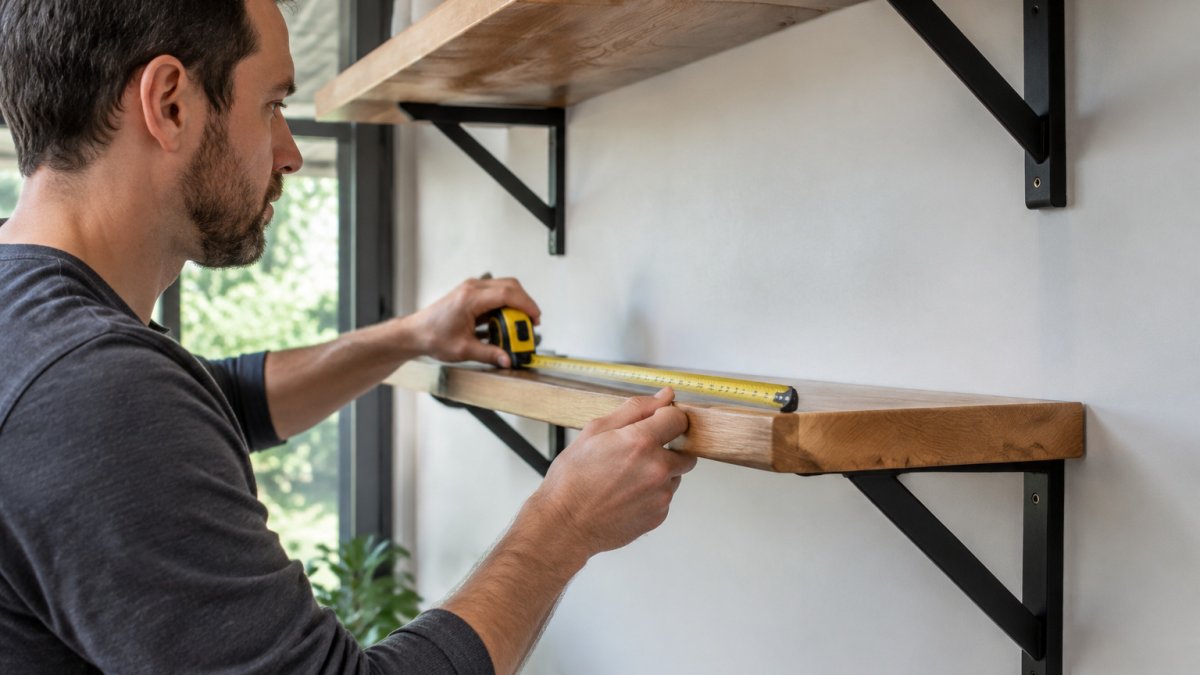
Bracket spacing controls how evenly the load is shared. For a typical shelf, placing brackets roughly one-quarter to one-third of the shelf length in from each end gives balanced support and limits the bending stress in the shelf board itself.
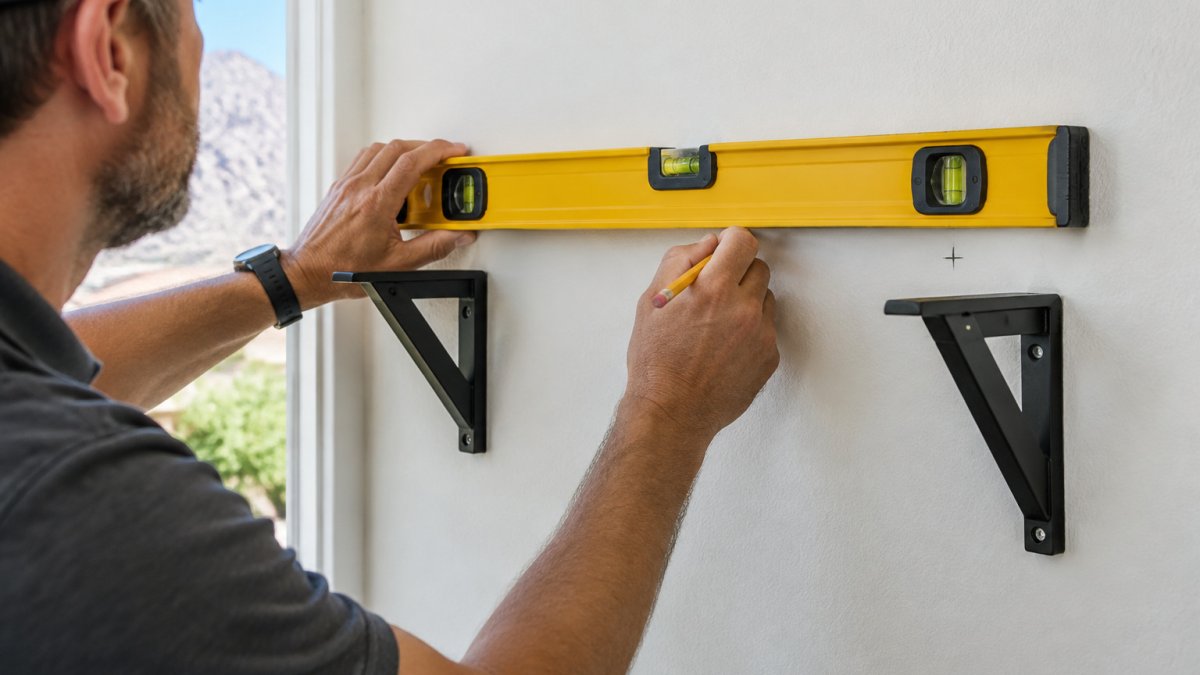
Wall material also affects spacing. Where you are working into a single stud, spacing brackets to match two studs gives you a much stronger mounting pattern than a single-point arrangement.
Testing Wall Materials and Maintaining Shelves Over Time
Before installing, identify what the wall is made of. Drywall over wood framing is the most common configuration in American homes, but plaster, masonry block, and specialty wall systems each need different fasteners and different planning.
Use this sequence to identify the wall before you drill:
- Tap and listen. A hollow, drum-like sound over a wide area suggests drywall or plasterboard over an empty cavity. A dull, solid thud suggests masonry or a stud directly behind the surface.
- Check for a seam. Drywall is installed in sheets, so a straight vertical or horizontal seam with a slight ridge usually means drywall. Plaster walls are typically seamless and may show hairline cracks radiating from corners.
- Drill a small pilot hole in an inconspicuous spot. Gypsum produces fine white powder and drills easily. Plaster produces a harder shell and may chip. Masonry resists the bit and produces grit. Wood produces shavings and a distinct change in resistance when the bit passes through the wallboard into framing.
- Probe the cavity. Insert a stiff wire or a thin screwdriver through the pilot hole. If it passes freely, you have a hollow cavity. If it stops against solid material within an inch or two, you have found framing or masonry.
- Confirm stud spacing. Measure from a known corner or outlet. Consistent stud spacing helps predict where the next stud will be.
Watch out: electronic stud finders can read false positives near pipes, wiring, or metal, and a finder calibrated for drywall can misread plaster or masonry.
Once installed, inspect shelves periodically. Look for loosening screws, cracks radiating from fasteners, and any visible sag in the shelf board.
A simple inspection schedule keeps a shelf safe over its life:
- Monthly: a visual check for sag, cracks, or items that have shifted.
- Every six months: tighten fasteners by hand until snug, and check that brackets are still flush to the wall.
- After any heavy load change: recheck the mounting points, since a new load pattern can stress fasteners that were fine before.
Planning Your Next Shelf Install With Arizona Door Store
Good shelf planning starts with an honest load estimate, a stud-based mounting plan, and the right hardware for your specific wall. For guidance on layouts suited to tighter spaces, our article on designing custom closet shelving for small spaces covers planning strategies in more detail, and our overview of modern shelving solutions for custom contractors addresses larger builds.
Frequently Asked Questions
How much weight can a wall-mounted shelf hold? It depends on the mounting method, the shelf length, and the wall material.
Are drywall anchors strong enough for heavy shelves? Drywall anchors can handle light to moderate loads when installed correctly and in multiples.
How do I find studs without a stud finder? You can locate studs by tapping the wall to listen for a solid tone, or by drilling small test holes.
U.S. Department of Housing and Urban Development guidance on home construction and framing notes that standard residential framing spacing shapes where fasteners should land. National Association of Home Builders resources on residential construction offers further background on wall framing and mounting practices. Consumer Product Safety Commission guidance on furniture and wall-mounting safety explains the tip-over and falling-object risks that make secure anchoring important.
Frequently Asked Questions
How much weight can a wall-mounted shelf hold?
The answer depends on three things: the shelf material and depth, the bracket type, and what the shelf is anchored into. A shelf fixed into wood studs with heavy-duty brackets can carry far more than one held only by drywall anchors. Always check the manufacturer's rated capacity for the specific bracket and fastener, and treat that rating as the maximum for evenly distributed weight, not a point load. Plan for less than the rating when items are heavy, unevenly placed, or will be bumped or loaded repeatedly. Arizona Door Store can help you match hardware to your project, and current product information is available on our website.
Do wall-mounted shelves need to be attached to studs?
For light decorative items, drywall anchors rated for the load may be enough. For heavier loads such as books, dishes, or cookware, attaching at least one bracket into a wood stud is strongly recommended. Studs provide far more holding strength than drywall alone, and they keep the shelf from pulling away from the wall under sustained or dynamic loads. A stud finder helps locate framing, and you should confirm the position by drilling a small test hole before installing final fasteners.
How far apart should shelf brackets be?
Bracket spacing depends on shelf length, depth, and expected load. Many manufacturers recommend placing brackets at roughly one-third to one-quarter of the shelf length from each end, and never leaving a long unsupported span. Longer or deeper shelves need closer spacing to reduce bending and leverage on the fasteners. Check the bracket instructions for the maximum allowed spacing, and add a central bracket on shelves over about 36 inches. Keep brackets level and aligned so weight distributes evenly across all fasteners.
How do I calculate the load capacity of a shelf?
Start with the lowest rating in the system: the shelf material, the bracket, the fastener, and the wall substrate. Add the rated capacity of each bracket that will be installed, then reduce that total to account for uneven loading and the leverage created by shelf depth. A safe planning rule is to use no more than about 50 to 70 percent of the combined rated capacity for everyday use, especially where items are heavy or may be added over time. Store heavier items close to the wall and near the brackets to lower the leverage force.
Can a floating shelf hold heavy items?
Floating shelves can hold substantial weight when they are installed with a concealed steel bracket or rod system anchored into wood studs or a solid reinforced wall. Their capacity drops significantly when they are mounted only with drywall anchors or when items are placed far from the wall, since the leverage multiplies the force on the fasteners. Verify the rated load for the specific floating shelf system, spread weight across the length of the shelf, and avoid storing very heavy objects such as cast-iron cookware or stacked hardcover collections at the far edge.