 How-to
7 Door Installation Warranty Facts That Protect Your Home
Last Updated: November 16, 2026
Quick Summary
A door installation warranty is a written promise covering defects in how your door was fitted, not just defects in the door itself. It protects you against drafts, water intrusion, and doors that will not latch, while manufacturer warranties rarely cover the labor that put the door there.
- Manufacturer warranties cover the slab but rarely cover the labor that installed it.
- Workmanship warranties cover fit, sealing, and alignment, usually for a set period separate from the manufacturer's term.
- Ask whether the workmanship warranty transfers if you sell the home.
- Give written notice of a defect, not just a phone call, to keep your claim strong.
- Skipping required maintenance like replacing weatherstripping can void workmanship coverage.
Table of Contents
- Why Professional Door Installation Warrants a Warranty
- Door Warranty Coverage and Exclusions: What's Protected and What's Not
- Door Workmanship Warranty: The Installer's Promise
- Door Installation Warranty Questions to Ask Before You Sign
- The Door Warranty Claim Process: Step by Step
- How Installation Quality Affects Long-Term Door Performance
- Schedule Your Professional Door Installation Consultation
- Frequently Asked Questions
Why Professional Door Installation Warrants a Warranty
A door installation warranty is a written promise that covers defects in how your door was fitted, not just defects in the door itself. That distinction matters more than most homeowners realize. According to the Federal Trade Commission's guidance on home improvement contracts, written warranty terms must be disclosed clearly before you sign, which is why the paperwork matters as much as the door.
A beautiful door hung poorly can leak, stick, and fail years before its time. Below, we break down the seven warranty facts that separate a protected investment from an expensive gamble.
Here is the core problem: a manufacturer warranty covers the slab. It rarely covers the labor that put it there. That gap is exactly where professional installation warranties earn their keep.
Door Warranty Coverage and Exclusions: What's Protected and What's Not
Most door warranties split into two buckets: manufacturing defects and installation defects. Manufacturing defects include warped slabs, failed glass seals, and finish flaws. Installation defects cover poor frame alignment, weak sealing, and improper fastening. The exclusions are where homeowners get surprised, so read them before you compare quotes, not after something goes wrong.
What typically gets excluded:
- Damage from storms, floods, hail, or impact
- Poor maintenance or missing weatherstripping
- DIY installation or work by an unqualified installer
- Alterations made after the fact
- Improper storage or exposure before installation
- Normal wear, settling, and cosmetic changes
Those bullets are the short version. The mechanism behind each one matters more than the label.
Actions that can void manufacturer coverage. Manufacturer warranty terms vary, but they often depend on installation by a qualified professional and on the door being finished, sealed, and maintained as directed. Check your specific product's terms. Common patterns include:
- Painting or staining an exterior door with the wrong product, or failing to finish all six sides of a wood door, can void finish and slab coverage.
- Cutting, planing, or boring a slab after delivery to force a fit can void coverage on the slab and hardware.
- Removing or altering factory weatherstripping, thresholds, or glass stops can void the affected components.
- Storing a door flat or in a damp garage before installation can warp it and void the slab warranty.
Actions that can void workmanship coverage. The installer's promise usually covers fit, sealing, and alignment, but not if the homeowner changes the conditions the installer warrantied:
- Adjusting hinges, strike plates, or closers yourself after installation
- Hanging a storm door or adding hardware the installer did not supply
- Power-washing or using harsh cleaners on seals and finishes
- Skipping the maintenance the contract requires, such as checking and replacing weatherstripping
Watch out: many homeowners assume a full-frame exterior door replacement is covered the same as a simple slab swap. It is not always. If your project involves reframing or new sealing, check when full-frame exterior door replacement makes sense before you assume the warranty follows.
Exclusions differ by door type. Entry, interior, patio, and garage doors carry different components and different warranty terms, and a single installer's workmanship warranty may treat them differently:
- Entry doors: slab, finish, and hardware coverage often carry separate terms; finish exclusions are common on wood doors.
- Interior doors: hollow-core and solid-core slabs have different defect definitions, and humidity-related warping is frequently excluded.
- Patio and sliding doors: glass seal failure, rollers, and tracks may be covered on different schedules than the frame.
- Garage doors: springs, openers, and safety-reverse features are usually covered under separate product warranties, and installation of the opener may be excluded from the door workmanship warranty.
| Warranty Type | Covers | Usually Excludes |
|---|---|---|
| Manufacturer warranty | Slab, glass, finish defects | Labor, installation errors, improper finishing |
| Workmanship warranty | Fit, sealing, alignment | Product defects, storm damage, homeowner adjustments |
| Extended service plan | Parts and labor after term | Neglect, unauthorized repairs |
A practical warranty comparison checklist beats a verbal promise every time. When you compare quotes, line up coverage, duration, exclusions, labor versus parts, and claim procedures side by side so you can see which promise is actually broader.
Door Workmanship Warranty: The Installer's Promise
The workmanship warranty is the installer's own promise, and it is the piece most homeowners forget to ask about. It covers how the door was hung, sealed, and aligned, and it usually runs for a set warranty period separate from the manufacturer's term.
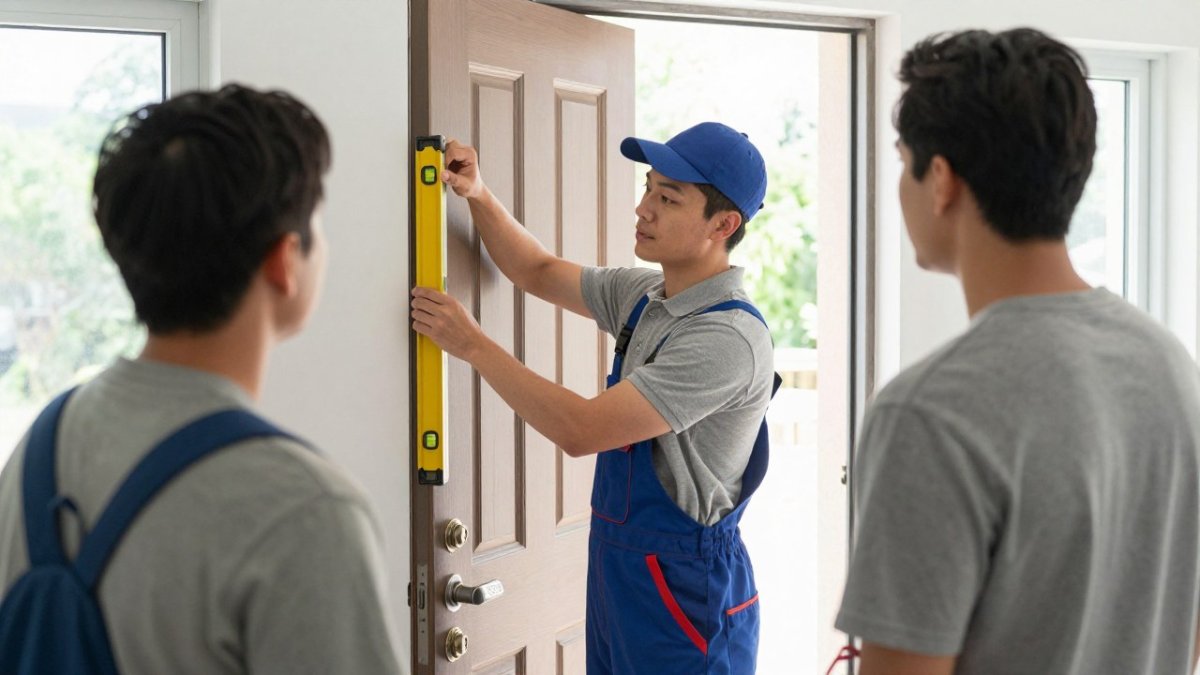
A common mistake is treating the workmanship promise as a formality. In practice, this is the coverage that protects you against drafts, water intrusion, and a door that will not latch. Want proof that a promise holds up? Read stories from homeowners like you before you sign.
Door Installation Warranty Questions to Ask Before You Sign
Ask these questions before any contract is signed. The answers tell you whether the warranty is real or just marketing.
- What is the exact warranty period for labor versus the product?
- Does the workmanship warranty transfer if I sell the home?
- What voids coverage, and who decides?
- How do I file a claim, and what is the service response time?
- Are parts and labor both covered, or only parts?
- What maintenance is required to keep coverage active?
- Is the coverage in writing, with proof of purchase requirements listed?
A practical warranty comparison checklist beats a verbal promise every time. Write the answers down, and compare them side by side. Preparing for a consultation? Bring questions to ask during your window or door consultation so you can compare warranty terms clearly.
The Door Warranty Claim Process: Step by Step
The claim process follows a predictable path, and documenting each step protects you. The goal is to make it easy for the installer or manufacturer to say yes, and hard for them to say the claim was filed wrong.
Step 1: Decide which warranty the issue belongs to. Before you call anyone, sort the problem into the right bucket. This single step prevents most denials.
- Sticking, rubbing, drafts, water intrusion at the frame, or a door that will not latch: usually a workmanship claim against the installer.
- Warped slab, failed glass seal, peeling finish, or failed hardware: usually a manufacturer claim.
- Both at once: file with the installer first and ask them to coordinate the manufacturer claim, since the contract often makes them the point of contact.
Step 2: Collect evidence before you touch anything. Photograph and video the defect with a date reference, including a wide shot of the door and frame and a close-up of the defect. Keep the proof of purchase, the signed contract, and the written warranty terms together in one folder. Note the date the problem first appeared and any weather events around it.
Step 3: Give written notice. Contact the installer in writing, not by phone alone. State the defect, the date it appeared, and the remedy you are requesting, and reference the warranty section you believe applies. Keep every message and repair record.
Step 4: Request an inspection and a written diagnosis. Ask for an inspection and a written diagnosis that states whether the cause is installation or product. That written diagnosis is what determines which warranty pays.
Step 5: Follow the response timeline in your contract. Many workmanship warranties set a service response window, and some require you to allow a repair attempt before replacement. If the contract is silent, a common pattern is a written acknowledgment within a few business days and an inspection scheduled within a few weeks.
Step 6: Escalate if the claim stalls. If the installer does not respond, send a written follow-up with a deadline, then escalate to the manufacturer if the issue is product-related. For consumer disputes, the Federal Trade Commission's consumer complaint resources explain how to file a complaint, and your state attorney general's consumer protection office is the next stop. Keep the paper trail intact at every stage.
Watch out: skipping written notice is the fastest way to weaken a legitimate claim. A paper trail is your best protection, and a phone call alone rarely counts as notice under most warranty terms.
Boundary cases worth knowing. A few scenarios trip up homeowners because the cause is genuinely ambiguous:
- A door that sticks only in summer is often a humidity and slab-expansion issue, frequently a product or environmental exclusion rather than a workmanship defect.
- Water staining at the threshold can be a sealing failure (workmanship) or a failed sill pan (product); the inspection diagnosis decides.
- Hardware that loosens repeatedly may be an installation fastening issue or a hardware defect, so ask for the diagnosis in writing.
- Normal wear on weatherstripping and finishes is usually excluded, even when the door was installed perfectly.
If you are still comparing installers, bring questions to ask during your window or door consultation so you can confirm claim procedures and response times before you sign.
How Installation Quality Affects Long-Term Door Performance
Installation quality decides how a door performs over its full service life. Proper frame alignment, correct shimming, and solid weatherstripping stop air leaks and drafts before they start. Poor sealing invites moisture damage and water intrusion, which shortens durability and drives up repair costs.
The difference between a door that lasts and one that fails comes down to the details a qualified installer handles on day one. If you are weighing a DIY approach, read door repair DIY vs. professional: safety and costs to see how poor installation can undermine your warranty coverage.
Schedule Your Professional Door Installation Consultation
The gap between a protected door and an expensive repair comes down to one decision: who installs it and what they promise in writing. That is where we come in.
At Arizona Door Store, our family-owned team pairs high-quality doors with expert guidance from experienced consultants. We offer reliable local delivery and fast will-call service, so your project stays on schedule. Schedule your no-obligation consultation to get measurement, product options, and a written estimate with no pressure.
Contact Arizona Door Store to discuss your door project.
A door is only as good as the hands that hang it. Bring us your project, and we will help you choose the right door and the coverage that backs it up.
Frequently Asked Questions
How long should a workmanship warranty be?
A workmanship warranty typically lasts between one and five years, depending on the installer and the door type. One year is common for basic installations, while higher-end exterior doors may come with longer coverage. Ask for the warranty period in writing before signing a contract, and confirm whether it covers labor, materials, or both. A longer workmanship warranty often signals that the installer stands behind their work and uses proper techniques.
Does professional installation affect a door's manufacturer warranty?
Yes. Many manufacturers require professional installation to keep the warranty valid. If a door is installed incorrectly, the manufacturer may deny a claim for issues like warping, frame damage, or seal failure. Hiring a qualified installer who follows the manufacturer's guidelines helps preserve coverage. Keep your installation receipt and proof of purchase, because you'll need them if you file a claim later.
What does a door installation warranty typically cover?
A door installation warranty usually covers defects related to the installation itself, such as improper frame alignment, poor sealing, or hardware that wasn't installed correctly. It may also cover labor to fix these issues. It does not cover damage from misuse, extreme weather, or lack of maintenance. Read the warranty terms carefully to understand what's included and what's excluded before you sign.
How do I make a claim under a door installation warranty?
Start by reviewing your warranty document to confirm what's covered and the claim deadline. Then contact the installer or manufacturer in writing, describing the problem and including photos and your proof of purchase. Keep a record of all communication. Many warranties require you to allow the installer to inspect the door before any repairs. Following the claim process step by step helps avoid delays and ensures your issue is resolved fairly.