 How-to
How to Fix Gaps Under Exterior Doors in 5 Steps
Quick Summary
To fix gaps under exterior doors, measure the widest gap, confirm it sits at the bottom of the door, then install an adjustable door sweep or a door bottom gap filler strip sized to the full door width. Gaps wider than 1/2 inch usually point to a sagging door or worn threshold, so fix those first.
- Measure the gap at the left, center, and right, and use the widest reading.
- Gaps under 1/8 inch often need only an adjusted sweep or new vinyl seal.
- Gaps from 1/4 to 1/2 inch usually call for an adjustable door sweep with a replaceable insert.
- Gaps over 1/2 inch point to a sagging door, worn threshold, or frame problem.
- Do not buy a sweep for side or top gaps; those need weatherstripping instead.
Table of Contents
- How to Fix Gaps Under Exterior Doors in 5 Steps
- Why Gaps Under Exterior Doors Let In Air, Pests, and Heat
- Tools and Materials You Need to Fix a Gap Under an Exterior Door
- How to Measure the Gap and Diagnose the Cause
- Choosing an Exterior Door Gap Filler by Gap Size and Location
- Installing a Door Bottom Gap Filler Strip or Adjustable Door Sweep
- Fixing Gaps on the Sides and Fixing the Gap Between Door and Frame When Closed
- Troubleshooting Large or Uneven Gaps and Your Next Step
- Frequently Asked Questions
How to Fix Gaps Under Exterior Doors in 5 Steps
Last Updated: November 14, 2026
Why Gaps Under Exterior Doors Let In Air, Pests, and Heat
Gaps under exterior doors are one of the most common reasons a home feels drafty, dusty, or hotter than it should, and learning how to fix gaps under exterior doors can save real money on cooling.
A gap under an exterior door is the space between the bottom of the door and the threshold or floor.
The main problems a gap causes are:
- Hot air entering during summer afternoons
- Dust and sand blowing across the floor
- Insects and small pests finding a way inside
Most gaps are easy to fix once you know where they come from. This guide walks through five steps: gather tools, measure the gap, choose the filler, install it, and check your work.
Tools and Materials You Need to Fix a Gap Under an Exterior Door
Gather everything in one place first, most gap repairs take less than an hour once materials are ready.
Here is what you will need for most jobs:
- Tape measure to check the gap height and door width
- Flashlight to spot light coming through the gap
- Screwdriver (Phillips and flathead) for hinges and screws
Choose your filler after you measure. Check that the product fits your door's width and thickness before buying.
A common mistake is buying a sweep that is too short. Measure the full width of the door, not the opening, so the seal runs edge to edge.
How to Measure the Gap and Diagnose the Cause
Close the door, turn off any fans, and shine a flashlight under the door from inside. If you see light, you have a gap.
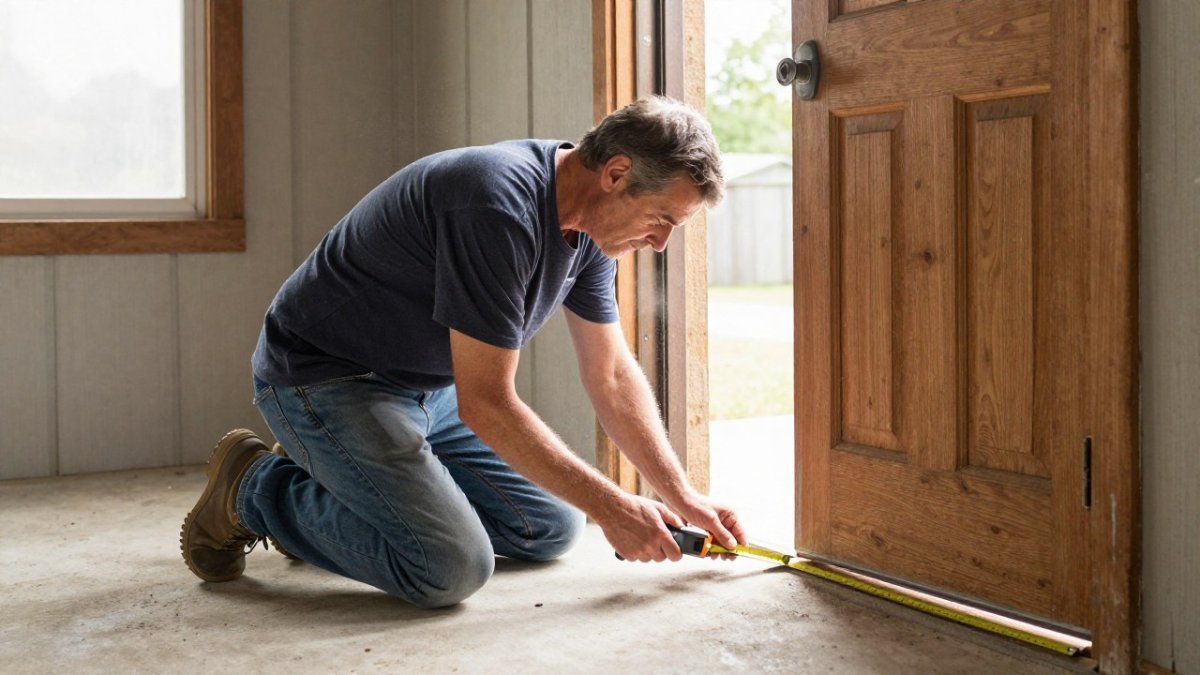
Measure the gap in three spots: the left side, the middle, and the right side. Use the widest reading to pick your filler.
Next, find the cause. A gap can come from:
- A worn or missing sweep or seal on the bottom of the door
- A door that has sagged and no longer sits level in the frame
- A worn threshold that has dipped or cracked
If the gap is even across the door and the old seal is cracked or missing, the fix is usually a new sweep or strip.
Choosing an Exterior Door Gap Filler by Gap Size and Location
Gap size tells you how much material you need; location and door type tell you which material will survive. Use both before buying.
Step 1: Classify the gap by measured size
Measure at the left edge, center, and right edge with the door closed, and use the widest reading. Then sort the gap into one of four bands:
| Measured gap | What it usually means | First repair to try |
|---|---|---|
| Under 1/8 inch | Seal is compressed but intact | Adjustable sweep raised slightly, or new vinyl bulb seal |
| 1/8 to 1/4 inch | Worn sweep or flattened weatherstripping | Rubber or vinyl door bottom strip |
| 1/4 to 1/2 inch | Missing sweep, sagging hinge, or shallow threshold | Adjustable door sweep with a replaceable insert |
| Over 1/2 inch | Worn or sunken threshold, warped door, or frame shift | Threshold replacement or hinge/frame repair before any sweep |
A gap over 1/2 inch is a red flag. A sweep can cover it, but the seal will be stretched thin and fail early. Fix the threshold or alignment first, then seal.
Step 2: Match the filler to the gap location
A gap under the door is not the same problem as a gap at the sides, top, or frame. Each location takes a different product:
- Bottom of the door (under-door gap): Use a door sweep, a door bottom gap filler strip, or a threshold seal. This is the only location where a sweep is the right answer.
- Sides and top (between door and frame): Use weatherstripping, self-adhesive foam, vinyl bulb, or a kerf-mounted seal if the door has a kerf slot. A sweep will not fix a side gap.
- Frame and trim (between frame and wall): Use a flexible sealant or backer rod plus sealant. This is a different repair from weatherstripping and is often missed.
Watch out: Buying a sweep for a side gap is one of the most common wasted purchases. Confirm the gap is actually under the door before you shop.
Step 3: Match the material to the door and threshold
Product compatibility matters as much as size. Check these before buying:
- Door thickness and width: Measure the full door width, not the opening. A sweep that is 1 inch short leaves an unsealed corner.
- Threshold shape: A flat threshold takes a flat sweep. A sill with a lip or a raised weatherstrip leg needs a sweep with a matching profile or an adjustable-height sweep.
- Door material: Wood doors accept screw-mounted sweeps well. Steel and fiberglass doors need self-drilling screws or rivets, and some hollow-core exterior doors require a sweep that clamps rather than screws.
Step 4: Match the material to the climate
Exterior doors face sun, heat, dust, and rain.
Quick decision path
- Measure the widest gap.
- Confirm the gap is under the door, at the sides, at the frame, or at the threshold.
- Pick the product family for that location.
- Check door thickness, width, threshold shape, and swing direction against the product specs.
- Choose a material that suits the sun and temperature range the door sees.
If your measurement lands over 1/2 inch or the gap changes width from one side to the other, skip the sweep for now and read the troubleshooting section first.
Installing a Door Bottom Gap Filler Strip or Adjustable Door Sweep
Start by cleaning the bottom edge of the door and the threshold. Dust and grit prevent adhesive from holding well.
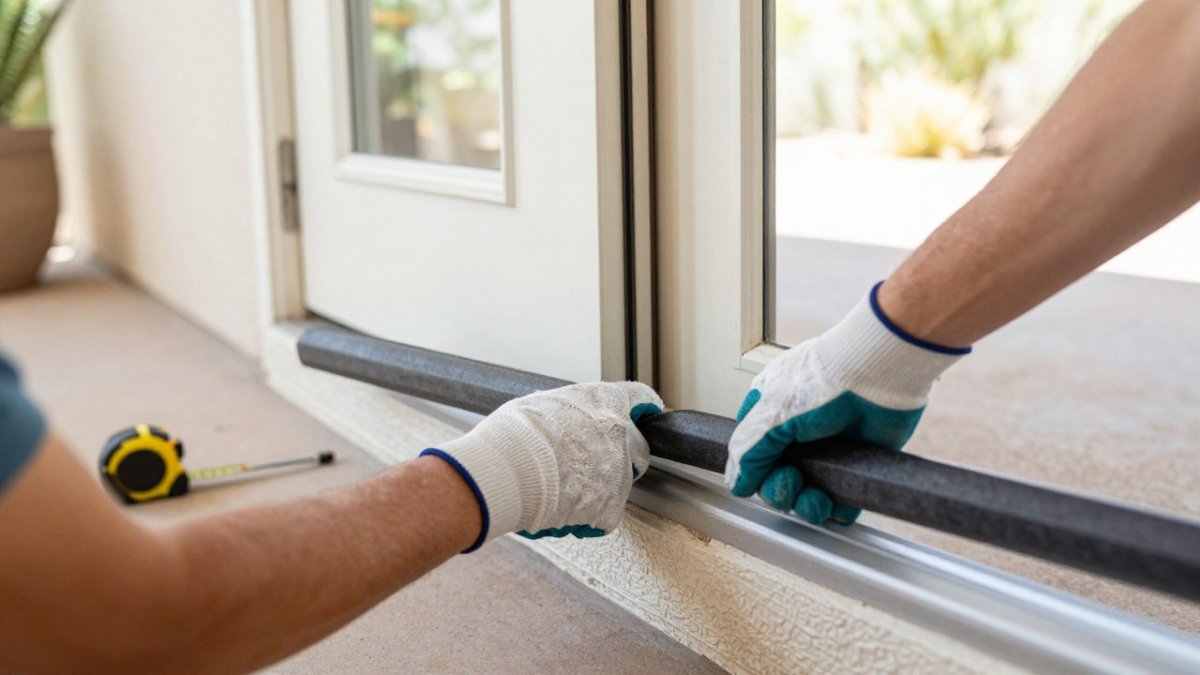
For an adjustable door sweep:
- Close the door and mark the bottom of the door on the sweep's mounting plate.
- Align the sweep along the bottom edge, with the seal just touching the threshold.
- Drill pilot holes if the instructions call for them, then attach the sweep with screws.
- Adjust the seal height so it touches the threshold without binding.
- Open and close the door several times to confirm it moves freely.
For a door bottom gap filler strip:
- Measure the strip against the door width and cut it to length.
- Peel the backing and press the strip onto the bottom of the door.
- Close the door and check that the strip presses lightly against the threshold.
A common mistake is setting the seal too tight. If the door scrapes or sticks, loosen the screws and raise the sweep slightly.
Fixing Gaps on the Sides and Fixing the Gap Between Door and Frame When Closed
Gaps along the sides or top of the door need a different fix. Check the weatherstripping around the frame first.
To fix a gap between the door and frame when closed:
- Close the door and look for light around the edges.
- Mark any spots where light gets through.
- Remove the old seal, clean the frame, and apply new weatherstripping along the marked spots.
- Close the door again and recheck the gaps.
If the gap persists, the door may be out of square. Tighten the hinge screws first.
Watch out: Do not force a door into the frame to close a gap. This can crack the frame and make the lock harder to use.
Troubleshooting Large or Uneven Gaps and Your Next Step
A gap that is wider on one side, changes with the seasons, or exceeds 1/2 inch is usually not a seal problem but a door, hinge, threshold, or frame problem. Work through these checks in order before buying another sweep.
Check 1: Is the door sagging on its hinges?
Open the door halfway and look at the gap at the top and the latch side. A sagging door shows a wide gap at the top latch corner and a tight gap at the bottom hinge corner. Tighten all hinge screws first. If a screw spins without gripping, the hole is stripped, fill it with wood glue and a wooden peg or a longer screw, let it cure, and re-drive the screw. Before deciding, learn what to inspect before replacing a drafty exterior door.
Check 2: Is the threshold worn, sunken, or the wrong height?
Lay a straightedge across the threshold and shine a light from the side. A threshold that dips in the middle or sits lower than the door's swing path needs adjustment or replacement. Adjustable thresholds have set screws that raise or lower the sill; turn them a quarter turn at a time and recheck the gap. A cracked or rotted threshold should be replaced, not patched.
Check 3: Is the door warped or the frame out of square?
Close the door and look along the bottom edge. A warped door touches the threshold in the middle and gaps at both corners, or the reverse. Check the frame with a level on both jambs and the head. If the frame is out of square from settling or moisture, adjusting the seal will not hold. A warped door can sometimes be corrected with a hinge adjustment, but a badly warped door or shifted frame usually needs replacement.
Check 4: Is the gap seasonal?
Wood doors swell in humid months and shrink in dry months. A gap that appears only in summer or only in winter is a moisture movement problem, not a seal failure. In that case, choose a sweep with a flexible insert that can compress and recover rather than a rigid strip that will bind when the door swells.
When a repair is not enough
Stop and call a professional if any of these are true:
- The gap is wider than 1/2 inch after hinge and threshold adjustment.
- The door drags on the threshold on one side and gaps on the other.
- The frame is visibly out of square or the threshold is rotted.
These signs point to a structural issue, settling, moisture damage, or a door that was never fitted correctly, and a new sweep will only hide it temporarily.
Verify the repair
After any fix, repeat the flashlight and dollar bill tests; the bill should slide with light resistance, not fall through. Open and close the door five times and confirm the seal touches without binding. Recheck after the first hot and cold cycle of the season, since heat and dust wear rubber and vinyl over time.
Your next step
If the checks point to a worn threshold or a door that no longer fits its frame, price a threshold replacement or a new exterior door before spending more on seals. A correctly fitted door needs only a thin sweep; an out-of-square door will keep eating seals until the underlying problem is fixed.
Frequently Asked Questions
How can I fix a gap under my exterior door?
Start by measuring the gap at the lowest point with a tape measure or a stack of coins. For gaps up to about three-eighths of an inch, an adjustable door sweep or a bottom gap filler strip usually solves the problem. Attach the sweep to the inside face of the door so it contacts the threshold when closed, then test it with a flashlight at night to confirm no light passes through. If the gap is larger or the door has dropped out of square, adjust the hinges or replace the threshold before installing a sweep, since a sweep cannot seal a gap that is wider than its flexible seal can reach.
What is the best exterior gap filler?
The best exterior gap filler depends on the gap size and how much the door moves. Adjustable door sweeps and bottom gap filler strips are common options for smaller gaps, and the right choice depends on the gap size and threshold shape. Choose a sweep that matches your door's width and thickness, and confirm the fin material suits your climate, since Arizona sun can dry out and crack lower-grade rubber over time.
Can I fix a large gap under an exterior door without replacing the door?
Yes, in many cases. A large gap is often caused by a sagging hinge, a worn or low threshold, or a door that has shifted in its frame. Tightening or replacing hinge screws, shimming the hinge side, or replacing the threshold can close the gap without replacing the door. If the gap still exceeds what a heavy-duty adjustable sweep can cover, or the door edge is warped or cracked, replacement may be the more practical choice. Arizona Door Store can advise on current options and pricing based on your door; contact the team or visit the website for a quote, since pricing depends on quantity, dates, and delivery.
How do I measure for a door bottom gap filler strip?
Measure the width of the door at the bottom edge so the strip matches your door's full width, usually 36 inches for a standard exterior door. Then measure the height of the gap at the lowest point between the door and threshold, using a quarter-inch or three-eighths-inch reference to choose the right seal profile. Note the door thickness as well, because a sweep mounted to the inside face needs to fit the door's bottom edge. Record these three measurements before ordering so the strip seals the full opening.