comparison
Building Supply vs Specialty Door Stores: 2026
Table of Contents
- Building Supply vs Specialty Door Stores: What Sets Them Apart
- Product Range and Selection
- Luxury Entry Doors and Premium Options
- Door Hardware and Moulding Selection
- Custom Entry Door Installation and Support
- Lead Times, Delivery, and Project Management
- Cost, Quality, and Service: Which Option Wins?
- Frequently Asked Questions
Building Supply vs Specialty Door Stores: What Sets Them Apart
General building supply retailers stock thousands of SKUs across dozens of product categories, including doors, lumber, roofing, and tools. Specialty door stores focus exclusively on doors, frames, hardware, and complementary millwork. This difference in scope creates meaningful trade-offs in selection depth, expert knowledge, and service model.
The Arizona Door Store operates as a specialty door retailer, meaning the team knows doors, entry systems, patio configurations, frame assembly, hardware specifications, and installation challenges with depth that generalists can't match. When comparing building supply vs specialty door stores, you're asking: do I need breadth across many categories, or depth in the specific category I care most about?
Product Range and Selection
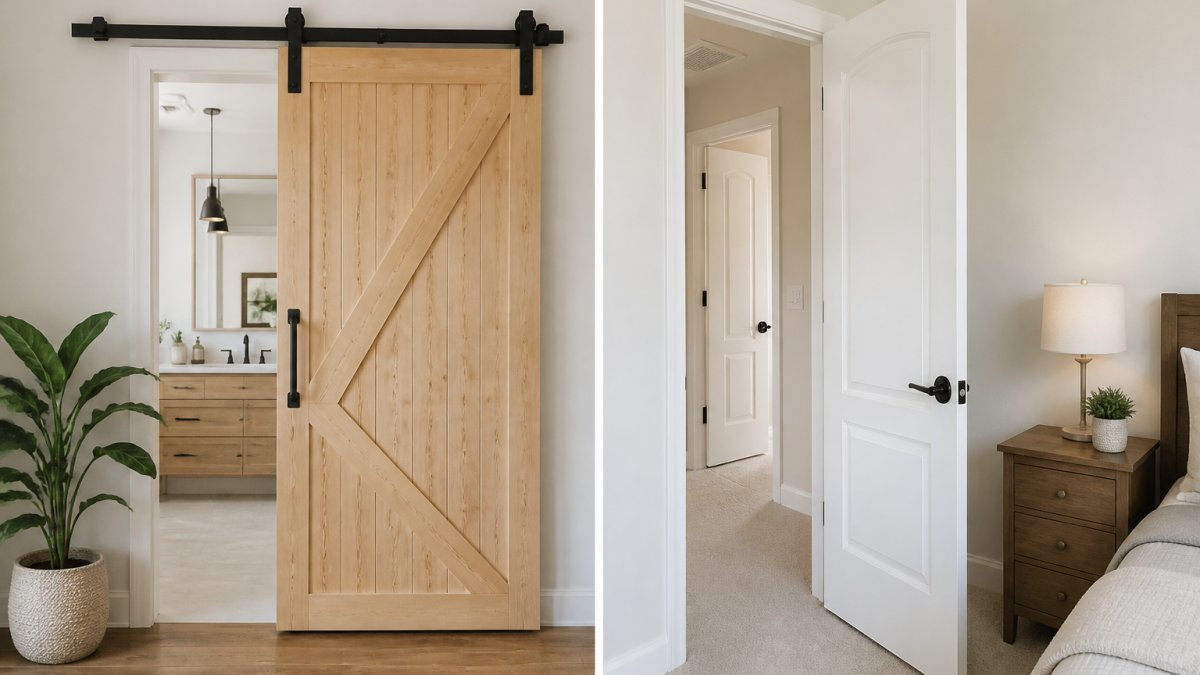
General building supply stores carry entry doors, patio doors, storm doors, and garage doors in limited configurations from major manufacturers like JELD-WEN and Masonite. The advantage is convenience: you can pick up doors, hardware, lumber, and fasteners in one trip.
Specialty door stores concentrate their entire SKU count in doors and door-related products, offering deeper inventory in specific categories, more frame options, more hardware finishes, more moulding profiles, and more entry door styles. If you need an odd-sized door, custom frame assembly, or specific hardware configuration, specialty retailers provide more options without special ordering.
For contractors managing multiple job sites, building supply vs specialty door stores often means using both: general suppliers for framing lumber and fasteners, specialists for premium doors and hardware.
Luxury Entry Doors and Premium Options
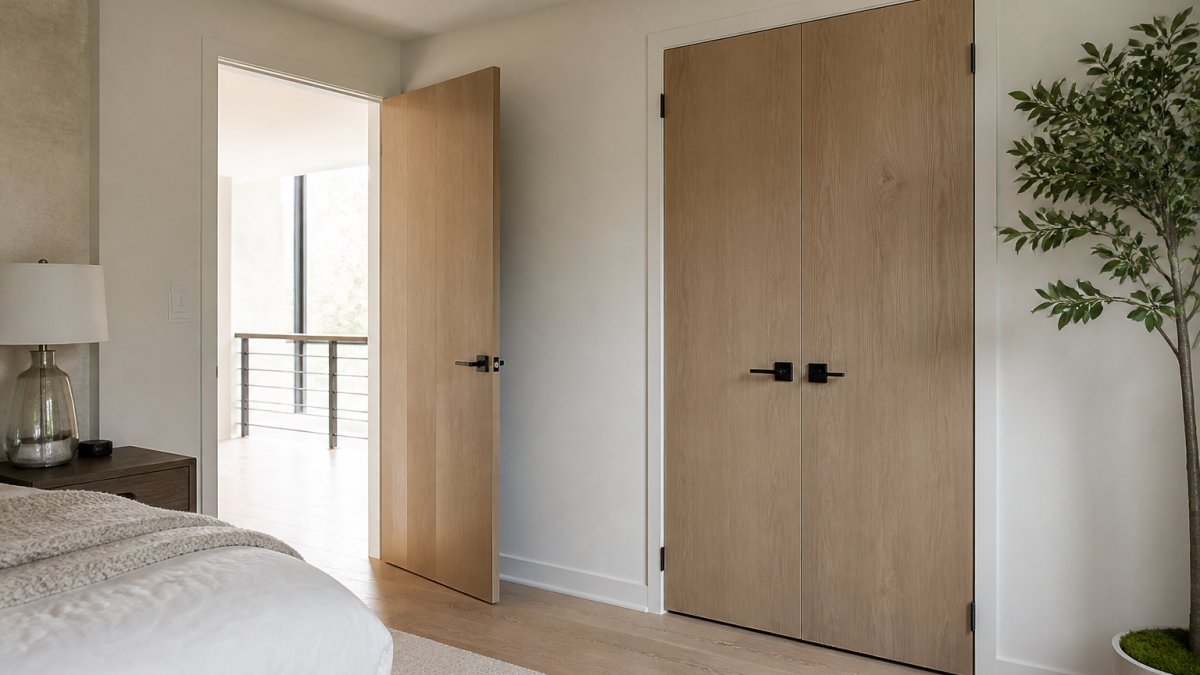
Premium entry doors in fiberglass, solid wood, or composite materials with high-end hardware are where specialty retailers excel.
General building supply stores carry some premium options but lean heavily toward mid-market offerings. Specialty door stores curate premium lines more carefully, with expert staff who understand material selection, weatherstripping performance, and hardware integration. For homeowners or contractors prioritizing quality and aesthetics, this focused expertise translates to better outcomes.
Luxury entry doors require consultation, seeing samples in person, understanding frame options, and discussing hardware finishes. Specialty retailers are built for this workflow.
Door Hardware and Moulding Selection

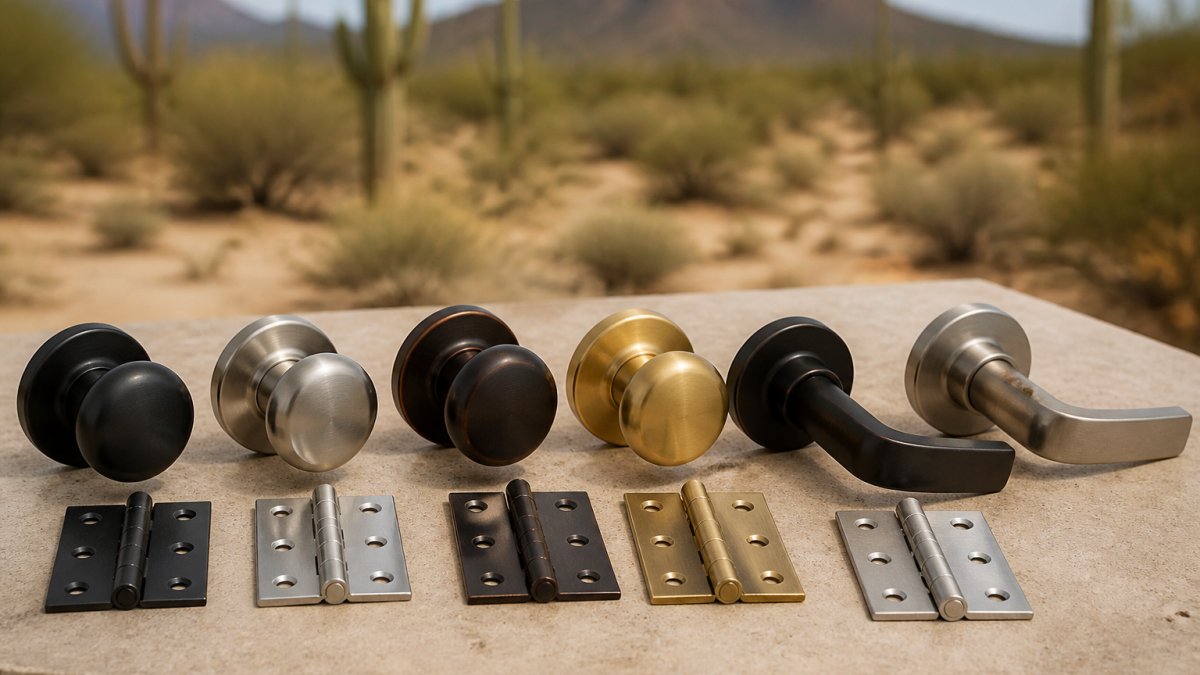
Specialty door stores stock dozens of hinge styles, handle finishes, lock mechanisms, threshold options, and moulding profiles in multiple wood species and finishes. General building supply stores stock basic hardware: standard hinges, common handle styles, basic locks. Customization is limited, and high-end selections typically require special ordering.
Arizona Door Store's approach reflects the specialty model: curated selection, multiple finish options, and staff who understand how hardware choices affect door operation and aesthetics. For contractors managing homes with specific architectural styles, Spanish Colonial, Mid-Century Modern, contemporary, this depth matters.
Custom Entry Door Installation and Support
Installation is where the building supply vs specialty door stores distinction becomes most consequential for whether your door functions correctly and your warranty remains valid.
Frame Installation and Plumb
The most common DIY failure is improper frame installation. Older homes often have walls that are out of plumb or floors that slope. If the frame isn't shimmed and leveled correctly, the door won't close properly, will bind on the latch side, or will develop gaps that compromise weatherstripping. Professional installers use shims and a level to ensure the frame is perfectly plumb and level, regardless of wall condition.
Weatherstripping and Seal Integrity
Entry doors are only as weathertight as their installation. If the frame isn't sealed properly or weatherstripping isn't compressed correctly, you'll have air leaks and water infiltration. Professional installers caulk the frame perimeter, ensure weatherstripping is compressed evenly, and test the seal before finishing.
Hardware Integration and Operation
Custom entry doors often come with specific hardware configurations, multi-point locks, heavy-duty hinges, threshold systems. If hardware isn't installed to manufacturer specifications, the door won't operate smoothly and you risk voiding the warranty. Specialty door retailers understand hardware integration because they sell doors with hardware as a system.
Warranty Implications
Most entry door manufacturers require professional installation to honor the warranty (pella.com). Premium doors from Pella, Andersen, and others carry 10-20 year warranties, but only if installed correctly (andersen.com). Specialty door retailers typically offer or coordinate professional installation as part of the service, with installers trained on their products and warranty requirements.
When DIY Makes Sense
DIY installation is reasonable for interior doors in straightforward conditions. Entry doors are not forgiving; they're exposed to weather and need to seal perfectly. Professional entry door installation is an investment against costly failures.
Choose professional installation if your entry door is premium or custom, your home has non-standard conditions, you want the warranty honored, or you're not confident in your ability to install it correctly.
Lead Times, Delivery, and Project Management
Understanding what drives delays and how to plan around them is essential for any renovation project.
Stock vs. Custom: The Timeline Divide
General building supply stores stock common door sizes and styles and can deliver within 3-5 business days. Custom orders typically take 2-4 weeks for basic customization and 4-8 weeks for significant modifications.
Specialty door stores move stock items fast, often within 2-3 business days for will-call pickup or next-day delivery. For custom orders, timelines depend on the manufacturer, but specialty retailers manage relationships directly and can often negotiate faster turnaround through established supplier relationships.
What Actually Drives Delays
Manufacturer production schedules operate on batch cycles; if you order mid-batch, your order queues for the next production run, typically 2-3 weeks out. Hardware sourcing, frame customization, and delivery logistics all add time. Specialty retailers with in-house or local fabrication capacity can turn custom work around in 1-2 weeks; general retailers ordering from national suppliers might see 3-4 weeks.
Getting Accurate Timelines
Ask for written lead time quotes that break down: order-to-manufacturing (typically 3-10 business days), manufacturing-to-completion (typically 5-15 business days), and completion-to-delivery (typically 2-5 business days for local delivery). Add a 1-2 week buffer to any custom order quote for material shortages or supplier delays.
Specialty retailers reduce timeline risk through local relationships and direct supplier communication. General retailers offer delivery as a commodity service with less leverage to accelerate or troubleshoot delays.
Cost, Quality, and Service: Which Option Wins?
Choose a general building supply store if: You need doors plus other materials in one location, you're working with a tight budget and stock items meet your requirements, or your installation is straightforward without custom frame assembly.
Choose a specialty door store if: You're sourcing premium entry doors or custom systems, your installation involves non-standard conditions, you want expert guidance on hardware and moulding, you value local delivery and project coordination, or door aesthetics and functionality are priorities.
Arizona Door Store positions itself in the specialty category: family-owned, locally focused, expert staff, fast will-call service, and reliable delivery to Scottsdale, Phoenix, and Tucson. Specialty retailers often compete on value, not cost. The real distinction isn't price; it's expertise and service model.
When planning a door replacement or renovation project, the difference between working with a generalist retailer and a specialist becomes clear during the consultation phase. At Arizona Door Store, the team has spent years helping contractors and homeowners navigate frame assembly, hardware selection, and installation challenges specific to residential properties in Arizona. Whether you're sourcing luxury entry doors, custom moulding, or hardware for a high-end installation, working with a retailer that specializes in doors means you get expertise, curated selection, and local delivery support. Learn more about residential door selection from industry resources to understand current best practices, and reach out to Arizona Door Store for a consultation on your specific project needs.
Frequently Asked Questions
Q: What is the difference between a building supply store and a specialty door store?
A: Building supply stores stock doors alongside other construction materials like lumber, roofing, and hardware. Specialty door stores focus exclusively on residential door solutions, custom millwork, and architectural wood products. Specialty retailers typically offer deeper expertise in door selection, installation guidance, and custom fabrication, while building supply stores provide convenience and one-stop shopping for broader project needs.
Q: Do specialty door stores offer better quality doors than building supply companies?
A: Specialty door stores often carry a wider range of quality tiers and premium brands, giving you more control over material and finish. Building supply stores stock popular national brands at competitive prices but may have limited selection in luxury entry doors or custom options. Quality depends on which brand you choose, not the retailer type. However, specialty stores typically provide better guidance on matching doors to your specific project requirements and architectural style.
Q: How long does it take to get custom doors from each type of supplier?
A: Stock doors from building supply stores are usually available within days. Custom entry door installation through specialty retailers typically takes 2-6 weeks depending on complexity and current order volume. Specialty door stores often have established relationships with manufacturers and may offer faster custom turnaround than big-box retailers. Always confirm lead times before committing to a project timeline, especially for engineered components or odd-sized doors.
Q: Should I work with a local specialty door store or a large chain?
A: Local specialty door stores excel when you need personalized service, custom solutions, or expert guidance on unusual installations. They're ideal if you're sourcing doors, moulding, and hardware from one trusted source. Large building supply chains offer convenience, competitive pricing on stock items, and broad selection. Choose based on your project complexity: simple renovations with standard door sizes favor chains; custom work, specialty products, or professional-grade materials favor local specialists.
This article was written using GrandRanker