 comparison
Concealed vs Surface Mount Cabinet Hinges: 2026 Guide
Table of Contents
- Concealed Hinges vs Surface Mount Cabinet Hinges: Core Differences
- Types of Cabinet Hinge Overlays Explained
- How to Install Concealed Cabinet Hinges
- Soft-Close Cabinet Hinge Advantages
- Adjustability and Door Alignment Features
- Cost and Installation Labor Considerations
- Which Hinge Type Should You Choose?
- Frequently Asked Questions
Last Updated: September 22, 2026
Concealed Hinges vs Surface Mount Cabinet Hinges: Core Differences
Understanding concealed vs surface mount hinges fundamentally changes how your cabinetry looks and functions. Understanding concealed vs surface mount hinges fundamentally changes how your cabinetry looks and functions. This isn't just about aesthetics, it's about installation complexity, adjustability, and long-term durability.
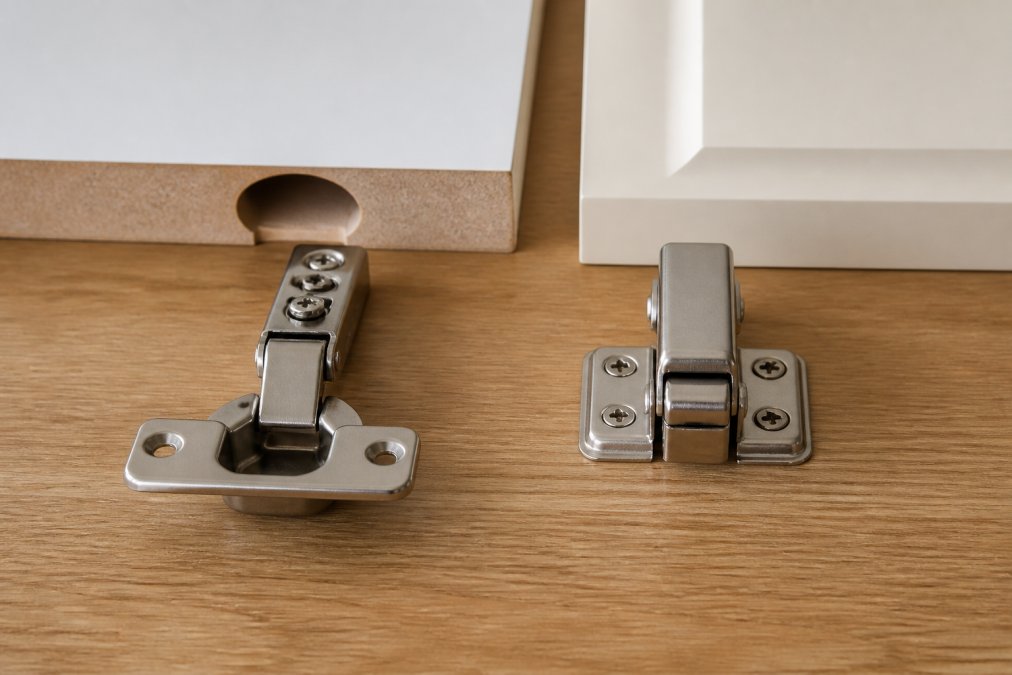
Concealed hinges sit hidden inside the cabinet, completely invisible when the door closes. They require precise boring of a 35mm cup hole into the door and mounting plates inside the cabinet box. Surface mount hinges attach directly to the outside of the cabinet frame, remaining visible even when closed. They're the traditional choice for face-frame cabinetry and require no drilling into the door itself.
The real difference comes down to three factors: visual cleanliness, installation labor, and adjustment capability. Concealed hinges deliver a modern, seamless look. Surface mount hinges offer simplicity and character, making them ideal for retrofits and traditional aesthetics.
Here's what matters most: concealed hinges demand precision during installation but reward you with professional results and superior adjustability. Surface mount hinges go faster to install but offer limited fine-tuning once the door hangs. Your choice depends on your timeline, budget, and whether you're building new or retrofitting existing cabinetry.
Types of Cabinet Hinge Overlays Explained
Cabinet hinges come in three overlay configurations, each determining how the door sits relative to the cabinet box. Understanding these configurations is essential because they affect both appearance and clearance requirements.
Full Overlay Configuration
A full overlay door completely covers the cabinet box on all sides, leaving minimal or no gap between adjacent doors. This configuration is standard in modern frameless cabinetry and creates the clean, integrated look that defines contemporary kitchens.
Full overlay hinges require careful calculation of door thickness and opening angle to prevent collision with adjacent cabinets or walls. The door swings fully open without obstruction when properly installed, typically allowing 110-degree opening angles. This configuration works best with soft-close mechanisms, which prevent slamming and protect the door alignment over time.
The advantage is visual continuity, your cabinetry appears as a unified surface rather than a collection of individual boxes. The trade-off is that installation must be precise. A poorly installed full overlay door creates visible gaps that immediately signal poor craftsmanship.
Half-Overlay and Inset Options
A half-overlay door covers half the cabinet box edge, typically sitting flush with one side while exposing the frame on the other. This configuration is common in face-frame cabinetry and works well when you're mixing cabinet styles or retrofitting existing installations.
Inset doors sit completely recessed inside the face frame, creating a traditional, furniture-like appearance. Inset installation demands the highest precision, doors must fit within tight tolerances, and any wood movement can cause binding or gaps. For this reason, inset configurations are less common in modern residential work but remain popular in high-end custom cabinetry.
Half-overlay hinges offer more forgiveness during installation than full overlay, making them practical for contractors working with existing cabinet boxes that may have minor inconsistencies. Inset hinges require specialized mounting plates and precise door sizing, which increases both material and labor costs.
How to Install Concealed Cabinet Hinges
Installing concealed hinges properly separates professional results from amateur work. The process requires specific tools and careful measurement, but the payoff is doors that align perfectly and adjust smoothly for years.
Mortise vs Non-Mortise Installation
Mortise installation requires routing a recess into the cabinet box to accommodate the hinge arm and mounting plate. This method delivers the cleanest look because the hinge sits flush with the interior surface, leaving no protrusions. However, mortising demands precision tools and adds significant labor time.
Non-mortise installation mounts the hinge arm directly to the interior cabinet surface without routing. The arm protrudes slightly into the cabinet interior, reducing usable space marginally but eliminating the routing step. Non-mortise installation is faster and more forgiving, making it the standard choice for most residential work.
For frameless cabinetry, non-mortise installation is typically sufficient. The hinge arm sits inside the box where it won't interfere with shelving or contents. For face-frame cabinetry, you may need mortising if the frame depth is minimal and the hinge arm would protrude into the opening.
Step-by-Step Installation Process
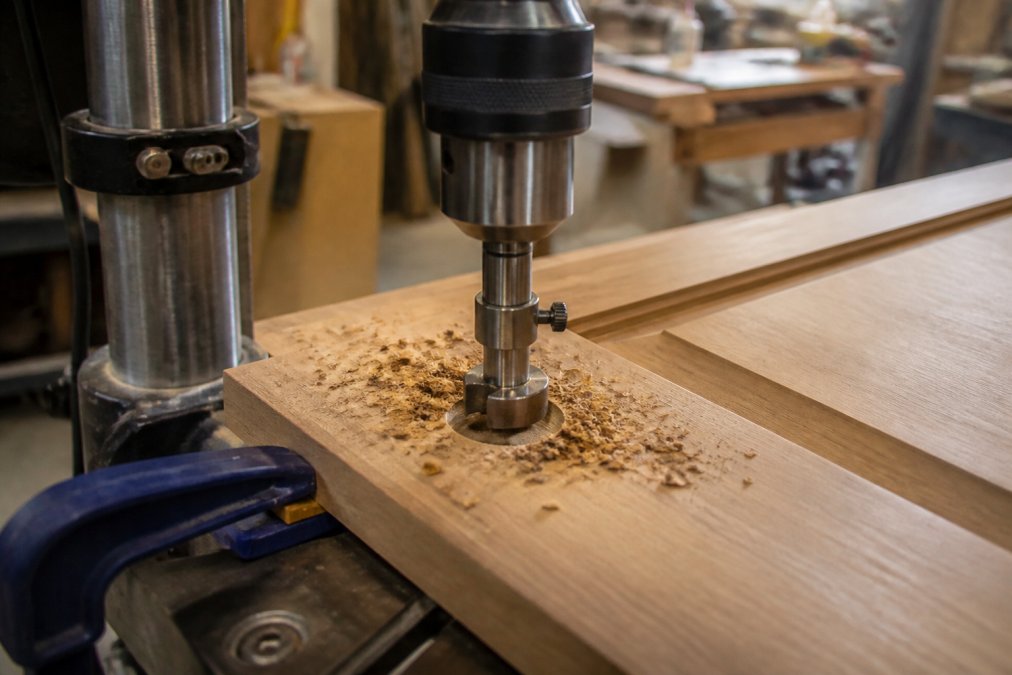
Step 1: Mark and Bore the Cup Hole, Use a 35mm Forstner bit to bore the cup hole into the door. The hole should be centered 37mm from the top or bottom edge of the door, depending on your hinge placement. Bore to a depth of 12mm for standard hinges. A drill press ensures perpendicular holes; hand drilling often results in angled bores that cause binding.
Step 2: Mount the Hinge Cup, Insert the hinge cup into the bore hole and secure it with the provided screws. The cup should sit flush with the door surface. Check that the cup rotates freely before tightening all fasteners.
Step 3: Install the Mounting Plate, Attach the mounting plate to the interior cabinet wall using the hinge's adjustment screws. Position the plate so the hinge arm aligns with the cup when the door closes. Leave adjustment screws slightly loose at this stage.
Step 4: Hang the Door, Clip or screw the hinge arm into the cup, then close the door slowly to check clearance. The door should close without rubbing the cabinet box or adjacent doors.
Step 5: Adjust for Perfect Alignment, Use the three adjustment screws on the mounting plate to fine-tune door position: depth adjustment (forward/backward), lateral adjustment (side to side), and vertical adjustment (up/down). Make small quarter-turn adjustments and test the door after each change.
Step 6: Secure and Test, Once alignment is perfect, tighten all fasteners completely. Open and close the door 10-15 times to ensure smooth operation and consistent gaps.
Soft-Close Cabinet Hinge Advantages
Soft-close hinges have become standard in quality cabinetry because they solve a real problem: slamming doors that damage hinges, disturb household members, and signal poor craftsmanship.
A soft-close hinge contains a hydraulic damper that gradually slows the door as it approaches closure. The mechanism engages in the final 6-8 inches of door travel, creating smooth deceleration rather than an abrupt stop. This dampening protects the hinge mechanism and prevents finger pinching, making it especially valuable in homes with children.
The advantage extends beyond safety. Soft-close hinges reduce noise in the kitchen, eliminate the need for magnetic catches or bumpers, and create the quiet, controlled feel that homeowners associate with high-end cabinetry. A cabinet that closes with a soft click rather than a slam immediately feels more expensive and refined. This emphasis on tactile quality often serves as the foundation for broader kitchen storage solutions that prioritize seamless functionality and long-term durability.
The trade-off is cost.
Adjustability and Door Alignment Features
Modern concealed hinges offer three-way adjustability that allows precise fine-tuning of door position. This adjustability is what separates professional installations from rough ones.
Cost and Installation Labor Considerations
The cost difference between concealed and surface mount hinges extends beyond the hardware itself, it includes the labor required for proper installation.
Which Hinge Type Should You Choose?
The decision comes down to four factors: cabinet style, budget, installation timeline, and your comfort with precision work.
Choose concealed hinges if:
- You're building frameless cabinetry or modern full-overlay installations
- You want professional, seamless aesthetics
- You have time for precise installation or access to experienced installers
- Door alignment and adjustability matter to your project
- You're working with quality wood and expect the cabinetry to last 15+ years
Choose surface mount hinges if:
- You're retrofitting existing face-frame cabinetry
- You need to complete the project quickly
- You want decorative hardware that adds character to the design
- You're working with a tight budget and labor is limited
- The cabinetry is utilitarian rather than high-visibility
| Hinge Type | Installation Time | Adjustability | Aesthetic | Best For |
|---|---|---|---|---|
| Concealed | 20-40 min/door | Three-way | Modern, seamless | Frameless cabinetry |
| Surface Mount | 5-10 min/door | Minimal | Traditional, visible | Face-frame retrofits |
| Soft-Close Concealed | 25-45 min/door | Three-way | Modern, quiet | Premium kitchens |
Frequently Asked Questions
What are the primary differences between concealed and surface mount hinges?
Concealed hinges are mounted inside the cabinet door and frame, remaining completely hidden when closed, while surface mount hinges are visible on the exterior. Concealed hinges offer superior adjustability through 3-way adjustment (vertical, lateral, and depth), whereas surface mount hinges have minimal adjustment capability. Concealed hinges require precise boring and mortising, while surface mount hinges install quickly with no drilling required. Concealed hinges suit modern, frameless cabinetry, while surface mount hinges work best on face-frame cabinets or traditional designs where hardware visibility adds character.
Are concealed hinges worth the extra installation cost?
For most residential projects, concealed hinges offer superior aesthetics and durability. They eliminate visible hardware that can wear or become misaligned, and their 3-way adjustability ensures doors stay perfectly aligned for years. If your project involves frameless cabinetry or modern design, concealed hinges are essential, surface mount hinges would look out of place. For budget-conscious renovations of older, face-frame cabinets, surface mount hinges may suffice. Professional installers appreciate concealed hinges because adjustability reduces callbacks. Consider your cabinet style and long-term durability expectations when deciding whether the extra labor and material cost aligns with your project goals.
What does 3-way adjustability mean for concealed hinges?
3-way adjustability refers to three independent adjustment axes: vertical (up/down), lateral (left/right), and depth (forward/backward). This allows installers to fine-tune door gaps and alignment after installation without removing the hinge. Vertical adjustment corrects uneven door height, lateral adjustment closes gaps between doors, and depth adjustment ensures the door sits flush with the cabinet face. This capability is especially valuable in older homes with uneven floors or walls that aren't plumb. Surface mount hinges lack this precision adjustment, making them unsuitable for projects requiring post-installation corrections or for installers working in challenging conditions.
Can I replace surface mount hinges with concealed hinges on existing cabinets?
Retrofitting surface mount hinges with concealed hinges is possible but requires significant modification. You'll need to fill or cover the existing hinge holes on your cabinet frame and door, then bore new 35mm cup holes in the door and install mounting plates on the frame. This process is labor-intensive and may damage your cabinet finish. Retrofitting works best on unfinished or easily refinished cabinets. If your existing cabinet doors are valuable or finished, replacement is often more practical than conversion.