 ultimate-guide
Benefits of Custom Moulding for Home Value
Table of Contents
- How Custom Moulding Affects Resale Value and Buyer Perception
- Types of Custom Moulding for Homes: Crown, Baseboard, and Casing
- The ROI of Interior Trim: What the Numbers Show
- Cost of Installing Custom Moulding vs. Value Added
- Material Longevity and Maintenance: Wood, MDF, and Beyond
- Custom vs. Off-the-Shelf: Installation Precision and Fit
- Style-Specific ROI: Where Moulding Pays Off Most
- Frequently Asked Questions
Last Updated: September 16, 2026
How Custom Moulding Affects Resale Value and Buyer Perception
Custom moulding means designing and fitting interior trim profiles to a specific home rather than buying standard stock lengths, and its effect on resale value comes down to how quickly buyers read a room as finished. This guide from Arizona Door Store covers what actually moves the needle: what appraisers and buyers notice first, which profiles pay off, and where the money is best spent.
What Appraisers and Buyers Notice First
Appraisers look for completeness and consistency; buyers look for atmosphere. Those two things rarely conflict, but they are not the same test.
Types of Custom Moulding for Homes: Crown, Baseboard, and Casing
The three profiles that carry most of the visual weight in a home are crown moulding, baseboards, and casing. Each does a different job with a different cost-to-impact ratio.
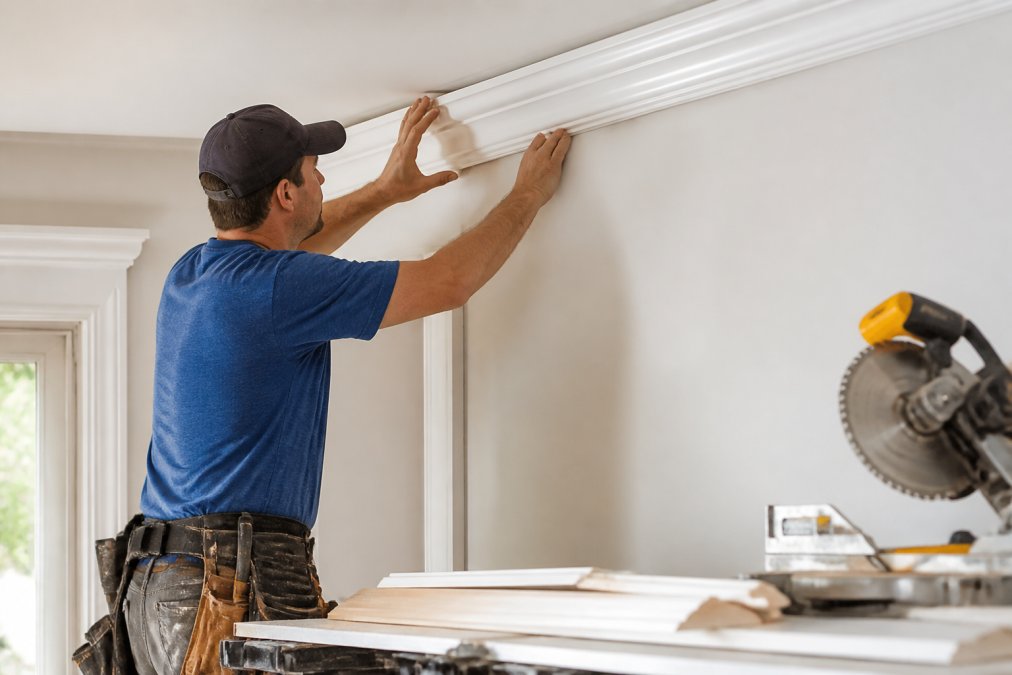
Crown Moulding: Visual Balance and Ceiling Height
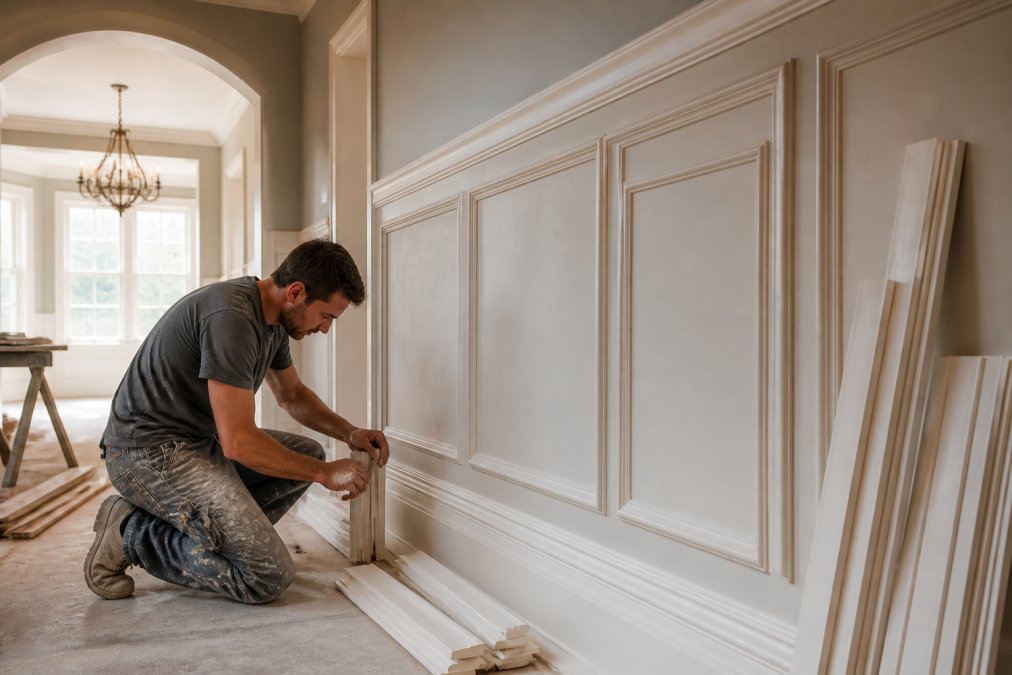
Crown moulding runs along the wall-to-ceiling junction and softens the hardest angle in any room. A well-proportioned crown makes a ceiling feel higher and a room feel more deliberate. Trim carpenters scale crown depth to ceiling height: modest profiles under nine feet, deeper profiles above. Get it wrong and the room looks unfinished or top-heavy.
Baseboards and Casing: The Everyday Details
Baseboards and casing are the profiles people touch and see constantly, so wear shows up there first. Baseboards protect walls from furniture and foot traffic; casing frames every door and window and sets the visual rhythm of a hallway. Because they are repaired more often than crown, material choice matters most here.
| Profile | Where It Goes | Primary Job | Best For |
|---|---|---|---|
| Crown | Wall-to-ceiling line | Visual balance, perceived height | Living rooms, dining rooms, primary suites |
| Baseboard | Wall-to-floor line | Wall protection, room grounding | Every finished room |
| Casing | Around doors and windows | Framing, visual rhythm | Hallways, entries, window walls |
The ROI of Interior Trim: What the Numbers Show
The ROI of interior trim is best understood as a percentage of project cost recovered at sale, not as a fixed dollar figure. Industry remodeling cost-versus-value reporting has long placed mid-range trim and millwork work among the more reliably recovered interior updates, though recovery rates shift with the local market and the quality of the surrounding finishes. According to [Remodeling magazine's Cost vs.
Why Trim ROI Behaves Differently From Other Upgrades
Three mechanisms drive trim's return, explaining why the numbers look modest on paper but strong in practice.
Style-Specific ROI: Not Every Profile Pays the Same
The return on a trim investment depends heavily on whether the profile matches the home's architectural style and local buyer expectations.
| Architectural Style | Profile That Pays | Profile That Hurts |
|---|---|---|
| Traditional / Colonial | Substantial crown, deep casing, stained or painted wood | Flat, minimal profiles that read as builder-grade |
| Victorian / Craftsman | Ornate or historically appropriate profiles, stained wood accents | Modern flat trim that fights the architecture |
| Contemporary / Modern Minimalist | Flat, square-edge profiles, restrained baseboards | Heavy ornate crown that looks applied |
| Transitional | Mid-weight crown, simple casing, consistent reveal | Mixing ornate and flat profiles in the same sightline |
| Southwestern / Territorial | Simple profiles in natural wood tones | Glossy white painted trim that clashes with the palette |
What Actually Moves the Number
Three levers matter more than the total spend:
- Consistency across sightlines. Matching profiles in every room a buyer can see from the entry is worth more than upgrading one room to a premium profile.
- Proportion to ceiling height. A crown that is too shallow for a tall room reads as unfinished; a crown that is too deep for a low room reads as top-heavy. Both suppress perceived value.
- Finish quality at the joints. Tight miters and clean caulk lines are the single most visible signal of craftsmanship. Sloppy joints undo the value of premium material.
The practical implication: trim is a value-protection play, not a value-creation play. Spend where the buyer's eye actually lands.
Cost of Installing Custom Moulding vs. Value Added
The cost of installing custom moulding breaks into three parts: material, profile complexity, and labor. Homeowners consistently underestimate the labor share. A useful trade rule of thumb is that labor runs 50 to 70 percent of a finished trim project's total cost, with material making up the rest. That ratio shifts with the profile: simple baseboard in a square room pushes labor to the low end, while deep crown with compound miters in a room full of corners pushes it to the high end.
The Three Cost Drivers, In Order of Impact
1. Labor (largest and least predictable). Labor scales with corner count, wall plumbness, ceiling flatness, and whether existing trim must be removed. A room with four square corners and level surfaces installs quickly; one with eight corners, an out-of-plumb wall, and a wavy ceiling can take two to three times as long for the same linear footage. That is why identical trim packages can produce very different bills.
Material-to-Labor Ratios by Project Type
| Project Scope | Typical Labor Share | Why |
|---|---|---|
| Single room, simple baseboard | 50-60% | Few corners, fast cuts, minimal prep |
| Single room, crown + baseboard | 60-70% | Crown miters and ceiling-line fitting add time |
| Full-house package, stock profiles | 55-65% | Volume helps, but every room has its own irregularities |
| Full-house package, custom profiles | 60-70% | Custom sizing reduces on-site fitting but adds lead time and handling |
| Older home with out-of-plumb walls | 65-75% | Wall prep and custom fitting dominate the schedule |
These ranges are directional, not quoted prices. The only reliable number is a quote based on your actual measurements, because trim is one of the few trades where substrate condition matters as much as material.
Where Value Gets Added, and Where It Doesn't
Value is added in precision. Tight miters, consistent reveal lines, and casing flush to the drywall read as craftsmanship. Buyers do not itemize trim on a spreadsheet, but they register whether a house feels carefully built, and that perception supports the asking price.
How to Read a Trim Quote
When comparing quotes, ask three questions:
- Is wall preparation included? Quotes that exclude prep often look cheaper and end up costing more once gaps appear.
- Is the profile custom-milled or cut from stock? Custom milling adds lead time but reduces on-site fitting in irregular rooms.
- Is the quote per linear foot or per room? Per-room quotes hide the cost of complex rooms; per-linear-foot quotes make comparison easier but require accurate measurements.
Request a quote based on your measurements rather than relying on national averages, because no two jobs measure the same.
Material Longevity and Maintenance: Wood, MDF, and Beyond
Material choice determines how long trim looks good and how much upkeep it demands. Solid wood takes paint and stain beautifully and can be sanded and refinished, but it moves with humidity, a real factor in dry climates with wide seasonal swings. MDF holds a crisp paint edge and resists the shrinking and cracking wood develops, but it swells if it gets wet.
| Material | Moisture Resistance | Paint Finish | Best Rooms |
|---|---|---|---|
| Solid wood | Moderate | Excellent, stainable | Living areas, stained feature trim |
| MDF | Low | Excellent, crisp edges | Bedrooms, hallways, painted interiors |
| PVC / composite | High | Good, needs bonding primer | Bathrooms, laundries, mudrooms |
Custom vs. Off-the-Shelf: Installation Precision and Fit
Custom profiles are milled to your rooms' dimensions; off-the-shelf trim is milled to a catalog and cut down on site. The difference shows at the joints: stock trim forces installers to build up profiles with filler pieces at transitions, and those build-ups are exactly where cracks appear two winters later.
Style-Specific ROI: Where Moulding Pays Off Most
Not every room returns the same on a trim investment. The rooms that pay off most are the ones buyers walk through first and photograph: entries, living rooms, dining rooms, and primary suites. There, a full crown, baseboard, and casing package reads as a deliberate design decision rather than a repair.
Frequently Asked Questions
Does adding custom moulding increase home value?
Custom moulding can increase home value by improving how buyers perceive a home's quality and architectural character. Appraisers weigh finish details when comparing homes in the same market. Crown moulding, baseboards, and casing fall under permanent home improvements, which means they count toward home equity rather than being treated as temporary decor. The exact lift depends on your market, the home's price bracket, and how well the millwork matches the home's style.
What is the typical ROI of interior trim upgrades?
The ROI of interior trim varies by project scope and market. Trim carpentry that fixes bare or damaged walls tends to return more than decorative additions in homes that already have adequate millwork. In competitive markets, well-executed interior trim helps a listing stand out against similar homes, which can shorten time on market. For a project-specific estimate, talk with a local supplier who can review your space and materials.
How much does custom moulding cost to install?
The cost of installing custom moulding depends on linear footage, profile complexity, material choice, and labor rates in your area. Custom profiles cost more than stock options because they require dedicated milling. Installation precision also affects labor time, especially in older homes with uneven walls and floors. Request a quote based on your measurements rather than relying on national averages.
Is custom millwork considered a permanent home improvement?
Yes, custom millwork such as crown moulding, baseboards, and casing is generally classified as a permanent home improvement. It is attached to the structure and transfers with the property at sale. That classification matters for home equity calculations and for how appraisers compare your home against others in the neighborhood. It also means the investment stays with the house rather than moving with you.