 listicle
High End Door Brands for Renovations: 2026 Buyer's Guide
Table of Contents
- Quick Comparison: High End Door Brands for Renovations
- How We Evaluated These High End Door Brands
- TruStile: Bespoke Interior Doors With Architectural Depth
- ProVia and Therma-Tru: Fiberglass Luxury Entry Doors Built for Weather
- Marvin, Andersen, and Pella: Premium Exterior and Patio Door Systems
- Allegheny Wood Works and Masonite: Solid Wood and Solid Core Options
- How to Choose High-End Door Hardware That Matches the Build
- What Drives the Cost of Custom Door Installation
- Frequently Asked Questions
Last Updated: September 15, 2026
Quick Comparison: High End Door Brands for Renovations
Choosing high end door brands for renovations means matching material, customization, and performance to the opening. TruStile leads for bespoke interior doors, ProVia and Therma-Tru dominate fiberglass entries, Marvin, Andersen, and Pella cover exterior and patio systems, and Allegheny Wood Works and Masonite handle solid wood and solid core needs. This guide from Arizona Door Store breaks down what each brand does best, where it falls short, and how to pair the right door with the right hardware and installation budget.
| Brand | Best For | Material Focus | Customization Level | Lead Time Reality |
|---|---|---|---|---|
| TruStile | Bespoke interior doors | MDF or natural wood | Very high | Made-to-order, longer |
| ProVia | Fiberglass entry doors | Fiberglass composite | Moderate to high | Dealer-dependent |
| Therma-Tru | Wood-look entries | Fiberglass | Moderate | Stock to custom |
| Marvin | Architectural exteriors | Wood and clad-wood | Very high | Long for custom |
| Andersen | Reliable patio and entry | Fibrex composite | Moderate | Standard |
| Pella | Style plus technology | Wood, fiberglass, steel | Moderate to high | Varies by line |
| Allegheny Wood Works | One-of-a-kind solid wood | Premium hardwoods | Fully bespoke | Longest |
| Masonite | Balance of quality and cost | Solid core, composite | Moderate | Standard |
How We Evaluated These High End Door Brands
We scored each brand on material quality, customization depth, durability in desert heat and monsoon swings, and how easily a contractor can source and install it. Factory-finished options, pre-hung systems, and stile and rail construction carried extra weight because they affect finish durability and installation speed.
Ranking door brands on catalog photos is a common mistake. The brand that wins a project is the one whose lead times, jamb depth options, and hardware compatibility line up with the build schedule, a gorgeous slab means nothing if the pre-hung system arrives out of square or the hardware doesn't match the bore spacing. We weighted sourcing reliability heavily for that reason.
TruStile: Bespoke Interior Doors With Architectural Depth
TruStile builds made-to-order interior doors for renovations where the door is part of the design statement. Its architectural-grade construction uses MDF or natural wood, with a deep library of panel configurations, custom sizing, and finishes that match existing trim profiles or create something new.
TruStile earns its reputation on stile and rail construction that stays true over time. In an older home with uneven walls, bespoke dimensions mean fewer filler strips and cleaner casing lines. The trade-off: pricing runs higher than mass-market alternatives, and made-to-order production adds lead time you must plan around.
ProVia and Therma-Tru: Fiberglass Luxury Entry Doors Built for Weather
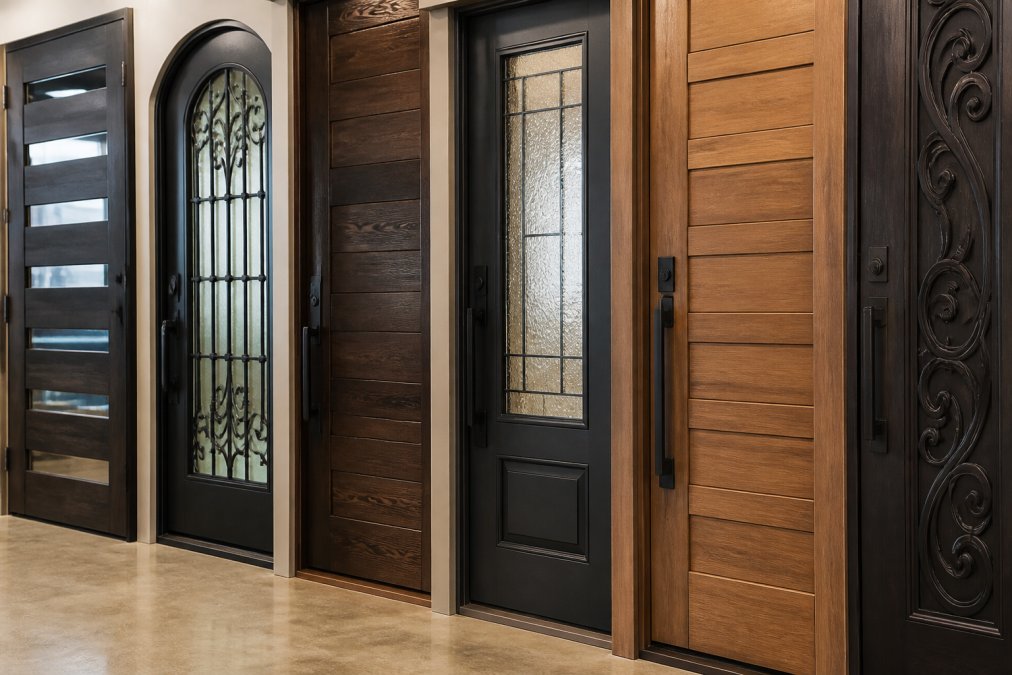
Fiberglass composite entry doors give you the look of wood without the warping, rotting, or swelling solid wood suffers in extreme temperature swings. ProVia and Therma-Tru both build fiberglass systems with authentic wood-grain textures, decorative glass, and advanced weatherstripping. But the differences that matter are buried in the spec sheet, not the showroom display.
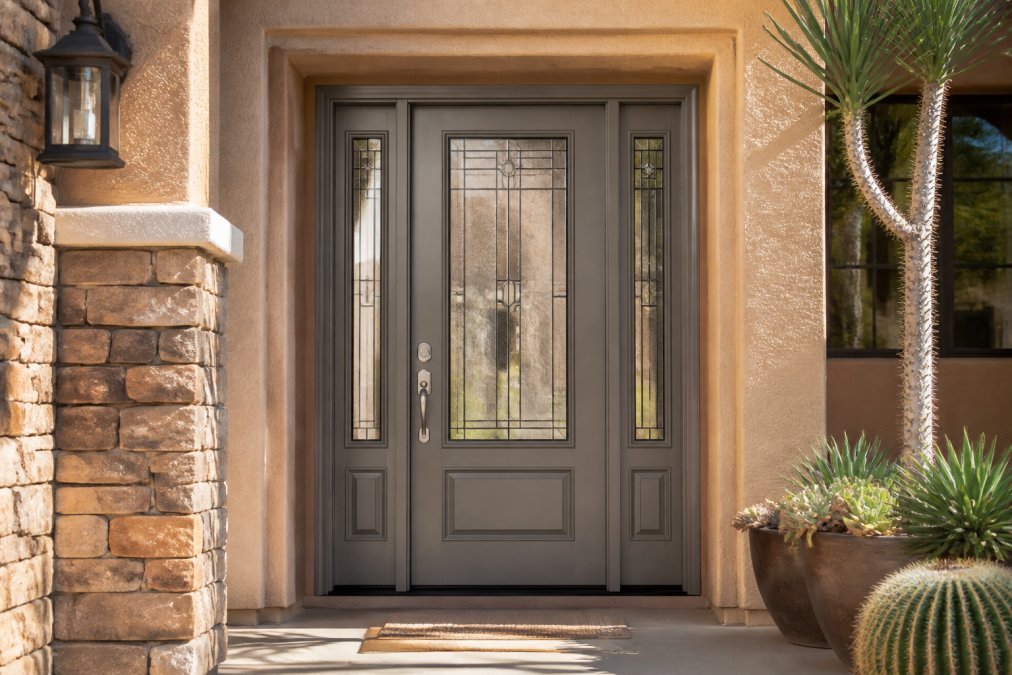
What to actually compare on the spec sheet
Thermal performance. Entry door energy ratings are expressed as U-factor (lower is better) and Solar Heat Gain Coefficient (SHGC). Fiberglass doors with a polyurethane foam core typically land in the U-0.15 to U-0.20 range, while solid wood of similar thickness often sits closer to U-0.40 or higher (energy.gov). In triple-digit summer heat, that gap shows up on the utility bill and on how hot the interior surface feels. Look for the National Fenestration Rating Council (NFRC) label, third-party verification that the manufacturer's numbers were tested, not estimated.
Structural ratings. The American Architectural Manufacturers Association (AAMA) publishes performance grades for entry doors covering air infiltration, water penetration, and structural wind load. A door rated to AAMA/WDMA/CSA 101/I.S.2/A440 at a higher performance grade holds up better against monsoon-driven rain and dust than a builder-grade unit. Ask the dealer for the performance grade, not just the brand name.
Impact and security. The door slab is only one part of the assembly. A multi-point locking system engages the door at three or more points along the frame, distributing forced-entry load far better than a single deadbolt. Both ProVia and Therma-Tru offer multi-point options on higher-end lines, but the hardware is often third-party, confirm the lock brand and finish before ordering, since a mismatched handle and deadbolt finish is a visible tell on a luxury entry.
Smart-home integration is the gap most guides skip
High-end renovations increasingly specify smart locks and automated entry. The constraint is door prep: most smart deadbolts require a standard 2-1/8-inch cross bore and a 1-inch edge bore, and some require a specific backset (2-3/8 inch or 2-3/4 inch). If the door arrives prepped for a non-standard bore, the smart lock won't fit without a retrofit kit or a new slab. Specify the lock first, then order the door prepped to match, for fiberglass doors, prep happens at the factory, so this decision comes before the order is placed.
The honest trade-offs
ProVia's professional-class construction leans toward energy efficiency, with insulation and weatherstripping designed to reduce thermal transfer. Therma-Tru's strength is its system of matching components, so sidelites, transoms, and glass coordinate without guesswork. Both require professional dealer installation, a fiberglass entry door is only as good as its threshold design and hinge configuration.
The drawbacks: purists who want genuine solid wood won't be satisfied, and fiberglass doors with deep wood-grain textures can show a visible seam at the stile-and-rail joints under raking sunlight, the first thing a critical eye notices on a south- or west-facing entry.
Marvin, Andersen, and Pella: Premium Exterior and Patio Door Systems
For exterior and patio systems, Marvin, Andersen, and Pella each solve a different problem. Marvin targets architectural projects with large-format multi-slide and clad-wood doors prioritizing design and structural integrity.
Allegheny Wood Works and Masonite: Solid Wood and Solid Core Options
Acoustic performance: the spec nobody puts on the showroom floor
Sustainability and certification: a gap most door guides ignore
Lead times and supply chain: plan the schedule around the door
The honest trade-offs
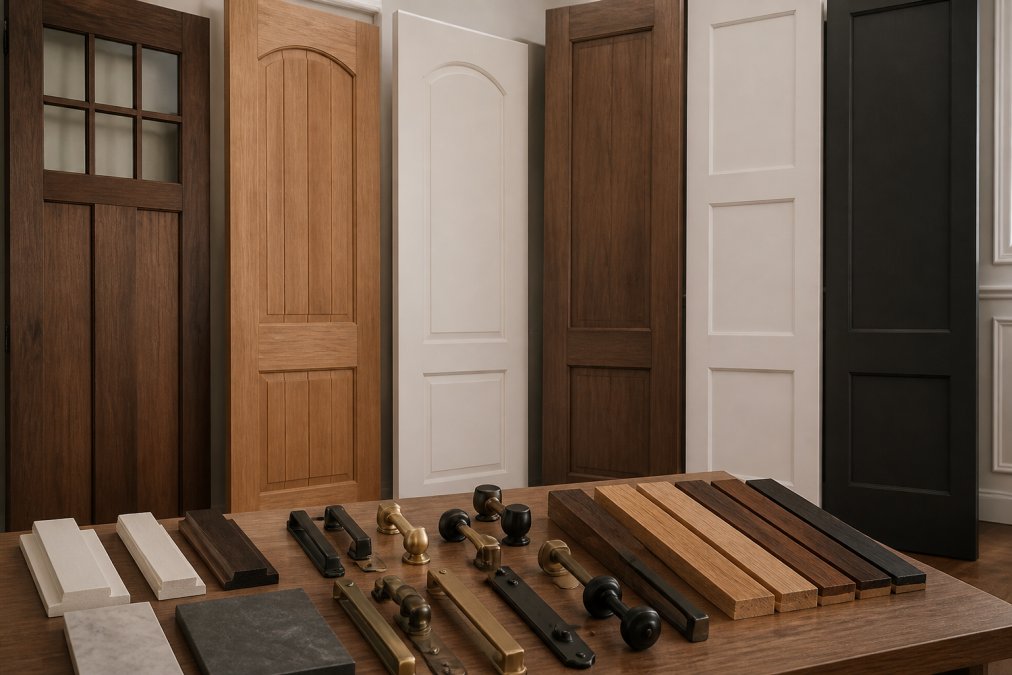
How to Choose High-End Door Hardware That Matches the Build
Use this decision framework when specifying hardware:
What Drives the Cost of Custom Door Installation
Frequently Asked Questions
What are some luxury door brands for home renovations?
Several manufacturers dominate the high end door brands market. TruStile and Allegheny Wood Works specialize in custom interior and solid wood doors. ProVia, Therma-Tru, and Andersen lead in fiberglass and composite exterior systems. Marvin and Pella cover high-performance wood and clad options. Masonite offers broad selections across price points. For renovations in the Phoenix area, working with a local supplier like Arizona Door Store lets you compare these lines side by side and get guidance on which fits your project.
How do I choose between wood, fiberglass, and steel for high-end doors?
Wood suits interior doors and covered entries where grain and custom millwork matter most. Fiberglass composite handles full sun and temperature swings without warping, which matters for exterior doors in desert climates. Steel offers strength and security but can dent and requires repainting over time. For luxury entry doors exposed to weather, fiberglass from ProVia or Therma-Tru balances appearance and durability. Solid wood from Allegheny Wood Works works well for interior spaces and protected entryways.
What affects the cost of custom door installation?
The cost of custom door installation depends on door size, material, hardware, and site conditions. Non-standard dimensions, sidelites and transoms, multi-point locking systems, and finish upgrades all raise the total. Older homes with uneven floors or walls that are not plumb require extra framing and adjustment time. Installation method matters too: pre-hung systems install faster than door slabs that need on-site fitting. Get a quote based on your specific measurements rather than relying on generic estimates.
How do I choose high-end door hardware that lasts?
Start with the door material and architectural style, then match finish and function. Solid brass and stainless steel hold up better than plated alloys in high-use entries. For exterior doors, look for a multi-point locking system and heavy-duty hinges rated for the door weight. Interior doors need quiet hinges and handles that match the home's design. Factory-finished hardware and pre-drilled doors reduce installation errors. Ask your supplier to show hardware options alongside the door so the finish and scale match.
Do high end door brands offer better energy efficiency and sound control?
Yes. Premium exterior doors from ProVia, Andersen, and Pella often carry Energy Star ratings and use insulated cores, thermal breaks, and advanced weatherstripping to reduce heat transfer. For interior doors, solid core options from Masonite and TruStile improve sound attenuation compared to hollow-core alternatives. If your renovation includes rooms near busy areas or home offices, solid core construction and proper door casing with tight seals make a measurable difference in noise reduction.